Entrance of the Queen of Sheba: 1st Violin Sheet Music Preview

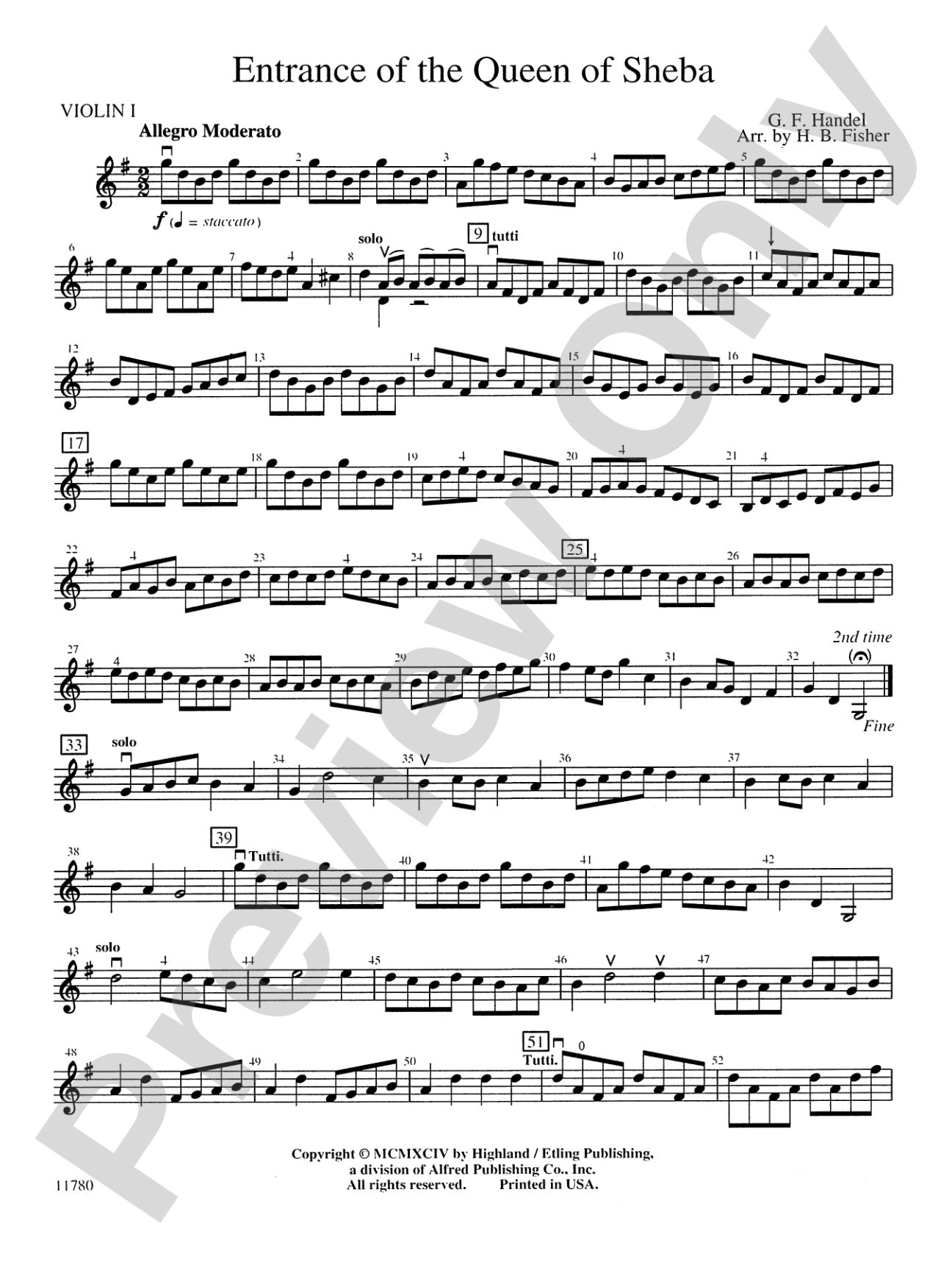
Entrance of the Queen of Sheba: 1st Violin

(from Solomon)

By George Frideric Handel / arr. H. B. Fisher

Grade: 2

Item: 00-PC-0000026_VN1

Digital Download
$5.99
Description
A sure winner with your violin section, this festive arrangement makes use of staccato bowing and eigth-note passage work. The divisi cello part calls for extensions in the lower part. This title is available in MakeMusic Cloud. A Federation Festivals 2020-2024 selection.

Don't just read it, hear it, play along with it, and watch your students grow with it. In MakeMusic Cloud, Entrance of the Queen of Sheba: 1st Violin comes alive with professional accompaniment, adjustable tempo, and built-in practice tools that turn solo practice into real progress.

Sample Audio
0:00
0:00
Sample Video
Additional Details
Series: Highland/Etling String Orchestra
Publisher: Alfred Music
Page Count: 164
SKU: 00-PC-0000026_VN1

More about this title

About the Composer: George Frideric Handel

George Frideric Handel (1685-1759) stands as one of the Baroque era's most prolific and celebrated composers. Born in Halle, Germany, he moved to England where he spent most of his career composing operas, oratorios, and instrumental works that defined the sound of 18th-century musical theater and concert life.

Handel's gift for memorable melody and dramatic expression made his work instantly appealing to performers and audiences alike. His instrumental pieces, including the famous Water Music and Music for the Royal Fireworks, remain staples of orchestral and string repertoire. For music educators, Handel offers something rare: music that is harmonically sophisticated yet immediately engaging, making it an ideal bridge between foundational and more complex repertoire.

Why we love this

String orchestras rarely get Baroque masterworks arranged at a level that feels both accessible and genuinely musical. This arrangement captures the ceremonial grandeur of Handel's original while letting your violins shine through staccato bowing and spirited passage work that sits comfortably under young players' fingers. The divisi cello writing adds orchestral color without becoming unnecessarily difficult, and its Federation Festivals 2020-2024 selection status means your ensemble can perform something that judges and audiences know and respect.

What to expect

Regal and bright, with the ceremonial pomp you'd expect from a royal entrance. The combination of staccato articulation and flowing eighth-note passages creates forward momentum and sparkle, while the harmonic foundation remains solid and grounded in Baroque style.

Who it's for

String orchestras at the Grade 2 level looking for repertoire with both historical substance and student-friendly technical writing. Directors preparing music for festival competitions or concert programs that call for Baroque masterworks will find this a reliable choice that keeps young players engaged without overwhelming them.

How to get the most out of it

  • Emphasize the crisp articulation in the staccato passages; younger players often rush or lose clarity when bowing quickly. Work the rhythm section through these figures separately before combining with melody.
  • Balance the divisi cello parts so the lower extension line doesn't overshadow the upper voice. Have the principal cellist voice each section independently first.
  • Let the opening flourish breathe slightly; resist the urge to push the tempo immediately. A conductor's slight space at the entrance sets the "processional" character Handel intended.
  • Check intonation carefully in the sustained harmonies beneath the running eighth-note figures. Baroque music exposes tuning issues that busier textures can mask.

How to use it

Program this as an opening number on a concert or festival performance to establish an elegant, sophisticated tone before moving into contrasting repertoire. It also works well as a mid-program accent piece that refreshes an audience and showcases your string section's rhythmic precision and articulation.

Skills your students will build

  • Crisp staccato bowing technique on fast note passages
  • Reading divisi cello parts with range extensions
  • Baroque articulation and phrasing style
  • Ensemble rhythmic unity in eighth-note figurations
  • Intonation accuracy in sustained harmonic backgrounds

You May Also Like