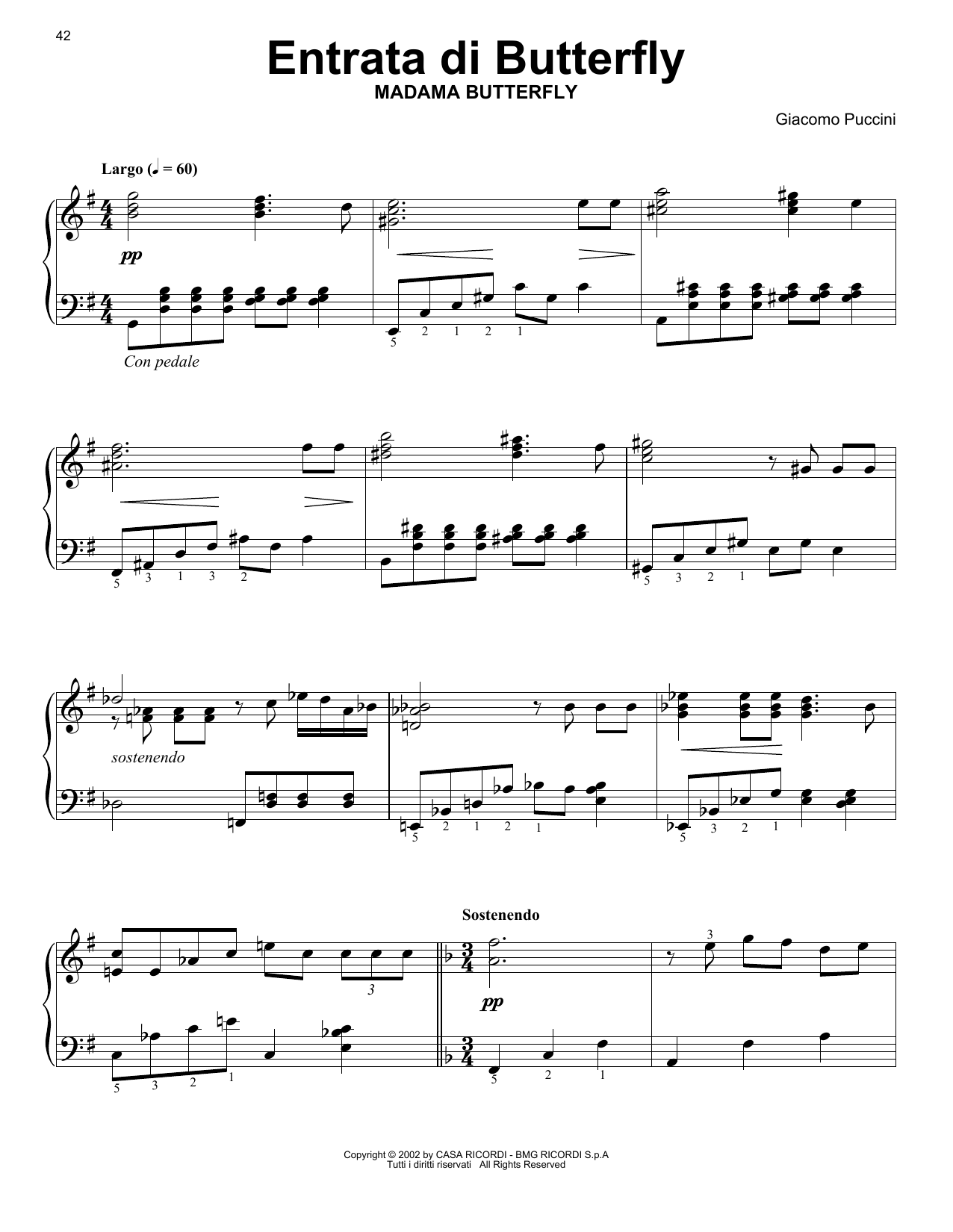
Entrance Of Butterfly Sheet Music Preview

Entrance Of Butterfly: Easy Piano Solo

By Giacomo Puccini

Item: 35-DS00478742

Digital Download
$4.99
Description

Discover MakeMusic Cloud: thousands of interactive titles your students can play along with today.

Sample Audio
No sample audio found.
Sample Video
Additional Details
Publisher: Hal Leonard
Page Count: 3
SKU: 35-DS00478742

More about this title

About the Composer: Giacomo Puccini

Giacomo Puccini (1858–1924) was an Italian composer whose gift for melody and dramatic pacing made him one of the most performed opera composers in the world. His works for the stage reveal an instinct for orchestration and harmonic color that translates beautifully to the piano, where his lyrical writing shines without the weight of a full ensemble.

Puccini's piano transcriptions of his operatic moments offer teachers a direct path into his compositional voice. Students engaging with his melodies at the keyboard develop an ear for the cantabile phrasing and structural clarity that define late Romantic opera.

Why we love this

This transcription captures one of opera's most enchanting moments in a form that intermediate pianists can actually master. The piece sits perfectly at the intersection of accessibility and musical substance, rewarding careful attention to tone production and phrase shape without demanding virtuosity.

What to expect

The piece unfolds with delicate, fluttering character suggesting the light and movement of its namesake. There's an intimate quality here, as though you're witnessing a tender moment rather than a grand operatic scene.

Who it's for

This arrangement serves intermediate piano students ready to move beyond simplified progressions into genuine operatic material. It also works for pianists preparing for recitals or competitions who want a piece with immediate lyrical appeal and manageable technical demands.

How to get the most out of it

  • Shape the melody with a singing tone; imagine the soprano's line has weight and continuity even as your fingers move across registers.
  • Allow rubato in the sustained passages, particularly where the accompaniment figure provides harmonic stability to support slight tempo flexibility.
  • Distinguish between the ornamental figuration and the core melody so the listener hears what matters most.

How to use it

Pair this with other operatic transcriptions to create a thematic set exploring how Puccini's gift for melody works at the keyboard. It also makes an elegant encore piece or a gentle opening number when programming requires something refined but not heavy.

Skills your students will build

  • Sustaining legato lines across hand position changes
  • Balancing melody against accompaniment texture
  • Shaping longer musical phrases with dynamic subtlety
  • Reading and interpreting ornamental notation
  • Voicing harmonic progressions idiomatically for piano

You May Also Like