Franz Schubert (1797–1828) composed with astonishing prolific energy across every major genre, yet died at 31 with much of his orchestral work unpublished. His gift for melody is nearly unmatched in the classical repertoire; he could sustain soaring, lyrical lines that seem to unfold without effort. For educators, Schubert represents the bridge between classical form and romantic expression, making his works essential for helping students understand how the 19th century transformed instrumental music.
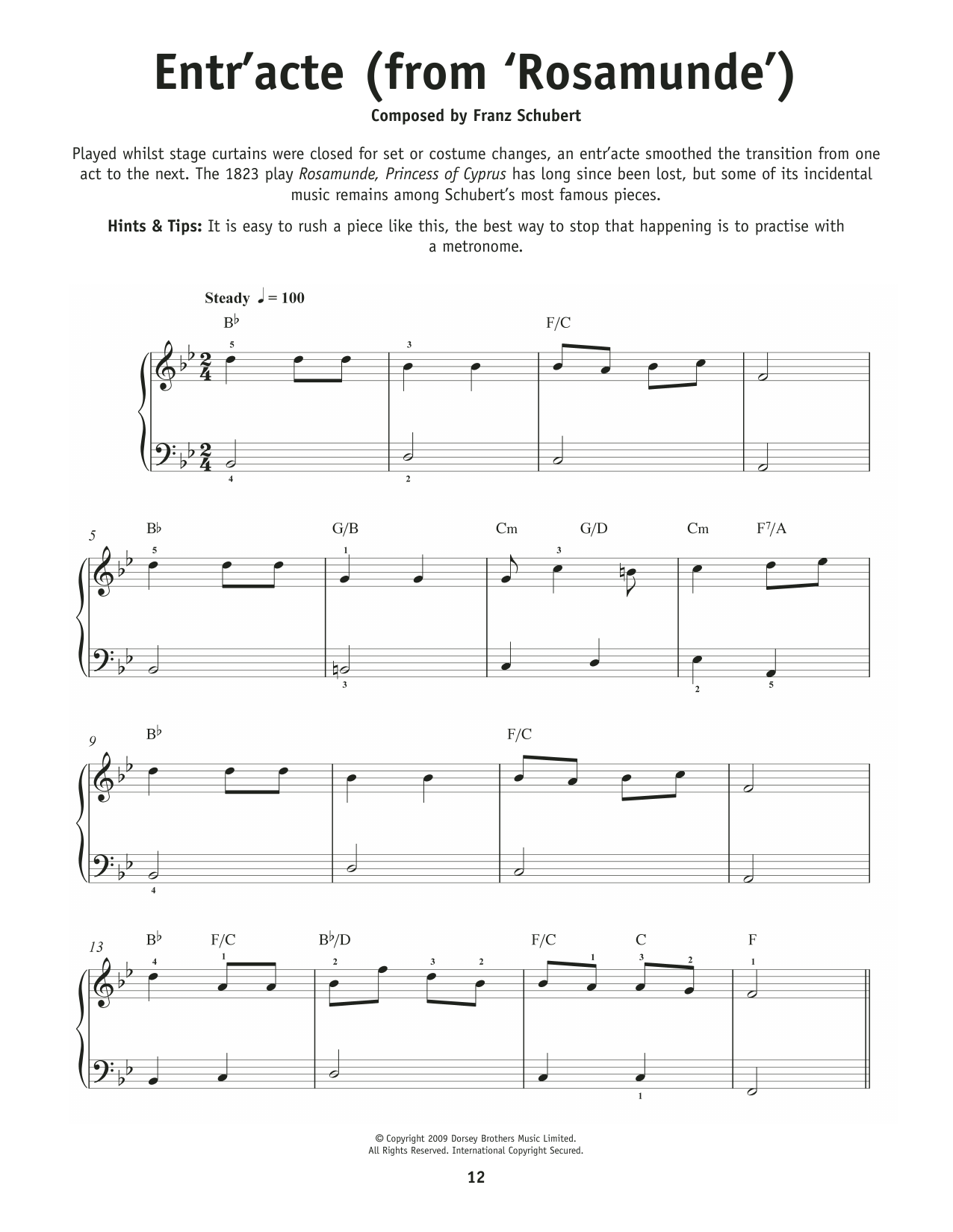
The Rosamunde incidental music, written in 1823 for a play that has long since vanished from stages, contains some of Schubert's most enduring melodies. These pieces survive because their beauty transcends their original theatrical purpose. Directors and teachers return to them again and again because they teach students what sustained lyricism and harmonic richness sound like in practice.