
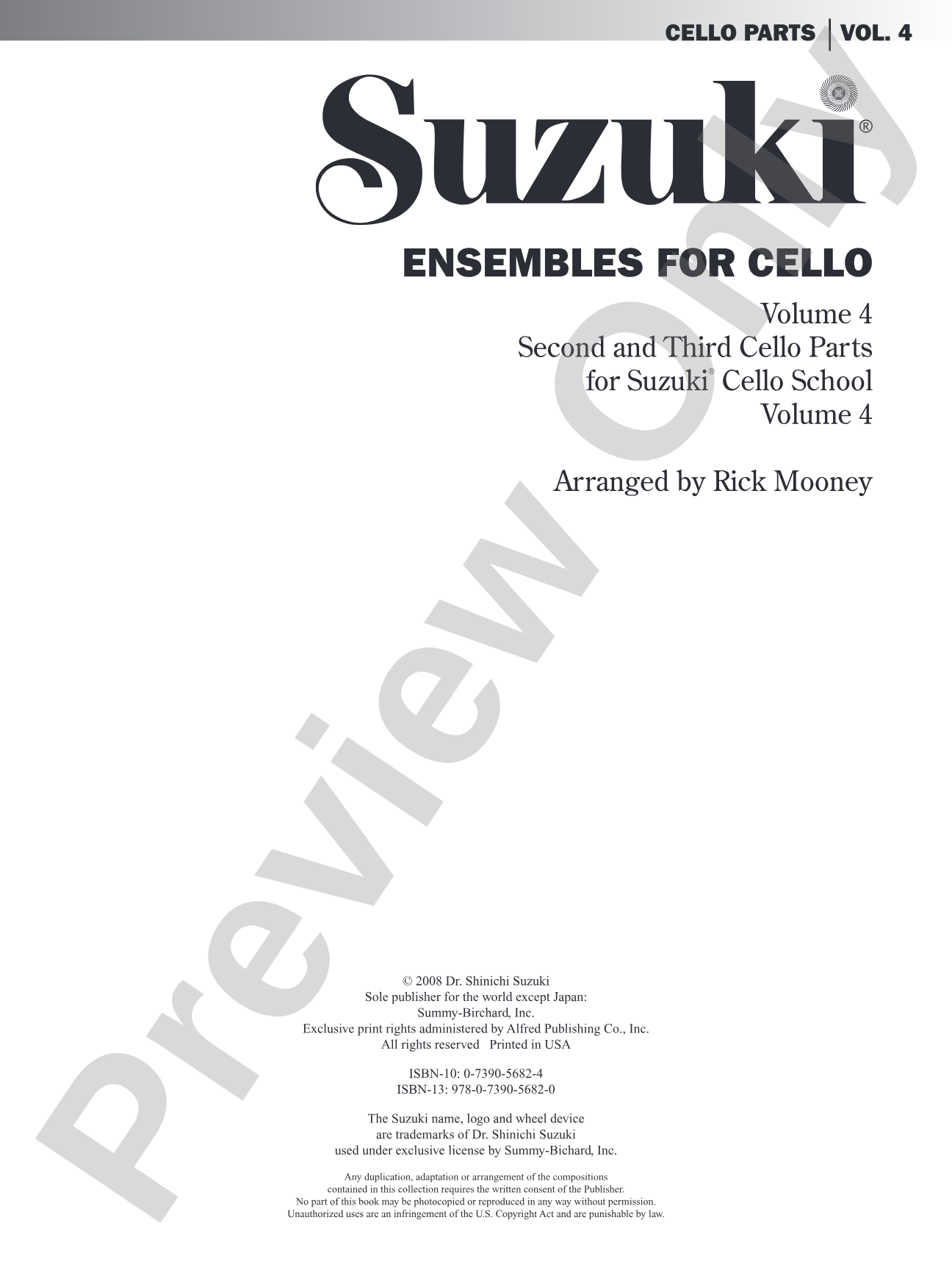

Ensembles for Cello, Volume 4: String Orchestra
By Rick Mooney
Item: 00-PB-0001824
$7.99
Pickup currently not available
Related Items
Ensembles for Cello, Volume 4: Cello Book |
$7.99
|
View |
Description
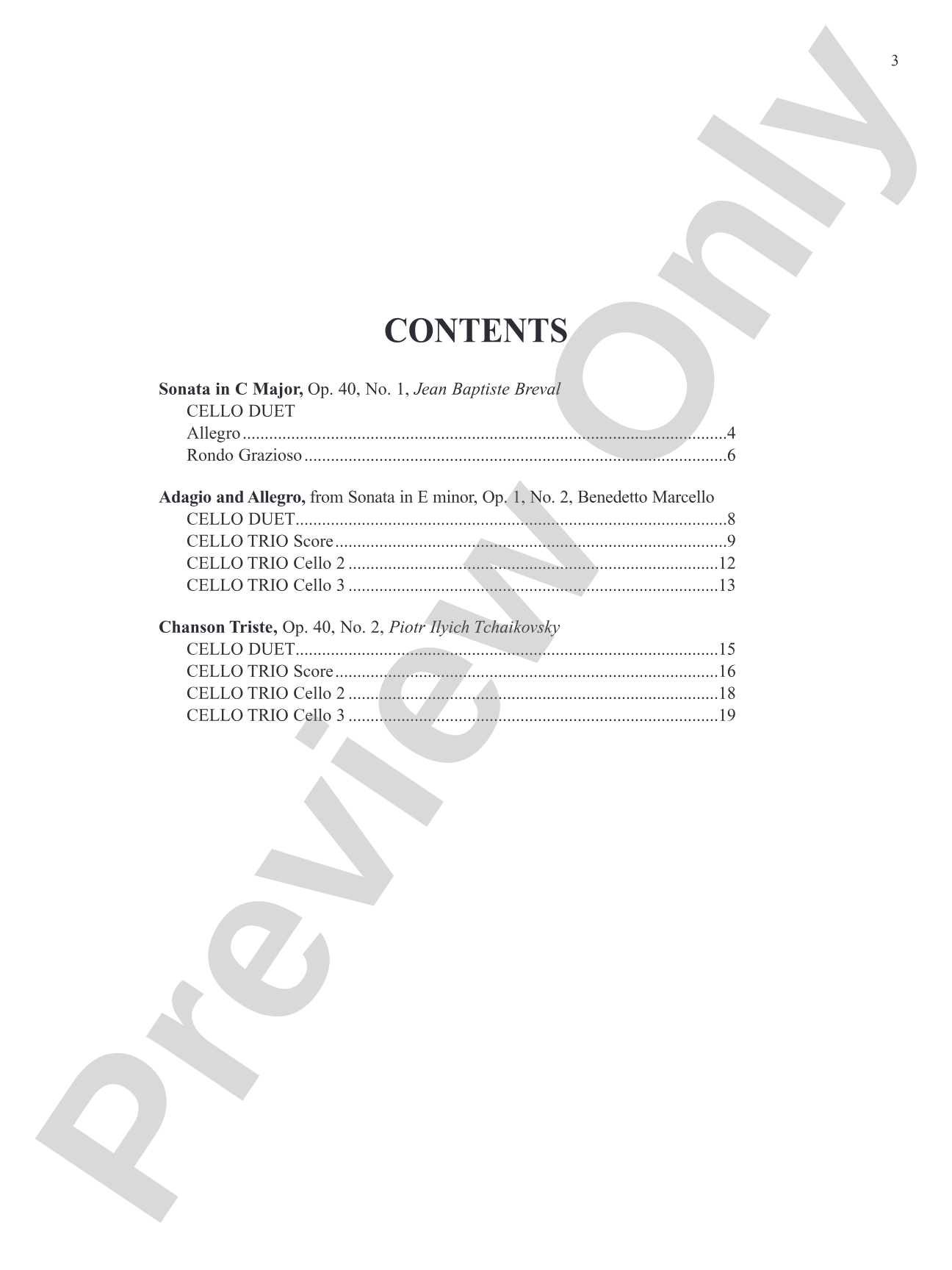
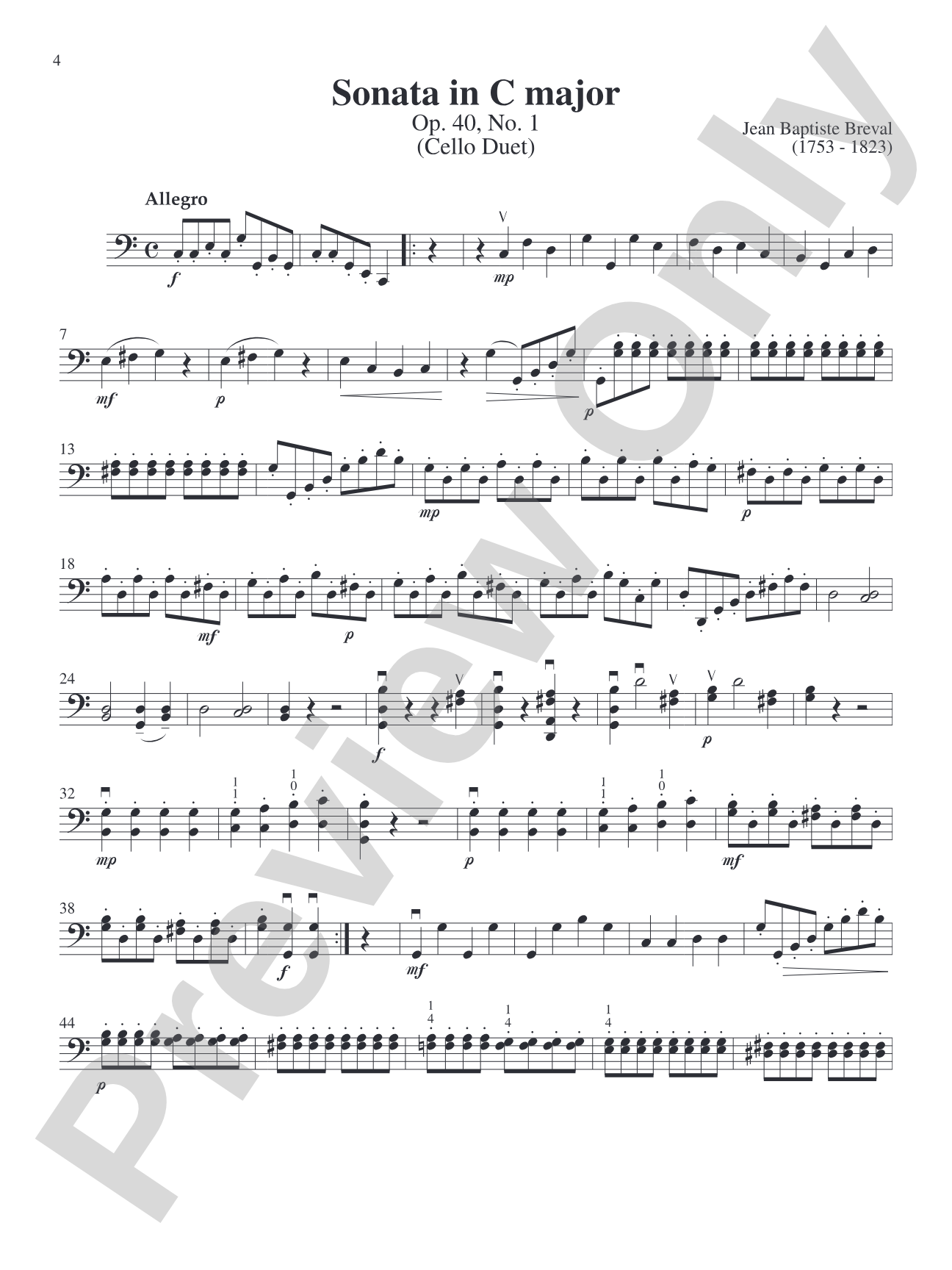
Prepared and edited by Rick Mooney, a well-known Suzuki teacher, teacher-trainer, and member of the Suzuki Cello Committee, these books contain harmony parts to go with many of the pieces in the Suzuki Cello School, Volumes 1, 2, 3, and 4. All of these pieces have been arranged to resemble, as much as possible, the existing piano accompaniments. These ensembles enable a cello teacher (who does not play or have access to a piano) to play harmony parts with students to prepare them for the time when a piano and pianist are available. These parts also provide additional challenges for the more advanced player during a group lesson. Contents include: Sonata in C Major, Op. 40, No. 1 (Cello Duet, Allegro, Rondo grazioso) (Jean Baptiste Breval); Adagio and Allegro, from Sonata in E Minor, Op. 1, No. 2 (Cello Duet, Cello Trio Score, Cello Trio Cello 2, Cello Trio 3) (Benedetto Marcello); Chanson Triste, Op. 40, (Cello Trio Score, Cello Trio Cello 2, Cello Trio Cello 3, Cello Duet) (Piotr Ilyich Tchaikovsky)


Ensembles for Cello, Volume 4: String Orchestra isn't in MakeMusic Cloud just yet...but it could be. Let us know you'd like to see it, and you'll help shape what comes next. In the meantime, start a free trial and dive into thousands of interactive titles your students can play along with today.
Request This Title
Tell us you want it.
Start Your Free Trial
Explore everything that's ready to play right now.
Sample Audio
No sample audio found.
Sample Video
No sample videos found.
Additional Details
Publisher:
Alfred Music
Page Count:
20
SKU:
00-PB-0001824
More about this title
About the Composer: Rick Mooney
Rick Mooney is a cornerstone figure in Suzuki cello pedagogy, recognized internationally as both a master teacher and teacher-trainer. His work with the Suzuki Cello Committee has shaped how generations of young cellists develop their foundational skills, and his arrangements for ensemble playing demonstrate deep understanding of how students progress through the Suzuki method.
Mooney's practical approach to music education extends beyond private instruction. By creating these harmony parts, he solved a real challenge that many cello teachers face: the ability to provide rich musical accompaniment without requiring a pianist or second instrument. His arrangements respect the original spirit of the pieces while adapting them specifically for the needs of young ensemble players.
Why we love this
These arrangements bridge a genuine gap in Suzuki cello instruction. A teacher working alone can now offer students the harmonic context and musical fullness they need to understand how their part sits within a complete musical texture, preparing them seamlessly for eventual piano accompaniment. The fact that Mooney created duet and trio options from the same repertoire means students at different levels can work through the same material together, turning a single lesson into an ensemble experience without requiring separate score preparation.
What to expect
These pieces move between lyrical sentiment and structured classical form. Breval's Sonata unfolds with Italianate grace before settling into a rondo's playful logic. Marcello's Adagio and Allegro opens with chamber-like intimacy, while Tchaikovsky's Chanson Triste carries a wistful, introspective quality that rewards careful listening to the interplay between voices.
Who it's for
Cello teachers working without access to a pianist, particularly those using the Suzuki method in private lessons or group settings. The material also extends learning opportunities for advanced young cellists who can take on harmony roles while peers work through melodic content.
How to get the most out of it
- Balance the cello trio so the melody line stays audible while the harmony parts provide support; younger students playing harmony should understand they're creating the foundation, not competing for attention.
- Use these arrangements early in a unit to establish familiarity with harmonic language before introducing a pianist; students who know what the accompaniment should sound like will adapt more quickly when the texture changes.
- Record yourself playing the harmony parts so students can practice independently against a fixed accompaniment, building confidence in intonation and rhythm before group rehearsal.
How to use it
Weave these duets and trios into studio class or sectional rehearsals as students advance through Suzuki volumes. They work particularly well as showcase pieces when you want to demonstrate student musicianship without requiring outside accompaniment; a cello trio has a warm, self-contained sound. Include them in informal recitals or studio performances where ensemble skills matter as much as individual proficiency.
Skills your students will build
- Harmonic awareness and listening to parts other than the melody
- Part independence in cello duet and trio textures
- Sight-reading multiple ensemble arrangements of familiar repertoire
- Collaborative listening and balance adjustment in small ensembles
- Preparation for transition from cello-alone to piano accompaniment