
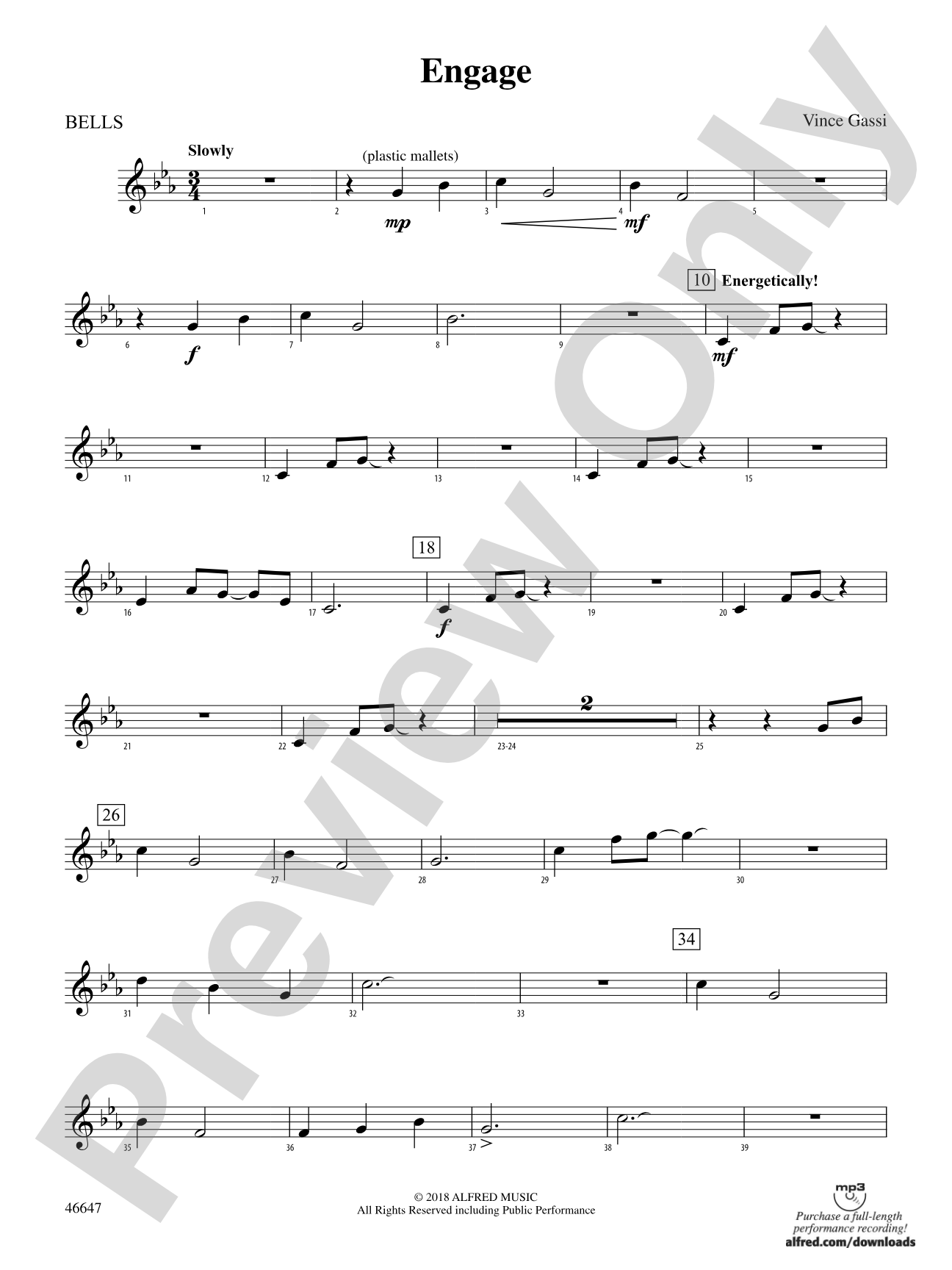

Engage: Bells
By Vince Gassi
Grade: 1.5 (Easy)
Item: 00-PC-0018077_B
$3.00
Pickup currently not available
Description
Set in 3/4, this dynamic work's momentum and drive will energize. Bold and rhythmic, lilting and lyrical---always fun. Set your audience meter for applause and launch into this new work. Go on, make it so! Engage!


Don't just read it, hear it, play along with it, and watch your students grow with it. In MakeMusic Cloud, Engage: Bells comes alive with professional accompaniment, adjustable tempo, and built-in practice tools that turn solo practice into real progress.
Open in the Player
Jump straight in and assign it today.
Start Your Free Trial
Open this title and explore the full library in minutes.
Sample Audio
1
Audio File
--:--
0:00
0:00
Sample Video
Additional Details
Series:
Challenger Band Series
Publisher:
Alfred Music
Page Count:
238
SKU:
00-PC-0018077_B
More about this title
About the Composer: Vince Gassi

Vince Gassi has been composing and arranging for young ensembles since 2006, building a catalog of more than 100 published works that balance accessibility with musical substance. Trained at the University of Western Ontario, the Dick Grove School of Music, and York University (where he earned his Ph.D.), Gassi brings both pedagogical insight and compositional craft to every score. His pieces appear regularly on festival and contest programs across North America, Europe, and Japan, and he conducts clinics and seminars throughout the continent on creative engagement and digital workflow for music directors.
For a quarter century, Gassi taught instrumental music at elementary and secondary levels, giving him direct knowledge of what students can play and what will excite them. His work as a guest conductor, adjudicator, and clinician keeps him connected to the rehearsal room. He continues to receive commissions and sees his music performed at major venues including the Midwest Clinic in Chicago.
Why we love this
Gassi writes with an instinct for what keeps young musicians engaged: rhythmic drive that propels the ensemble forward, melodic material that sits naturally in each voice, and dynamic contrast that rewards careful phrasing. At Grade 1.5, this score delivers real musicianship without getting bogged down in technical complications, freeing your band to focus on ensemble balance, articulation clarity, and the subtle art of lifting a phrase. The 3/4 meter and lilting quality give your students something fresh compared to the typical march or chorale opener.
What to expect
Bold and rhythmic in its opening moments, then shifting into something more lilting and graceful, this work rides a wave of forward momentum. The writing is lean and accessible, yet full of life; students feel the dance of 3/4 time and the swing of well-placed accent and release.
Who it's for
Concert bands in their first year or two of playing together, where the focus is on building ensemble cohesion and basic interpretive skills. Directors looking for repertoire that energizes a program without creating a ceiling on musicality, and students ready to tackle pieces with genuine character and shape.
How to get the most out of it
- Shape the rhythmic figures with consistent articulation across the band. What starts crisp and punchy should land the same way in every section.
- Honor the lyrical passages by pulling back the tempo slightly and letting the melody sing through the texture. Avoid rushing; let the breath give the phrases room.
- Balance the tutti moments by checking that your inner voices (altos, tenor saxes, trombones) aren't overpowering the melodic line. A light touch in the accompaniment lets the tune land.
- Use the meter signature as your friend. The 3/4 pulse is inherently flowing; resist the urge to conduct it heavily. Let it dance.
How to use it
Open a concert with this piece to set an energetic, positive tone before moving into heavier or more contemplative works. Its Grade 1.5 level makes it an excellent choice for a fall festival appearance, where you want your band to play confidently and sound musically mature without overreaching technically. The combination of rhythmic vitality and lyrical passages also suits it well as a bridge piece between a chorale and a march.
Skills your students will build
- Conducting and responding to clear meter in 3/4 time
- Balancing rhythmic drive with lyrical phrasing
- Maintaining ensemble articulation across sections
- Managing dynamic contrast and control
- Reading and executing syncopated rhythmic figures