
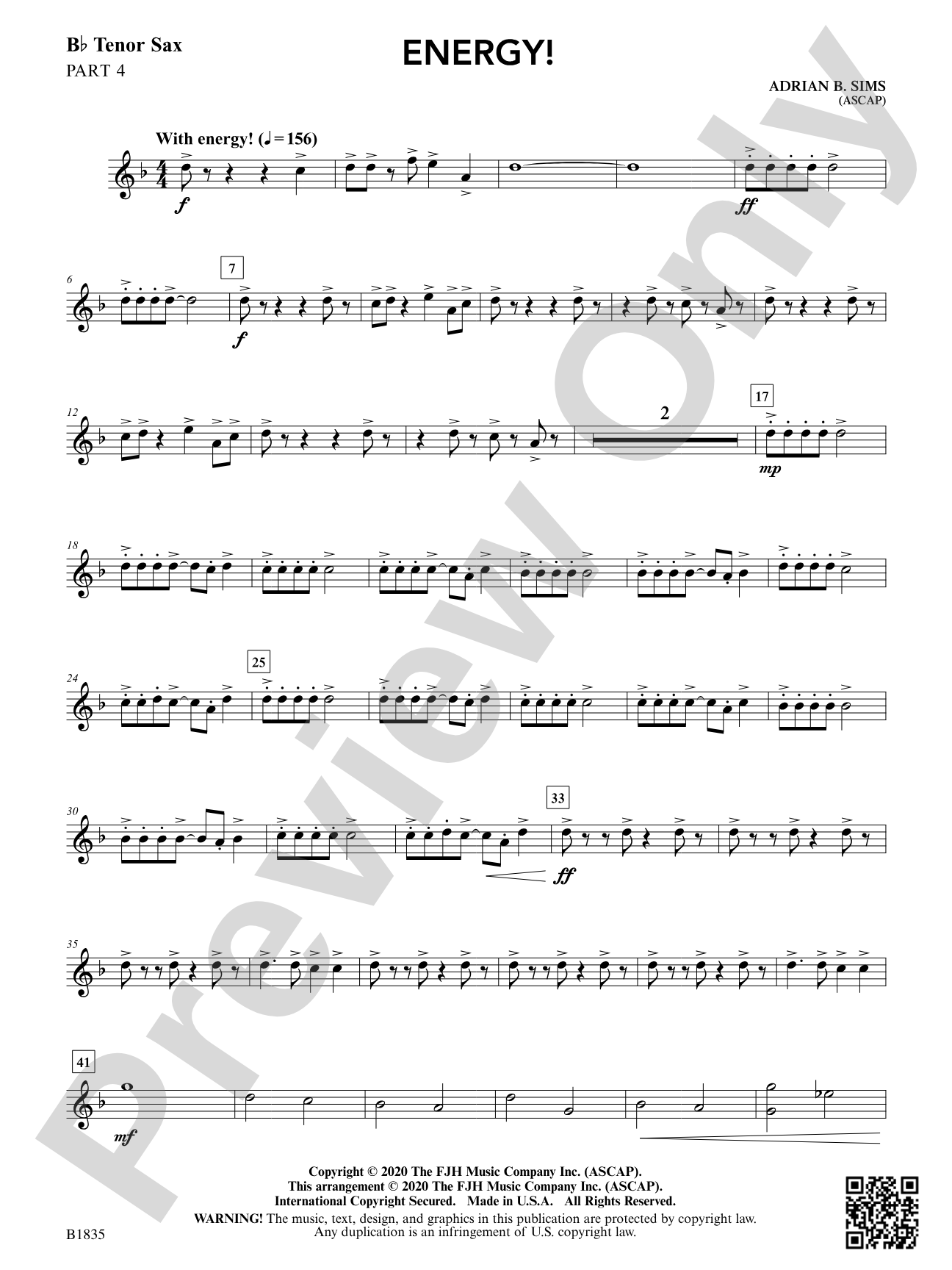

Energy!: Part 4 - B-flat Tenor Saxophone
By Adrian B. Sims
Grade: 2.5
Item: 98-PC-DB1835_PT4_TX
$7.00
Pickup currently not available
Description
Like its title implies, this highly aggressive work is based on a combination of invigorating melodies and a relentless rhythmic drive. Musical lines weave throughout the ensemble, soaring countermelodies take center stage, and an increasingly intense final passage takes the piece to an entirely new level. Simply put, this one is full of energy!


Discover MakeMusic Cloud: thousands of interactive titles your students can play along with today.
Sample Audio
1
Audio File
--:--
0:00
0:00
Sample Video
No sample videos found.
Additional Details
Series:
The ReImagine Initiative
Publisher:
The FJH Music Company, Inc.
SKU:
98-PC-DB1835_PT4_TX
Instrumentation:
4-Part Fully Adaptable with Percussion
More about this title
About the Composer: Adrian B. Sims

Adrian B. Sims is a composer, conductor, educator, and trombonist born in Seattle in 2000. His compositions have been performed at The Midwest Band and Orchestra Clinic and earned spots on the Bandworld Top 100 List, alongside victories in the Maryland Music Educators Association Young Composers Project and the Make Music Young Composers Contest. He has conducted performances of his own works across Maryland schools and performs as a trombonist in top ensembles at the University of Maryland, where he studies composition with Dr. Robert Gibson and trombone with Matthew Guilford, solo bass trombonist with the National Symphony Orchestra.
Sims' development as a composer reflects both rigorous study and mentorship from accomplished musicians. His high school experience included multiple selections to the Maryland All-State Band and performances alongside the Baltimore Symphony Orchestra. He credits band directors Christopher Gnagey and Cindy Stevenson with shaping his musical foundation, and counts world-renowned composer Brian Balmages among his professional influences. Sims is pursuing a dual degree in Music Education and Composition at the University of Maryland.
Why we love this
This score harnesses the energy of young composers' instinctive drive while delivering genuine musical substance. The flexible instrumentation means you can use it with whatever ensemble combination you have on any given day, and the Grade 2.5 difficulty sits perfectly at that sweet spot where students feel challenged without becoming discouraged. The relentless rhythmic foundation paired with soaring countermelodies creates a piece that propels itself forward, making it an immediate audience favorite at festivals and concerts.
What to expect
Propulsive and muscular from the first measure. The piece channels relentless forward momentum through interlocking rhythmic patterns and weaving melodic lines that feel genuinely alive rather than stationary. By the final passage, the energy has become something almost tangible, as if the ensemble is being pulled toward a climactic destination it cannot resist.
Who it's for
Bands and flexible ensembles at the Grade 2.5 level looking for a high-impact festival or concert opener that works regardless of instrumentation gaps. Directors seeking pieces that maintain student engagement through propulsive writing rather than technical showiness will find this particularly valuable.
How to get the most out of it
- Keep the rhythmic drive metronomic and uncompromising in the early sections. Student ensembles often soften aggressive patterns; lock in with your strongest rhythm section players and ask the rest of the band to match their conviction.
- Shape the countermelodies to sing above the foundational lines. Mark which instruments carry soaring passages in rehearsal and rotate focus as lines weave; this prevents the texture from becoming undifferentiated.
- Build intensity deliberately across the final passage rather than jumping straight to maximum volume. Reserve your strongest dynamic for the very last moments so the ending lands with genuine impact.
How to use it
Open a concert with this to establish energy and engagement before settling into slower or more introspective repertoire. The flexible instrumentation makes it reliable for both fall and spring festivals where you cannot predict attendance. Its Grade 2.5 difficulty and audience appeal also make it an ideal piece for young musicians' first festival appearance.
Skills your students will build
- Sustaining rhythmic drive across extended passages
- Balancing independent melodic lines within a full texture
- Dynamic control and pacing toward climactic moments
- Ensemble coordination across flexible and changing instrumentation