Endurance: Flute Sheet Music Preview

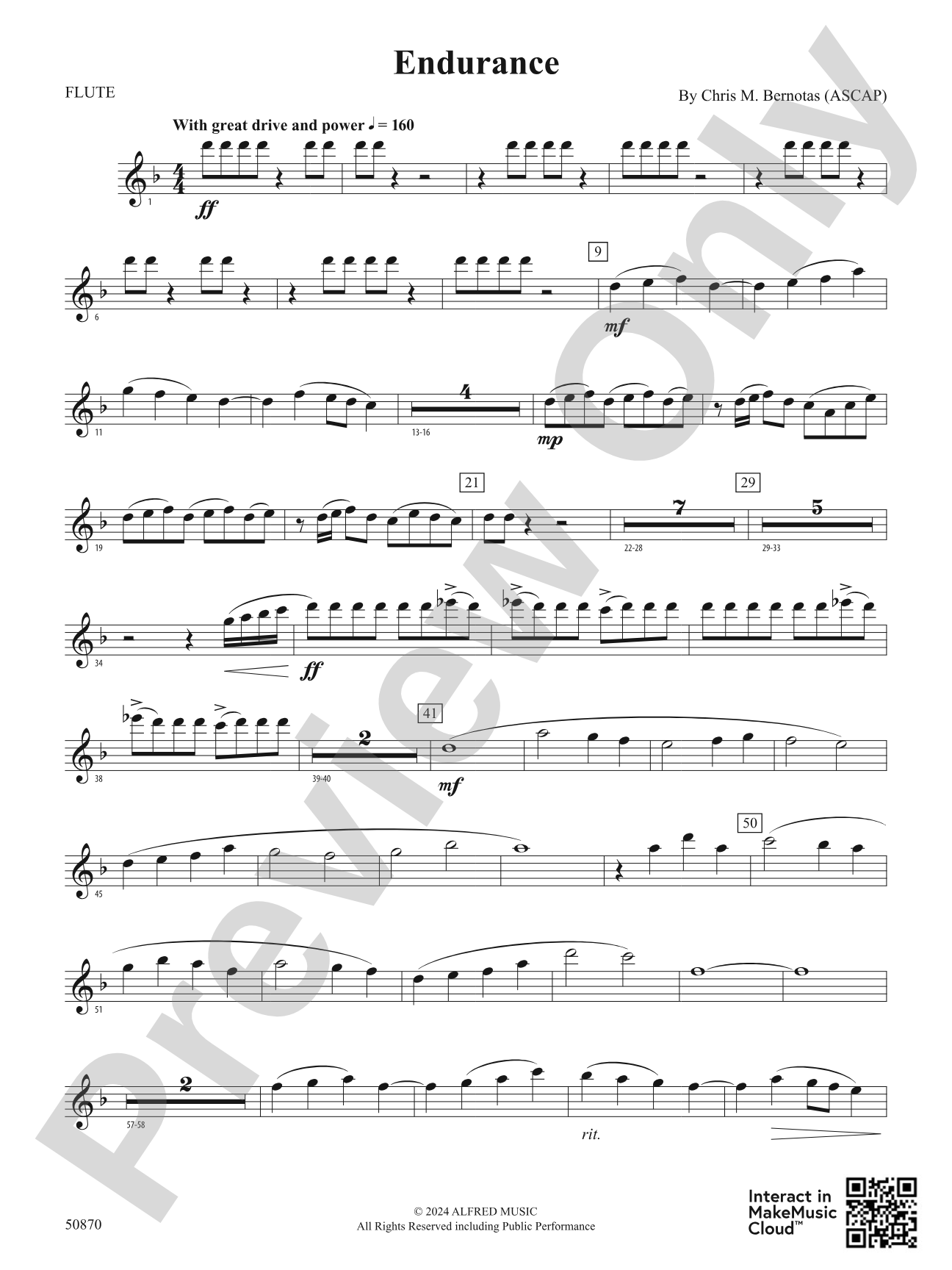
Endurance: Flute

By Chris M. Bernotas

Grade: 2

Item: 00-PC-0019292_F1

Digital Download
$3.00
Description
Endurance, by Chris M. Bernotas, is an exciting overture that honors endurance athletes and anyone who pursues challenging goals. The piece starts fast and furiously, representing the initial excitement and adrenaline of a challenge. Eventually, it slows down and becomes more calm, representing the moments of doubt and fatigue that can occur along the way. The piece ends with a powerful and triumphant return, representing the spirit of endurance and determination. A perfect concert opener or closer! (3:50)

Don't just read it, hear it, play along with it, and watch your students grow with it. In MakeMusic Cloud, Endurance: Flute comes alive with professional accompaniment, adjustable tempo, and built-in practice tools that turn solo practice into real progress.

Sample Audio
0:00
0:00
Sample Video
Additional Details
Series: Young Symphonic
Publisher: Alfred Music
SKU: 00-PC-0019292_F1

More about this title

About the Composer: Chris M. Bernotas

Chris M. Bernotas

Chris M. Bernotas brings over 25 years of music education experience to his work as a composer and conductor. As Director of Instrumental Publications at Alfred Music, he has shaped band and orchestra curricula for programs worldwide, drawing on direct classroom knowledge to inform every piece he writes.

Beyond composition, Bernotas is deeply invested in music pedagogy and teacher support. He conducts clinics, leads honor ensembles, and has co-authored several pedagogical resources including the Sound Innovations and Sound Artistry series. His dual commitment to creating engaging repertoire and supporting educators reflects a philosophy that great music education requires both inspiring compositions and thoughtful curricular guidance.

Why we love this

Bernotas captures the emotional arc of athletic striving without resorting to bombast or oversimplification. The form works beautifully as a concert opener because it commands attention immediately, then rewards the audience with genuine emotional contrast before finishing strong. For a Grade 2 band, this piece delivers sophisticated drama while remaining technically accessible.

What to expect

The opening arrives with infectious energy and forward momentum, pulling the listener into a moment of peak athleticism. Gradually, the music softens and slows, creating space for reflection and struggle before gathering resolve and surging toward a triumphant finish. The emotional journey feels genuine, not manipulative.

Who it's for

Grade 2 concert bands seeking an overture with real emotional substance and clear dramatic architecture. The piece works equally well for school bands building programming confidence and community ensembles wanting accessible repertoire that still engages sophisticated audiences.

How to get the most out of it

  • Shape the opening fast section with clear dynamic peaks and valleys rather than playing at one relentless volume. The excitement comes from the band's control of contrast, not just speed.
  • Let the slow middle section breathe. Young bands often rush through slower passages; resist the temptation and allow the moments of doubt to register genuinely with the audience.
  • Prepare the return from the slow section carefully in sectionals. The transition builds momentum gradually, so brass and percussion need to coordinate the gradual crescendo without jumping ahead.
  • Use the recorded accompaniment in rehearsals to build confidence in younger sections during exposed passages, especially in the contrasting middle section.

How to use it

Open a concert with this piece to immediately establish energy and set a dynamic tone for the remainder of the program. Alternatively, close a concert with the triumphant return to leave your audience on an uplifting note. The 3:50 length makes it ideal for festival programs requiring variety in pacing.

Skills your students will build

  • Dramatic pacing and dynamic contrast across extended sections
  • Sustaining focus through tempo and key changes
  • Coordinated ensemble transitions between fast and slow material
  • Musical storytelling through form and orchestration

You May Also Like