

Enchanted Isle - Piano Quartet (2 Pianos, 8 Hands): Piano
By Beatrice A. Miller
Level: Intermediate
Item: 00-PB-0000808

$4.99
Pickup currently not available
Related Items
Enchanted Isle: Piano Quartet (2 Pianos, 8 Hands) Sheet (2 copies included) |
$4.99
|
View |
Description
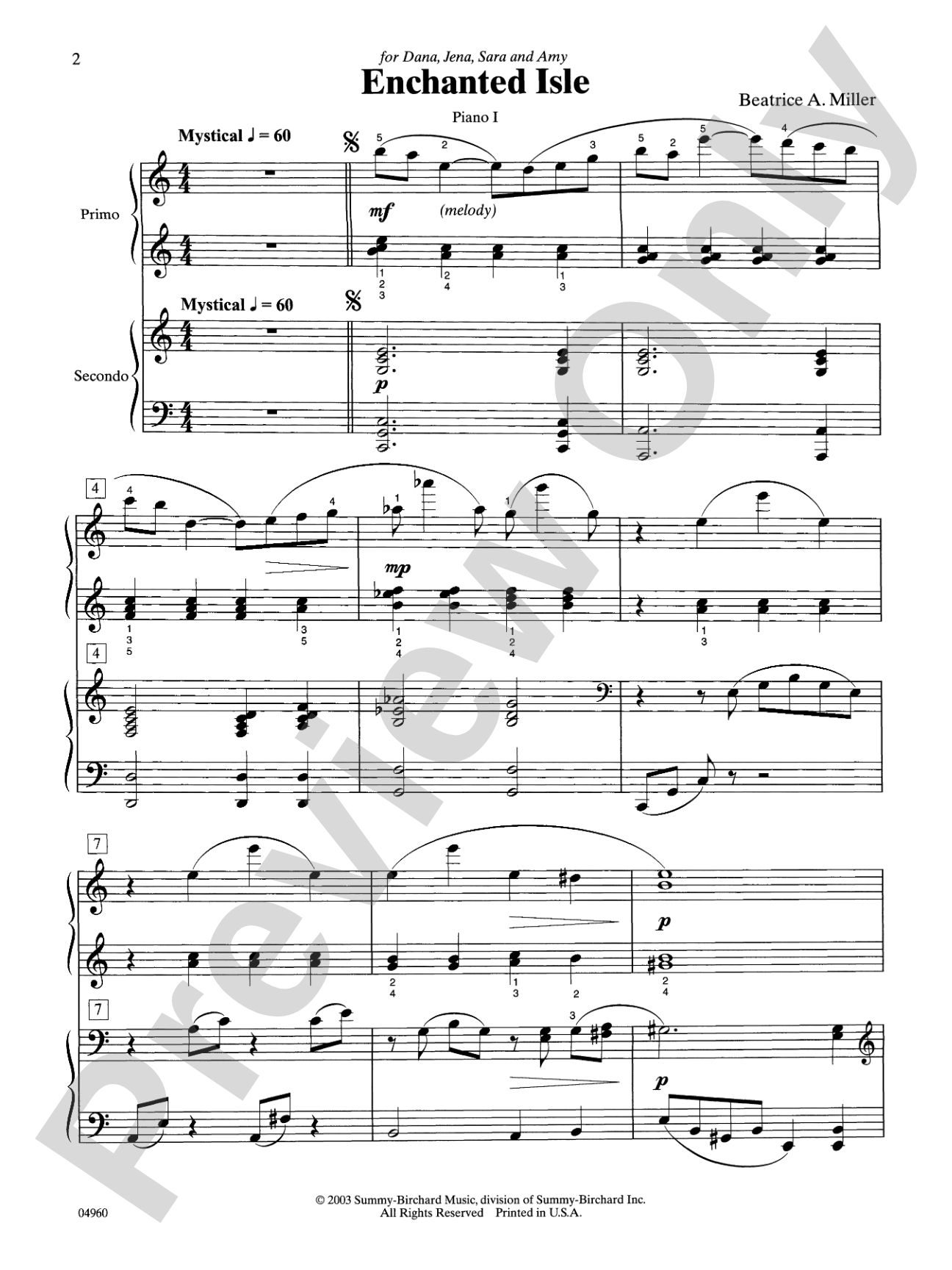
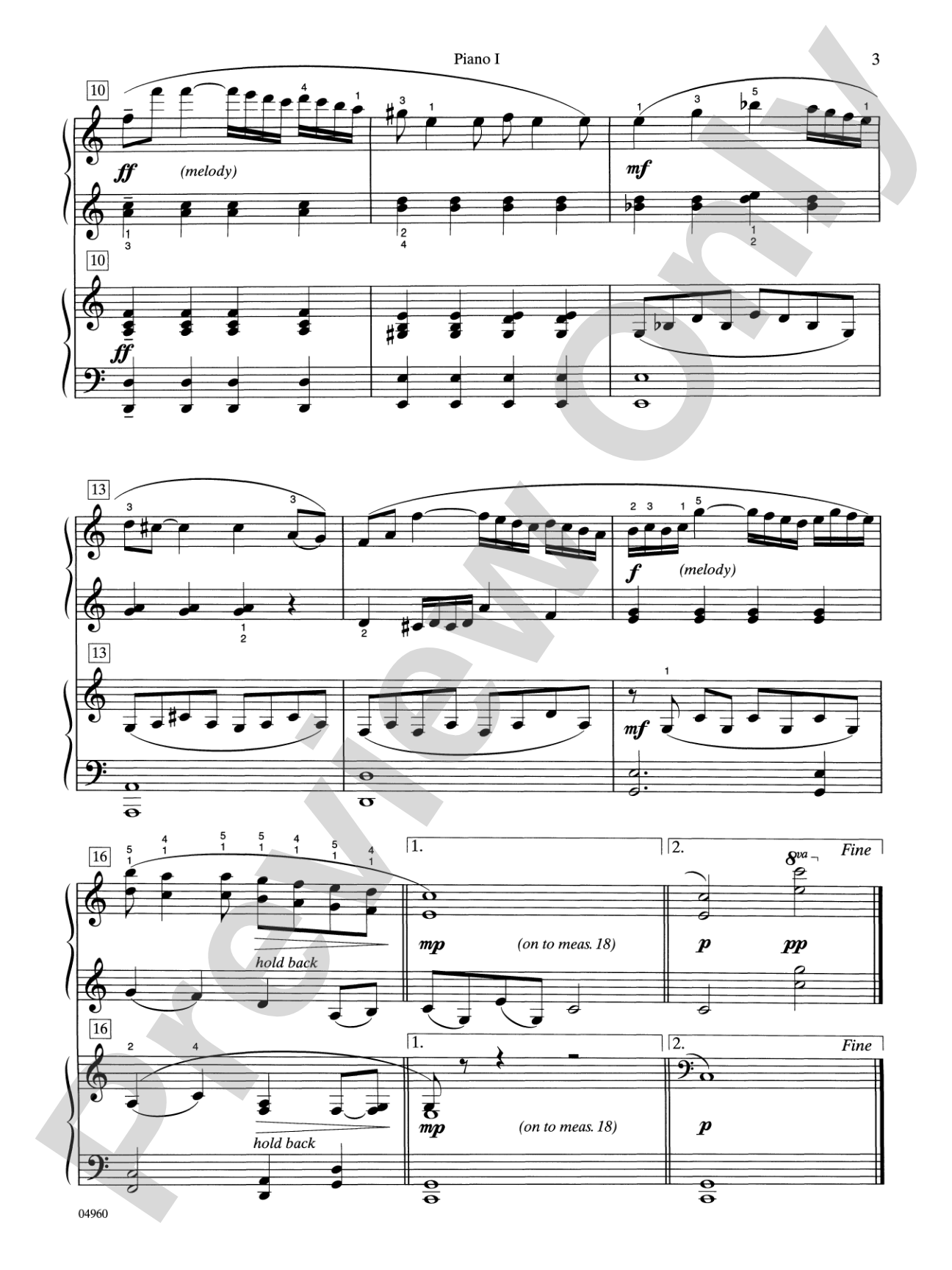
This two pianos, eight hands intermediate quartet utilizes extended harmonies in the key of C to create the mystical setting suggested by the title. Melodies are fluidly interwoven among the parts along with a rhythmically repetitive chordal accompaniment. This piece is a joy to play. Two copies are included. A Federation Festivals 2024-2028 selection.


Don't just read it, hear it, play along with it, and watch your students grow with it. In MakeMusic Cloud, Enchanted Isle - Piano Quartet (2 Pianos, 8 Hands): Piano comes alive with professional accompaniment, adjustable tempo, and built-in practice tools that turn solo practice into real progress.
Open in the Player
Jump straight in and assign it today.
Start Your Free Trial
Open this title and explore the full library in minutes.
Sample Audio
No sample audio found.
Sample Video
No sample videos found.
Additional Details
Publisher:
Alfred Music
Page Count:
8
SKU:
00-PB-0000808
More about this title
About the Composer: Beatrice A. Miller

Beatrice A. Miller grew up in Detroit, Michigan, in a musical household shaped by her father's work as a Lutheran pastor, choir director, and accomplished musician. Daily hymn singing after evening devotions planted a deep love of sacred music in her that would influence her compositional voice throughout her career. Family lore captures her precocious musicality: at nine months old, her baby sounds echoed the cadence of a hymn the family had just sung, a moment that captivated her initially reluctant brothers and set the tone for a lifetime of musical gift-giving.
Miller earned her Master's degree in music composition from Northwestern University and spent decades teaching piano, directing choirs, and serving as church organist in Corvallis, Oregon. When she stepped back from full-time teaching in 1979, composition became her primary focus. Her published works began appearing in 1987, and the Oregon Music Teacher's Association recognized her as Composer of the Year in 1997.
Why we love this
Miller's writing for multiple pianos is tactile and genuinely collaborative; the fluid interweaving of melody among eight hands creates genuine ensemble dialogue rather than just doubled parts. The extended harmonies give the piece an impressionistic shimmer that feels fresh at the intermediate level without becoming precious, and the rhythmically anchored accompaniment keeps everything grounded so pianists can focus on the melodic conversations happening around them.
What to expect
Enchanted Isle unfolds like a musical landscape painted in soft, layered colors. The extended harmonies shimmer and shift beneath flowing melodic lines that seem to float between the pianos, creating an atmosphere of gentle mystery and discovery. There's warmth in the writing that feels inviting rather than austere, making the piece a genuine pleasure to inhabit from opening to close.
Who it's for
Intermediate pianists who thrive in ensemble settings and are ready to balance independent musicianship with collaborative listening. This quartet works well for studio teachers with multiple students at similar levels or for school programs seeking intermediate chamber music that invites genuine ensemble playing without requiring a conductor.
How to get the most out of it
- Balance the interwoven melodies by listening across both pianos rather than within your own part; the piece opens up when the four players hear themselves as a single musical texture.
- Establish a steady pulse in the rhythmic accompaniment figures before rehearsing melodies together; this foundation keeps the extended harmonies from drifting.
- Experiment with subtle dynamic shaping within the melodic lines to suggest the mystical character without exaggerating; let the harmony do the atmospheric work.
- Schedule rehearsals with all four pianists present from the beginning; the interdependence of the parts means that isolated practice yields diminishing returns.
How to use it
This selection fits naturally into a recital program of chamber music or as a centerpiece for a student showcase focused on ensemble work. Its accessibility at the intermediate level makes it ideal for spring concerts where you want to highlight collaborative performance, and its Federation Festivals designation suggests a strong option for competitive programming in 2024-2028 seasons.
Skills your students will build
- Balancing independent lines while maintaining ensemble awareness
- Playing in extended harmonic language (chromatic voice leading, seventh and ninth chords)
- Coordinating tempo and musical phrasing across two pianos
- Reading and voicing four-part texture on the keyboard
- Listening and responding to melodic material in other parts during performance