
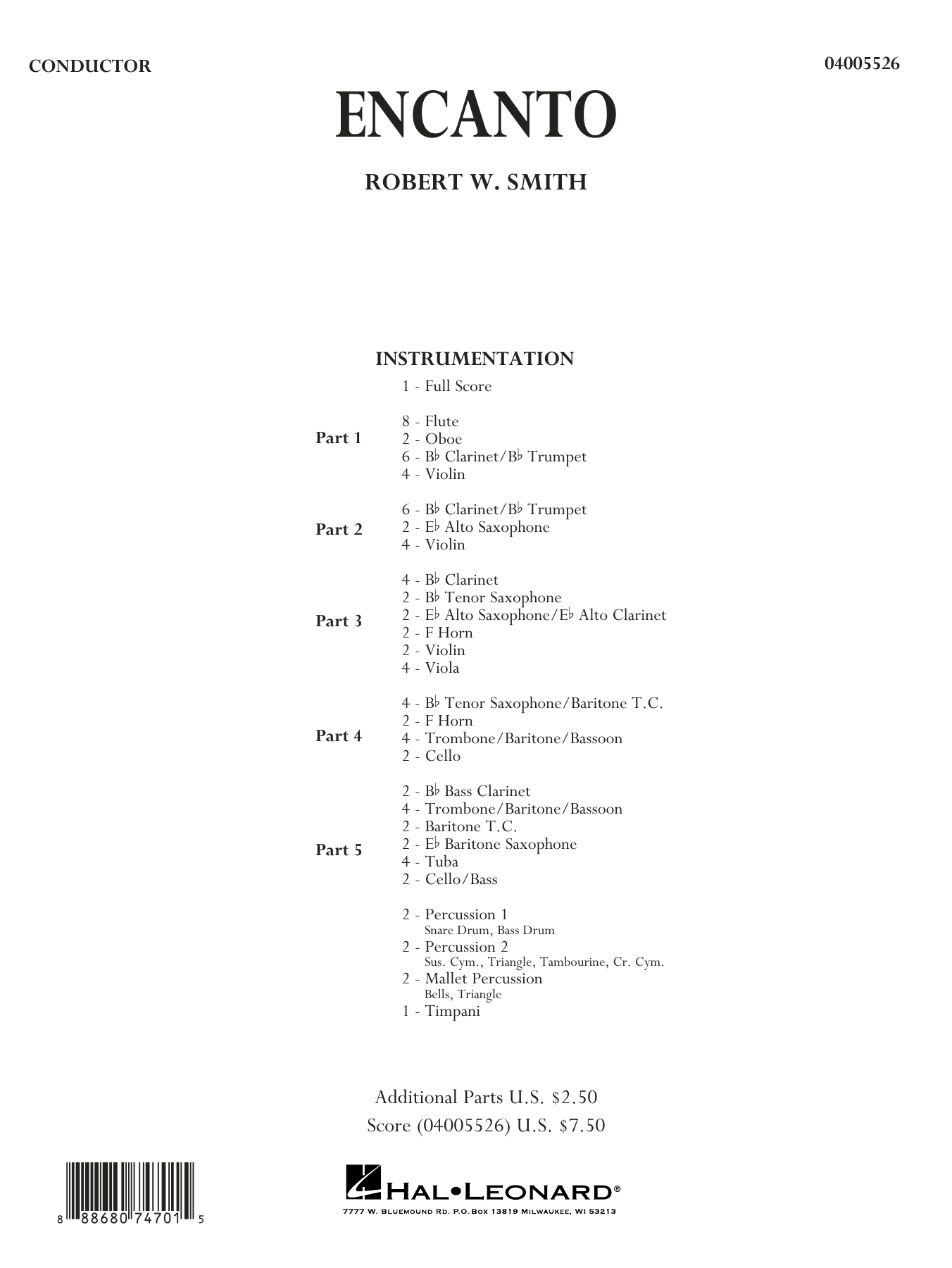

Encanto: Flex Ensemble Conductor Score & Parts
By Robert W. Smith
Grade: 3
Item: 35-PK00555614
$65.00
Pickup currently not available
Buy Extra Parts (Digital PDF Download)
Parts Added to Cart!
Description
Robert W. Smith's "Encanto" has been a staple of the festival repertoire for young bands for over 30 years! With its dramatic fanfare and rhythmic energy throughout, this version for flexible instrumentation is adapted directly from the original.


Encanto: Flex Ensemble Conductor Score & Parts isn't in MakeMusic Cloud just yet...but it could be. Let us know you'd like to see it, and you'll help shape what comes next. In the meantime, start a free trial and dive into thousands of interactive titles your students can play along with today.
Request This Title
Tell us you want it.
Start Your Free Trial
Explore everything that's ready to play right now.
Sample Audio
No sample audio found.
Sample Video
No sample videos found.
Additional Details
Publisher:
Hal Leonard
SKU:
35-PK00555614
More about this title
About the Composer: Robert W. Smith

Robert W. Smith stands among the most frequently performed American composers in the concert band and orchestral worlds, with over 400 published works to his credit. Trained at Troy State University (AL) and the University of Miami (FL), Smith has built a career anchored in music education; his compositions for developing ensembles have become foundational repertoire, while his larger works like The Divine Comedy and The Odyssey have circulated across North America, Europe, Australia, and Asia.
Beyond the concert hall, Smith's music has reached global audiences through high-profile platforms. His arrangements and original compositions have appeared on major television broadcasts, at the Olympic Games, in the Macy's Thanksgiving Day Parade, and at opening ceremonies honoring presidents and heads of state. As a conductor and clinician, he continues to work directly with musicians across the United States, Canada, Japan, Australia, and throughout Europe.
Why we love this
Smith's ability to write energetic, accessible concert band music without sacrificing musical substance shines here. The flexible instrumentation means you can build an ensemble from whatever combination of players you have, while the dramatic fanfare and propulsive rhythmic drive keep both students and audiences engaged from the downbeat.
What to expect
This music radiates confidence. A dramatic brass proclamation opens the door, then rhythmic energy sustains the momentum with bracing orchestrations that feel larger than the ensemble performing it. There's pageantry here without pretension, and forward motion that keeps the piece driving toward its conclusion.
Who it's for
Directors programming Grade 3 flex ensembles at festival season or preparing for concert dates will find this a reliable choice that works with a range of instrumentation combinations. It suits both developing high school ensembles and strong middle school groups seeking repertoire with concert appeal.
How to get the most out of it
- Balance the opening fanfare across your brass; the clarity of that gesture sets the entire piece's energy. If you're light on high brass, double the melody in the upper woodwinds without losing the brass character.
- Lock the rhythmic momentum in your low reeds and bass line. Grade 3 material often loses propulsion when these voices meander; keep them steady and grounded so the upper voices breathe.
- Use sectional rehearsals to isolate where the fanfare returns beneath running passages in other voices. It's easy to lose this thematic callback if the full ensemble hasn't internalized what to listen for.
- Shape the dynamic arc across the entire work rather than treating each section as isolated. A single push or pull that spans multiple systems helps students understand the piece's cumulative architecture.
How to use it
Open a concert with this. The dramatic fanfare commands attention, and the rhythmic vitality sets a positive tone for whatever follows. It also pairs well on a mixed program where you're balancing contemporary concert works with classical or lyrical selections.
Skills your students will build
- Executing fanfare articulations with ensemble precision
- Maintaining steady rhythmic pulse under sustained melodic lines
- Balancing transparent orchestration across flexible instrumentation
- Responding to dynamic and timbral direction within a unified dramatic arc
- Reading flexible part assignments and adapting to available instruments