Empty Chairs At Empty Tables (from Les Miserables) (arr. Ed Lojeski) Sheet Music Preview

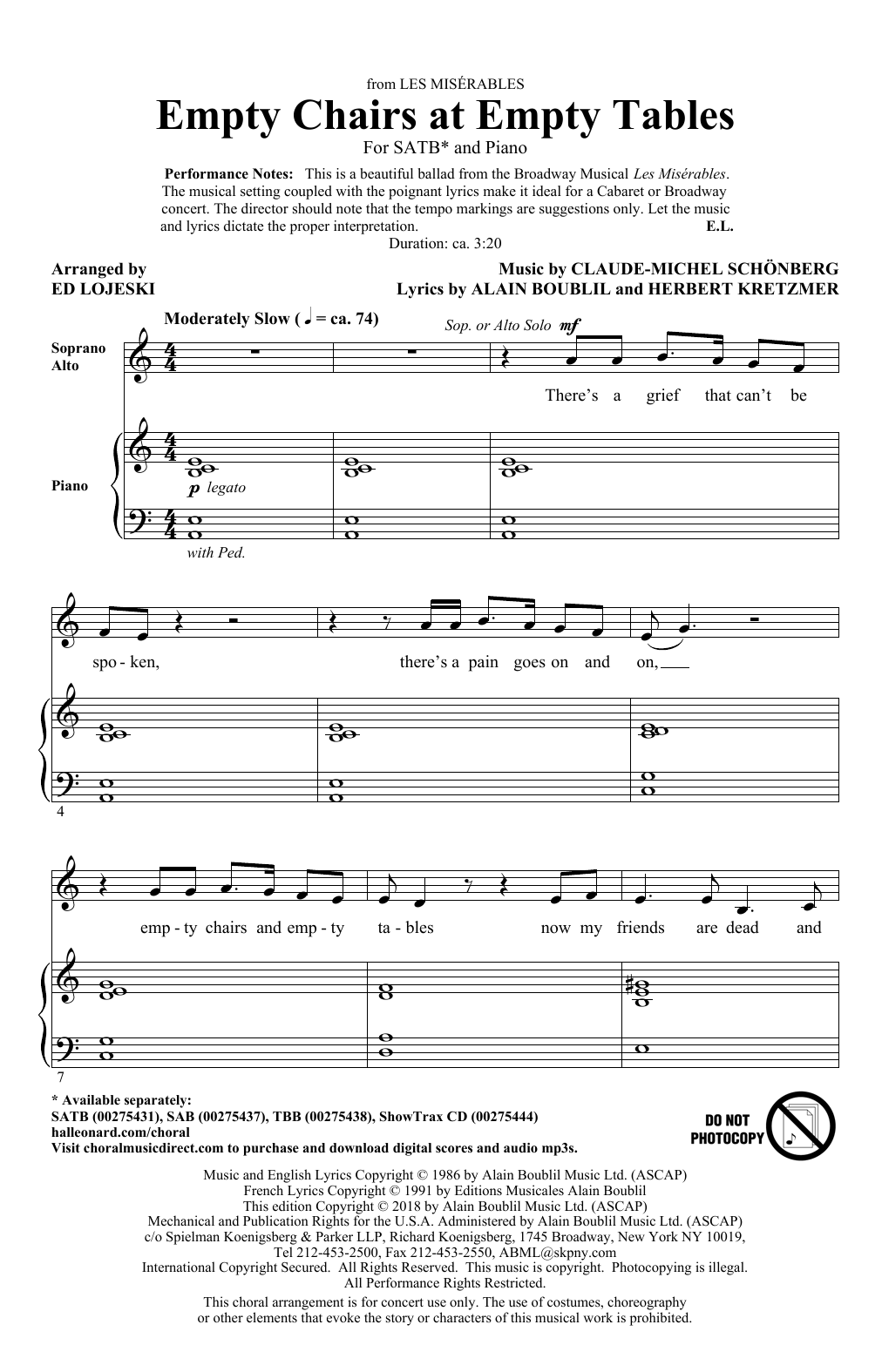
Empty Chairs At Empty Tables (from Les Miserables) (arr. Ed Lojeski): SATB Choral Octavo

Arranged by Ed Lojeski

Item: 35-DS00416000

Digital Download
$2.99
Description

Empty Chairs At Empty Tables (from Les Miserables) (arr. Ed Lojeski): SATB Choral Octavo isn't in MakeMusic Cloud just yet...but it could be. Let us know you'd like to see it, and you'll help shape what comes next. In the meantime, start a free trial and dive into thousands of interactive titles your students can play along with today.

Sample Audio
No sample audio found.
Sample Video
Additional Details
Publisher: Hal Leonard
Page Count: 7
SKU: 35-DS00416000

More about this title

About the Arranger: Ed Lojeski

Ed Lojeski has spent decades crafting choral arrangements that honor the melodic integrity of their sources while making them accessible to singers at various levels. His work across Broadway, pop, and standard repertoire demonstrates a sophisticated understanding of how to voice contemporary material for mixed ensembles without sacrificing the emotional core of the original.

Why we love this

Lojeski captures the raw vulnerability of Marius's soliloquy while building ensemble texture that never overwhelms the story. The arrangement respects the song's intimate confessional quality, making it suitable for both concert settings and staged presentations where the emotional narrative needs room to breathe.

What to expect

Melancholy settles like winter light through a barred window. The arrangement moves between Marius alone in his grief and moments where memory seems to surround him, creating an internal landscape that is both desolate and achingly tender.

Who it's for

Choirs preparing concert programs or musical theatre productions who want a singable, dramatically honest version of this showstopper. Suitable for intermediate to advanced SATB ensembles with a soloist capable of carrying the emotional and vocal weight of the piece.

How to get the most out of it

  • Establish Marius's isolation early by keeping the opening solo lean and exposed; the harmonic support should feel like memory rather than presence, allowing the text to land with full weight.
  • Shape the dynamics across the entire arc rather than treating each phrase as independent, building gradually toward the climactic realization before settling into resignation.
  • Balance the soprano and alto lines in the ensemble sections so neither competes with the melody; use blend as an interpretive tool that reflects Marius's emotional state.

How to use it

Feature this as a concert centerpiece that shifts mood dramatically from lighter Broadway fare, or stage it as the emotional turning point in a Les Misérables revue. Its seven pages and chamber-like quality make it ideal for smaller programs seeking impact from narrative depth rather than spectacle.

Skills your students will build

  • Balancing solo presence against harmonic accompaniment
  • Sustaining long phrases while maintaining vocal clarity
  • Interpreting text with emotional specificity in ensemble context
  • Blending SATB voicings to support rather than dominate melodic line

You May Also Like