
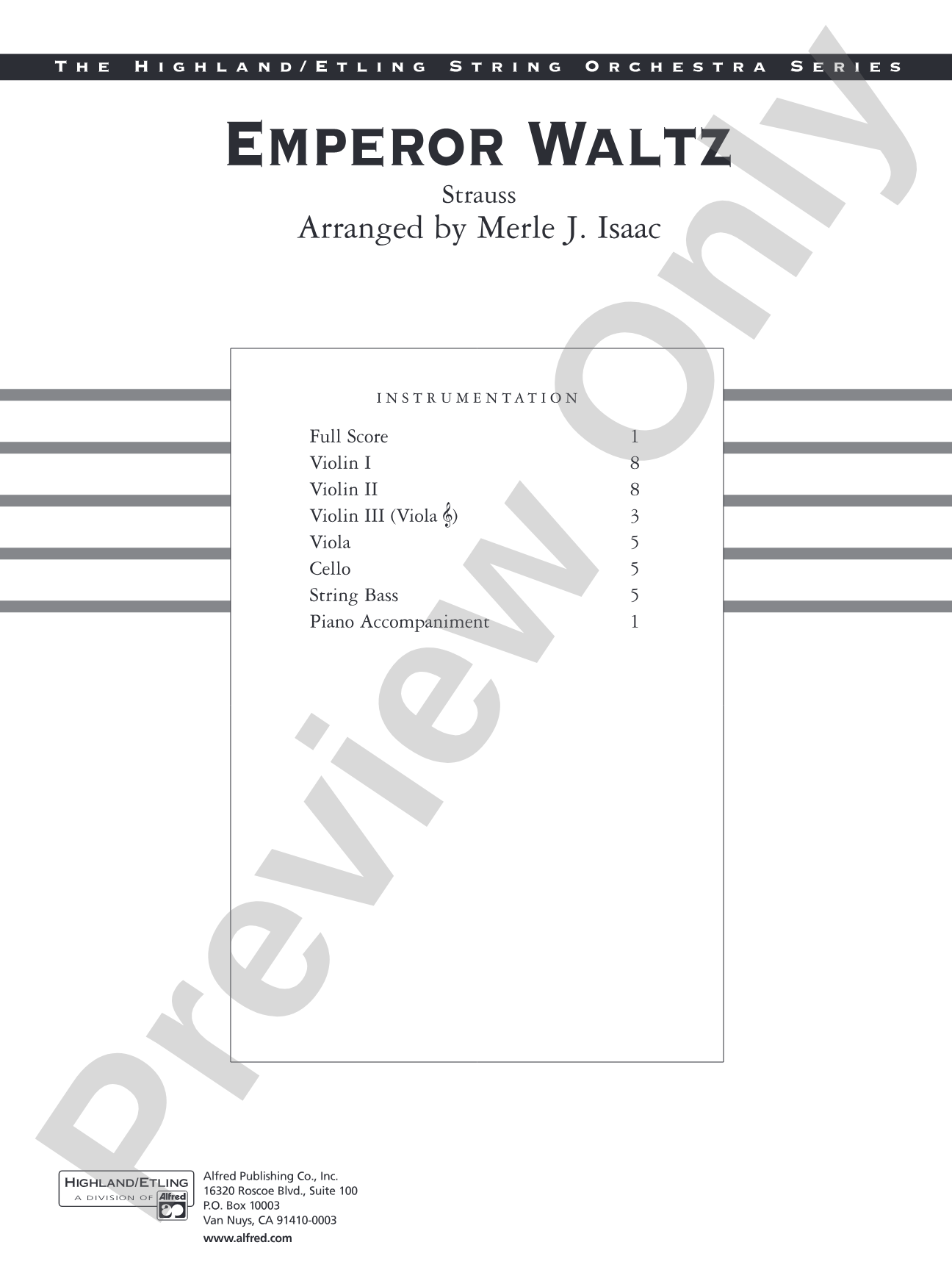

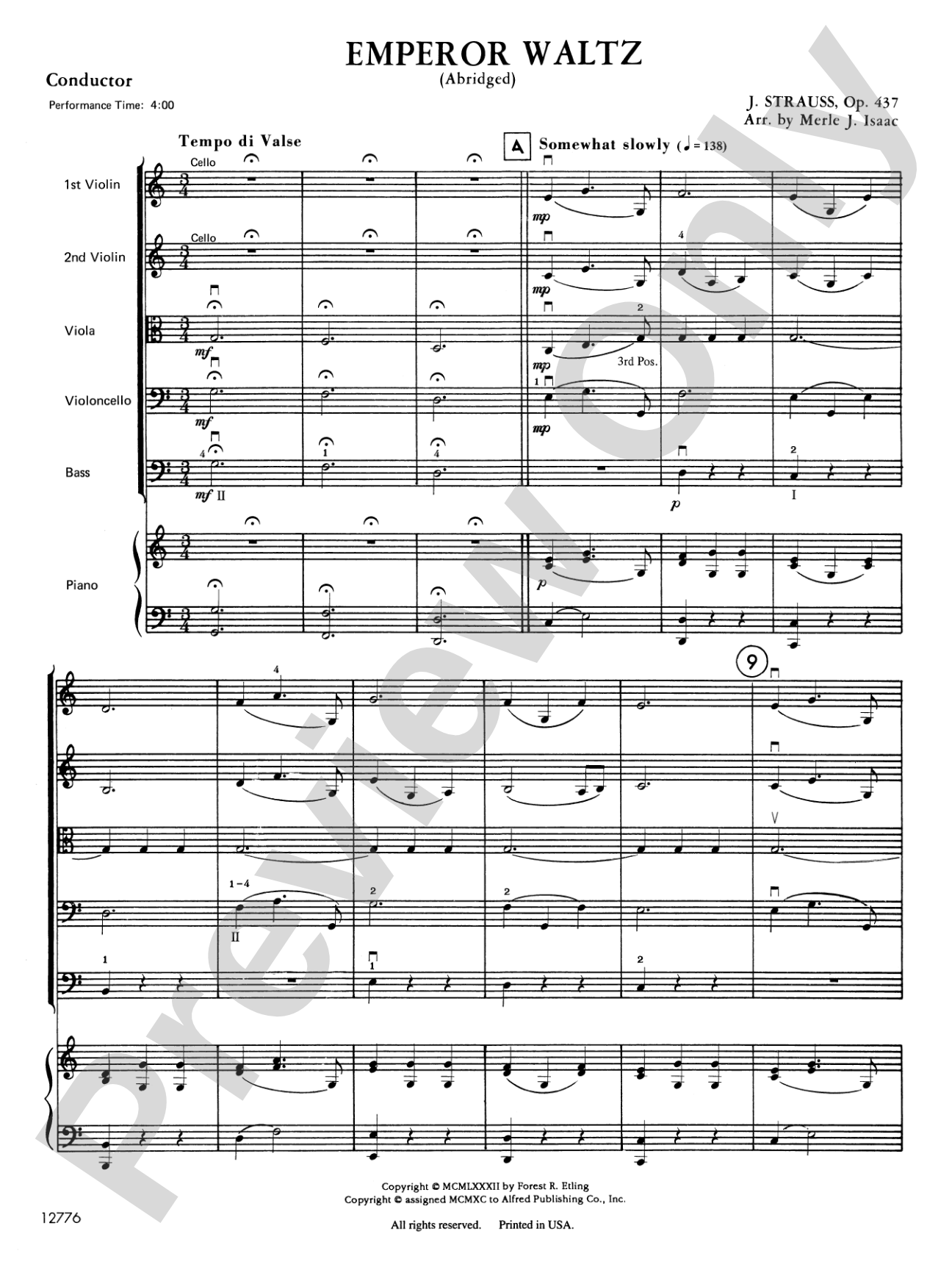
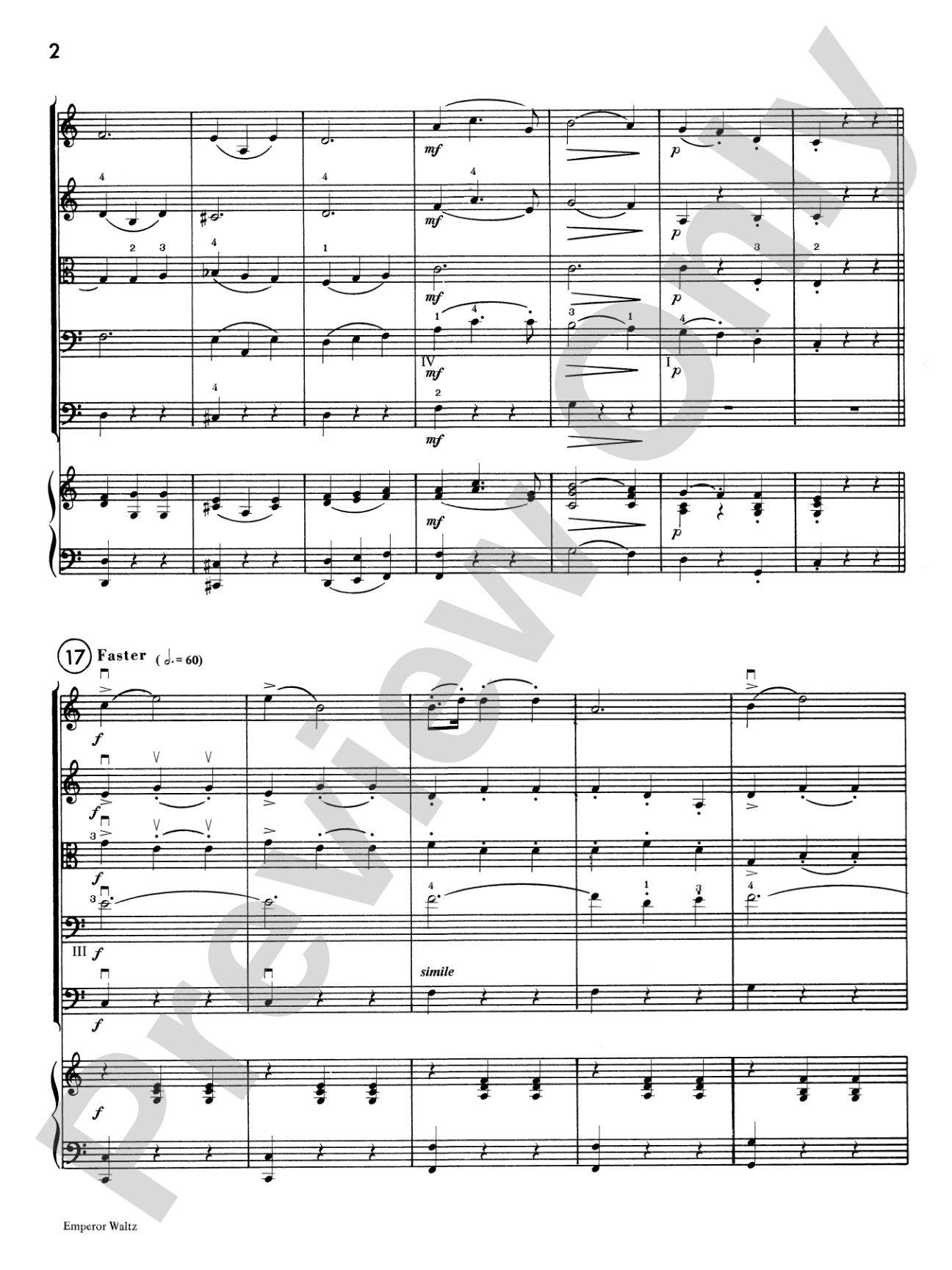
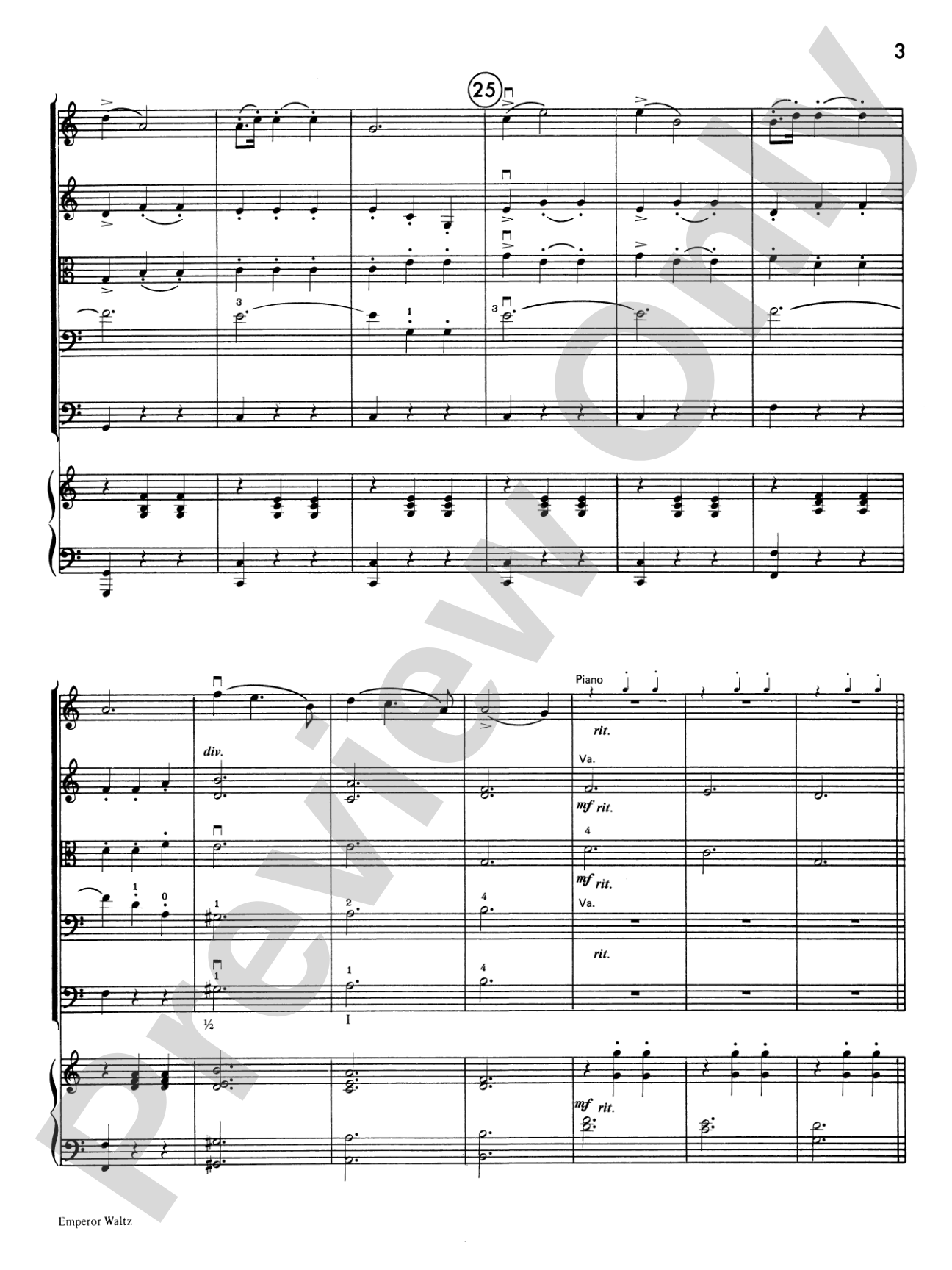
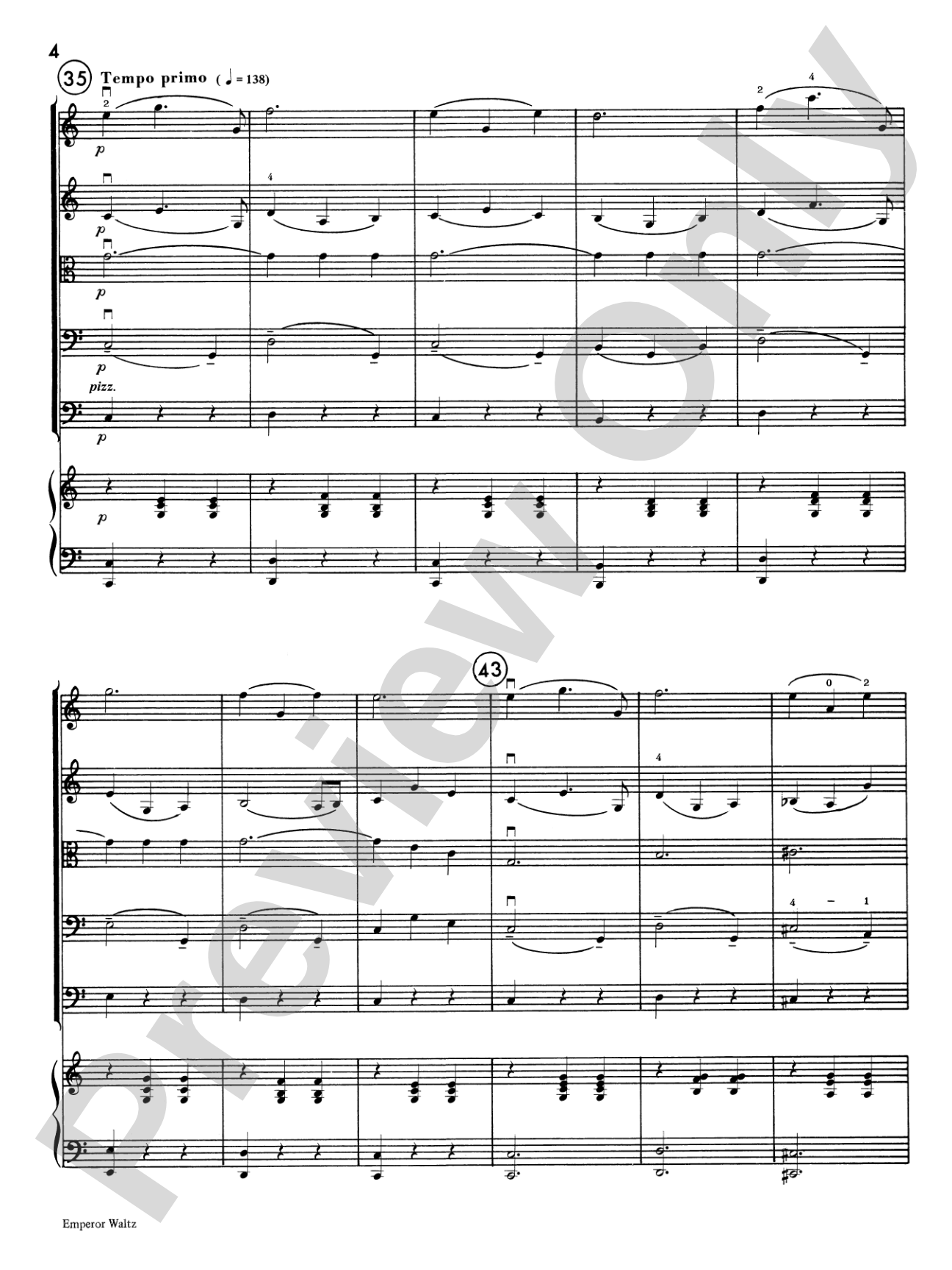
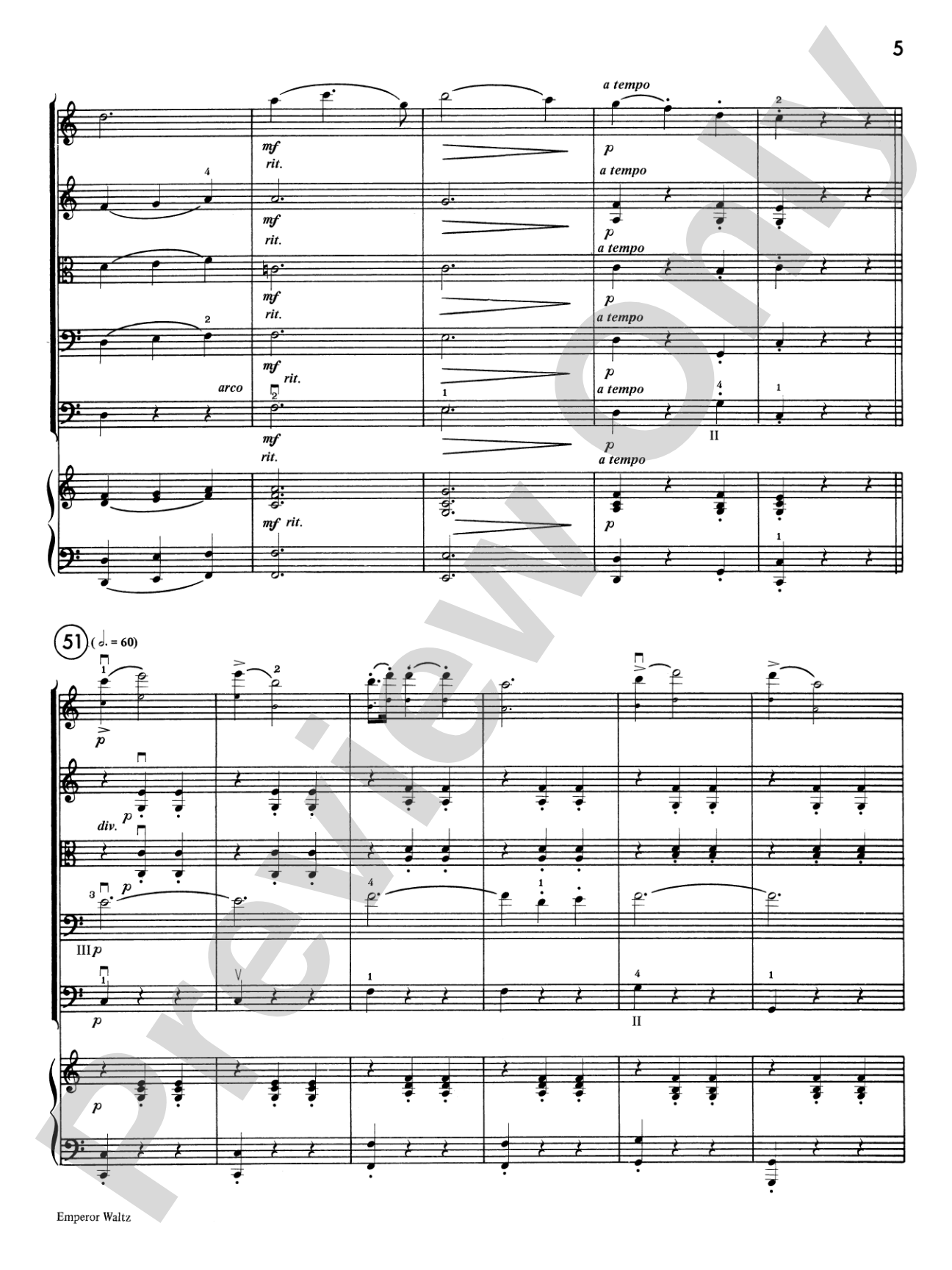
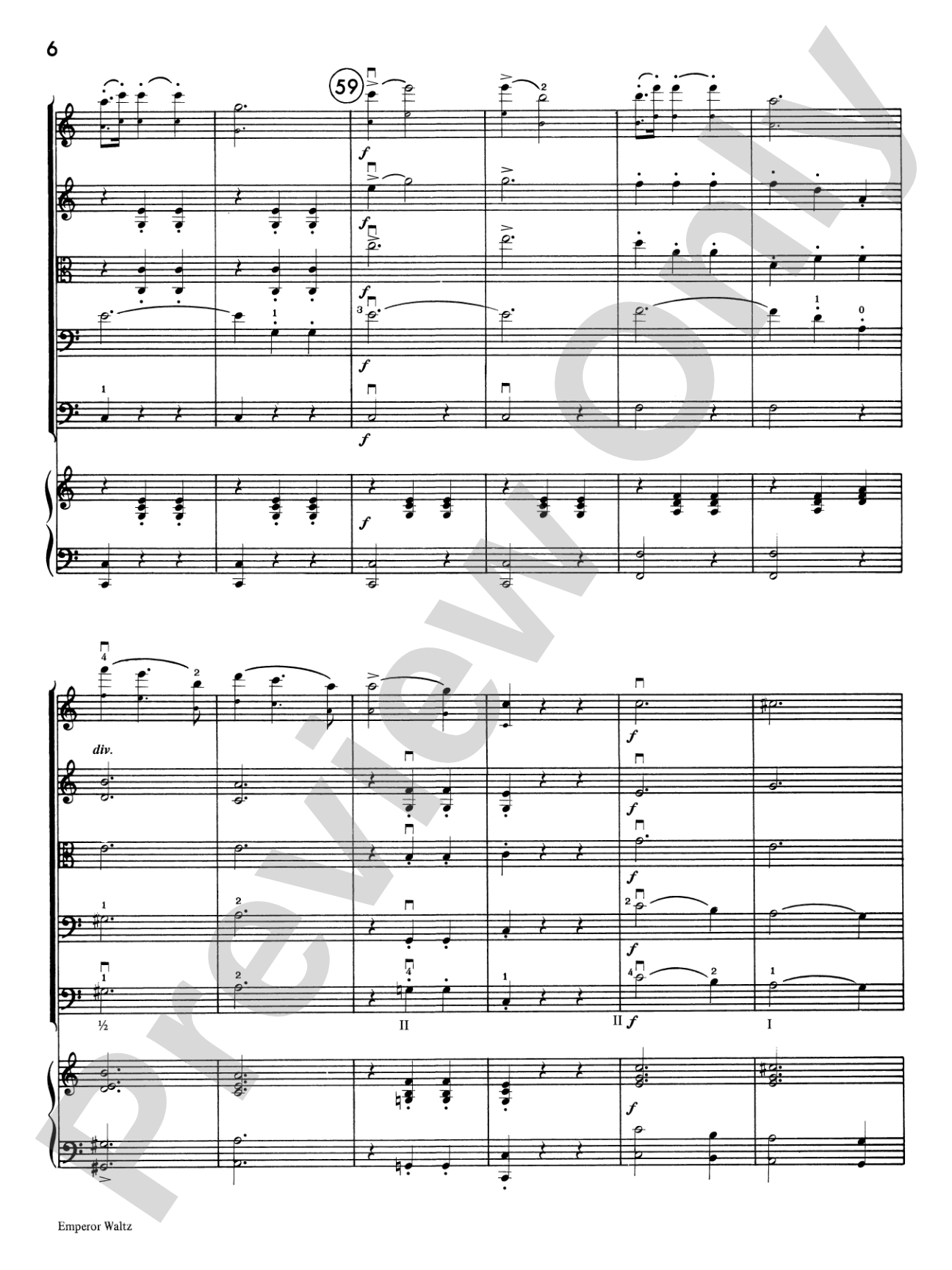
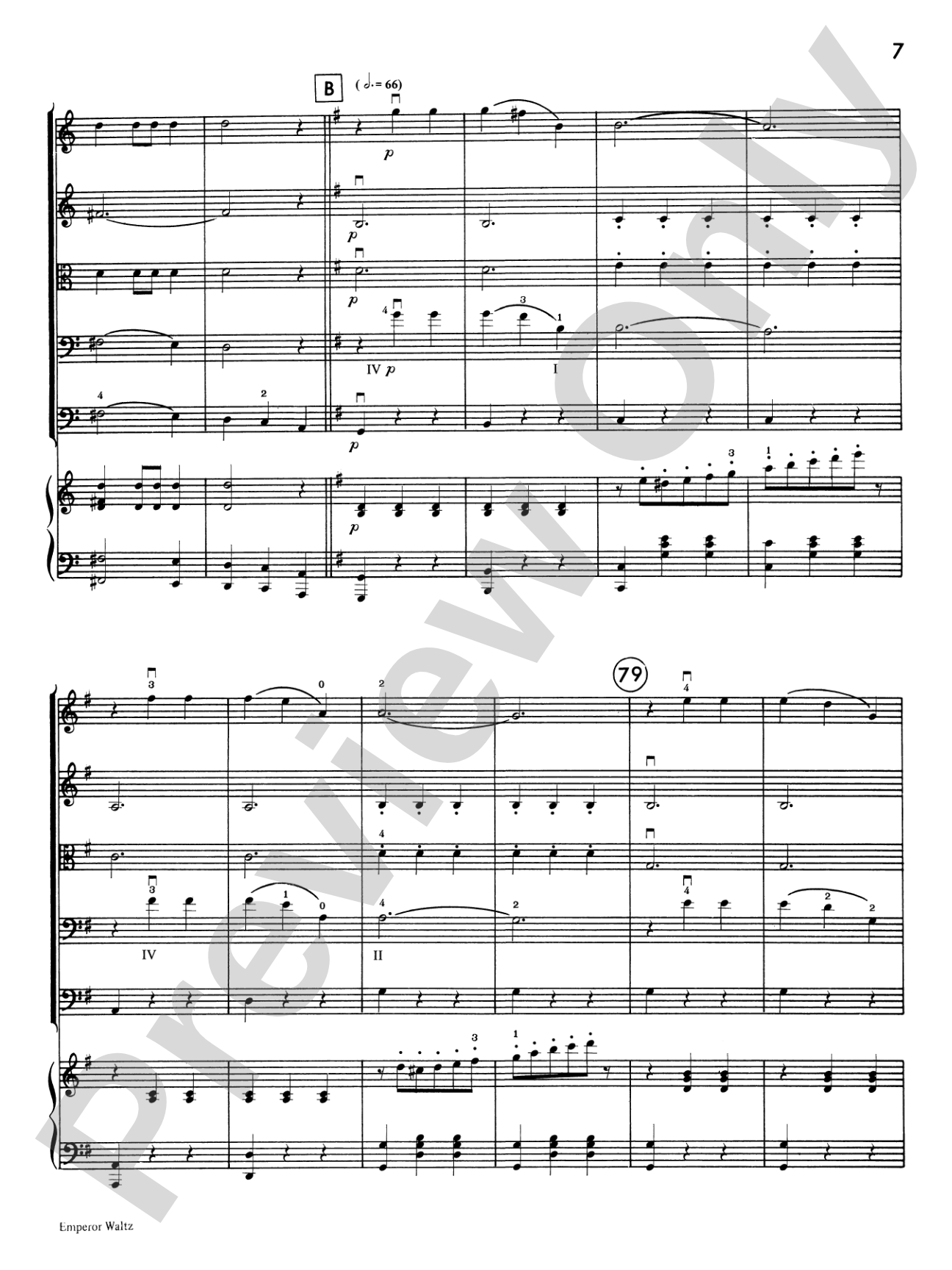
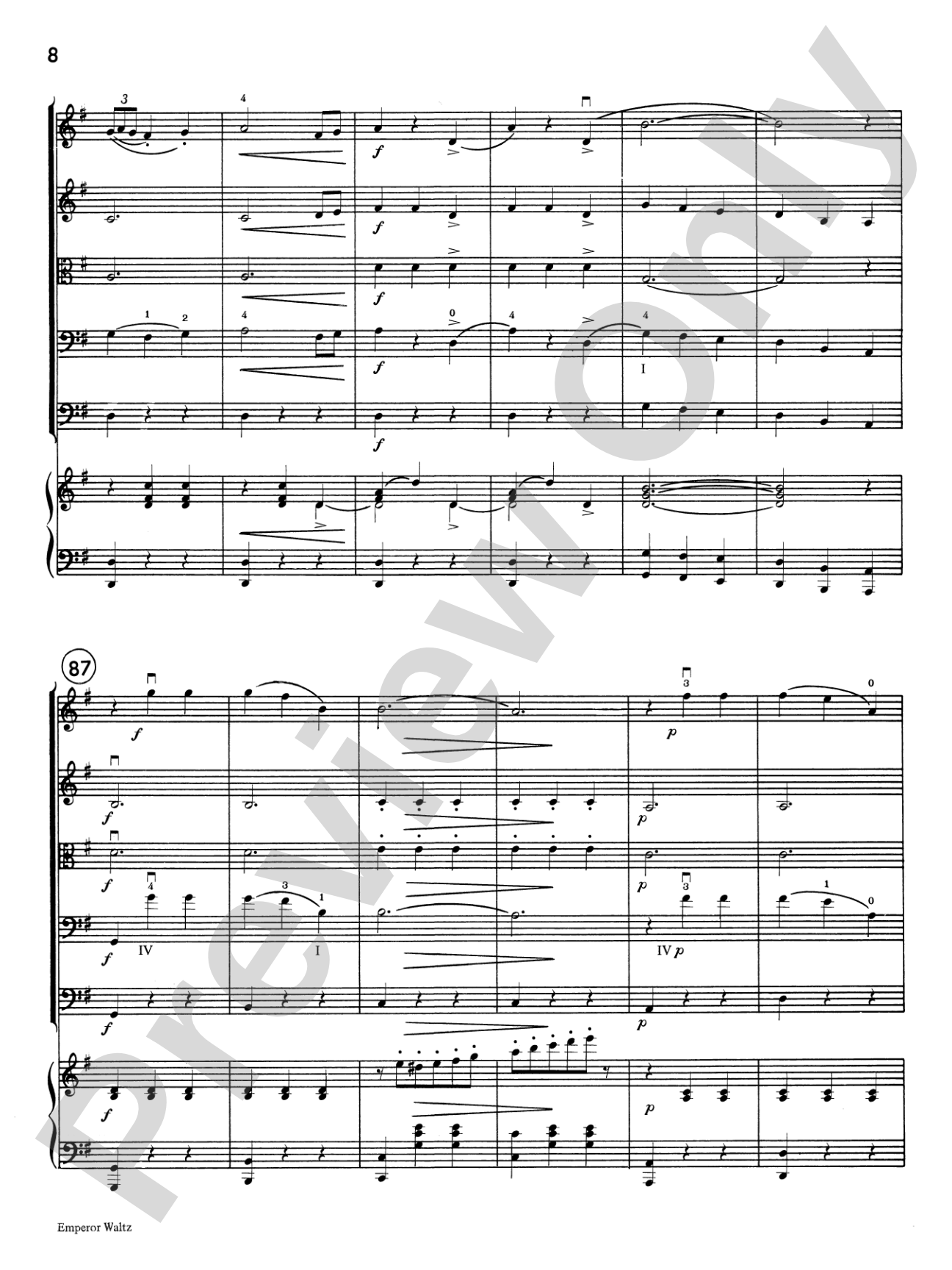
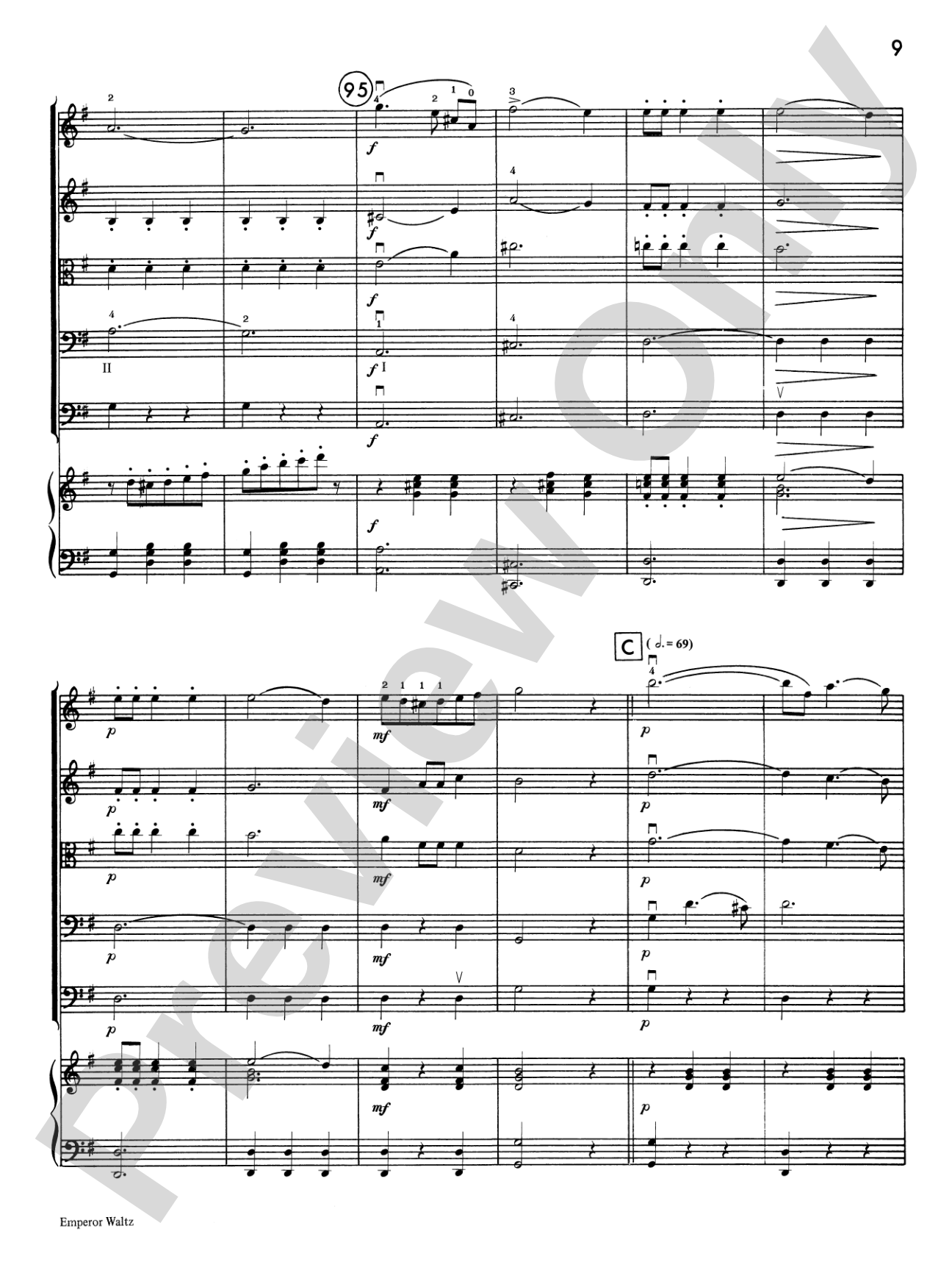
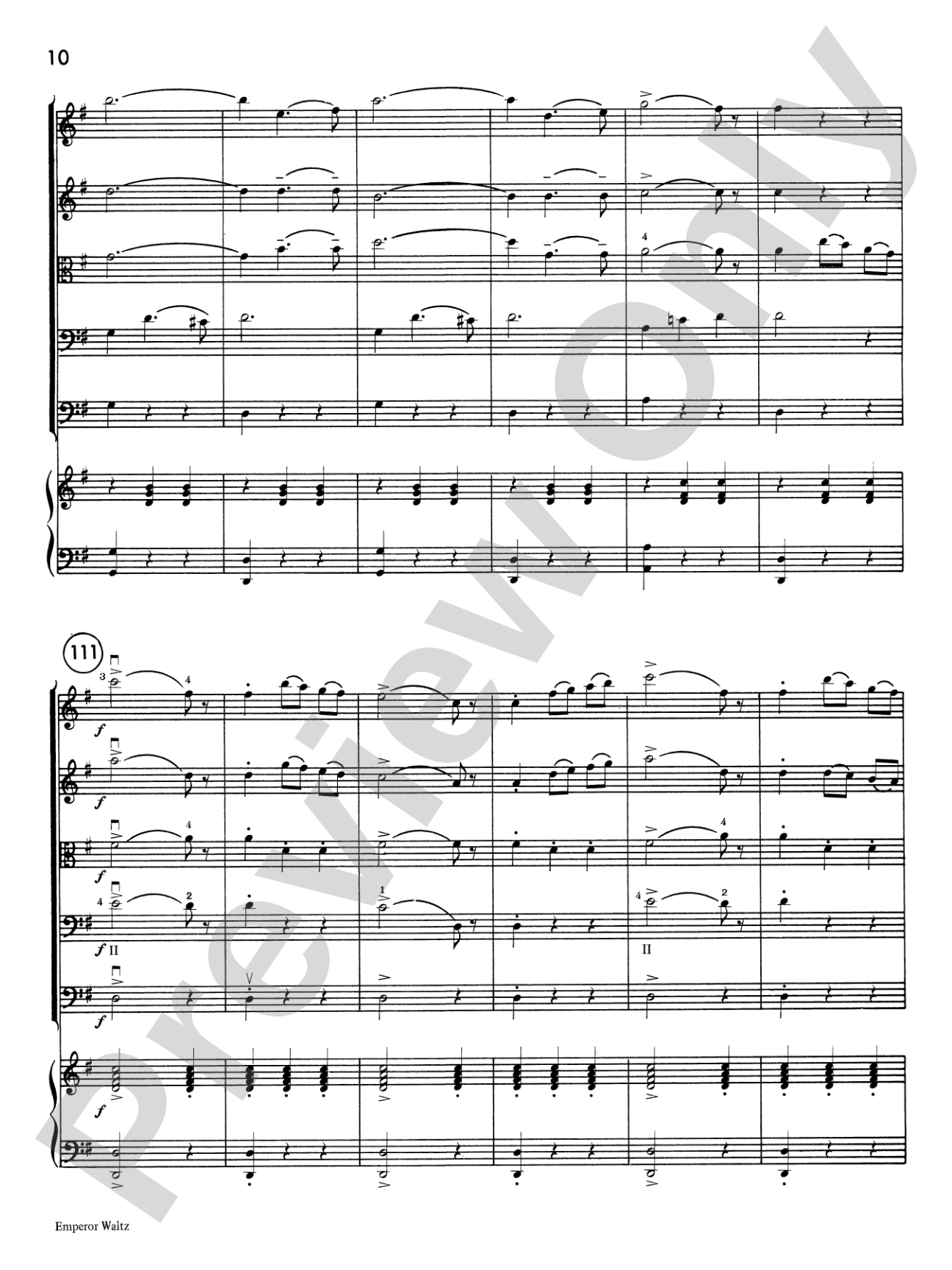
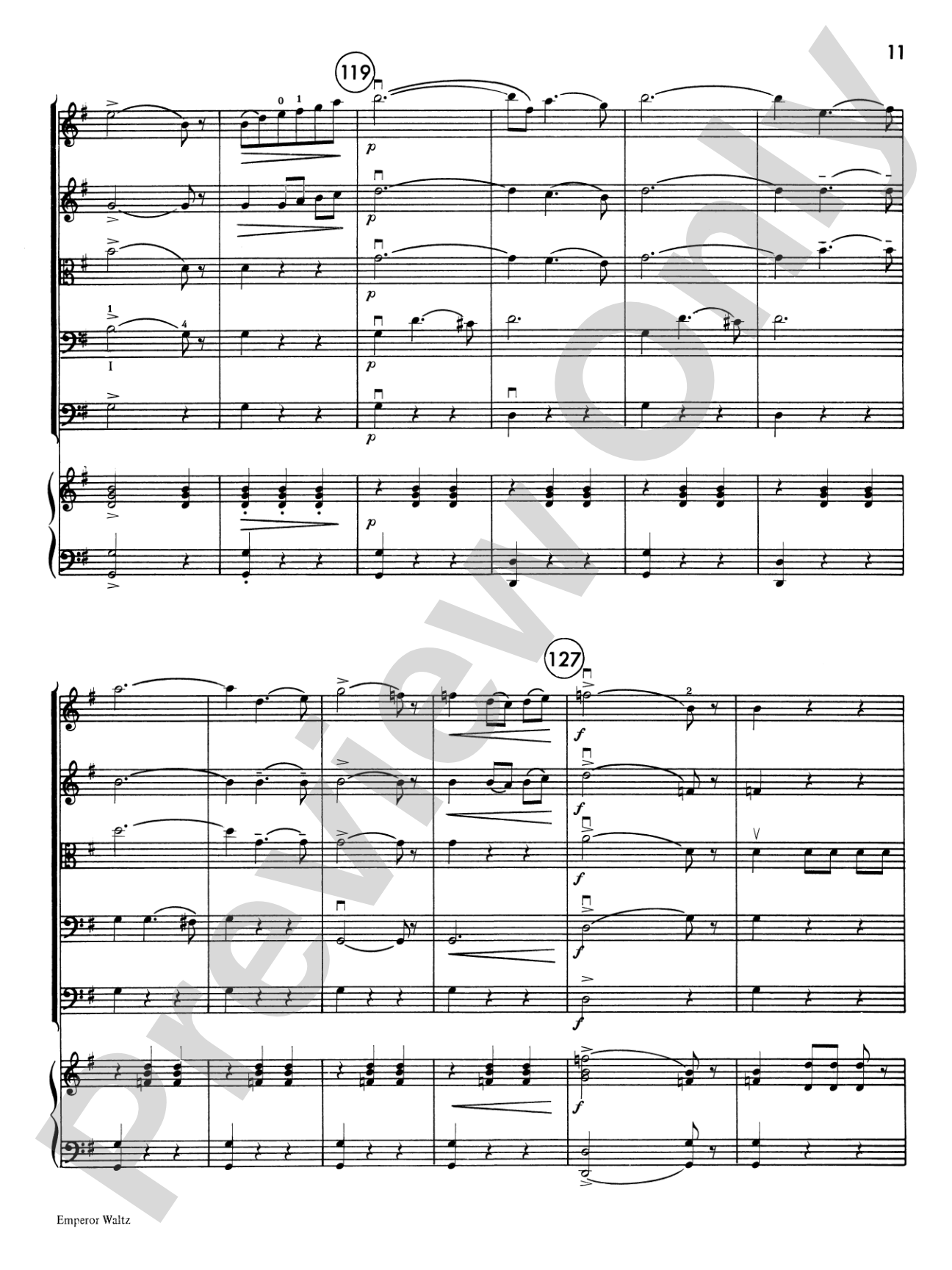
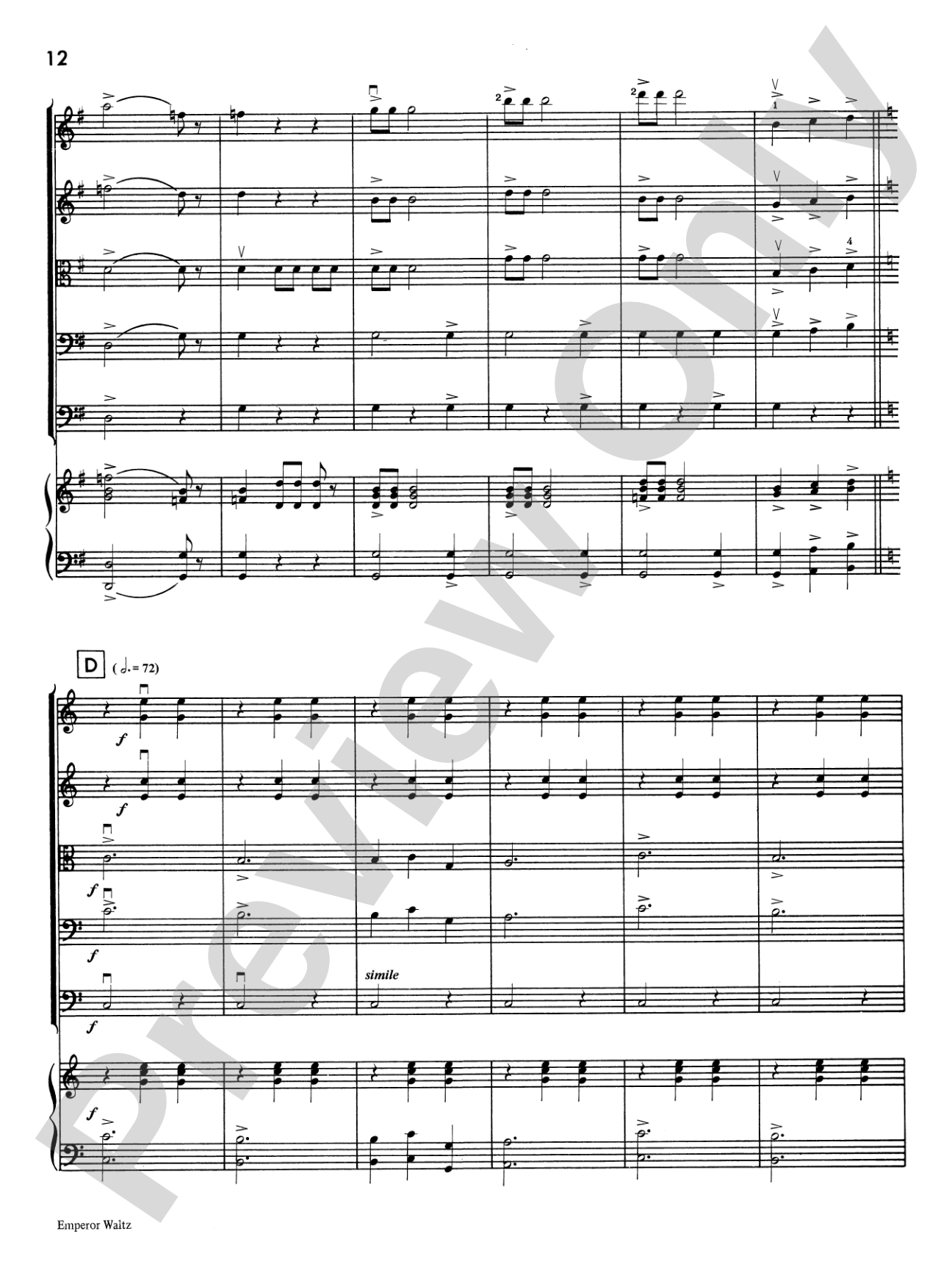
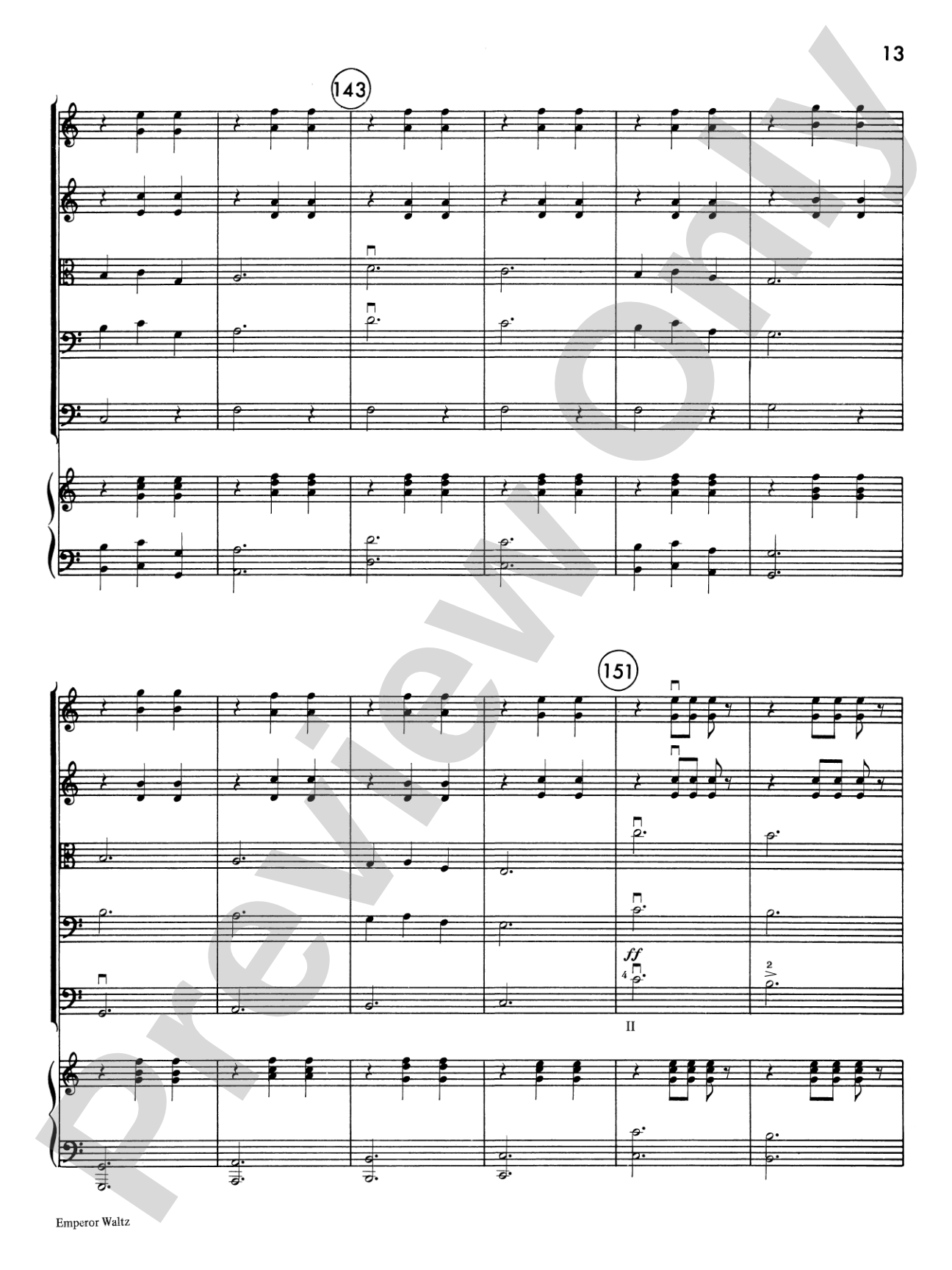
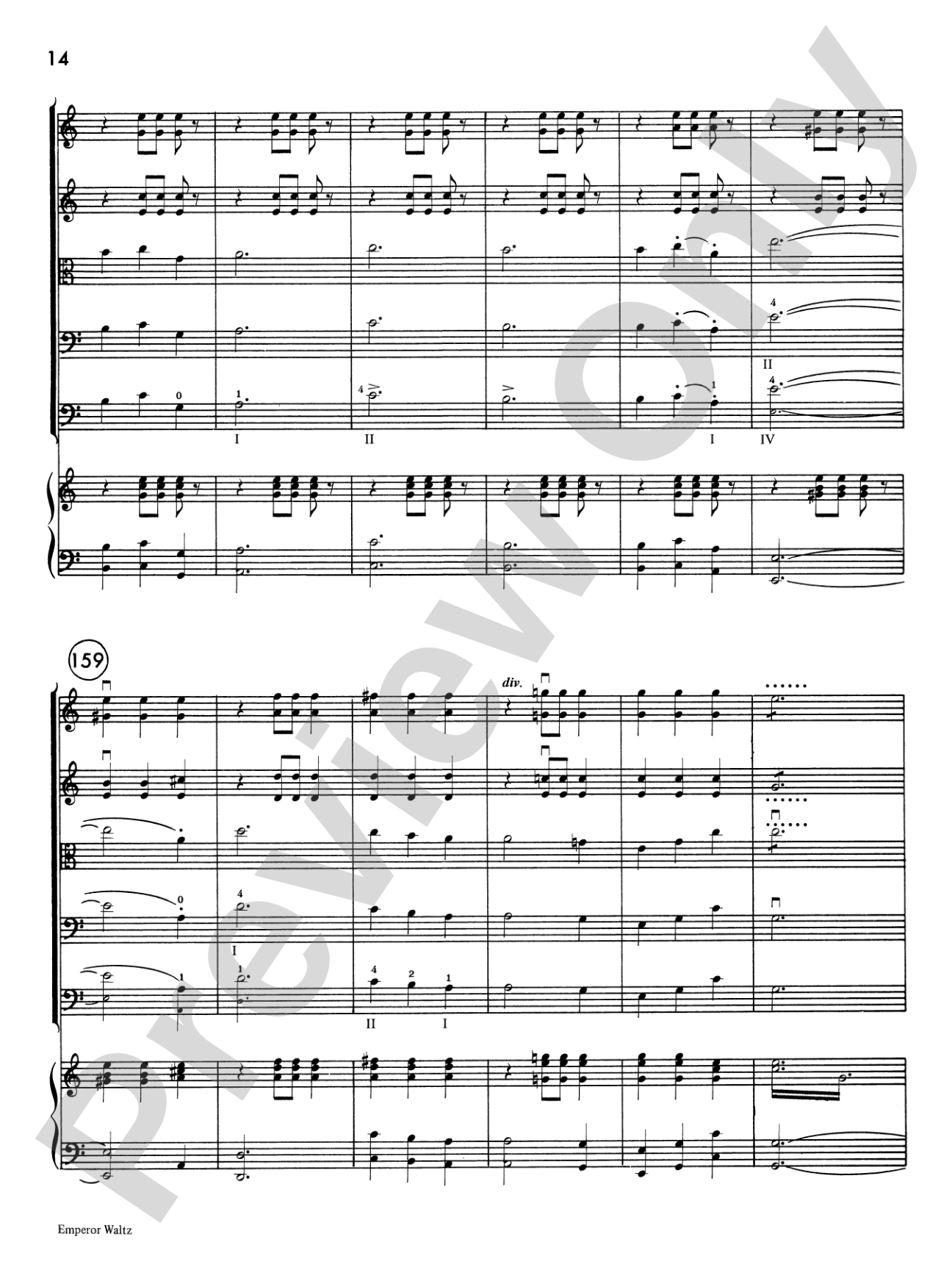
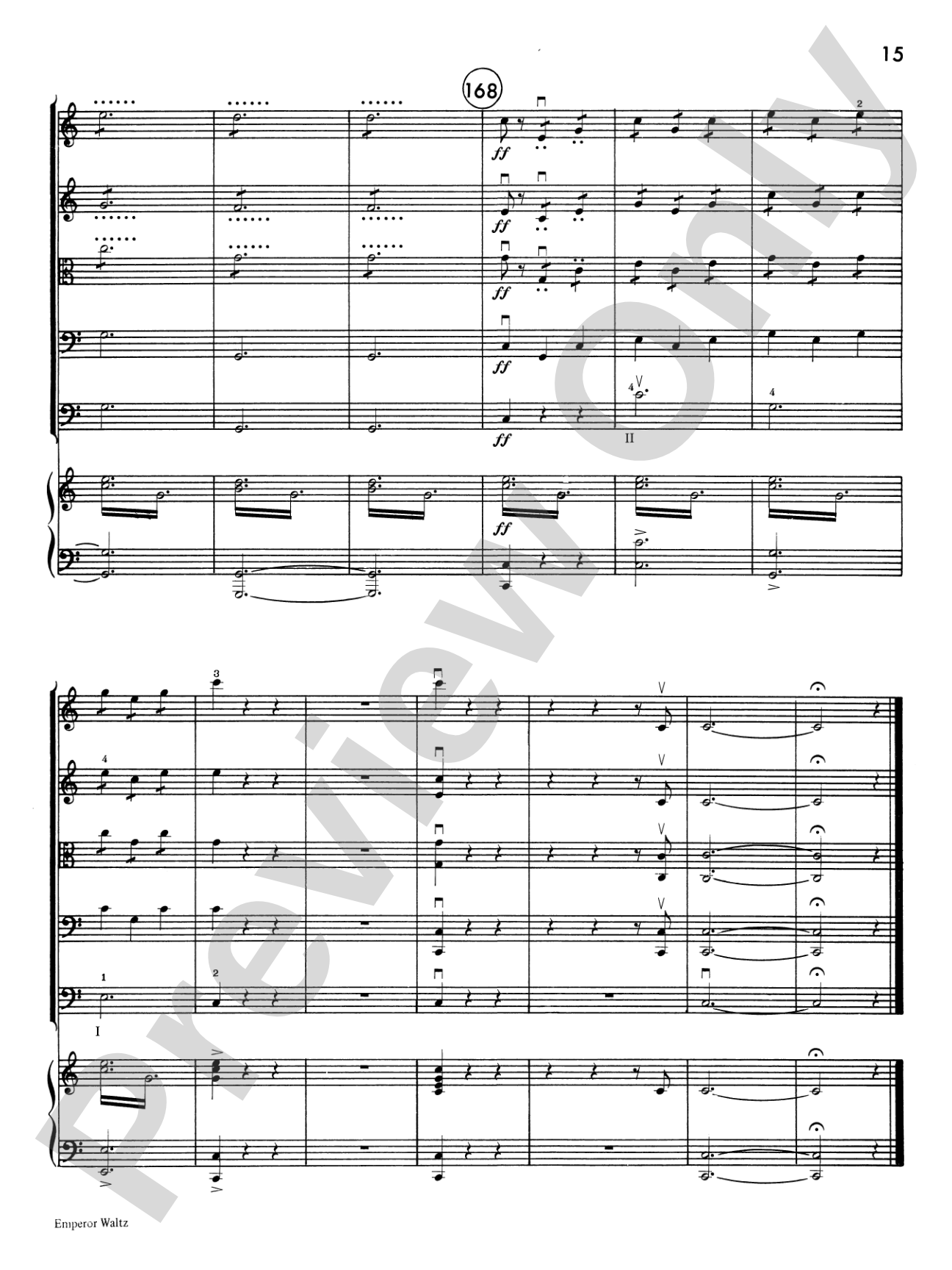




Emperor Waltz: Score
By Johann Strauss / arr. Merle J. Isaac
Grade: 3
Item: 00-PR-0000095
$10.00
Pickup currently not available
Description


Don't just read it, hear it, play along with it, and watch your students grow with it. In MakeMusic Cloud, Emperor Waltz: Score comes alive with professional accompaniment, adjustable tempo, and built-in practice tools that turn solo practice into real progress.
Open in the Player
Jump straight in and assign it today.
Start Your Free Trial
Open this title and explore the full library in minutes.
Sample Audio
No sample audio found.
Sample Video
No sample videos found.
Additional Details
Series:
Highland/Etling String Orchestra
Publisher:
Alfred Music
Page Count:
144
SKU:
00-PR-0000095
More about this title
About the Composer: Johann Strauss
Johann Strauss II (1825-1899) earned his reputation as the "Waltz King" by composing over 500 dance pieces that defined the sound of 19th-century Vienna. His gift for memorable melody and orchestral color made him one of the most performed composers of the Romantic era, influencing everything from operetta to film scores. The Emperor Waltz, written in 1889, showcases his mastery of form: elegant themes, seamless modulations, and the infectious rhythmic vitality that made Strauss waltzes essential to concert halls and ballrooms alike.
For music educators, Strauss represents an essential bridge between classical structure and popular appeal. His works teach students how great melodies can drive an entire piece, how orchestration creates character, and how rhythmic precision serves musicality rather than replacing it. The Emperor Waltz in particular demonstrates that sophisticated composition and immediate accessibility are not opposites.
Why we love this
Merle Isaac's arrangement brings this concert staple within reach for Grade 3 orchestras without sacrificing the piece's grandeur and structural integrity. The orchestration honors Strauss's original voice while giving every section memorable material, making this both a satisfying performance experience and a genuine musical achievement. Audiences recognize it immediately, and your students will feel the pride of playing a masterwork that has endured for over 130 years.
What to expect
Graceful and celebratory, with the unmistakable lilt of the Viennese waltz. The music dances forward with elegant simplicity, moving through contrasting sections with the storytelling quality of a musical conversation, before building to moments of genuine brilliance and joy.
Who it's for
String orchestras at the Grade 3 level looking for repertoire with legitimate concert appeal and contest viability. This arrangement suits ensembles with solid fundamental skills in intonation and rhythm who are ready to tackle a piece with genuine musical substance and audience recognition.
How to get the most out of it
- Shape the main waltz theme with subtle dynamic swells that follow the natural phrase contours rather than playing it metronomically. The elegance Strauss intended depends on gentle rubato and breathing room between sections.
- Balance the viola and cello lines carefully in the middle sections; they often carry inner voices that deserve clarity without overpowering the violin melody.
- Establish a steady, dance-like pulse from the opening, then allow slight flexibility in the transition passages to maintain the conversational quality Strauss's orchestration creates.
- Emphasize the dialogue between first and second violins, particularly in the developmental passages. These exchanges are where the arrangement's creativity shines and where student violinists can take ownership of the musical narrative.
How to use it
Open a concert with this piece to immediately establish sophistication and warmth, or use it as a crowd-pleasing finale that leaves audiences smiling. It pairs beautifully on programs with contemporary works or early Romantic repertoire, creating a concert that feels both accessible and musically substantive.
Skills your students will build
- Sustaining consistent waltz rhythm (3/4 pulse and typical Strauss rubato)
- Phrasing longer, lyrical melodies with architectural clarity
- Balancing transparent orchestration where multiple independent lines coexist
- Responding to subtle dynamic and tempo inflection as an ensemble
- Playing with the specific articulation character of Romantic-era dance music