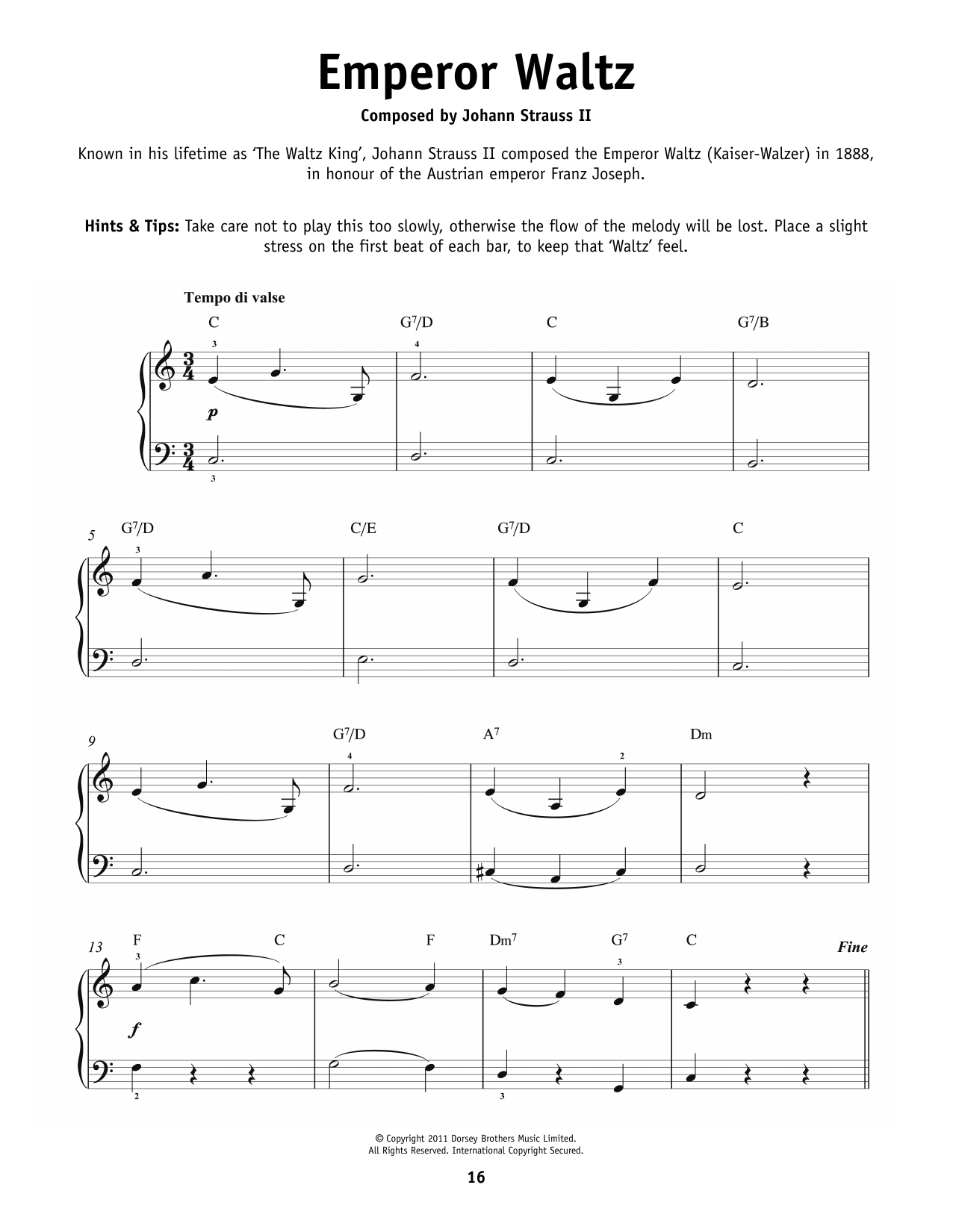
Johann Strauss II (1825–1899) earned his title as the 'Waltz King' by composing over 500 dance works that defined the sound of 19th-century Vienna. He inherited his father's orchestra and reputation, then surpassed both through an unmatched gift for memorable melody and orchestral color. His waltzes remain teaching staples because they demonstrate how to write elegant, singable themes, manage ensemble texture, and sustain musical interest across extended formal structures.
Why we love this
The Emperor Waltz sits comfortably in the repertoire sweet spot: charming and accessible enough for young players, yet sophisticated enough to reward mature musicianship. Strauss's craftsmanship here is on full display—clean phrasing, balanced orchestration, and those irresistible melodic turns that stick with audiences long after the final chord.
What to expect
Elegant and buoyant, with the lilting grace of a Viennese ballroom. Strauss gives you sweeping melodic lines that feel like they're waltzing themselves, supported by a rhythmic pulse that's always dancing, never plodding. There's warmth and refinement throughout, without a hint of bombast.
Who it's for
This work suits concert bands, orchestras, and wind ensembles at the intermediate level and beyond. Teachers seeking a unifying program piece or a concert opener will find the Emperor Waltz immediately engaging for both players and audiences.
How to get the most out of it
Shape each phrase with a gentle swell rather than a rigid crescendo; Strauss waltzes thrive on conversational rubato and breathe naturally between sections.
Lock the accompaniment pattern early in rehearsals so the ensemble establishes a rock-solid rhythmic foundation before soloists add expressive freedoms.
Bring out the secondary melodies in the inner voices; they often carry witty counterpoints that add harmonic richness when balanced properly.
Treat tempo as elastic within phrases but never wavering in the underlying pulse; this is what gives Strauss waltzes their ballroom elegance.
How to use it
Open a concert with this to set an uplifting tone, or place it midsection to refresh the audience after heavier repertoire. It pairs beautifully with other light classical or salon pieces and works equally well as a standalone feature or in a Strauss-themed program block.
Skills your students will build
Lyrical phrasing and breath placement in a dance context
Balancing solo melody with decorative accompaniment figures
Maintaining steady waltz rhythm (3/4) without emphasizing the downbeat
Ensemble coordination across multiple moving lines
You May Also Like
Scan to Complete Your Purchase
Use your phone's camera to scan the code below
You'll log in on your phone and the order will be added to your account