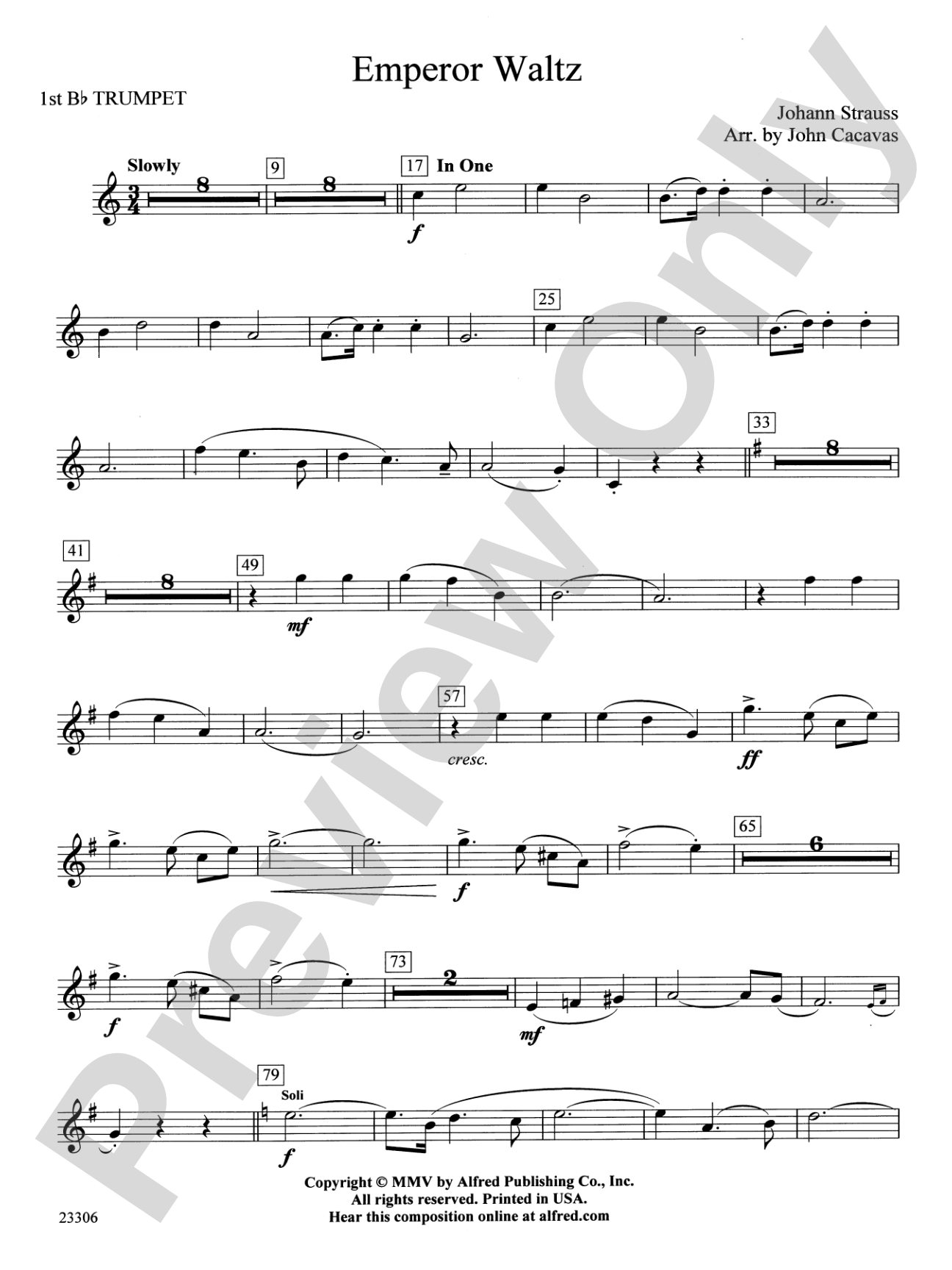
Emperor Waltz: 1st B-flat Trumpet Sheet Music Preview

Emperor Waltz: 1st B-flat Trumpet

Arr. John Cacavas

Item: 00-PC-0000656_T1

Digital Download
$3.00
Description
The music of Johann Strauss, Jr. is among the most recorded and performed of the semi-classical repertoire of all time. Emperor Waltz is typical of the highly melodic music of the composer and the variety of themes in this work is representative of his compositional skills. Enjoy a change of pace on your next concert with Emperor Waltz.

Don't just read it, hear it, play along with it, and watch your students grow with it. In MakeMusic Cloud, Emperor Waltz: 1st B-flat Trumpet comes alive with professional accompaniment, adjustable tempo, and built-in practice tools that turn solo practice into real progress.

Sample Audio
0:00
0:00
Sample Video
Additional Details
Series: Young Symphonic
Publisher: Alfred Music
Page Count: 258
SKU: 00-PC-0000656_T1

More about this title

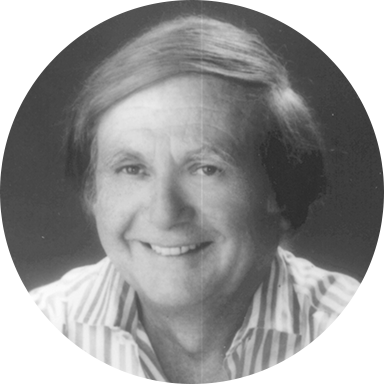
About the Composer: John Cacavas

John Cacavas

John Cacavas built his career bridging classical composition with popular media. After earning his degree in Composition and Theory from Northwestern University, he served as an arranger with the United States Army Band in Washington, D.C., where he refined his craft for large ensembles. His prolific output includes film and television scoring (over 400 TV episodes, 50 television movies, and 15 feature films), work that exposed his orchestrations to millions of listeners.

Beyond his screen work, Cacavas has documented his expertise in two published texts: Orchestration and Music Arranging and The Art of Writing Music. His arrangements for concert band demonstrate the same clarity of voice and structural sophistication that characterize his original compositions, making him a trusted name for ensembles seeking accessible yet musically substantial material.

Why we love this

Cacavas captures the brilliance of Strauss while writing idiomatically for concert band, creating an arrangement that doesn't shortchange either the original's elegance or the capabilities of your ensemble. The variety of themes keeps students engaged throughout, offering contrasting musical moments that showcase different sections. This is the kind of piece that lands well with audiences and judges alike because it sounds both substantial and genuinely musical.

What to expect

Elegant and buoyant, with the characteristic charm that made Strauss a household name. The piece flows through multiple memorable themes, each generously melodic and orchestrated with warmth, creating a concert experience that feels both sophisticated and accessible.

Who it's for

Concert bands at the intermediate to advanced level seeking repertoire that combines musical substance with audience appeal. This arrangement serves programs that want to program a masterwork of the semi-classical tradition without the complexity of the full orchestral score.

How to get the most out of it

  • Bring out the characteristic lilt of the waltz rhythm; it should breathe naturally rather than march mechanistically through the triple meter.
  • Balance the melodic lines between woodwinds and brass so that each thematic statement lands with clarity. Strauss's gift for memorable melody deserves the spotlight.
  • Shape individual phrases toward their peaks rather than playing through-composed sections at one dynamic level. The sweep of each theme matters as much as its initial statement.
  • Use tempo flexibility judiciously in the traditional waltz style, allowing slight relaxation before key entrances and building gently into climactic moments.

How to use it

Schedule this mid-concert to reset the mood after a heavy contemporary work or as a closer that leaves audiences with a smile. It pairs beautifully on programs that mix standard masterworks with original band compositions, offering your audience a brief but satisfying reminder of why the waltz remains timeless.

Skills your students will build

  • Stylistic understanding of the waltz genre and period characteristics
  • Melodic balance and phrasing across mixed instrumental colors
  • Ensemble cohesion in triple meter and compound rhythmic figures
  • Interpretation of lyrical, Romantic-era musical language

You May Also Like