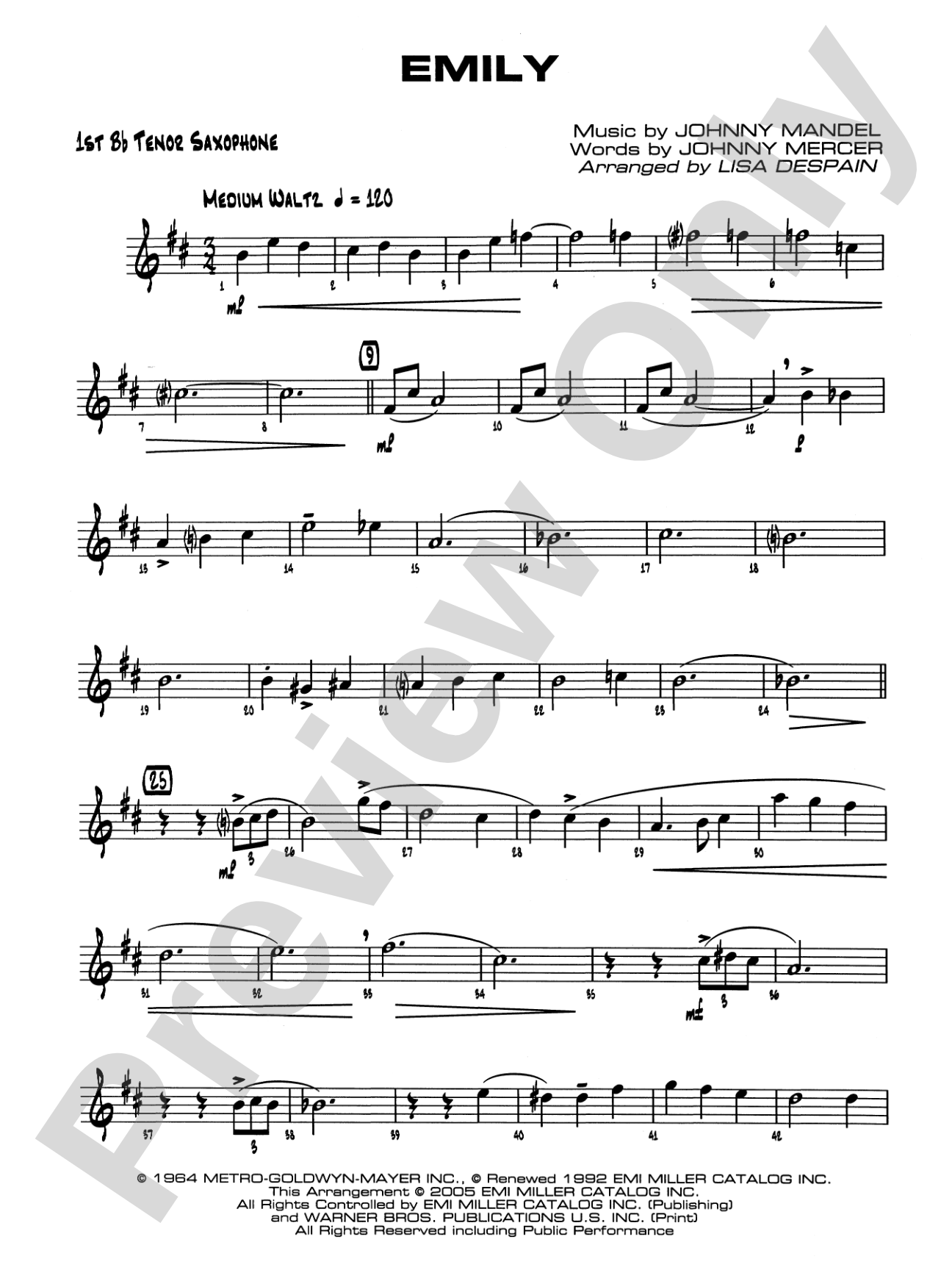
Emily: B-flat Tenor Saxophone Sheet Music Preview

Emily: B-flat Tenor Saxophone

By Johnny Mandel / arr. Lisa DeSpain

Grade: 2 (Medium Easy)

Item: 00-PC-0016126_TX1

Digital Download
$3.00
Description
"Emily" is a beautiful waltz-certainly one of the finest melodies of our time by composer Johnny Mandel. Arranger Lisa DeSpain delivers a fine chart that will help you teach phrasing, how to connect the phrases, phrase contour, use of slurs, and vibrato. The melody is stated by trombone and tenor sax, written or ad lib solos are for trombone and cued for trumpet. Range is modest and the rhythm section can focus on the 3/4 feel. You'll enjoy this one. (3:03)

Don't just read it, hear it, play along with it, and watch your students grow with it. In MakeMusic Cloud, Emily: B-flat Tenor Saxophone comes alive with professional accompaniment, adjustable tempo, and built-in practice tools that turn solo practice into real progress.

Sample Audio
0:00
0:00
Sample Video
Additional Details
Series: Young Jazz Ensemble
Publisher: Alfred Music
Page Count: 90
SKU: 00-PC-0016126_TX1

More about this title

About the Composer: Johnny Mandel

Johnny Mandel (1925-2020) composed some of the most enduring melodies in jazz and film music. His gift for writing singable, sophisticated lines earned him respect across classical, jazz, and cinema worlds. "Emily" exemplifies his approach: a melody so naturally shaped that it invites phrasing and expression from every player who touches it.

Why we love this

Lisa DeSpain's arrangement captures what makes Mandel's melody so teachable. The modest range keeps the focus on musicianship rather than chops, while the shared melody between trombone and tenor sax creates natural conversation on the bandstand. Grade 2 ensembles finally have a waltz that rewards attention to phrase shape and vibrato without demanding technical fireworks.

What to expect

A conversation over coffee, unhurried and warm. The waltz sits comfortably in the middle of the ensemble's range, inviting long lines and gentle swing. There's sophistication in the simplicity: a melody so clear that every choice in dynamics, vibrato, and articulation becomes audible.

Who it's for

Grade 2 jazz ensembles looking for repertoire that teaches musicianship through melody rather than technique. Conductors who want to spend rehearsal time on phrasing, dynamics, and expression without wrestling with fast changes or high registers.

How to get the most out of it

  • Shape each phrase as a vocalist would, connecting the line through the bar line rather than stopping at phrase marks. The melody asks for continuity.
  • Establish the 3/4 lilt early in rehearsal by having the rhythm section lock the feel before adding horns. A lazy waltz here kills the piece; keep it buoyant.
  • Balance vibrato between sections when stating the melody. Coordinate the trombone and tenor sax so the line feels like one voice passing between them, not two soloists taking turns.
  • Give soloists room to breathe. Whether the trombone takes the written solo or improvises, the accompaniment should stay light and supportive, letting the solo speak.

How to use it

Program this as a contrast piece between uptempo swingers or as part of a jazz standards set that showcases ballad playing. Its elegant brevity (3:03) makes it ideal for festival programming or as a warm-up to a more demanding second piece.

Skills your students will build

  • Phrase shaping and connection across bar lines
  • Vibrato control and consistency between sections
  • Reading and executing slurs and legato articulation
  • Maintaining 3/4 jazz waltz feel in rhythm section
  • Balancing ensemble sound during melody statements
  • Responding to solo passages with appropriate accompaniment texture

You May Also Like