Embraceable You (featuring Flugelhorn Solo with Strings): String Bass Sheet Music Preview

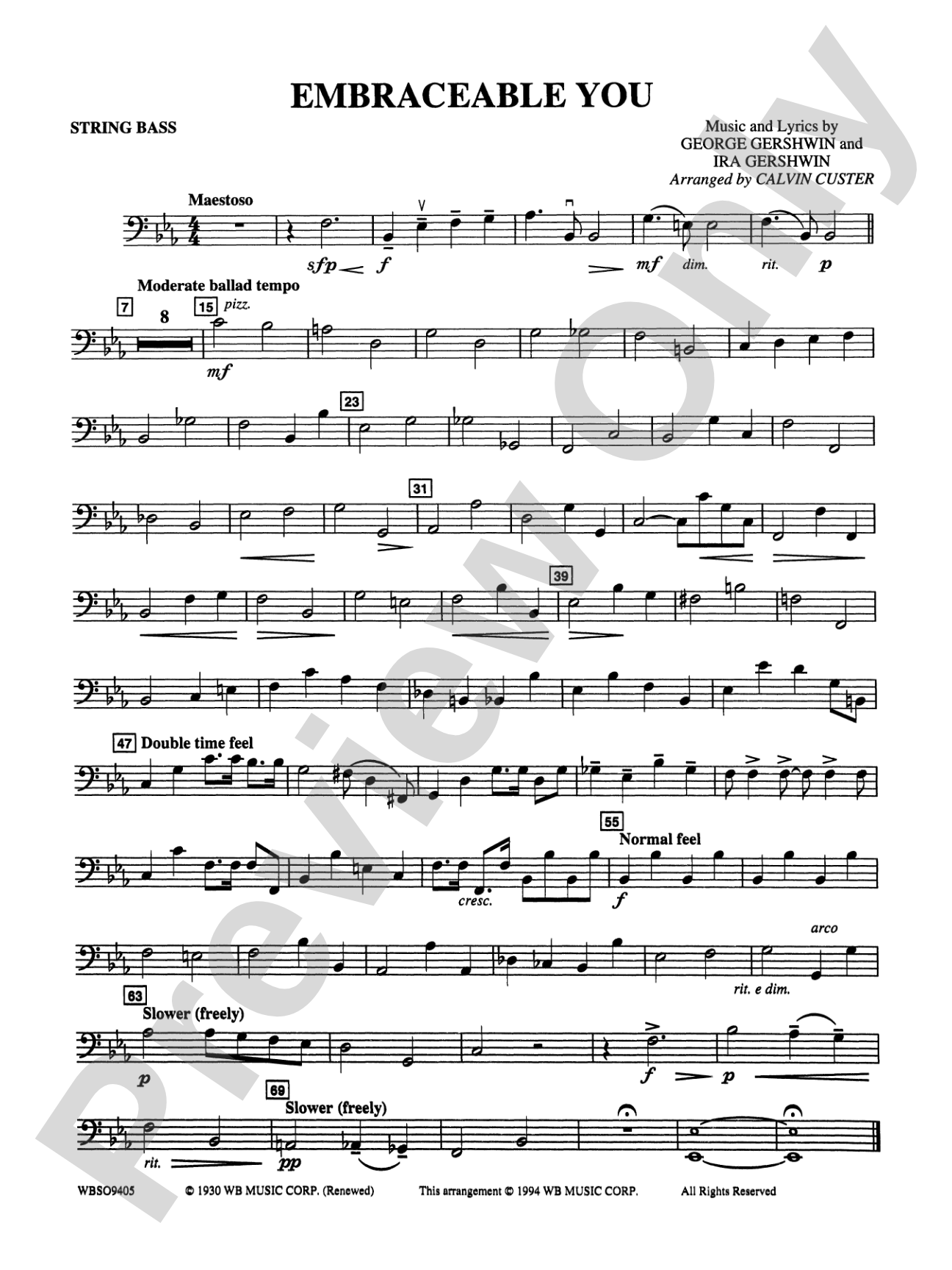
Embraceable You (featuring Flugelhorn Solo with Strings): String Bass

Music and lyrics by George Gershwin and Ira Gershwin / arr. Calvin Custer

Grade: 3.5

Item: 00-PC-0014769_SB

Digital Download
$5.99
Description
Put your best flugelhorn or trumpet soloist out front to solo on this one. A rhythm section (piano, bass, drums, and guitar) adds that modern sound. (4:21)

Don't just read it, hear it, play along with it, and watch your students grow with it. In MakeMusic Cloud, Embraceable You (featuring Flugelhorn Solo with Strings): String Bass comes alive with professional accompaniment, adjustable tempo, and built-in practice tools that turn solo practice into real progress.

Sample Audio
No sample audio found.
Sample Video
Additional Details
Series: Pop Concert String Orchestra
Publisher: Alfred Music
Page Count: 84
SKU: 00-PC-0014769_SB

More about this title

About the Composer: George Gershwin

George Gershwin (1898-1937) bridged classical and popular music in ways that still define American concert music. His gift for melody and harmonic sophistication made him a natural for both Broadway and the concert hall, and his works remain central to music education because they teach students how to honor popular idioms without sacrificing musical substance.

Gershwin's collaborations with his brother Ira, who provided lyrics, produced some of the twentieth century's most enduring songs. His ability to write for orchestra with clarity and elegance makes his music ideal for student ensembles seeking repertoire with genuine musical weight and immediate appeal.

Why we love this

Calvin Custer's arrangement brings the warmth and sophistication of Gershwin's classic to string orchestra with real orchestral craft. The decision to feature a flugelhorn or trumpet soloist over strings and rhythm section creates a natural focal point for your best player while keeping the texture modern and engaging. This is the kind of standard that reminds students why this music has lasted; it swings, it sings, and it teaches them something about American musical identity.

What to expect

Warm, sophisticated, and inviting. The arrangement honors Gershwin's gift for melody while adding modern color through the rhythm section; it feels both nostalgic and contemporary. There's an ease to the music that puts performers and listeners at ease, yet enough musical substance to keep ears engaged throughout.

Who it's for

String orchestras with a capable flugelhorn or trumpet soloist and a functioning rhythm section. This works equally well for groups at the intermediate level seeking accessible masterwork arrangements or advanced students wanting to explore jazz-influenced scoring and the relationship between classical and popular idioms.

How to get the most out of it

  • Balance the solo voice so it sits naturally above the strings and rhythm section without dominating; the accompaniment should feel like conversation, not background.
  • Work with your rhythm section (piano, bass, drums, guitar) to establish a relaxed swing feel that supports the lyrical quality of the melody.
  • Bring out the counter-melodies and inner voices in the strings; Custer's arrangement has written dialogue that keeps the texture alive even when the soloist carries the tune.
  • Let the soloist breathe with the phrases rather than adhering strictly to metronomic time; this tune benefits from subtle rubato that respects its vocal origins.

How to use it

Program this alongside other American standards or as a bridge between classical and contemporary repertoire. It works well as a feature for a concerto-style program or as a lighter moment that still carries musical weight. The approximately four-minute length makes it suitable as a standalone piece or as part of a thematic concert exploring Broadway's contributions to orchestral literature.

Skills your students will build

  • Balancing a solo line against ensemble accompaniment
  • Playing in a swing style with appropriate rhythmic flexibility
  • Reading and responding to rubato in a lyrical context
  • Understanding jazz-influenced harmony and voice leading
  • Ensemble cohesion when combining classical strings with a contemporary rhythm section

You May Also Like