Embraceable You: E-flat Baritone Saxophone Sheet Music Preview

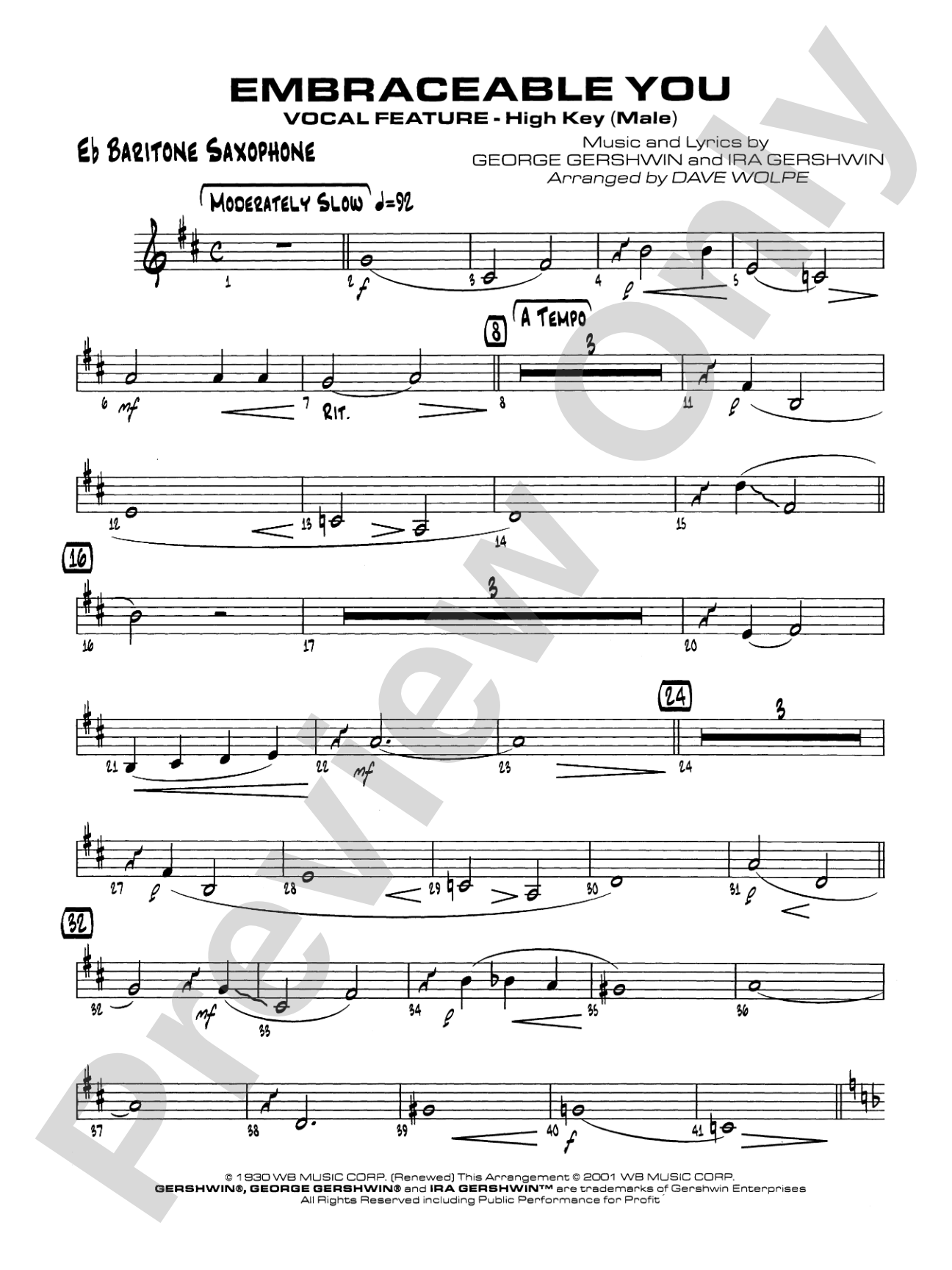
Embraceable You: E-flat Baritone Saxophone

Vocal Feature

Words by Ira Gershwin, music by George Gershwin / arr. Dave Wolpe

Grade: 3 (Medium)

Item: 00-PC-0014741_BTX

Digital Download
$3.00
Description
Romantic songs always communicate well with the audience, and this Gershwin¨ classic is one of the best. This flexible arrangement is written in two keys by creative arranger Dave Wolpe. The higher key is designed for a male vocalist and the lower key for your female vocalist, and the parts are printed back to back---just flip the page. Low (female) key of C range is G below middle C to third line B. High (male) key (F) range is middle C to fourth space E. This is a must-have vocal solo with jazz ensemble---superb!

Don't just read it, hear it, play along with it, and watch your students grow with it. In MakeMusic Cloud, Embraceable You: E-flat Baritone Saxophone comes alive with professional accompaniment, adjustable tempo, and built-in practice tools that turn solo practice into real progress.

Sample Audio
0:00
0:00
Sample Video
Additional Details
Series: Jazz Vocal Series
Publisher: Alfred Music
Page Count: 82
SKU: 00-PC-0014741_BTX

More about this title

About the Composer: George Gershwin

George Gershwin (1898-1937) bridged the worlds of classical concert music and American popular song with unprecedented ease. His gift for melody and harmonic sophistication made him one of the most performed composers of the twentieth century, and his influence on jazz, musical theater, and art music remains profound.

Ira Gershwin (1896-1983) provided the lyrics that made George's melodies unforgettable. Working in close partnership with his brother, Ira crafted lyrics of wit, elegance, and emotional directness. Together they created some of the American songbook's most enduring standards, including pieces that have become central to jazz repertoire.

Why we love this

Dave Wolpe's dual-key arrangement solves a real casting challenge without sacrificing the song's sophisticated harmonic language. The back-to-back printing is a practical stroke that makes rehearsal seamless, and the Grade 3 scoring gives your ensemble plenty to sink their teeth into while keeping the focus on the vocalist's lyrical storytelling.

What to expect

Warm, intimate, and swaying. The arrangement captures the Gershwin touch: blues-tinged harmonies that feel both modern and timeless, with space for the vocalist to settle into the lyric. There's an ease and elegance here that invites genuine connection between performer and listener.

Who it's for

Directors leading jazz ensembles with vocalist soloists who need sophisticated yet accessible repertoire. This arrangement works equally well for a single featured vocalist or as a recital piece for a student exploring the American songbook with jazz accompaniment.

How to get the most out of it

  • The rhythm section should listen closely to the vocalist's phrasing rather than locking rigidly to click. Gershwin's melodies breathe, and the jazz ensemble works best when it supports that natural elasticity.
  • Balance the ensemble texture so that the horn section frames the vocalist without overwhelming. This is a love song, not a showstopper, and clarity of the vocal line matters most.
  • Rehearse the vocalist and rhythm section together early. Once that core relationship is solid, layer in the horns for a cohesive whole.

How to use it

Place this in a spring concert as a bridge between your ensemble's more driving charts and a classical finale, or feature it as the centerpiece of a jazz standards program. The romantic quality and clear melodic focus make it an excellent vehicle for showcasing both your soloist and the ensemble's ability to accompany with sensitivity.

Skills your students will build

  • Accompanying a solo vocalist with sensitivity and flexible ensemble balance
  • Playing jazz comping and rhythm section patterns in two different keys
  • Interpreting swing style within a melodic, ballad context
  • Reading and performing from a full score with multiple transpositions

You May Also Like