
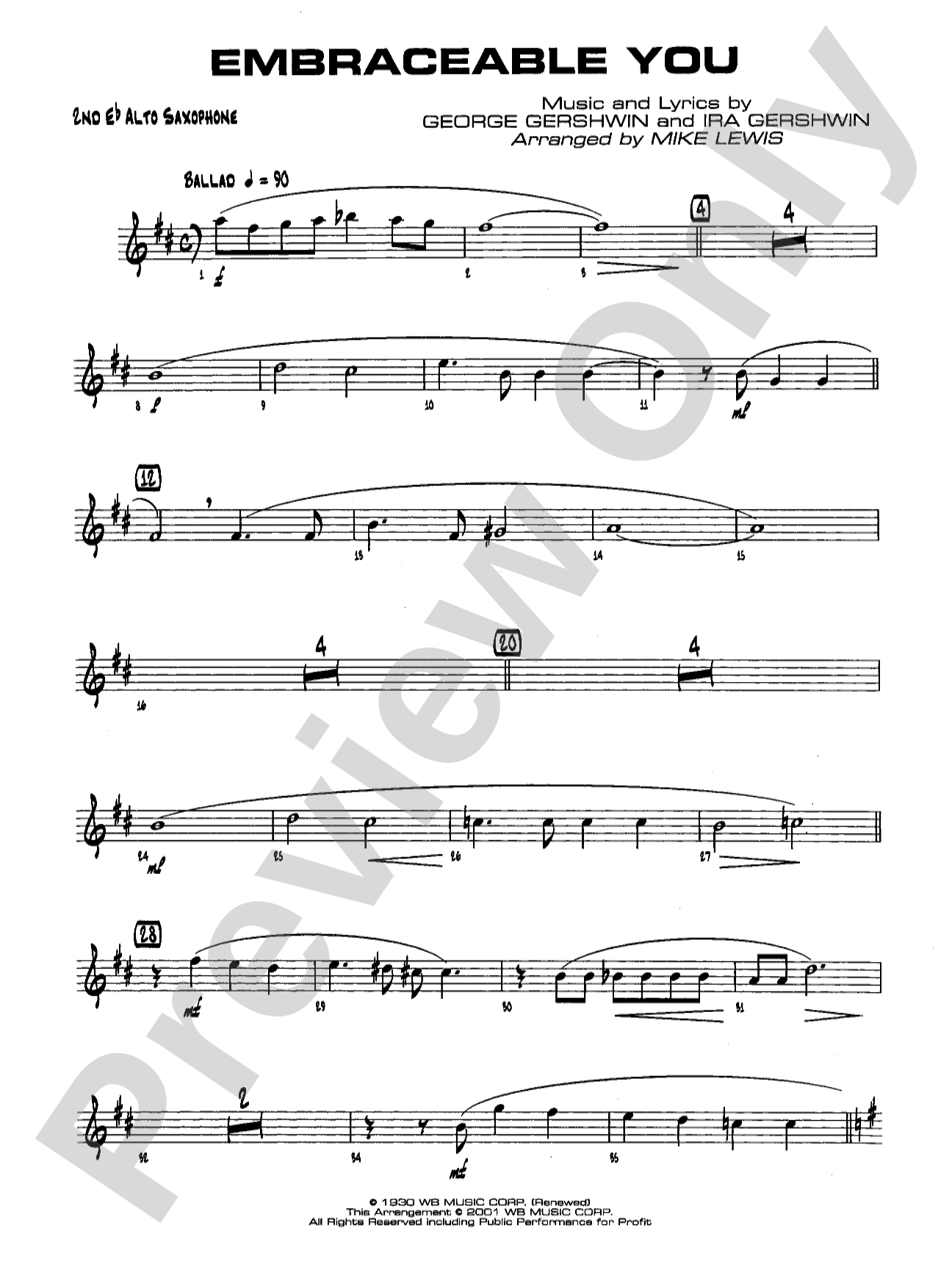

Embraceable You: 2nd E-flat Alto Saxophone
Music and lyrics by George Gershwin and Ira Gershwin / arr. Mike Lewis
Grade: 1 (Easy)
Item: 00-PC-0016125_AX2
$3.00
Pickup currently not available
Description
This Gershwin classic has been performed and recorded countless times, and now it's time for your beginning players to play and learn this gorgeous standard! Arranger Mike Lewis has scored Embraceable You to sound full even with reduced instrumentation. Alto saxophone has the featured solo along with a brief tenor sax solo and plenty of ensemble throughout. Mike captures the Gershwin essence with this classy arrangement. This title is available in MakeMusic Cloud. (3:07)


Don't just read it, hear it, play along with it, and watch your students grow with it. In MakeMusic Cloud, Embraceable You: 2nd E-flat Alto Saxophone comes alive with professional accompaniment, adjustable tempo, and built-in practice tools that turn solo practice into real progress.
Open in the Player
Jump straight in and assign it today.
Start Your Free Trial
Open this title and explore the full library in minutes.
Sample Audio
1
Audio File
--:--
0:00
0:00
Sample Video
No sample videos found.
Additional Details
Series:
First Year Charts for Jazz Ensemble
Publisher:
Alfred Music
Page Count:
68
SKU:
00-PC-0016125_AX2
More about this title
About the Composer: George Gershwin
George Gershwin (1898-1937) bridged the concert hall and Broadway stage with a compositional voice that remains unmistakably American. His ability to weave jazz idioms, blues inflections, and popular song forms into sophisticated harmony made him a transformative figure in 20th-century music. For music educators, Gershwin's work offers students access to genuine masterworks that reward repeated listening and reveal new layers with each encounter.
Gershwin's melodies are immediate and memorable, yet they rest on harmonic foundations that challenge and expand student musicians. "Embraceable You," written with his brother Ira's lyrics, exemplifies his gift for creating songs that feel both intimate and universally resonant. Teaching from Gershwin's repertoire connects students to a composer whose influence spans jazz, musical theater, and classical concert music.
Why we love this
Mike Lewis has crafted an arrangement that preserves every ounce of Gershwin's harmonic sophistication while remaining genuinely playable for beginning jazz ensembles. The featured alto saxophone solo gives your lead player a chance to shine with an idiomatic jazz voice, and the full ensemble sound never feels thin despite the Grade 1 accessibility. This is the rare Grade 1 arrangement that sounds elegant rather than simplified.
What to expect
Warm, urbane, and timelessly romantic. The melody unfolds with the easy elegance of a song meant to be sung in a crowded room where everyone stops to listen. Beneath that surface charm sits a harmonic world that feels current and alive, neither dated nor trying too hard to sound modern.
Who it's for
Beginning jazz ensemble students who are ready to tackle a genuine standard with musical maturity. This arrangement works beautifully for ensembles making their first foray into jazz repertoire, whether in a classroom setting or as a festival selection.
How to get the most out of it
- Shape the melody with the phrasing Gershwin intended; avoid punching every note equally. The swing feel should float naturally, not drive aggressively.
- Balance the alto saxophone solo so it sings over the ensemble without drowning the harmonic foundation. The tenor saxophone brief solo needs the same careful balance.
- Lock the rhythm section (piano, bass, drums) first in sectionals. Once they anchor the groove, the horns will sit into the pocket more easily.
- Observe the articulation markings in the ensemble passages. Gershwin's voice-leading becomes clearer when you respect the slurs and staccatos written into the score.
How to use it
Open a concert with this piece to signal that your ensemble takes jazz seriously and understands its heritage. It also pairs well in a program exploring American songbook standards or as a festival entry that showcases musicality over technical fireworks. The 3-minute duration makes it an efficient way to build confidence and polish in your beginning ensemble.
Skills your students will build
- Swing articulation and jazz phrasing
- Balancing solo lines over ensemble texture
- Reading jazz chord symbols and voicings
- Listening to harmonic movement rather than playing by rote
- Interpreting dynamics and expression in a jazz context