
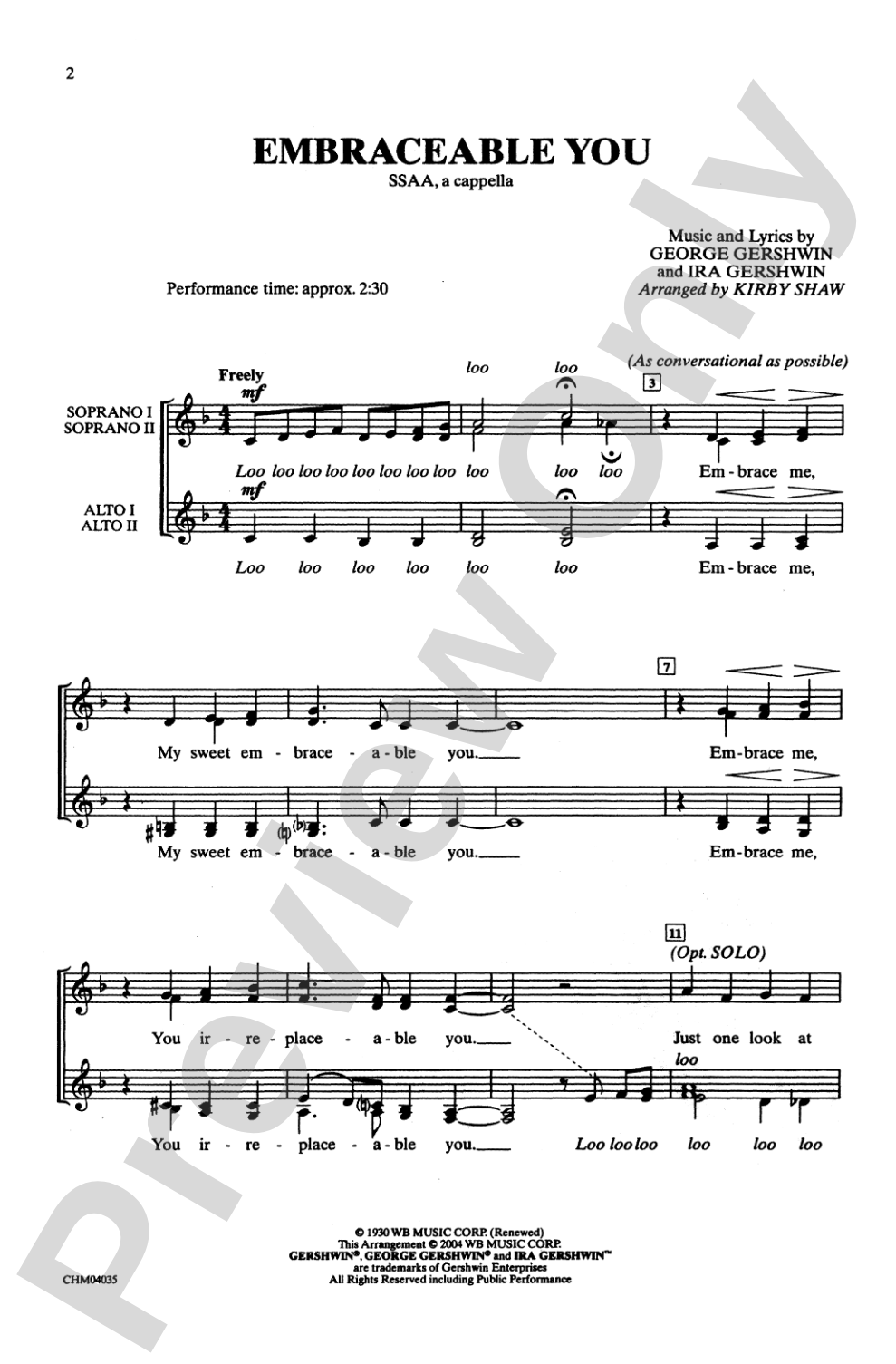

Embraceable You: SSAA, a cappella Choral Octavo
Music and lyrics by George Gershwin and Ira Gershwin / arr. Kirby Shaw
Level: Moderate
Item: 00-PO-0002968

$1.90
Minimum order quantity: 20 copies
One moment…
Description
Kirby Shaw's tradition for creating exceptional a cappella ballads continues with this wonderful arrangement of the Gershwin® classic "Embraceable You." Showcase your singers with this very special arrangement!


Don't just read it, hear it, play along with it, and watch your students grow with it. In MakeMusic Cloud, Embraceable You: SSAA, a cappella Choral Octavo comes alive with professional accompaniment, adjustable tempo, and built-in practice tools that turn solo practice into real progress.
Open in the Player
Jump straight in and assign it today.
Start Your Free Trial
Open this title and explore the full library in minutes.
Sample Audio
1
Audio File
--:--
0:00
0:00
Sample Video
No sample videos found.
Additional Details
Series:
Alfred Archive Edition: Alfred Pop Choral Series
Publisher:
Alfred Music
Page Count:
4
SKU:
00-PO-0002968
More about this title
About the Composer: George Gershwin
George Gershwin (1898-1937) bridged the worlds of concert music and popular song with a compositional voice that felt both sophisticated and immediate. His melodies became standards because they combined jazz idioms, blues inflections, and classical structure in ways that felt natural rather than forced. For music educators, Gershwin's work represents a crucial moment when American popular music gained serious artistic recognition, and his pieces continue to reward both performers and audiences with their harmonic richness and emotional directness.
Ira Gershwin, George's lyricist brother, had an unmatched gift for witty, singable words that fit melodies like they were written together (they were). His contribution to the Great American Songbook includes some of the most durable love songs ever written, each lyric shaped by his understanding of how words must dance with music.
Why we love this
Kirby Shaw understands what makes a ballad resonate in an a cappella setting, and this arrangement gives your singers room to shape the melody while maintaining the harmonic sophistication that makes Gershwin's music endure. The four-part SSAA texture allows for genuine independence among voices without sacrificing the lush, romantic sound that defines this song. Programming a piece this well-known but arranged this freshly signals to your audience that you're offering them something they love heard in a new way.
What to expect
Warm, romantic, and elegantly conversational. The song's famous opening phrase reaches across the measures with affection, and Shaw's harmonies support that emotional directness without overwhelming it. Performing this piece feels like your singers are sharing something personal with the audience rather than displaying technique.
Who it's for
Choirs with solid intonation skills and singers who have experience balancing parts in a cappella settings will get the most from this arrangement. It suits groups at the high school level or beyond, particularly those with developed treble voice sections and a director comfortable coaching nuance and blend in unaccompanied music.
How to get the most out of it
- Balance the harmonic voices carefully during sustained chords; the soprano line will naturally project, so ensure lower voices are heard without oversinging.
- Shape the phrase in service of Gershwin's melody, not against it. This arrangement respects the song's essential line, so let that guide your phrasing and breathing.
- Give yourselves time in rehearsal to lock the unaccompanied sonorities, especially at key harmonic shifts where tuning can either solidify the moment or blur it.
- Treat the text with the intimacy it deserves; 'Embraceable You' is a direct declaration, and your singers should deliver it with conviction rather than coyness.
How to use it
This works beautifully as a showcase solo for a strong soprano section with excellent ensemble support, or as a moment of intimacy in a concert otherwise built around livelier material. Consider placing it after something upbeat to let the audience settle into the song's vulnerability. It also programs well in competition or festival settings where judges respond to interpretive maturity and balanced voicing.
Skills your students will build
- Sustaining pure a cappella intonation across four-part harmony
- Balancing independent melodic lines while maintaining unified phrase direction
- Shaping a familiar melody freshly within an arranged context
- Interpreting the text of a classic song with emotional authenticity rather than sentimentality