

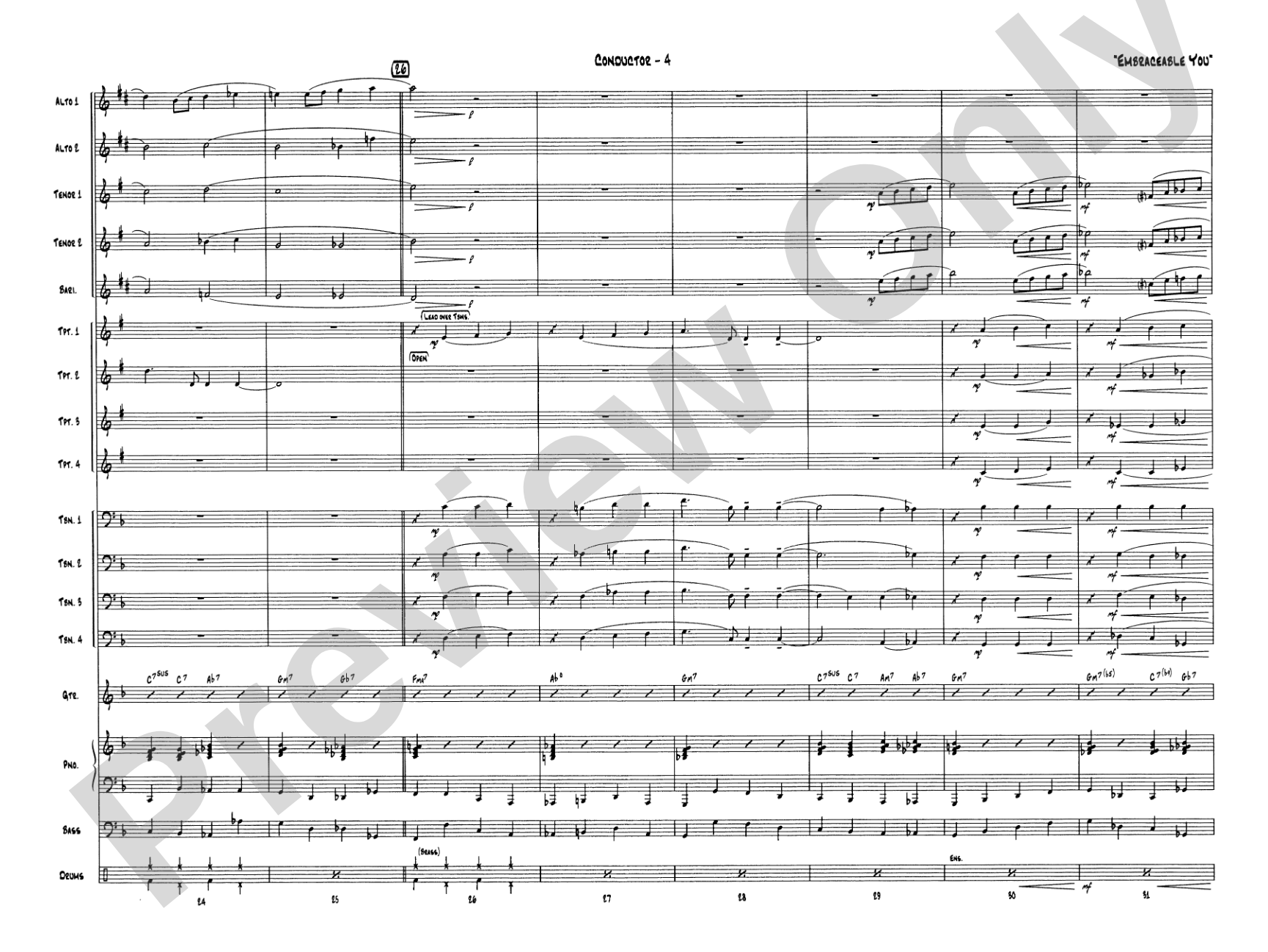
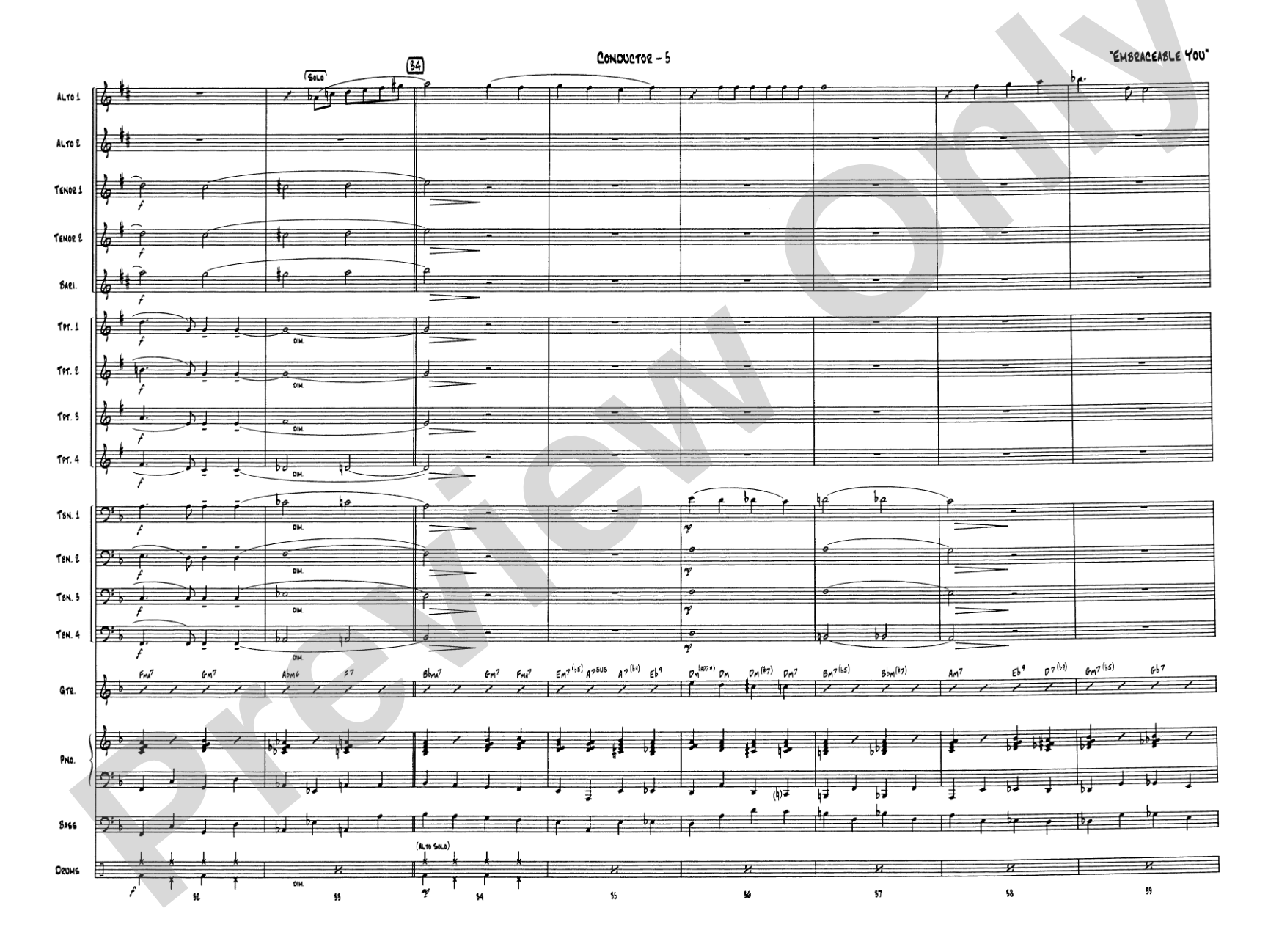
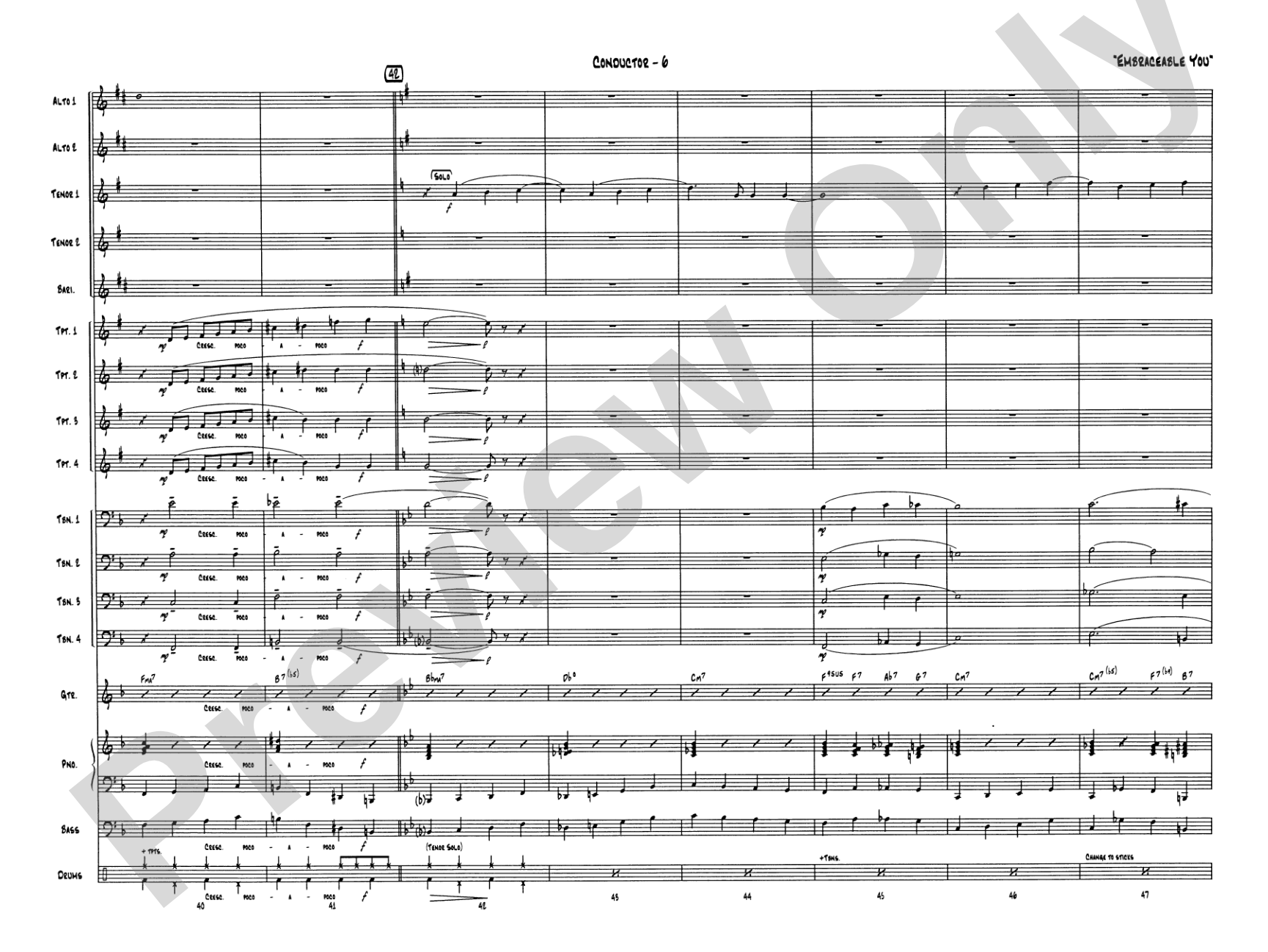
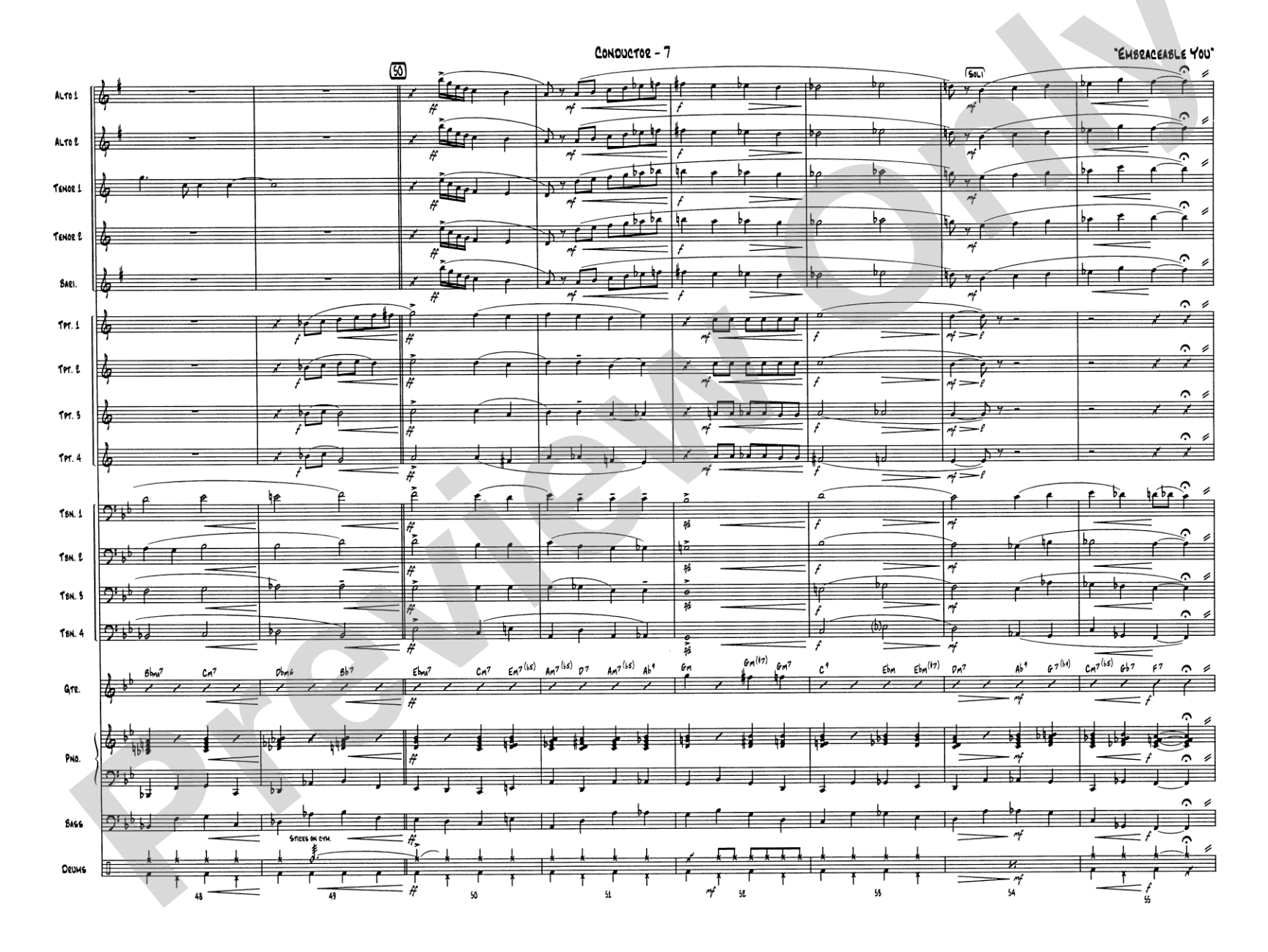
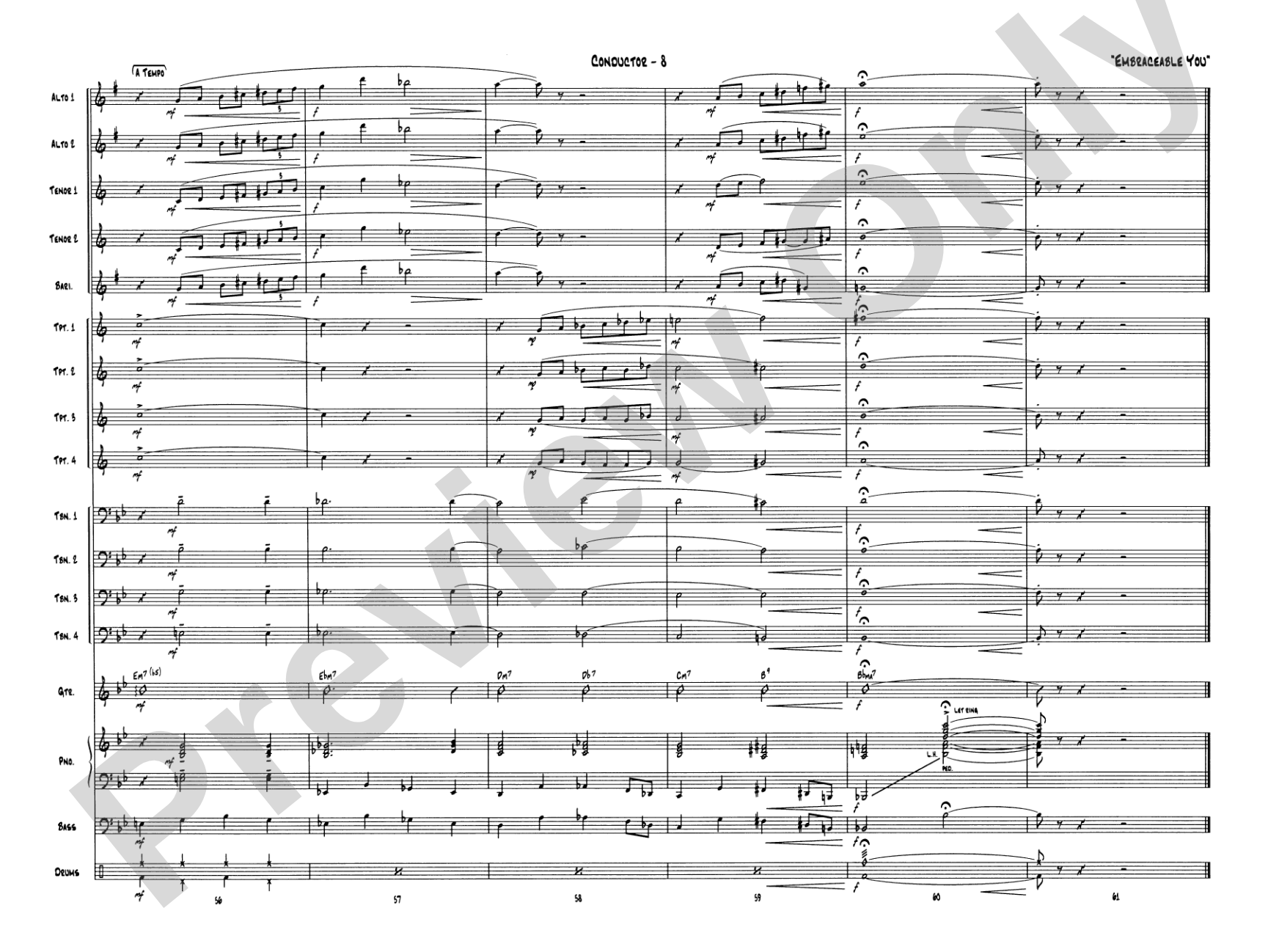



Embraceable You: Jazz Ensemble Conductor Score & Parts
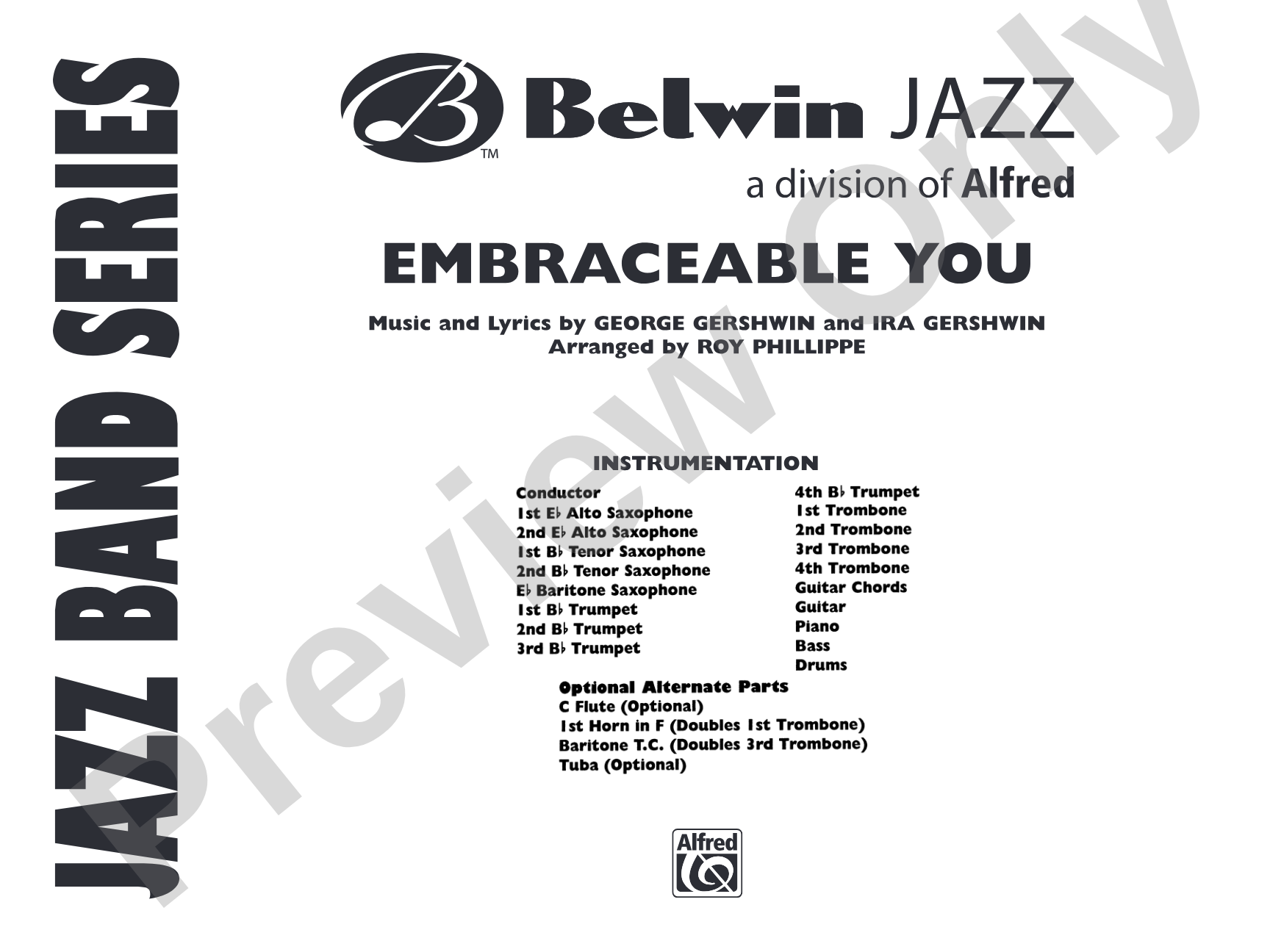
By George Gershwin / arr. Roy Phillippe
Grade: 3 (Medium)
Item: 00-PK-0002470

$52.00
One moment…
Related Items
Embraceable You: Jazz Ensemble Conductor Score & Parts |
$52.00
|
View |
Description
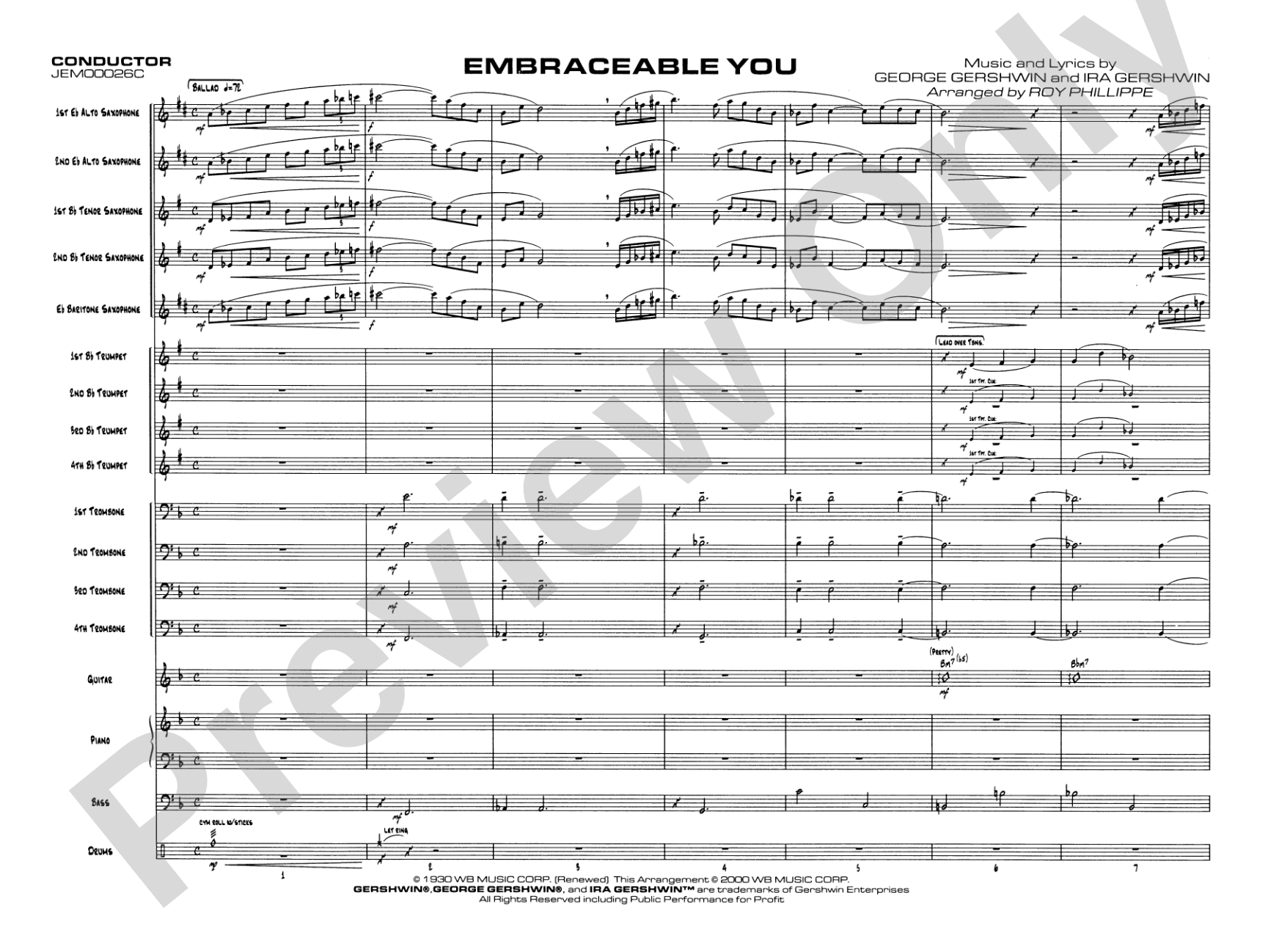
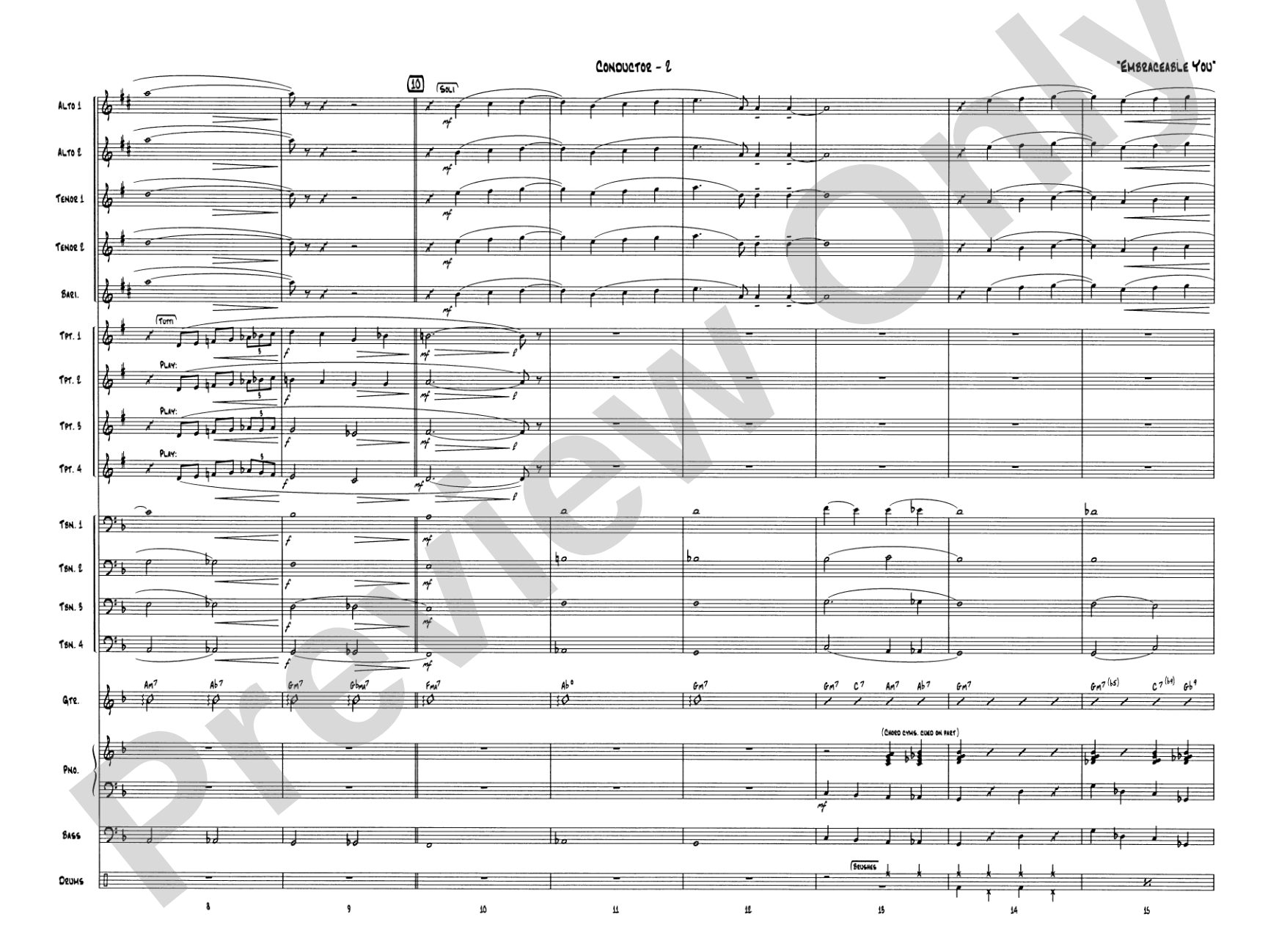
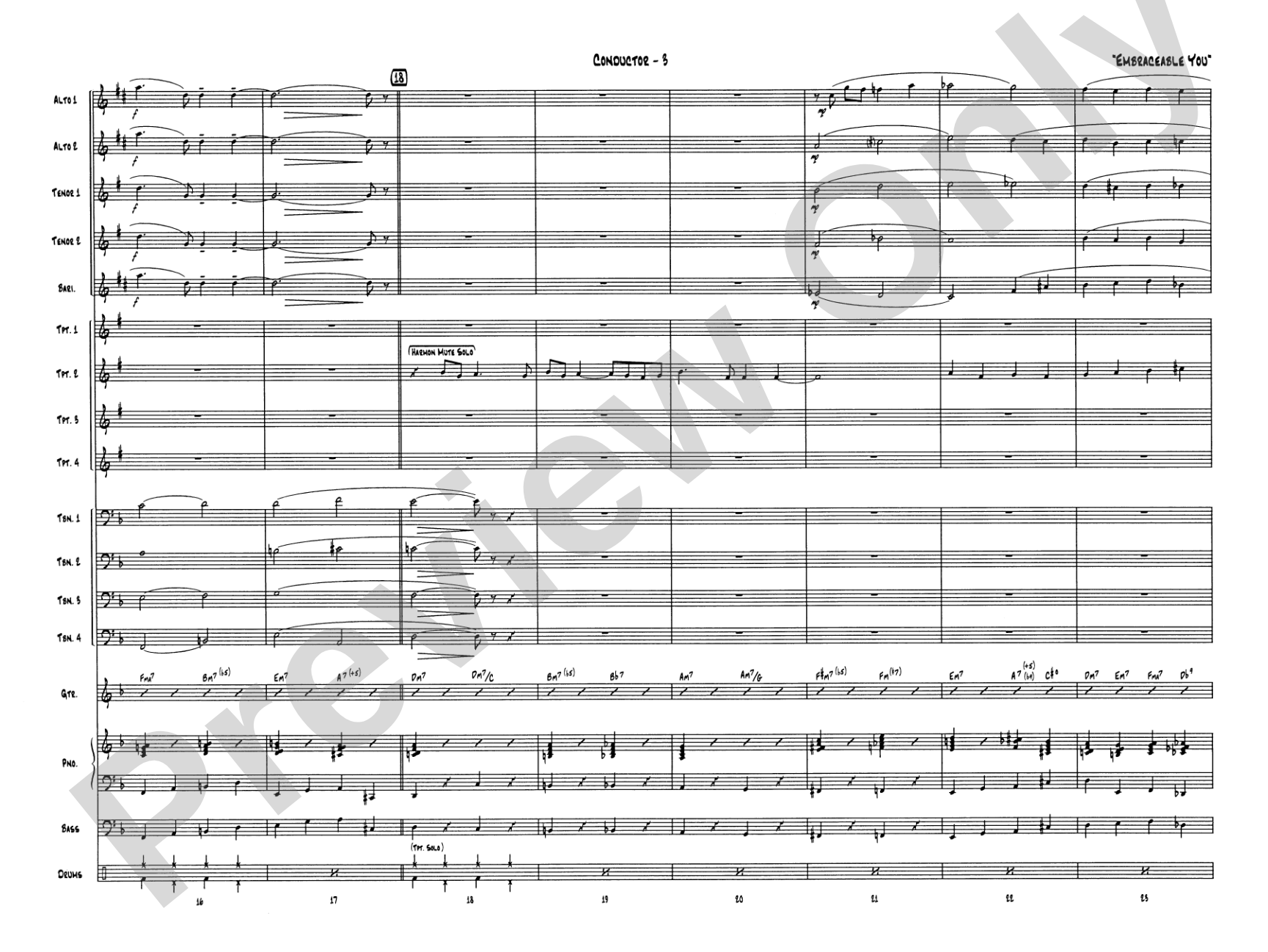
What a gorgeous ballad. This wonderful Gershwin standard, recorded and performed countless times, is ideal for your students to play and learn. Featured are beautiful chord changes throughout with nice block harmonies for the 'bones, a muted trumpet solo, and alto sax and tenor sax solos each playing written-out melodic lines. Speaking of chords, this is a great opportunity to teach students to recognize diminished chords. Your drummer is using brushes until the end, keeping this chart tender and sweet, and the brass ranges are quite reasonable with trumpet to G and trombone to F. It's a great change-of-pace ballad for any setting. Roy Phillippe truly captures the essence of Gershwin with this classy arrangement.


Don't just read it, hear it, play along with it, and watch your students grow with it. In MakeMusic Cloud, Embraceable You: Jazz Ensemble Conductor Score & Parts comes alive with professional accompaniment, adjustable tempo, and built-in practice tools that turn solo practice into real progress.
Open in the Player
Jump straight in and assign it today.
Start Your Free Trial
Open this title and explore the full library in minutes.
Sample Audio
1
Audio File
--:--
0:00
0:00
Sample Video
No sample videos found.
Additional Details
Series:
Jazz Band Series
Publisher:
Alfred Music
Page Count:
40
SKU:
00-PK-0002470
More about this title
About the Composer: George Gershwin
George Gershwin (1898-1937) was an American composer who bridged the worlds of concert music and popular song with uncommon sophistication. His melodies, harmonic language, and orchestral textures influenced generations of composers, and his standards remain central to American musical identity. Gershwin's gift was making complex harmony accessible; his works reward both casual listening and deep musical study, which is why they anchor jazz repertoire and concert programs alike.
Why we love this
Roy Phillippe's arrangement respects Gershwin's harmonic language while giving every section something real to play. The written-out sax solos mean your soloists aren't improvising over changes they don't know yet, the muted trumpet part is genuinely beautiful, and the brush work keeps the ensemble anchored on ballad fundamentals. This is a chart that sounds like a professional recording without requiring one.
What to expect
Soft-focus and intimate, like a late-night set at a small club where every note lands with intention. The harmonies are rich enough to reward close listening; there's nothing throwaway here, even in the comping parts. Time slows down slightly, and the whole ensemble learns what it means to play as a single voice instead of individual parts.
Who it's for
Jazz ensembles at the Grade 3 level who have solid reading skills and at least one competent soloist on trumpet and one on each saxophone. This works equally well for high school jazz bands, college jazz combos, or community ensembles that want a ballad with professional sound and reasonable technical demands.
How to get the most out of it
- Balance the ensemble around the vocalist energy of the solos; this is a tender ballad, not a swinger. The drummer's brushes set the texture, so spend rehearsal time on brush technique and dynamics.
- Pay attention to the diminished chord passages the arranger includes. Mark them in your parts and have students identify them by ear; recognizing that sound is a skill that transfers immediately to improvisation.
- The muted trumpet solo should speak clearly without volume; work dynamics and phrase shape before worrying about tempo. A beautiful solo at a slightly slower pace beats a fast one that loses its lyrical quality.
- Lock the trombones' block harmonies tight; these chords define the harmonic color of the arrangement, especially under the sax solos. Voicing precision matters more than blend here.
How to use it
Program this after an uptempo feature to showcase your band's ballad command and dynamic control. It pairs beautifully with other Gershwin standards or as a bridge between a jazz set and a classical section, demonstrating how much depth sits beneath what sounds simple. It's also an ideal closer for a shorter set, leaving the audience with something elegant.
Skills your students will build
- Reading and recognizing diminished chord voicings by ear and on the page
- Brush technique and dynamic control in a ballad context
- Solo line reading from written-out melody (alto sax, tenor sax, and trumpet)
- Balancing solo prominence with ensemble support
- Phrase shaping and lyrical phrasing at slower tempos