
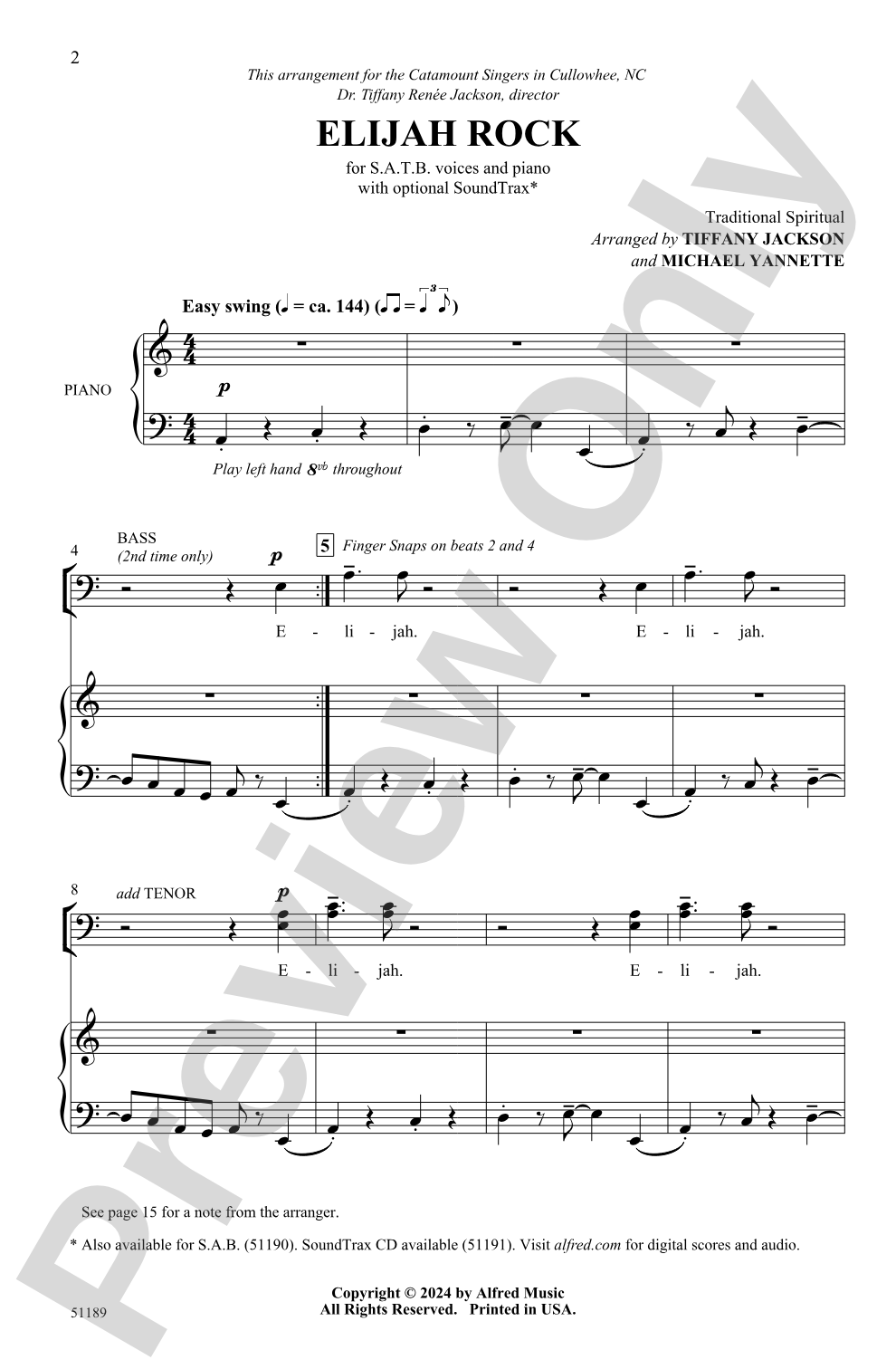
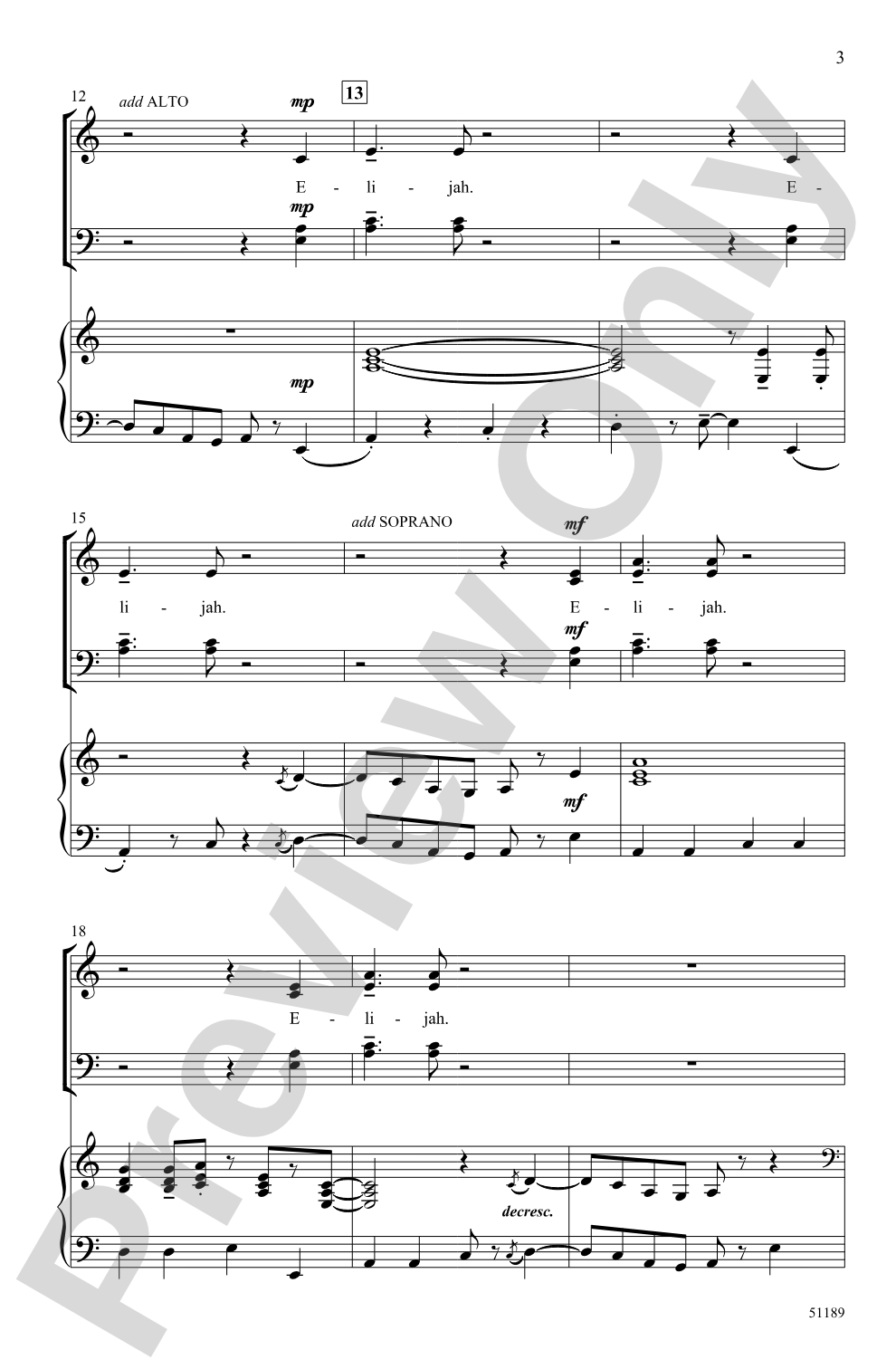
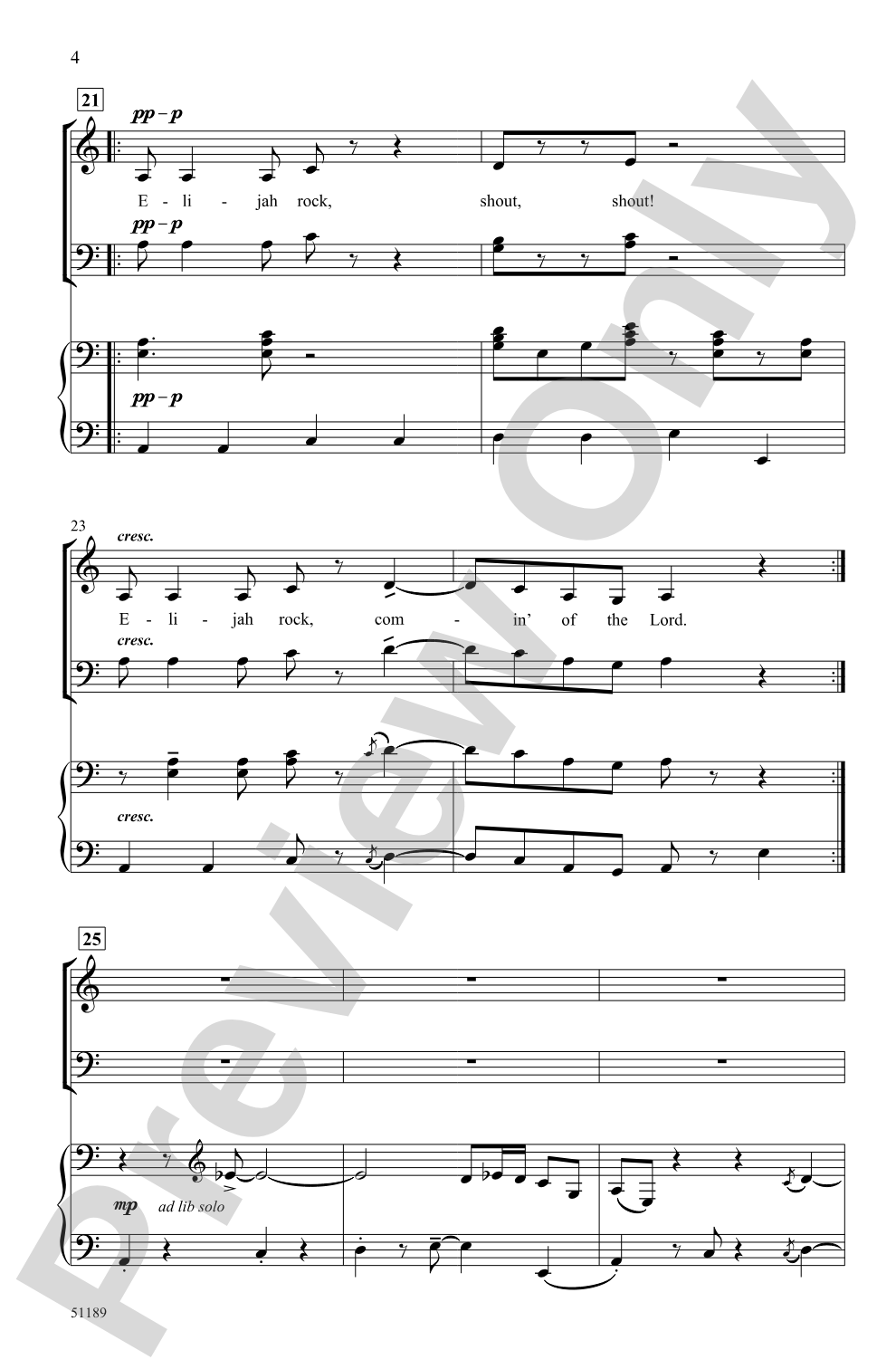

Elijah Rock: SATB Choral Octavo
Traditional Spiritual / arr. Tiffany Jackson and Michael Yannette
Item: 00-PO-0007247
$2.40
Minimum order quantity: 20 copies
Pickup currently not available
Description
Here's a rousing rendition of the beloved spiritual. Dr. Jackson has notated what she learned as a child, honoring her recollection and experience. A hushed introduction layers into an invigorating gospel chorus bursting with soul. Along the way, a few featured soloists and your pianist get many opportunities for improvisation---no two performances need be the same with this truly authentic arrangement.


Elijah Rock: SATB Choral Octavo isn't in MakeMusic Cloud just yet...but it could be. Let us know you'd like to see it, and you'll help shape what comes next. In the meantime, start a free trial and dive into thousands of interactive titles your students can play along with today.
Request This Title
Tell us you want it.
Start Your Free Trial
Explore everything that's ready to play right now.
Sample Audio
1
Audio File
--:--
0:00
0:00
Sample Video
Additional Details
Series:
Alfred Choral Designs
Publisher:
Alfred Music
Page Count:
16
SKU:
00-PO-0007247
More about this title
About the Arranger: Tiffany Jackson

Dr. Tiffany Renée Jackson brings a rare synthesis of classical training, jazz artistry, and deep cultural knowledge to her work as a vocalist, scholar, and pedagogue. A native of New Haven, Connecticut, she earned degrees from the University of Michigan, Yale School of Music, Manhattan School of Music, and the University of Connecticut. Her performance resume spans the Metropolitan Opera, Carnegie Hall, major symphony orchestras, and jazz venues including the Blue Note and Jazz at Lincoln Center, where she has become known for her interpretations of Ellington and Strayhorn.
Beyond the concert stage, Dr. Jackson has appeared on America's Got Talent and the Oprah Winfrey Show, and currently serves as an Assistant Professor of Voice at Hampton University. Her arrangement of "Elijah Rock" emerges from personal memory and lived experience, preserving the spiritual tradition as she learned it while honoring the improvisational and soulful character of authentic gospel practice.
Why we love this
This arrangement honors the actual practice of the spiritual tradition rather than imposing a polished, concert-hall interpretation onto it. Dr. Jackson's notation of improvisation for soloists and pianist gives your ensemble permission to breathe, respond, and make the piece their own, which is how these songs were meant to live. The architecture of the piece (quiet opening that builds into an exuberant chorus) creates a genuine emotional arc that audiences feel immediately.
What to expect
The piece opens with intimate introspection, voices layering gently like a spiritual gathering beginning in near silence. Then it ignites. The gospel chorus emerges with soul and momentum, full of the joy and resilience the spiritual tradition holds. Throughout, the arrangement breathes authenticity—this is lived tradition, not a museum piece.
Who it's for
Choirs with solid blend and at least one or two singers confident enough to carry a featured solo passage. Your ensemble should have enough rehearsal time to explore the improvisational sections without feeling rushed. This works equally well for concert performances and festival competitions.
How to get the most out of it
- Study the piano part carefully during rehearsals. The pianist carries much of the rhythmic and harmonic foundation, especially in the introduction and during solo passages, so their security directly affects the choir's confidence.
- Encourage soloists to listen to multiple spiritual recordings before their performances. This builds familiarity with the genre's tonal quality and phrasing conventions, which are quite different from classical art song approach.
- Use the recorded accompaniment (if available) to hear how the arrangement sits in real time, but don't let it lock your ensemble into one interpretation. The point is to build from that foundation toward your own distinct reading.
- Work the dynamic and textural transition from introduction to chorus slowly in rehearsal. The shift from hushed to gospel-bursting requires clear ensemble understanding of when to expand and brighten the sound.
How to use it
Place this as a centerpiece in a program focused on African American sacred music or spiritual traditions; its emotional power and accessibility make it an ideal anchor. It also serves beautifully as a concert closer, leaving audiences with warmth and energy. The 16-page length makes it substantial enough to stand alone without overshadowing other works on the same program.
Skills your students will build
- Singing spirituals with historically informed phrasing and textural sensitivity
- Balancing individual interpretation with ensemble cohesion during improvised passages
- Navigating dynamic transitions from intimate to exuberant within a single piece
- Responding to and supporting featured soloists while maintaining choral integrity
- Understanding the cultural and personal context of the spiritual tradition