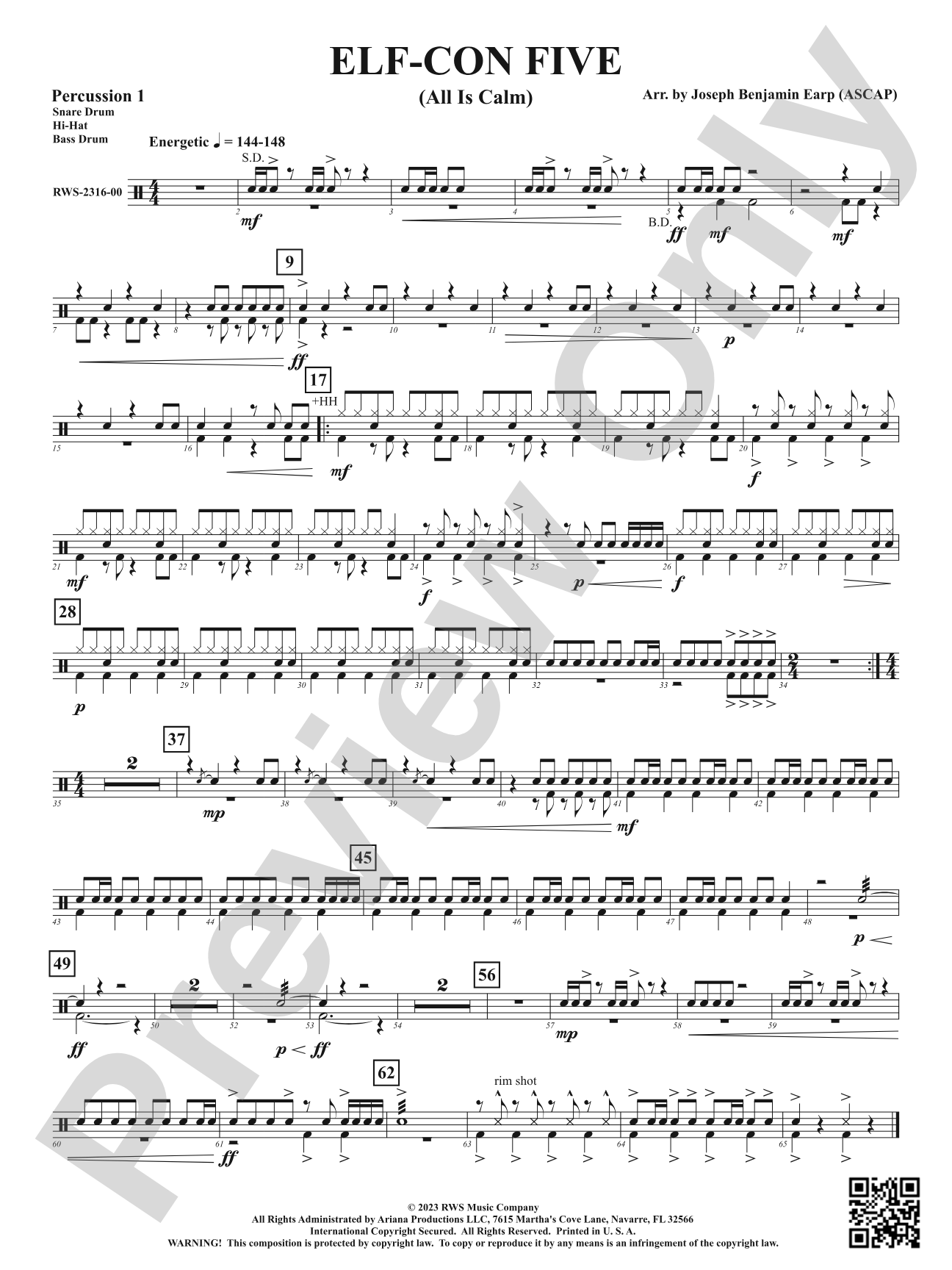
It's time to recover from the chaos of Christmas by bringing the mood back to "merry" with ELF-CON FIVE — an energetic holiday work for band. Santa and his elves have gone from the high stress of getting all the toys in the sleigh, to the "All Is Calm" of Christmas. Celebrate with some of the most well known winter holiday favorites in this high-speed medley that will be a winter concert hit!
Original Item#: RWS-2316-00
Discover MakeMusic Cloud: thousands of interactive titles your students can play along with today.
Earp nails the tonal shift that makes this medley work: the arrangement moves from frantic holiday energy into genuine quietness, which keeps audiences engaged rather than exhausted. At Grade 3.5, the writing stays playable for developing bands while delivering genuine musical contrast and momentum. It's the kind of piece that gives your winter concert structure and narrative arc rather than just stringing together recognizable tunes.
What to expect
The piece captures the relief of Christmas morning after the pre-holiday scramble. It opens with the bright, slightly chaotic energy of last-minute preparations, then settles into a genuinely peaceful moment of reflection. The familiar melodies ground the listener while the arrangement keeps them present throughout.
Who it's for
Concert bands at the Grade 3.5 level who want a holiday piece with real dramatic range and don't need to rely entirely on recognizable melody to engage an audience. Conductors seeking a medley that actually builds a narrative rather than serving as filler will find the structure here both efficient and effective.
How to get the most out of it
Shape the transition into "All Is Calm" deliberately. The shift from high-speed medley to calm section only lands if the ensemble commits to the tempo change and pulls back the dynamic intensity together.
Balance clarity and speed during the medley sections. Mark problem ensemble entrances in rehearsal early; the quick tempo can mask coordination issues if the woodwind and brass sections aren't locking together from the start.
Let the accompaniment parts breathe during the "All Is Calm" section. This is where upper woodwinds and horn harmonies become the focus, so younger players need permission to play expressively without rushing forward.
How to use it
Place this as your second-half opener at a winter concert to reset the room's energy after something heavier or more formal. The emotional arc works well as a bridge between themed halves, and its moderate length makes it ideal when you're balancing multiple groups or featuring soloists in the same program.
Skills your students will build
Executing rapid tempo changes and maintaining ensemble cohesion across contrasting sections
Balancing technical demands of fast passagework with dynamic control and expression
Listening for harmonic color and blend in slower, more intimate arranging moments
Managing accompaniment role clarity while supporting shifting melodic focus
You May Also Like
Scan to Complete Your Purchase
Use your phone's camera to scan the code below
You'll log in on your phone and the order will be added to your account