Elephas Maximus (For Solo Bass and String Orchestra): 2nd Violin Sheet Music Preview

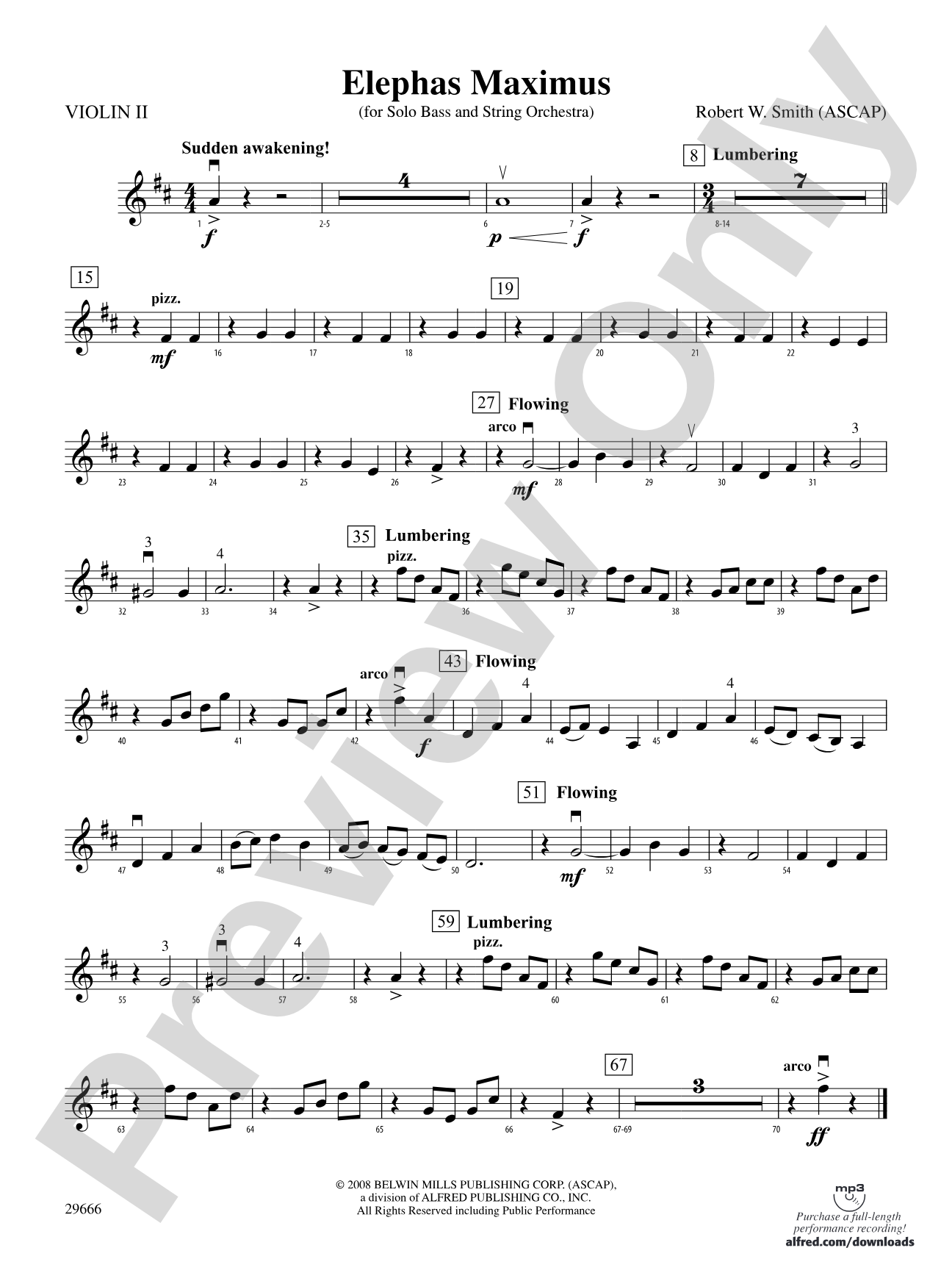
Elephas Maximus (For Solo Bass and String Orchestra): 2nd Violin

By Robert W. Smith

Grade: 3

Item: 00-PC-0001541_VN2

Digital Download
$5.99
Description
The Latin name for our largest living land animal provides the title for this solo for bass with orchestra. Beginning with the "awakening," the solo continues with the first lumbering steps before the giant mammal reaches full speed. Light, lyrical and even comedic, the piece was inspired by a trip to the Taronga Zoo in Sydney, Australia, and the way Burma, the elephant, moved and swayed. (1:50)

Don't just read it, hear it, play along with it, and watch your students grow with it. In MakeMusic Cloud, Elephas Maximus (For Solo Bass and String Orchestra): 2nd Violin comes alive with professional accompaniment, adjustable tempo, and built-in practice tools that turn solo practice into real progress.

Sample Audio
0:00
0:00
Sample Video
Additional Details
Series: Belwin Intermediate String Orchestra
Publisher: Alfred Music
Page Count: 80
SKU: 00-PC-0001541_VN2

More about this title

About the Composer: Robert W. Smith

Robert W. Smith

Robert W. Smith has established himself as a commanding voice in American orchestral and concert band composition, with more than 400 published works performed by ensembles across North America, Europe, Australia, and Asia. His training at Troy State University and the University of Miami grounded him in both education and advanced compositional technique, foundations that shaped his gift for writing music that challenges developing musicians while remaining deeply musical.

Smith's catalog ranges from large-scale symphonic works like The Divine Comedy and The Odyssey to accessible pieces for younger orchestras and bands, many of which have become standard repertoire. Beyond the concert hall, his compositions have appeared in television broadcasts, Olympic ceremonies, and major public events, reflecting a compositional voice that connects with broad audiences. As a guest conductor and clinician, he continues to work directly with musicians and ensembles worldwide.

Why we love this

Smith captures genuine character and humor in his orchestral writing without resorting to musical clichés. The narrative arc here—awakening, tentative steps, building momentum—unfolds through smart orchestration and a genuinely engaging bass line that gives your soloist something memorable to shape.

What to expect

The piece opens with quiet mystery before the bass gradually emerges, lumbering and stately like the animal it depicts. As momentum builds, there's a lightness and even playfulness to the orchestration that prevents the narrative from becoming heavy or overly literal.

Who it's for

String orchestras in Grades 2-4 who want a contemporary character piece with a strong solo opportunity for an advanced bass player. Directors seeking a concert vehicle that balances entertainment value with genuine musicality will find this especially appealing.

How to get the most out of it

  • Shape the opening carefully to establish the 'awakening' mood before the bass enters; conductors should model the gradual stirring through clear gesture.
  • Work with your bass soloist on the rhythmic swagger of the lumbering section, which benefits from slight flexibility and swagger rather than metronomic precision.
  • Keep the string section light and playful, especially in the comedic passages; over-weighting the sound obscures the wit of the writing.
  • Balance is essential since the bass must be heard as a true soloist; mark dynamic thresholds in rehearsal so the orchestra knows when to support and when to step back.

How to use it

This works well as a concert centerpiece or a lighter foil to more serious works. The 1:50 duration makes it ideal for pops-style programs, family concerts, or any concert where you want to showcase an individual musician while keeping the energy approachable.

Skills your students will build

  • Accompanying and balancing a featured soloist
  • Rhythmic precision in ensemble sections contrasted with flexible, lyrical playing
  • Orchestration listening (following the narrative and thematic material through different sections of the string section)
  • Shaping dynamic waves and overall phrase architecture across an ensemble

You May Also Like