
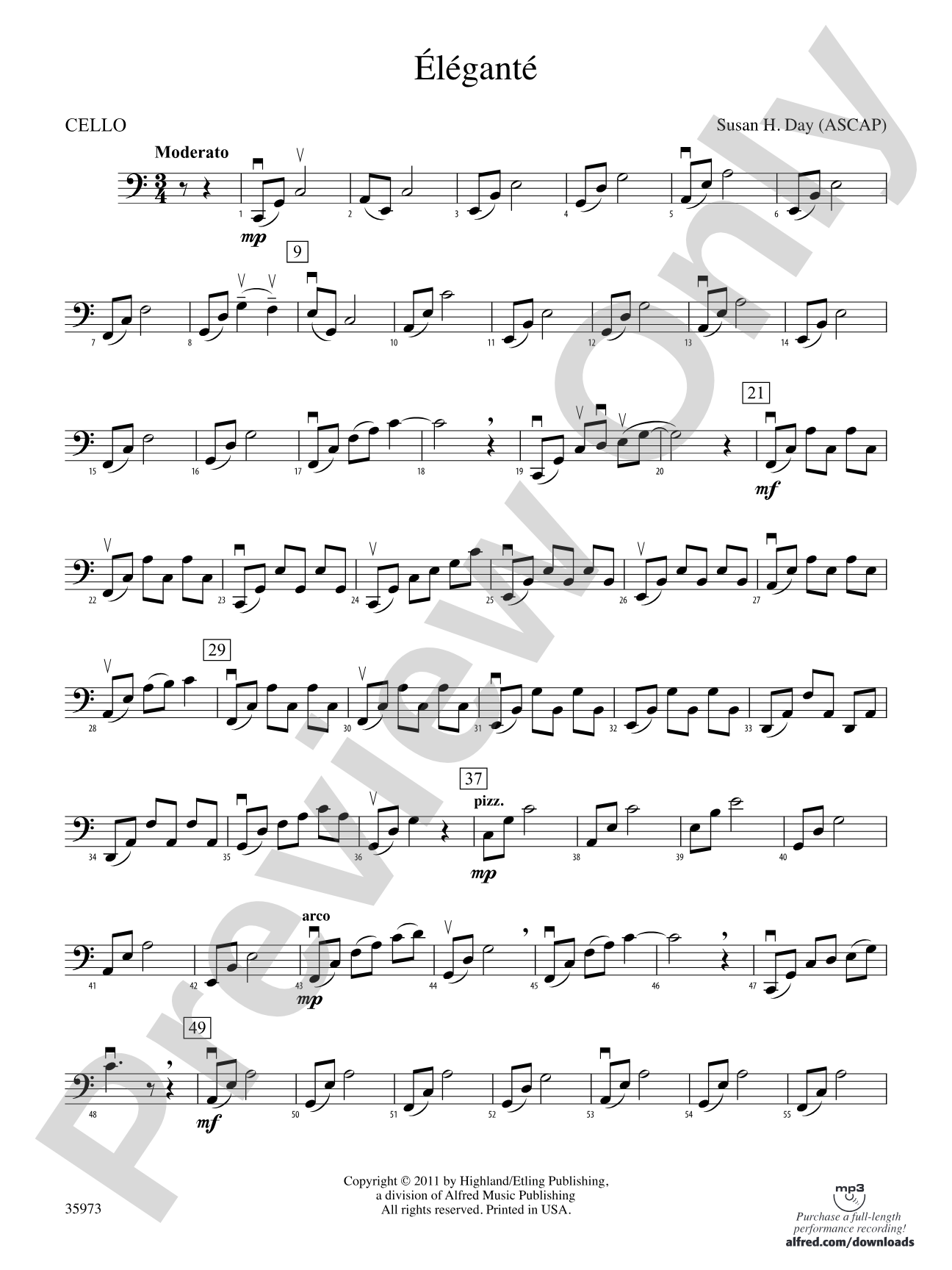

Éléganté: Cello
By Susan H. Day
Grade: 2.5
Item: 00-PC-0015048_VC1
$5.99
Pickup currently not available
Description
As the title suggests, this piece offers an opportunity for players to create a rich and elegant sound by using long, full bows with slurred note passages. Written in 3/4 time using the keys of C and D, there is a short solo section to allow your 1st chair players to shine. All parts stay in 1st position except the 1st violins who have a few notes in 3rd position. There are some accidentals, pizzicato and divisi throughout, and all parts share the melodic lines. A beautiful piece for developing expressive playing in your group!


Don't just read it, hear it, play along with it, and watch your students grow with it. In MakeMusic Cloud, Éléganté: Cello comes alive with professional accompaniment, adjustable tempo, and built-in practice tools that turn solo practice into real progress.
Open in the Player
Jump straight in and assign it today.
Start Your Free Trial
Open this title and explore the full library in minutes.
Sample Audio
1
Audio File
--:--
0:00
0:00
Sample Video
No sample videos found.
Additional Details
Series:
Highland/Etling String Orchestra
Publisher:
Alfred Music
Page Count:
124
SKU:
00-PC-0015048_VC1
Instrumentation:
string
More about this title
Why we love this
Susan H. Day writes with genuine understanding of what developing string players can accomplish when given the right musical vehicle. The solo section feels earned rather than showy, and the shared melodic lines ensure every player experiences ownership of the piece's elegant sound rather than retreating into accompaniment roles.
What to expect
Éléganté unfolds with the understated sophistication of a well-composed lyrical movement. Long bow strokes and slurred passages create sustained warmth, while the modest key changes between C and D provide gentle color shifts that reward careful listening and intonation work.
Who it's for
String orchestra conductors working with Grade 2.5 ensembles who want to deepen their students' understanding of tone production and musical expression without pushing technical boundaries. Players benefit from both the melodic opportunities and the accompaniment work that teaches ensemble balance and listening skills.
How to get the most out of it
- Encourage full bow length on the slurred passages to achieve the legato, singing tone the title promises. Young players often rush these moments, so isolate a few measures and have them sustain each slur for the bow's complete length.
- Balance the first violin solo against the accompaniment by having non-solo players pull back slightly in dynamic intensity, creating space for the featured line to project without overshadowing it.
- Experiment with the pizzicato sections as a rehearsal landmark. Mark where each pizzicato moment occurs and have students anticipate the textural shift with a slight breath or gesture adjustment.
- Address the divisi passages early, assigning stands clearly so players understand whether they're on the upper or lower line. Run these sections in isolation before combining them with surrounding material.
How to use it
This works beautifully as a concert opener or as the reflective centerpiece of a program mixing tempo contrasts. It's also well-suited for festival competitions where judges reward musicianship and tone quality over technical display.
Skills your students will build
- Long bow control and legato phrasing over sustained passages
- Reading and executing slurred articulations across multiple measures
- Playing divisi lines with clear independence while maintaining ensemble cohesion
- Balancing solo and accompaniment roles within the same piece
- Intonation awareness across key centers (C major and D major)
- Dynamic control and expressive shaping in a lyrical context
- Position awareness (1st position dominance with selected 3rd position work in 1st violins)