
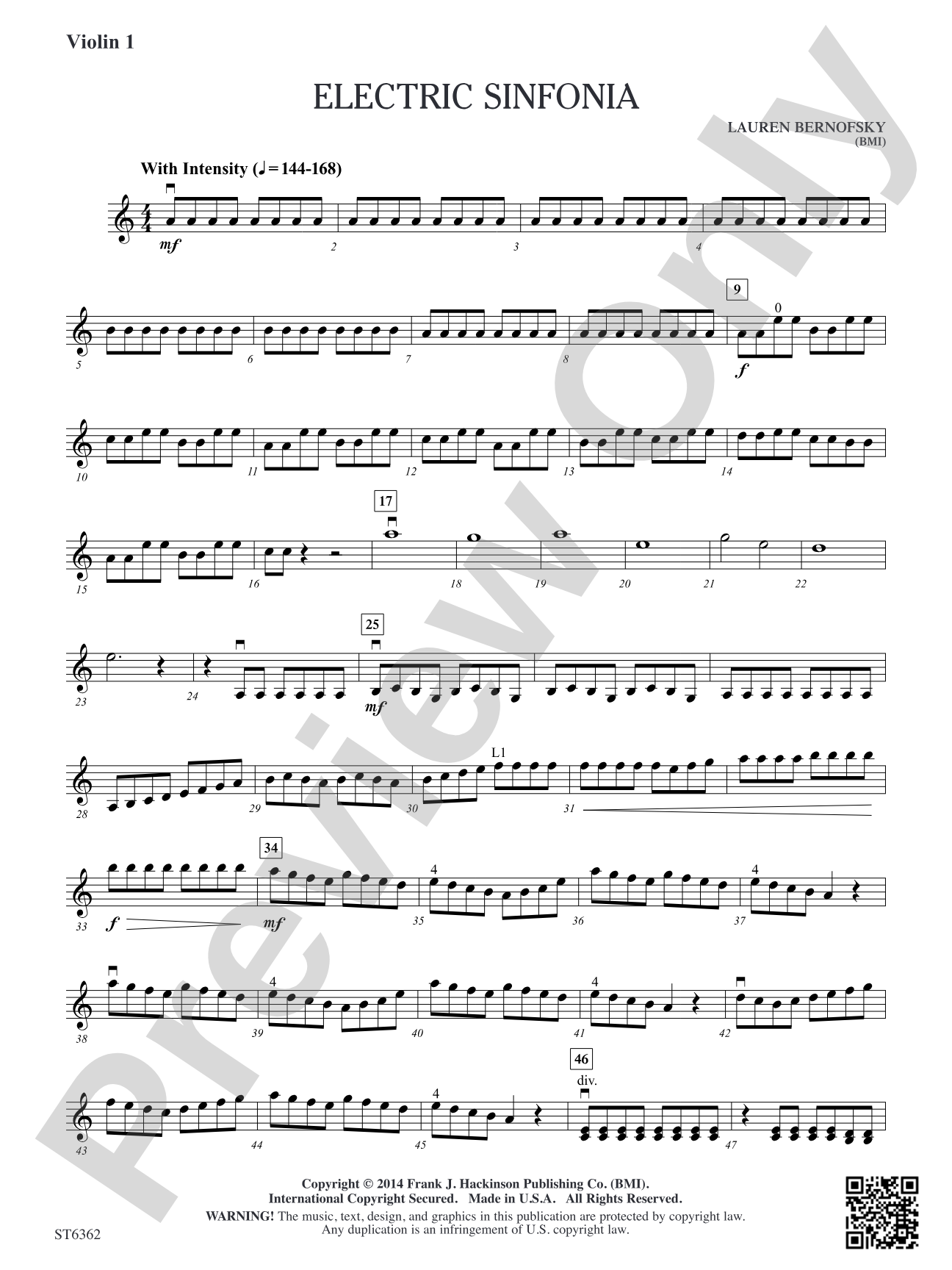

Electric Sinfonia: Violin 1
By Lauren Bernofsky
Grade: 2.5
Item: 98-PC-DST6362_VN1
$7.00
Pickup currently not available
Description
Hop onboard with this red-hot piece that includes hints of rock music. Musicians hit the ground running as aggressive lines contrast with longer, sweeping phrases. Perfect for building confidence in your group, individual parts are quite easy to play, but when you put everything together, the group will sound sensational!


Don't just read it, hear it, play along with it, and watch your students grow with it. In MakeMusic Cloud, Electric Sinfonia: Violin 1 comes alive with professional accompaniment, adjustable tempo, and built-in practice tools that turn solo practice into real progress.
Open in the Player
Jump straight in and assign it today.
Start Your Free Trial
Open this title and explore the full library in minutes.
Sample Audio
1
Audio File
--:--
0:00
0:00
Sample Video
No sample videos found.
Additional Details
Series:
FJH Developing Strings
Publisher:
The FJH Music Company, Inc.
SKU:
98-PC-DST6362_VN1
More about this title
About the Composer: Lauren Bernofsky

Lauren Bernofsky has composed over a hundred works spanning solo pieces, chamber music, choral literature, and large-scale orchestral, operatic, and ballet scores. Her compositional voice balances emotional depth with intellectual rigor, blending technical sophistication with lyrical expression. Lukas Foss called her "a master composer," and her work has earned major recognitions including the National Flute Association's Newly Published Music Competition and the Opera Puppets Award at Boston Metro Opera. Her Prayer of Shantideva won the Dalai Lama Composition Contest and was premiered at a service honoring the Dalai Lama himself.
Bernofsky holds degrees from The Hartt School (Bachelor's in violin and composition), New England Conservatory (Master's in composition), and Boston University (Doctorate of Musical Arts in composition). She has taught at the Peabody Institute and Interlochen Center for the Arts, and her works have been commissioned by ensembles ranging from The Bloomington Symphony to Sinfonia Calcania of Boston. Her string quartet Anacostia Journal was featured on PBS's NOW with Bill Moyers, and her Concerto for Trumpet and Orchestra has appeared in the International Trumpet Guild journal.
Why we love this
Bernofsky captures something rare here: a piece that sounds impressive while remaining genuinely playable at Grade 2.5. The rock-influenced orchestration gives students permission to play with energy and attitude, yet the writing never sacrifices musicality or ensemble balance. You'll find yourself looking forward to rehearsals because the sound payoff is immediate and genuinely exciting.
What to expect
Propulsive and modern, with the drive of rock music meeting the fullness of a string orchestra. Aggressive lines snap and crackle, then the texture opens into long, singing phrases that let the ensemble breathe and showcase tonal beauty in a completely different register.
Who it's for
String orchestras at the Grade 2.5 level who are ready to sound polished and confident without over-reaching technically. This works especially well for groups building ensemble pride or preparing for competitions where a contemporary, energetic piece sets them apart.
How to get the most out of it
- Strike the opening aggressive lines with unified bow direction and clear articulation; the contrast with the sweeping phrases depends on crisp ensemble attacks.
- Balance individual parts against the full texture by rehearsing sections separately first, then gradually layering them so students hear how their lines fit into the larger sound.
- Encourage a rock-influenced energy without sacrificing string technique; this piece invites a more contemporary attitude while maintaining proper bow control and intonation.
- Mark the transitions between aggressive and lyrical sections clearly in the score so players understand the architectural shape and prepare mentally for each shift in character.
How to use it
Program this as an opener or closer on a concert where you want to establish contemporary style and energy; it signals that your ensemble engages with modern repertoire and performs with confidence. It also fits naturally into a concert that mixes classical and contemporary work, or serves as a strong festival entry where accessibility combined with musical maturity scores well with adjudicators.
Skills your students will build
- Balancing aggressive, detached articulation with sustained, lyrical phrasing
- Ensemble cohesion across contrasting musical textures and tempos
- Reading rhythmic figures influenced by rock idiom
- Maintaining intonation under dynamic and textural pressure
- Responding to conductor's interpretation of contemporary style