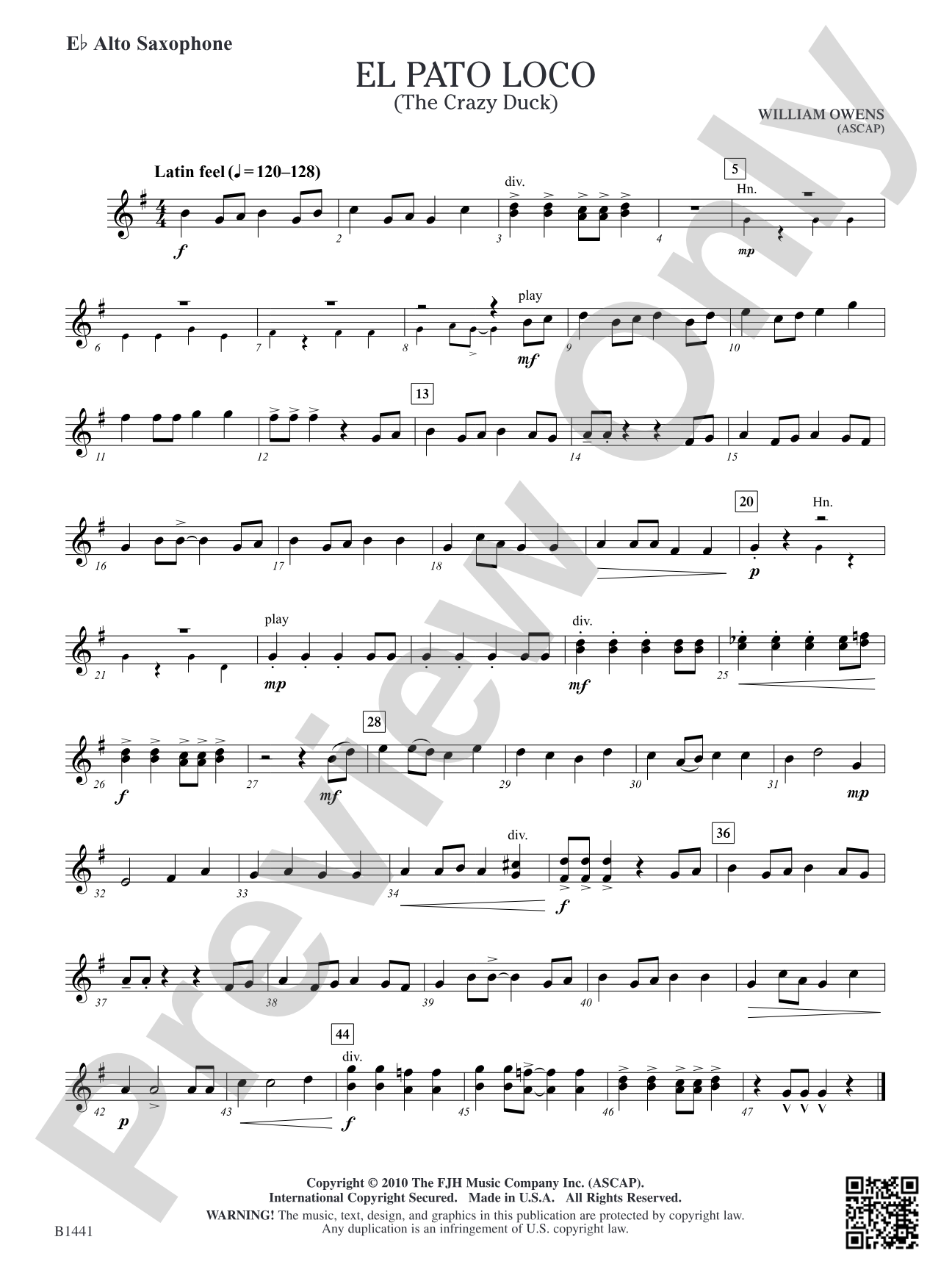
El Pato Loco (The Crazy Duck): E-flat Alto Saxophone Sheet Music Preview

El Pato Loco (The Crazy Duck): E-flat Alto Saxophone

The Crazy Duck

By William Owens

Grade: 1

Item: 98-PC-DB1441_AX1

Digital Download
$7.00
Description
Add some south-of-the-border flare to your next concert with this whimsical novelty work! Dedicated to those wacky, web-footed waterfowl that wander innocently through our parks vying for a quick snack, the music is based on Latin-style rhythms that are supported by an array of percussion instruments. You’ll even hear moments alluding to the great Toreador as the crazy duck comes for you! Lots of fun!

El Pato Loco (The Crazy Duck): E-flat Alto Saxophone isn't in MakeMusic Cloud just yet...but it could be. Let us know you'd like to see it, and you'll help shape what comes next. In the meantime, start a free trial and dive into thousands of interactive titles your students can play along with today.

Sample Audio
0:00
0:00
Sample Video
Additional Details
Series: FJH Beginning Band
Publisher: The FJH Music Company, Inc.
SKU: 98-PC-DB1441_AX1

More about this title

About the Composer: William Owens

William Owens

William Owens brings three decades of classroom experience to his compositions for young ensembles. A VanderCook College of Music graduate and former Texas band director, he has established himself as a trusted voice in beginning band literature, with over 300 published works spanning concert band, string orchestra, and small ensemble formats. His music appears on required repertoire lists across the country and has become foundational to many young band programs.

Owens' compositional approach balances accessibility with musicality, making him a go-to composer for directors seeking pieces that engage students without sacrificing artistic merit. His work has earned recognition from the American Bandmasters Association, ASCAP membership, and numerous state and national awards. Based in Fort Worth, Texas, he remains an active clinician and conductor throughout North America.

Why we love this

Grade 1 novelty pieces that actually work in concert require careful craft, and Owens nails the balance here. The piece carries genuine musical ideas rooted in Latin idioms rather than relying solely on humor, which means your band sounds accomplished even while having obvious fun. Programming a well-made novelty like this early in the year builds ensemble morale and shows students that concert band can be joyful.

What to expect

A lighthearted romp through a Latin-flavored landscape, complete with comedic energy and unexpected musical winks. The percussion drives the action while the band carries a melody that feels familiar and charming, creating moments of genuine musical wit that performers and audiences both appreciate.

Who it's for

Beginning band conductors looking for a Grade 1 piece that entertains without talking down to students. The straightforward instrumentation and accessible harmony make it ideal for concert programs where you want to showcase ensemble unity and fun alongside more serious repertoire.

How to get the most out of it

  • Establish a clear, infectious groove in the rhythm section from the first rehearsal; lock the Latin-style pulse before layering in the melodic voices.
  • Balance the percussion battery so that the various instruments articulate the rhythmic framework without overwhelming the band's tuning or clarity.
  • Lean into the character moments, especially the Toreador-inspired passages; these musical nods reward conductors and audiences who recognize them and make the piece memorable.
  • Keep the tempo steady and playful; resist the urge to rush, as clarity of the Latin rhythms depends on rhythmic precision rather than speed.

How to use it

This works beautifully in an early-season concert when you need to establish a relaxed, welcoming tone before moving into weightier works. It also serves as an excellent pacing piece in a longer program, or as a finale that sends the audience home smiling. Consider pairing it with other accessible Grade 1 works to build ensemble confidence early in the school year.

Skills your students will build

  • Latin rhythm patterns and syncopation common to son and mambo styles
  • Balanced ensemble playing with varied percussion textures
  • Stylistic contrast between sections (melodic versus rhythmic material)
  • Maintaining steady tempo while executing rhythmic precision

You May Also Like