
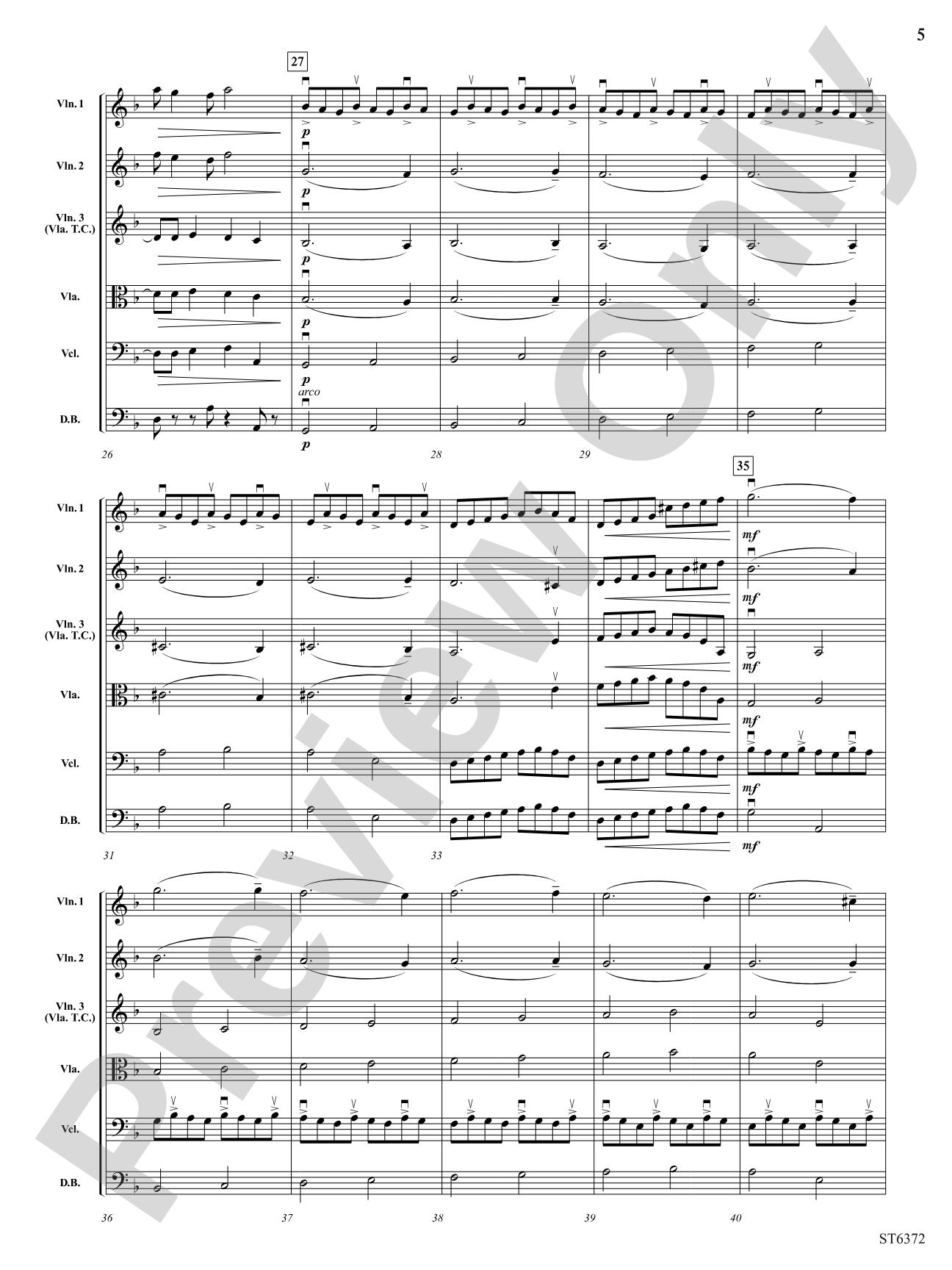
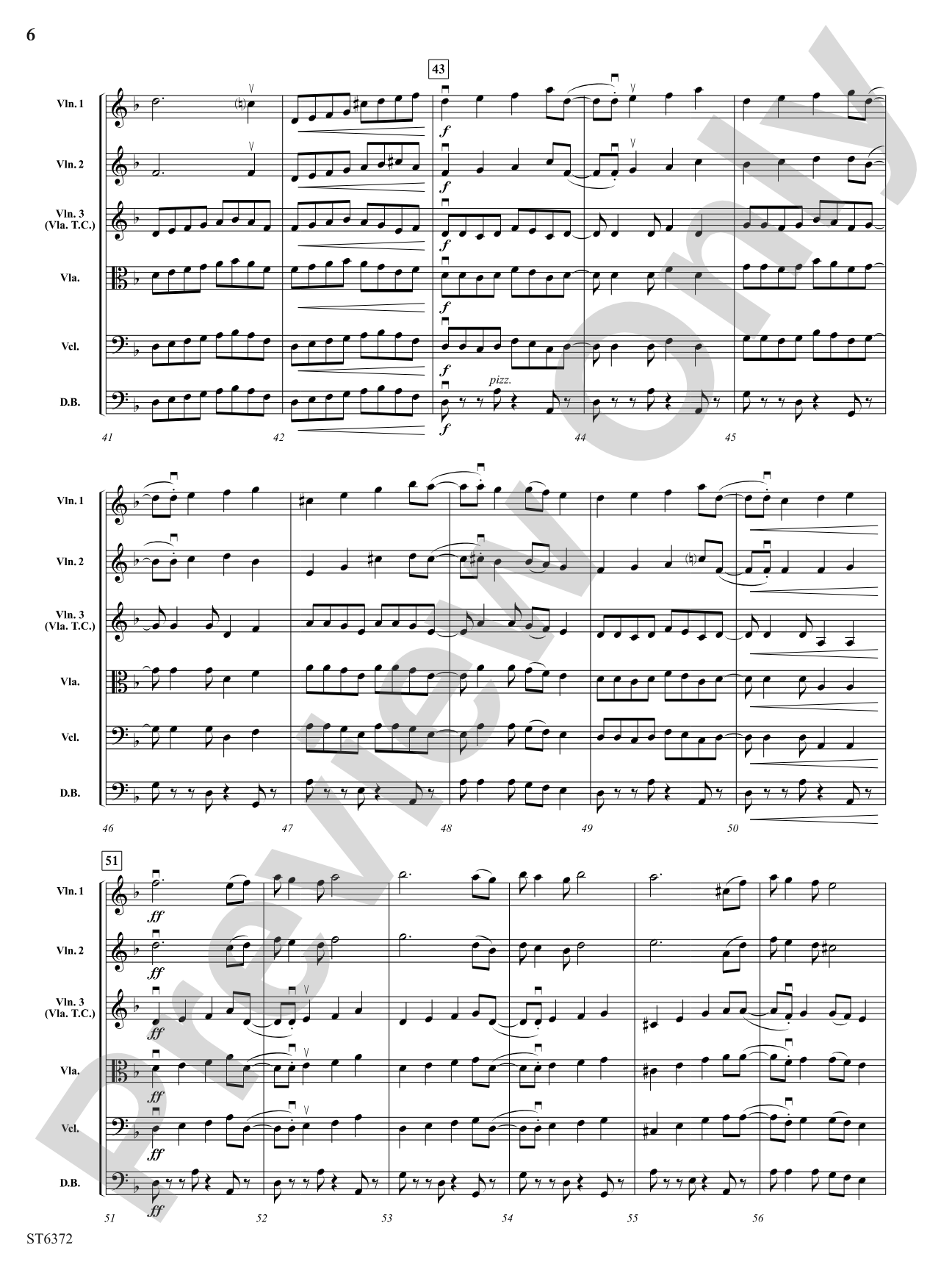
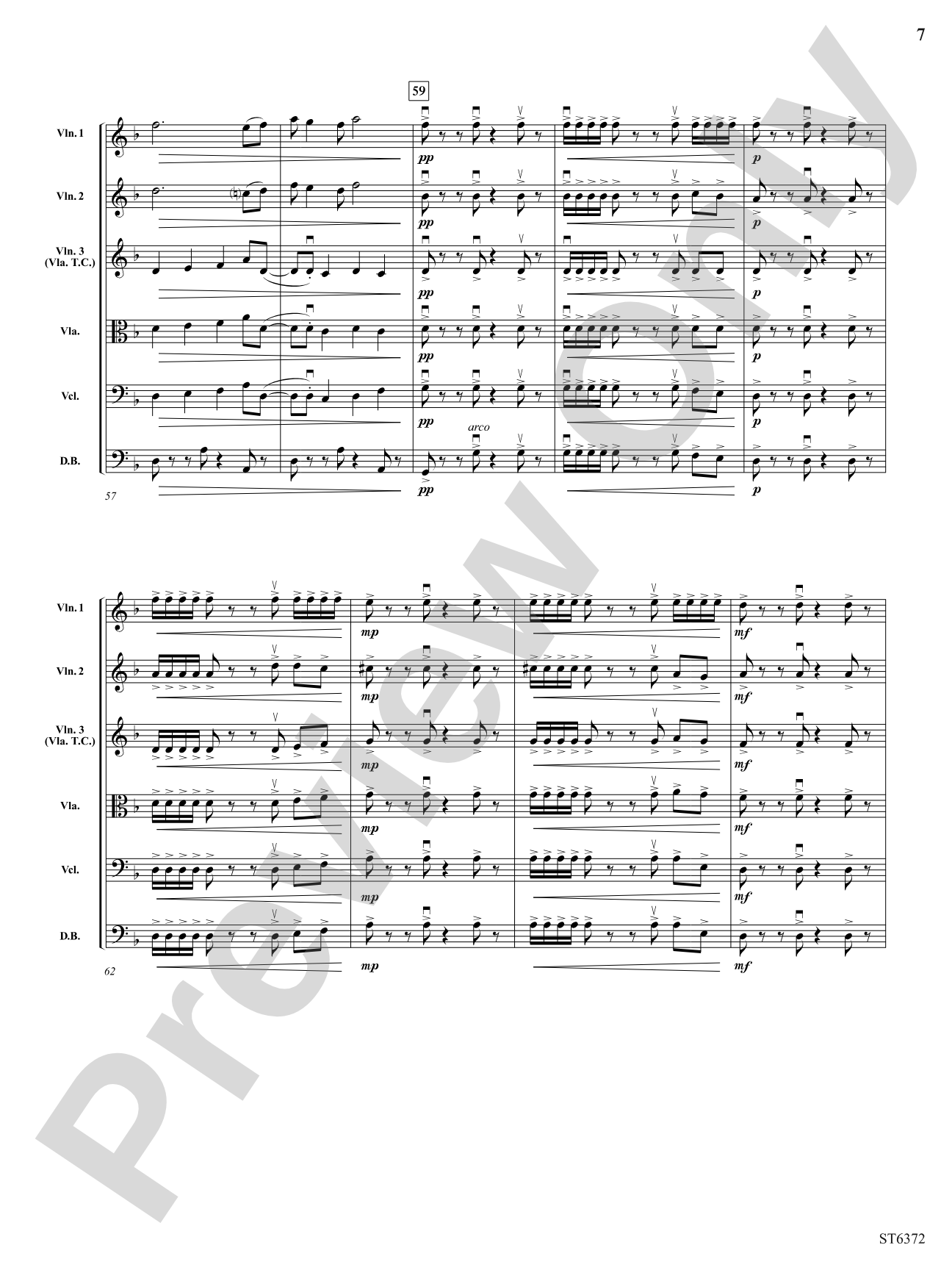
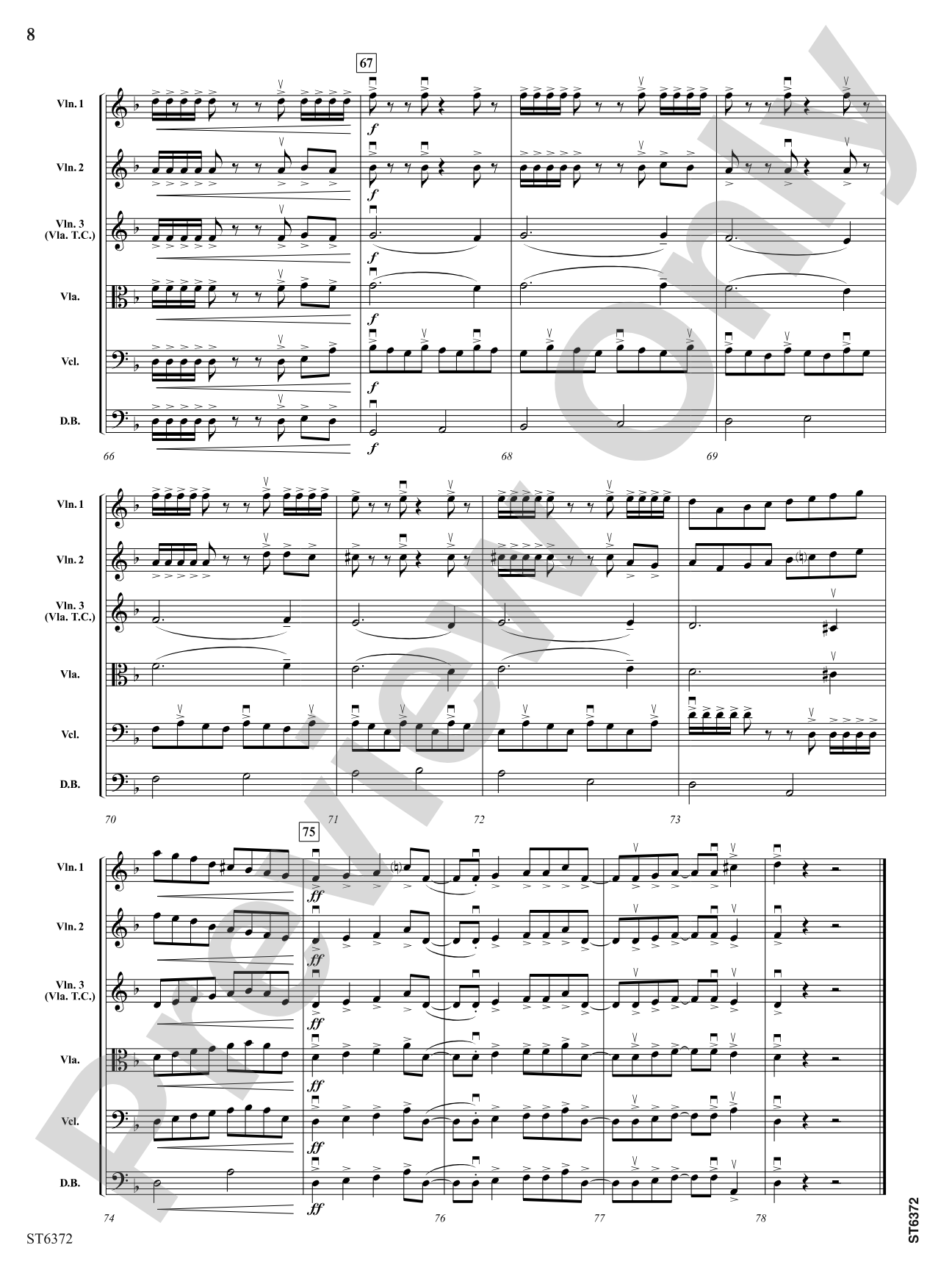

El Gaucho: Score
By Bob Lipton
Grade: 3
Item: 98-DST6372S
$10.00
Pickup currently not available
Description
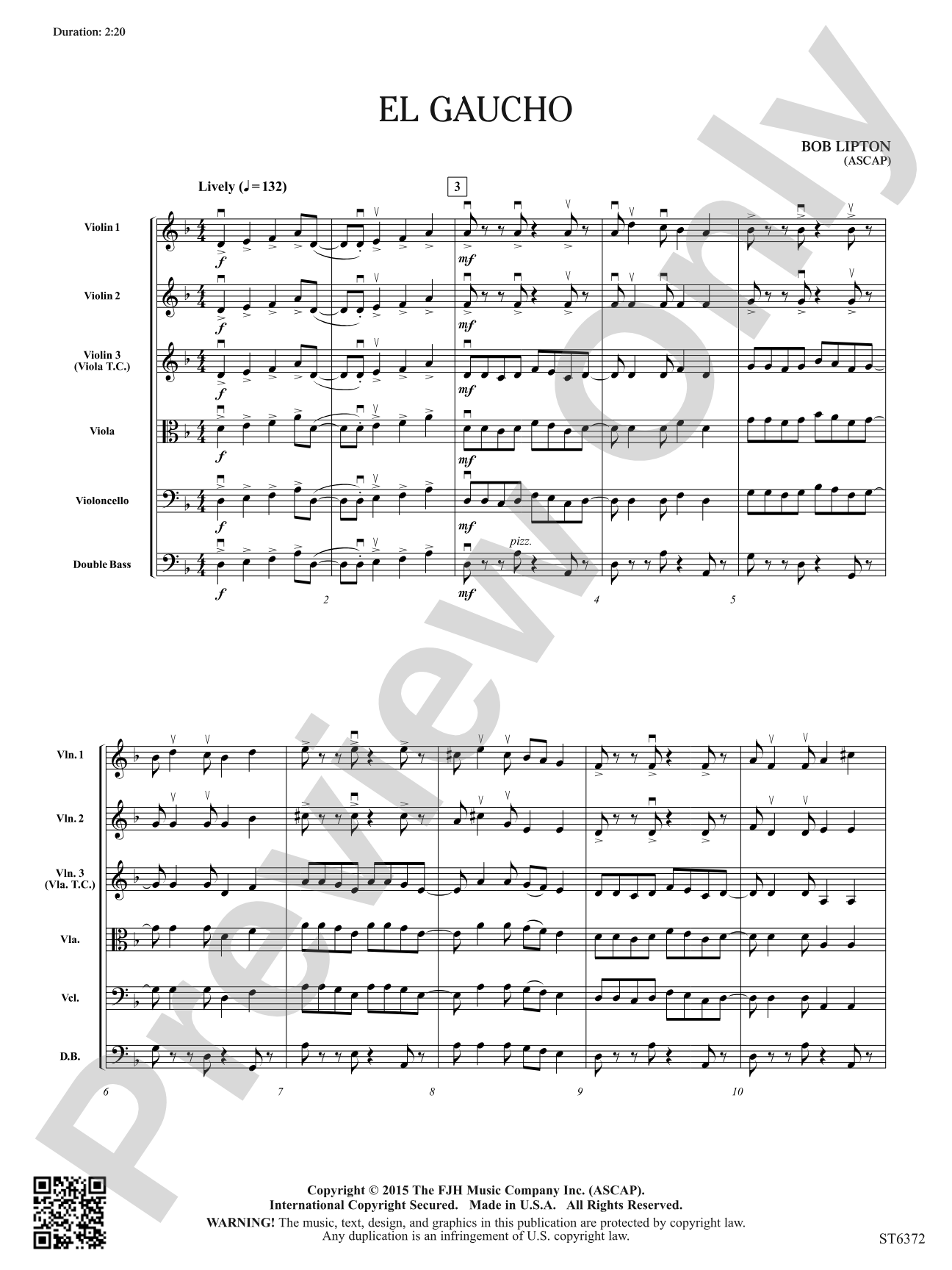
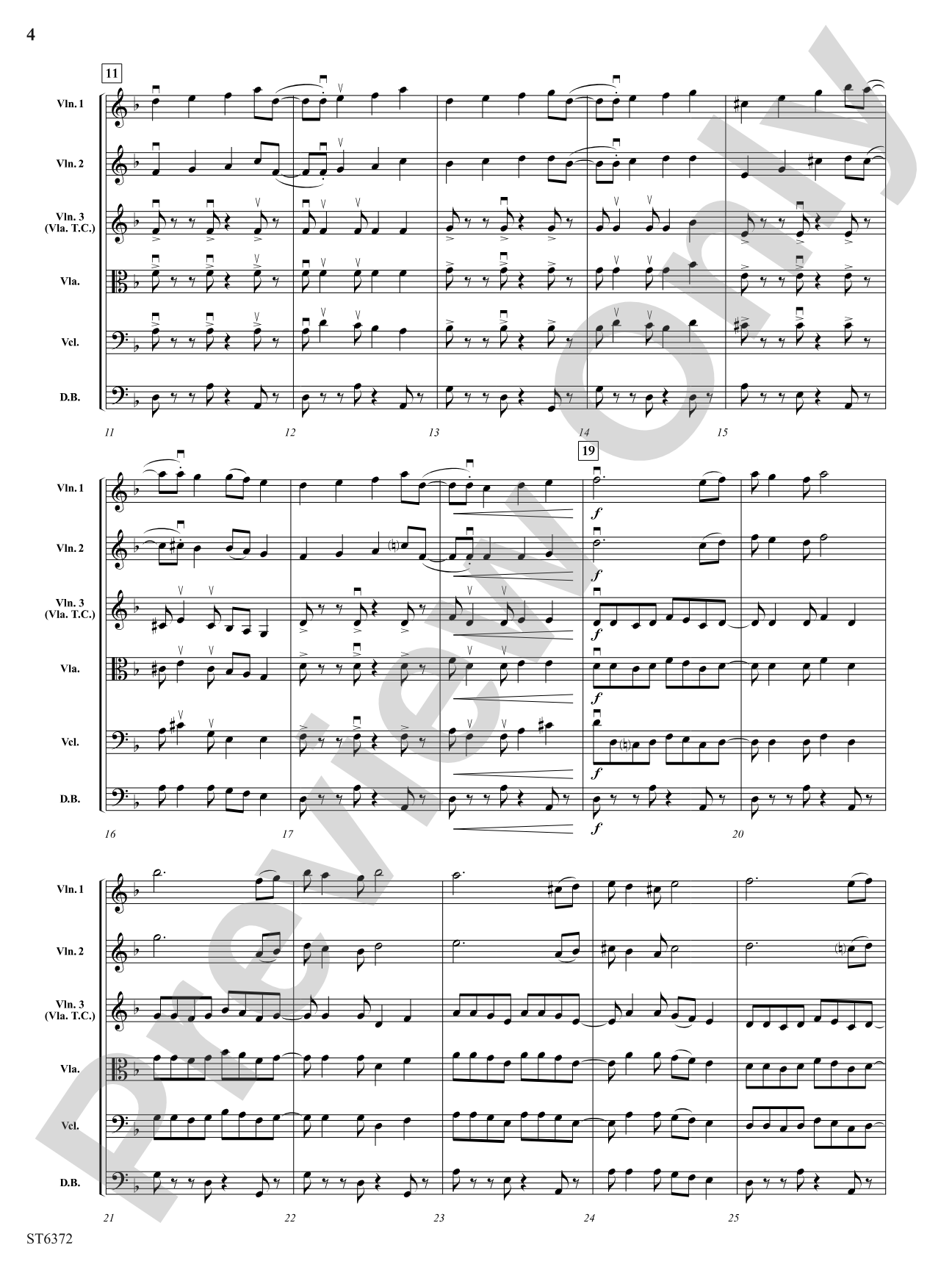
Add a touch of Latin flair to your next program with this driving, rhythmic work. Infectious melodies combine with a touch of tango as every section gets a chance to dig in. Not for the faint of heart, yet much easier to play than it sounds!


El Gaucho: Score isn't in MakeMusic Cloud just yet...but it could be. Let us know you'd like to see it, and you'll help shape what comes next. In the meantime, start a free trial and dive into thousands of interactive titles your students can play along with today.
Request This Title
Tell us you want it.
Start Your Free Trial
Explore everything that's ready to play right now.
Sample Audio
1
Audio File
--:--
0:00
0:00
Sample Video
No sample videos found.
Additional Details
Series:
FJH String Orchestra
Publisher:
The FJH Music Company, Inc.
SKU:
98-DST6372S
More about this title
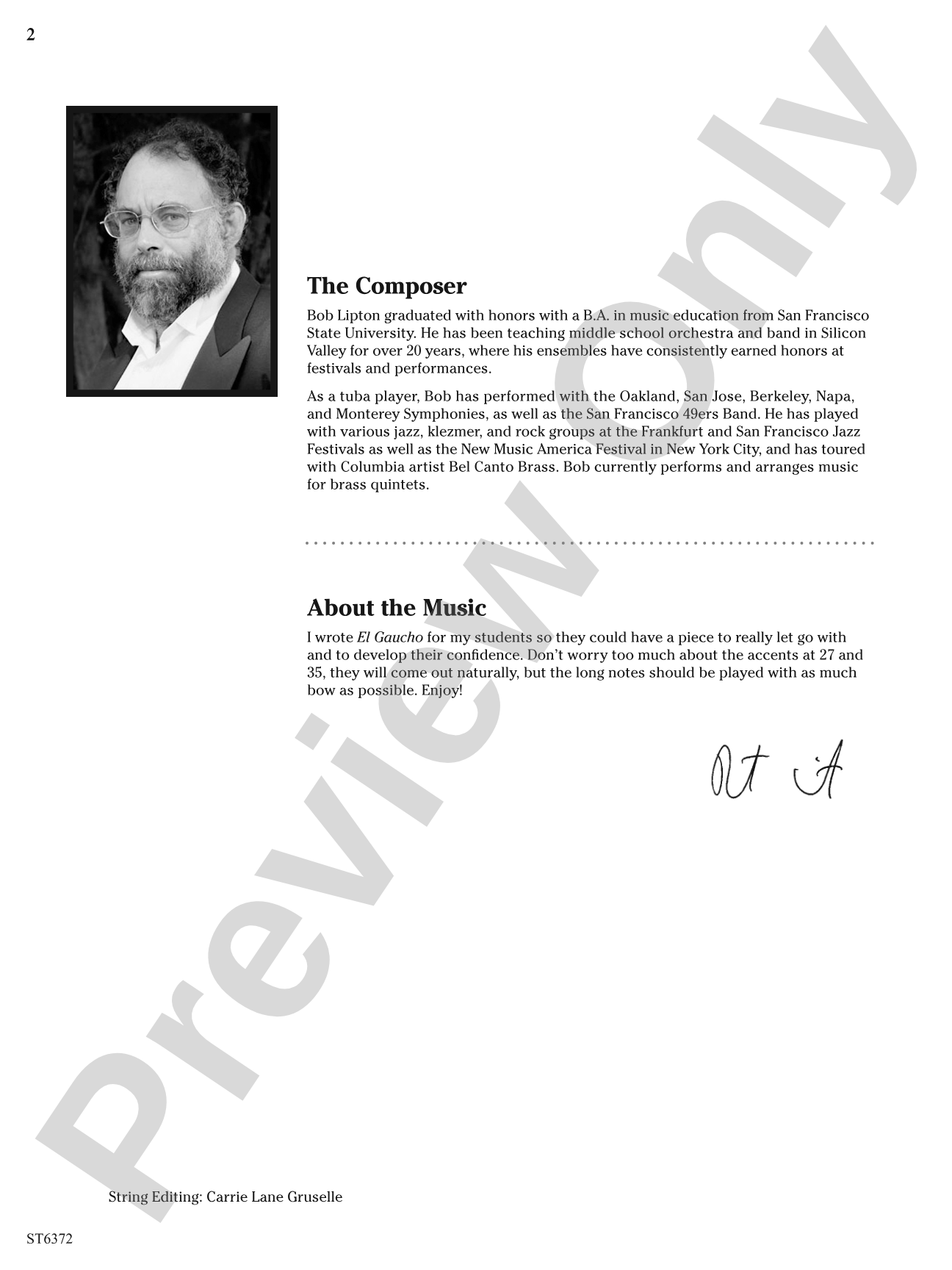
About the Composer: Bob Lipton
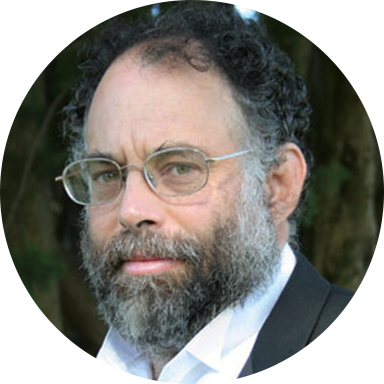
Bob Lipton earned his B.M. in music education from San Francisco State University and has spent the last two decades teaching middle school orchestra and band in Silicon Valley. His background as a tuba performer has taken him across five regional symphonies (San Jose, Oakland, Napa, Monterey, and Berkeley) and into festival performances ranging from the San Francisco Jazz Festival to the Filmfare Awards in Mumbai.
Beyond his classroom work, Lipton has maintained an active performance schedule that spans classical, jazz, and popular music contexts. He toured internationally with the Colombia Artists Bel Canto Brass, played in the SF 49ers marching band, and continues to arrange and perform music for brass quintet. His compositional voice draws directly from these varied musical experiences, resulting in school orchestra and band works that balance technical accessibility with genuine musical substance.
Why we love this
El Gaucho captures that rare balance where students feel like they're playing something sophisticated and stylistically rich, yet the writing never punishes them for being at Grade 3. The infectious rhythmic drive and tango-inflected melodies keep energy high across all rehearsals, and every section gets spotlight moments that make their parts feel essential rather than filler.
What to expect
El Gaucho pulses with the energy of a bustling dance floor. Driving rhythms and swaying melodic lines create forward momentum that never lets up, while the tango-influenced harmonies add sophistication without losing accessibility. It's the kind of piece where even young players feel the music's infectious vitality in their bodies.
Who it's for
String orchestra directors at the Grade 3 level who want to expose their students to Latin and tango idioms without sacrificing musical substance. This works equally well for middle school ensembles ready to move beyond folk arrangements and for high school orchestras seeking accessible contemporary work with genuine character.
How to get the most out of it
- Lock the rhythm section (cello and bass) into a tight, steady pulse; Latin grooves live or die on rhythmic precision, and young players often rush the energy.
- Shape the melodic lines with clear rubato and phrasing rather than playing mechanically; tango character demands expressive momentum even in shorter phrases.
- Balance the violin parts so the main melody cuts through the rhythmic accompaniment; young players tend to overshadow the tune with busy accompaniment figures.
- Use articulation consistently across similar passages; this piece relies on short, sharp bowstrokes to drive the Latin feel, so agreement among players makes the style land immediately.
How to use it
Program this as a midsection piece when you need to shift mood and energy after a Baroque or Classical work; the Latin flair and rhythmic drive provide natural contrast. It also pairs well on a concert celebrating multicultural repertoire or as a closing concert opener that establishes enthusiasm before transitioning to heavier works.
Skills your students will build
- Latin rhythmic vocabulary and tango-style articulation
- Independence within rhythmic ensemble (accompaniment figures that sit against the main melody)
- Stylistic phrasing and rubato in non-classical contexts
- Confidence playing accessible contemporary arrangements of world music