
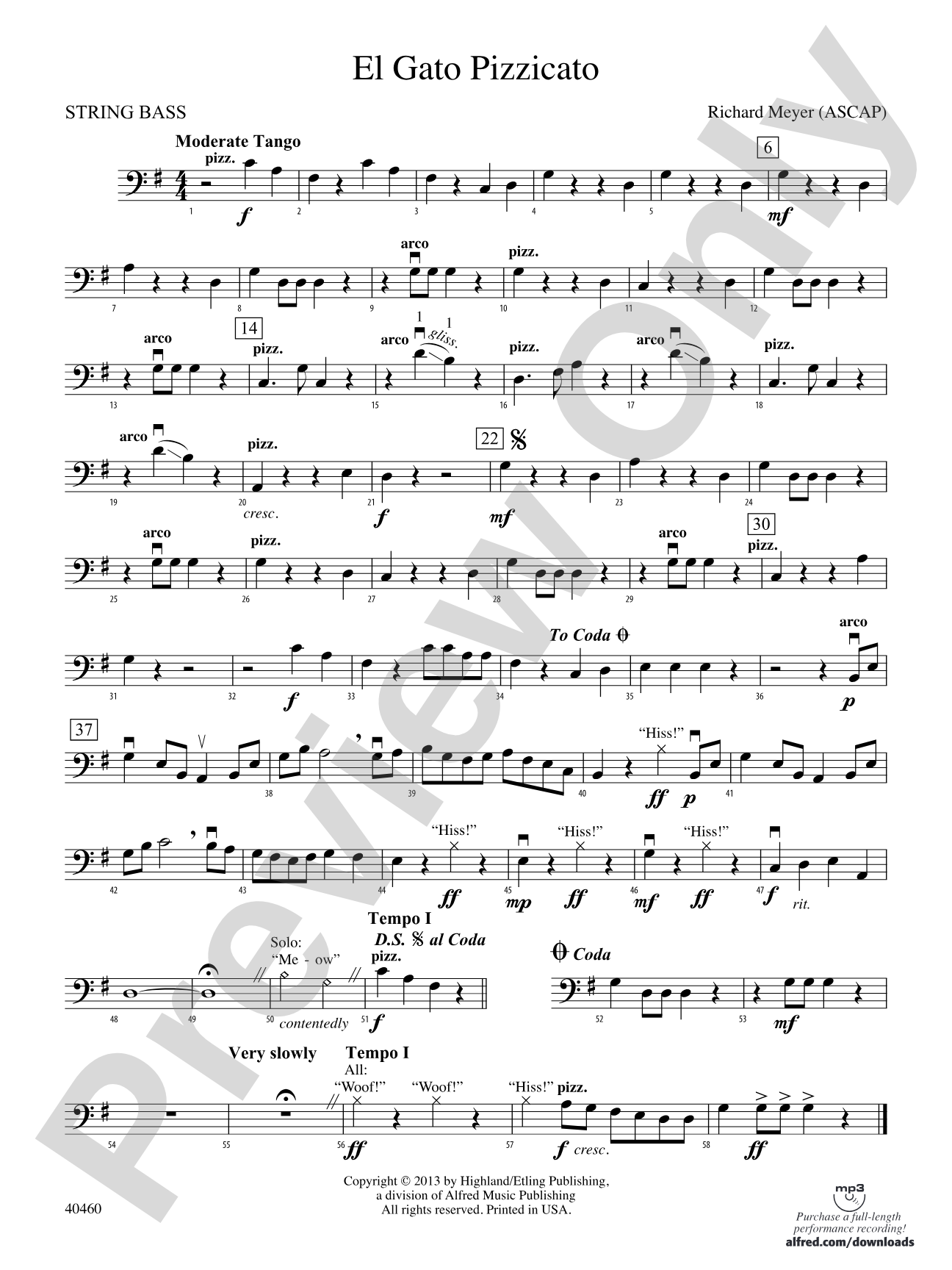

El Gato Pizzicato: String Bass
By Richard Meyer
Grade: 1.5
Item: 00-PC-0015993_SB
$5.99
Pickup currently not available
Description
Your students' imaginations will run wild as they rehearse and perform this charming Spanish-flavored salute to cats. Glissando "meows," threatening "hisses," and even an enthusiastic visit from a dog set the mood for what is sure to be the highlight of any concert. A great way to introduce shifting basics and high vs. low finger patterns, this selection is also a wonderful way for students to learn about tone painting. Includes a simple part for maracas and claves, as well as piano accompaniment and violin III parts. Correlates to String Explorer, Book 1, Unit 13.


Don't just read it, hear it, play along with it, and watch your students grow with it. In MakeMusic Cloud, El Gato Pizzicato: String Bass comes alive with professional accompaniment, adjustable tempo, and built-in practice tools that turn solo practice into real progress.
Open in the Player
Jump straight in and assign it today.
Start Your Free Trial
Open this title and explore the full library in minutes.
Sample Audio
1
Audio File
--:--
0:00
0:00
Sample Video
Additional Details
Series:
Highland/Etling String Explorer
Publisher:
Alfred Music
Page Count:
76
SKU:
00-PC-0015993_SB
More about this title
About the Composer: Richard Meyer

Richard Meyer spent 35 years teaching strings to students across elementary, middle, and high school levels in California public schools. At Oak Avenue Intermediate School in Temple City, he directed orchestras for 22 years, expanding the program from 29 students to 200 while simultaneously overseeing the city's elementary string curriculum. He later served as music director of the Pasadena Youth Symphony Orchestra for 16 years, leading ensembles on tours throughout North America, Europe, and Australia.
Beyond the classroom and concert hall, Meyer has become a nationally recognized composer with more than 190 works and arrangements published. He served as string editor for Alfred Publishing Company for 16 years and co-authored the String Explorer method series alongside other instructional resources for young string players. His innovative "Giving Bach" program, launched in 2009, has earned national recognition for using interactive concerts to reach special needs and underserved student populations throughout Southern California. He has been a featured clinician at major conferences including the A.S.T.A. National Conference and has guest-conducted All-State and Honor Orchestras across multiple states.
Why we love this
Meyer knows exactly what intermediate string students need to hear and play. The Spanish-flavored imagery gives young players a concrete dramatic framework for exploring shifting, finger patterns, and tone color without feeling like a study piece. Directors will appreciate how thoroughly he's thought through the pedagogical layers here; every musical event serves both a story purpose and a technical one.
What to expect
A delightful journey through a world of cats in their natural habitat, complete with playful meows, territorial hisses, and the chaos of an unwelcome canine visitor. The Spanish flavor wraps the whole piece in warmth and charm, making it feel both whimsical and genuinely musical.
Who it's for
Elementary and early middle school string orchestras ready for repertoire that combines humor with real musical content. Students should have basic shifting skills and be comfortable with multiple finger patterns on the D and A strings.
How to get the most out of it
- Rehearse the glissando "meows" separately so students understand they're executing a shift, not just sliding randomly. Lock the pitch of the arrival note first, then add the glissando on top.
- Balance the percussion parts carefully; the maracas and claves should dance around the strings without overwhelming them. Have players rehearse their entrances with the conductor's clear gestures, not by listening for the strings.
- Shape the "hissses" with a unified bow direction and consistent pressure across the section. Younger players often flatten these moments or make them sound timid; they need permission to lean into the drama.
- Coordinate the "dog visit" chaos with a clear count or gesture. Students should know whether they're responding to a specific orchestra moment or to you, and the resulting texture should feel playful, not messy.
How to use it
This works beautifully as a family concert opener or as the anchor of a "pops" concert that also includes other lighter works. The strong visual and sonic storytelling makes it memorable for audiences of all ages, and the novelty appeal often becomes a highlight parents and students talk about long after the concert.
Skills your students will build
- Shifting between positions (particularly low to high finger patterns on D and A strings)
- Glissando technique as a musical and expressive tool, not just a technique
- Creating distinct tone colors for different characters and moods (meows, hisses, dog sounds)
- Sight-reading and coordinating rhythm in a piece with multiple percussion parts
- Understanding tone painting and program music through active listening and performance