

El Dia de Tu Santo (The Day of Your Glory): SAB Choral Octavo
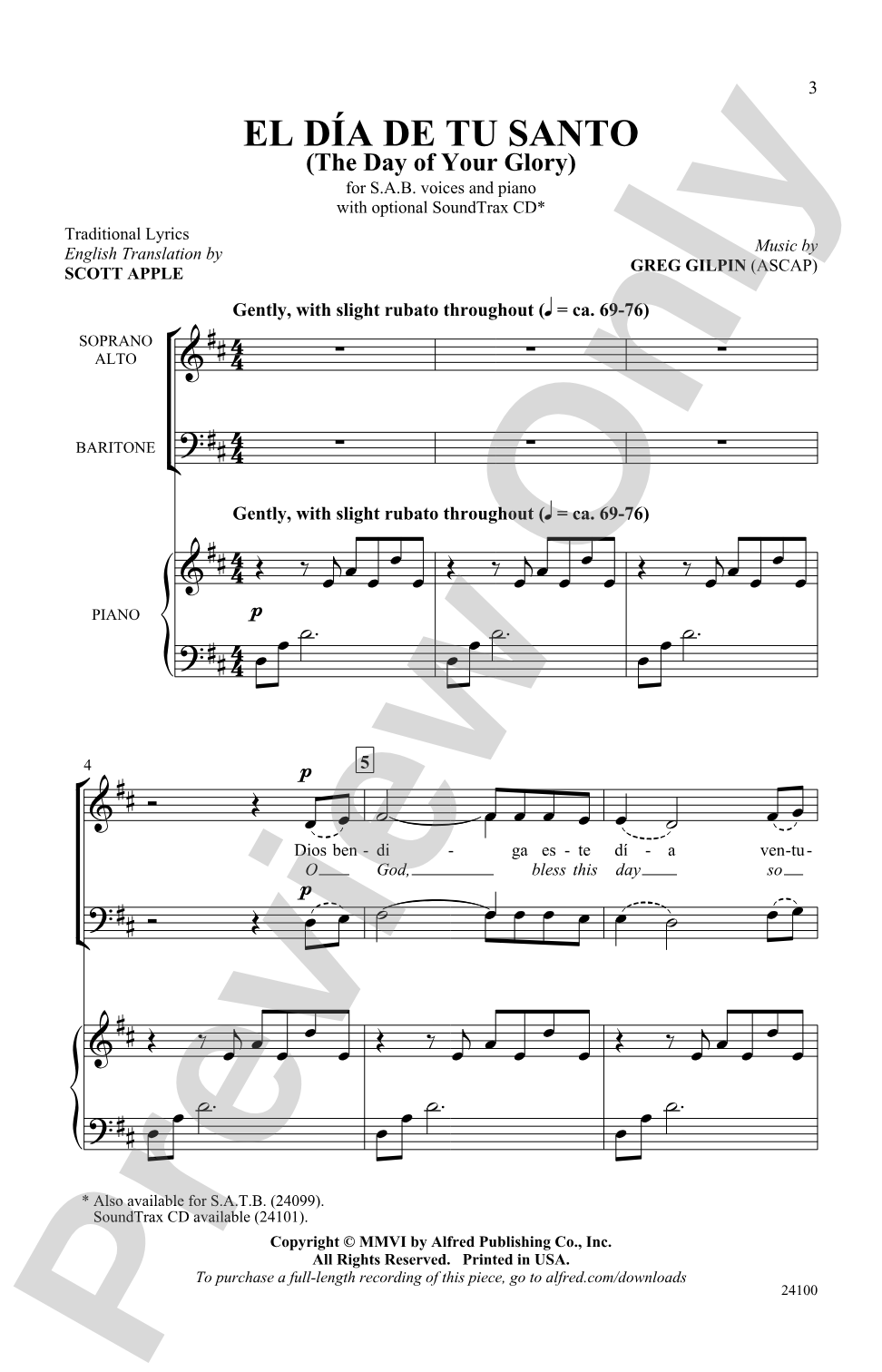
Traditional Lyrics, music by Greg Gilpin
Item: 00-PO-0000118
$1.65
Minimum order quantity: 20 copies
Pickup currently not available
Related Items
El Dia de Tu Santo (The Day of Your Glory): SoundTrax Digital Audio Download |
$22.95
|
View | |
El Dia de Tu Santo (The Day of Your Glory): SATB Choral Octavo |
$1.65
|
View | |
El Dia de Tu Santo (The Day of Your Glory): SATB Choral Octavo |
$1.65
|
View | |
El Dia de Tu Santo (The Day of Your Glory): SAB Choral Octavo |
$1.65
|
View | |
El Dia de Tu Santo (The Day of Your Glory): Choral Octavo SoundTrax CD |
$22.95
|
View |
Description
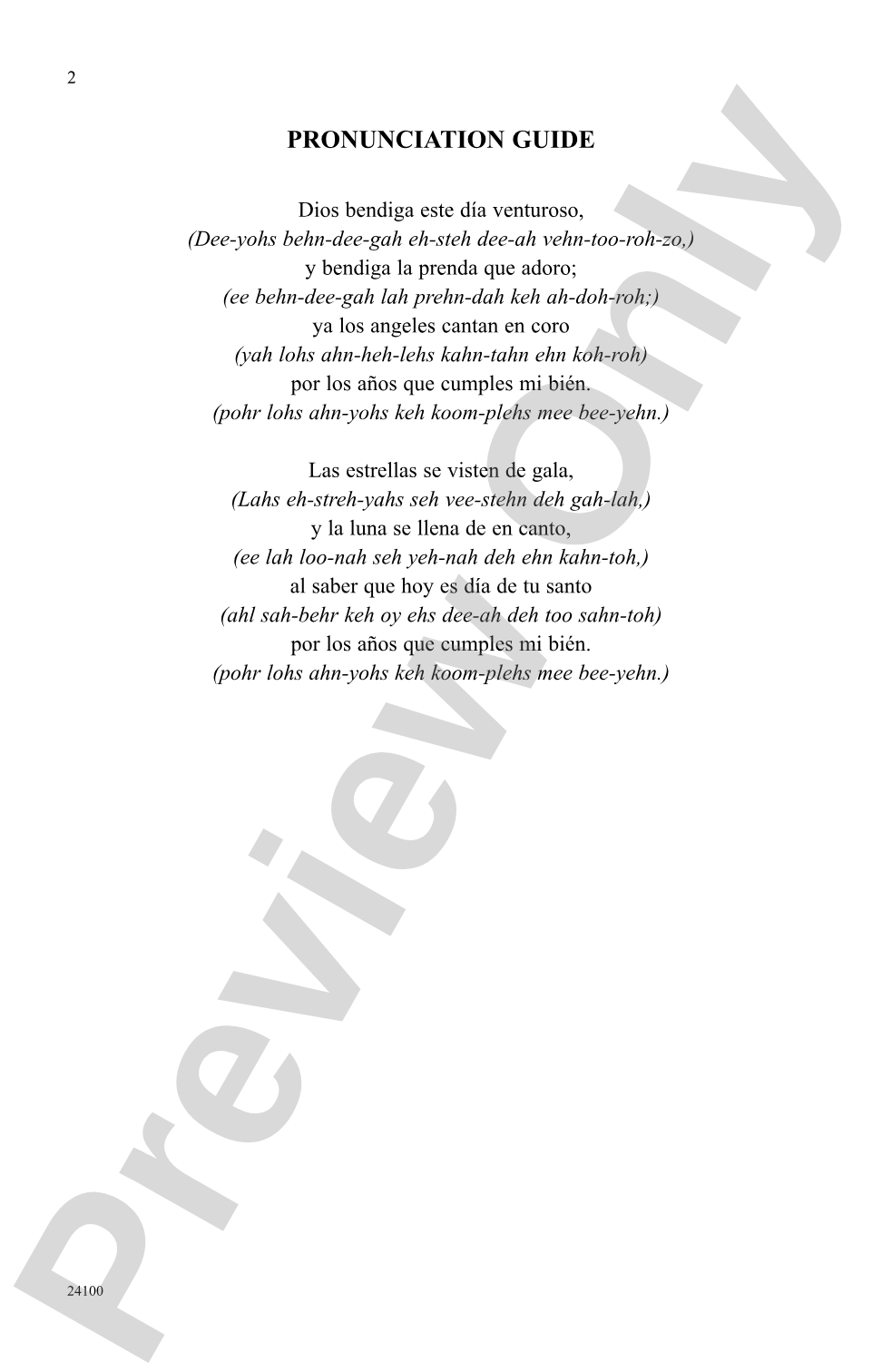
An inspired setting of a thoughtful Spanish text, traditionally used as a blessing. Strikingly simple, yet elegantly effective, this contemporary choral offers a light multicultural sound and may be sung year-round in either Spanish or English.


El Dia de Tu Santo (The Day of Your Glory): SAB Choral Octavo isn't in MakeMusic Cloud just yet...but it could be. Let us know you'd like to see it, and you'll help shape what comes next. In the meantime, start a free trial and dive into thousands of interactive titles your students can play along with today.
Request This Title
Tell us you want it.
Start Your Free Trial
Explore everything that's ready to play right now.
Sample Audio
1
Audio File
--:--
0:00
0:00
Sample Video
No sample videos found.
Additional Details
Series:
Alfred Choral Designs
Publisher:
Alfred Music
Page Count:
8
SKU:
00-PO-0000118
More about this title
About the Composer: Greg Gilpin

Greg Gilpin brings both compositional depth and practical choral expertise to every piece he writes. An ASCAP-recognized composer and conductor, he has led performances at Carnegie Hall, Lincoln Center, and Ryman Auditorium, with international credits spanning the Sydney Opera House, Royal Festival Hall in London, and Harpa Concert Hall in Reykjavik. As Director of Educational Choral Publications for Shawnee Press, Gilpin understands what works in rehearsal and in performance.
Beyond the concert hall, Gilpin has expanded his creative reach into film scoring, winning Best Score for the short film "Rosie's Rescue" in 2021, and collaborating with opera singer Angela Brown on a world premiere arrangement of "What Child is This?" He holds membership in ACDA, NAfME, SAG-AFTRA, and is a Life Loyal Member of Phi Mu Alpha Sinfonia.
Why we love this
Gilpin has crafted something genuinely rare here: a piece that feels both spare and complete. The deceptive simplicity invites singers to focus on tone, blend, and the beauty of the text itself, making this ideal for choirs still building confidence or for directors seeking repertoire that sounds far more substantial than its demands suggest. The dual-language option and year-round flexibility mean this becomes a workhorse addition to your library.
What to expect
Serene and purposeful, this blessing unfolds with understated grace. The writing allows space for the Spanish text (and its English counterpart) to breathe, creating a sense of reverence and intimacy that invites both singers and listeners into reflection.
Who it's for
This octavo suits choirs of all ability levels, from middle school through adult groups. Its accessibility makes it ideal for communities seeking meaningful sacred repertoire that bridges cultural traditions without requiring advanced vocal technique.
How to get the most out of it
- Let the simplicity serve the text. Resist the urge to over-interpret; the arrangement's elegance comes from restraint and clarity of vowels.
- If performing bilingually, rehearse both versions thoroughly so singers feel equally secure in each language and can shift between them without losing focus.
- Shape phrases through breath and text emphasis rather than dramatic dynamic swells. The contemporary multicultural sound depends on gentle, purposeful phrasing.
- Use the recorded accompaniment strategically during early rehearsals to anchor harmonic relationships, then gradually reduce reliance on it as singers internalize the voicing.
How to use it
Program this as a gentle centerpiece for a multicultural concert or sacred service, or use it as a moment of calm during a choral festival. Its year-round appropriateness and bilingual nature make it equally fitting in a spring concert celebrating community or as a blessing during a commissioning or dedication ceremony.
Skills your students will build
- Balancing blend and tone across three-part voicing with minimal doubling
- Singing in Spanish with proper diction and musicality
- Sustaining focus through sparse arranging without rhythmic or harmonic complexity
- Shaping longer phrases with text awareness rather than dynamic contrast