
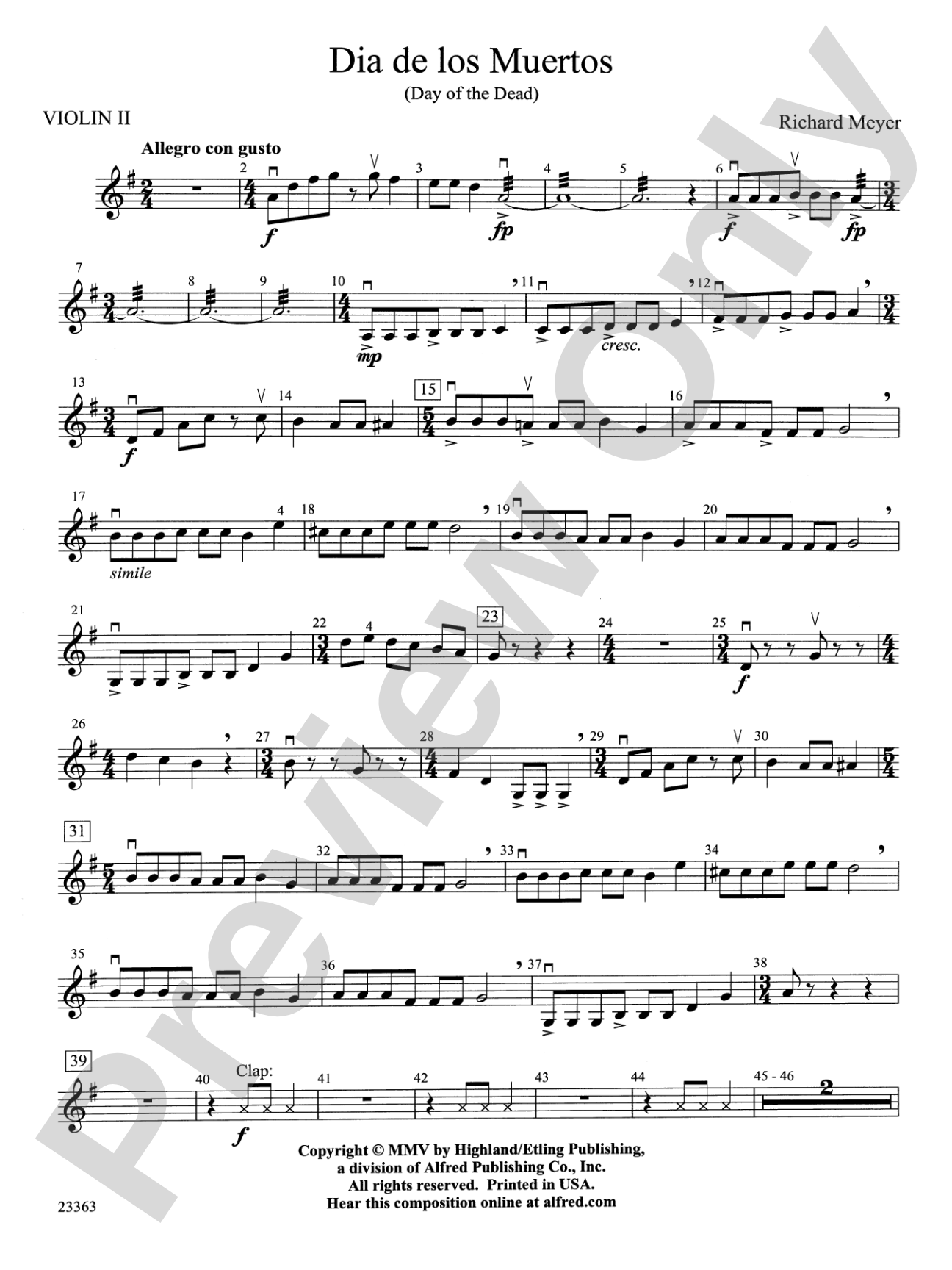

El dia de los Muertos: 2nd Violin
(Day of the Dead)
By Richard Meyer
Grade: 3
Item: 00-PC-0000708_VN2
$7.99
Pickup currently not available
Description
Richard Meyer has done it again! You audience will be transfixed by this stunning work which depicts "El Dia de los Muertos," or the Day of the Dead-a celebration that is observed in Mexico and other Latin American countries each year at the beginning of November. You're sure to recognize the incorporated "Dies Irae" theme, and you'll love the fun and high energy of this piece. Highly recommended!


Don't just read it, hear it, play along with it, and watch your students grow with it. In MakeMusic Cloud, El dia de los Muertos: 2nd Violin comes alive with professional accompaniment, adjustable tempo, and built-in practice tools that turn solo practice into real progress.
Open in the Player
Jump straight in and assign it today.
Start Your Free Trial
Open this title and explore the full library in minutes.
Sample Audio
1
Audio File
--:--
0:00
0:00
Sample Video
No sample videos found.
Additional Details
Series:
Highland/Etling String Orchestra
Publisher:
Alfred Music
Page Count:
132
SKU:
00-PC-0000708_VN2
More about this title
About the Composer: Richard Meyer
Richard Meyer spent 35 years teaching strings in public schools, with 22 of those years directing orchestras at Oak Avenue Intermediate School in Temple City, California. He transformed that program from 29 students to 200 and oversaw the district's elementary string curriculum. Meyer also led the Pasadena Youth Symphony Orchestra for 16 years, taking ensembles to performances across North America, Europe, and Australia.
Beyond the classroom, Meyer has established himself as a prolific composer with over 190 works published and served as string editor for Alfred Publishing Company. His "Giving Bach" initiative, launched in 2009, pioneered interactive concerts designed to reach special needs and underserved students throughout Southern California. He has presented clinics at major conferences including the A.S.T.A. National Conference and guest-conducted All-State orchestras across multiple states.
Why we love this
Meyer crafts an accessible yet musically sophisticated take on a culturally significant celebration. The integration of the Dies Irae gives the work historical weight while the vibrant orchestration keeps energy high throughout, making it genuinely engaging rather than reverent. At Grade 3, it lands in that sweet spot where young orchestras can execute something visually and sonically impressive without drowning in technical demands.
What to expect
The piece captures the duality at the heart of Day of the Dead celebrations: joyful, colorful energy overlaid with quiet reflection. Meyer's orchestration bounces between lively Latin rhythms and moments of genuine tenderness, creating music that feels alive and emotionally honest rather than superficial or cartoonish.
Who it's for
String orchestras at the Grade 3 level (typically middle school, but accessible to advanced elementary programs) looking for repertoire that combines cultural relevance with festival-ready musicianship. This works equally well for concert programming and contest scenarios.
How to get the most out of it
- Establish the rhythmic foundation early in rehearsal. The Latin character depends on secure, steady pulse from the lower strings, so lock that section in before layering upper voice texture.
- Balance the Dies Irae quotes carefully; these moments should feel like echoes or memories within the celebration rather than overwhelming the forward momentum of the piece.
- Pay attention to dynamic contrast. Many Grade 3 orchestras tend to play at one volume; this score rewards clear forte and piano sections that shape the emotional arc.
- Use the recorded accompaniment to check ensemble balance and to let students hear how their individual parts fit into the larger texture.
How to use it
Program this in fall concerts (late October or early November) as a natural fit for Halloween/Día de Muertos thematic programming. It also works as a contest piece that stands out for its cultural authenticity and compositional craft. Pair it with lighter works to showcase range, or with other multicultural selections to build a cohesive concert concept.
Skills your students will build
- Reading and executing Latin rhythmic patterns and syncopation
- Balancing melody, countermelody, and accompaniment texture within a Grade 3 framework
- Responding to sudden dynamic and tempo shifts that shape emotional character
- Interpreting the same thematic material (Dies Irae) in different orchestrational contexts
- Sustaining ensemble intonation during lyrical passages without sacrificing rhythmic drive