El Capitan: E-flat Alto Clarinet Sheet Music Preview

El Capitan: E-flat Alto Clarinet

By John Philip Sousa / arr. Jack Bullock

Grade: 3 (Medium Easy)

Item: 00-PC-0015596_AC1

Digital Download
$3.00
Description
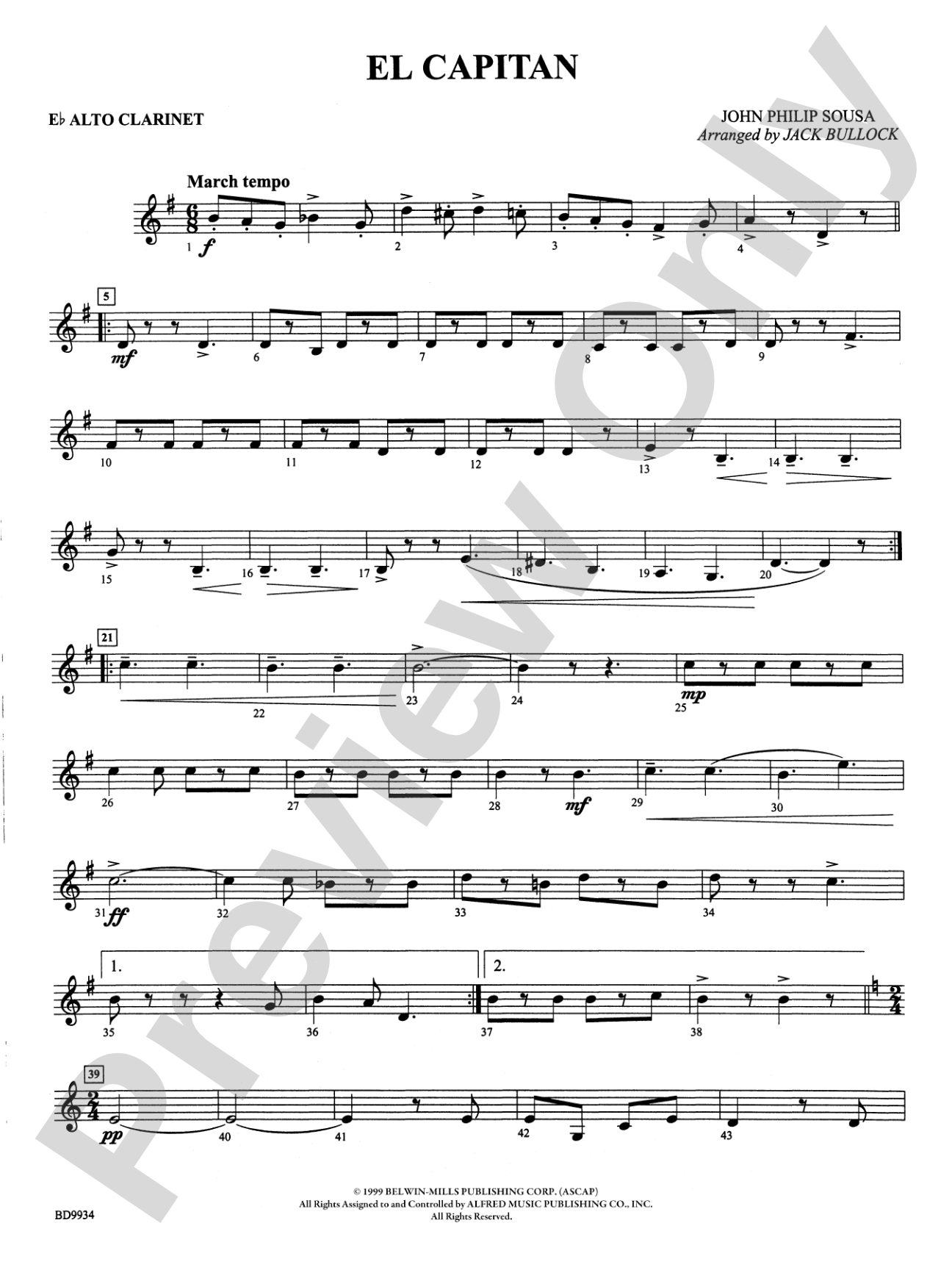
When one thinks of "marches," one almost automatically thinks of John Philip Sousa. Perhaps the greatest march writer of all time, he composed literally hundreds of these works. El Capitan ranks high in his list of classics. The first several strains are written in six-eight, and the last strains in two-four, giving a unique change of character. This scoring has reduced the technical difficulties while keeping the integrity of this well-known work. (2:21)

Don't just read it, hear it, play along with it, and watch your students grow with it. In MakeMusic Cloud, El Capitan: E-flat Alto Clarinet comes alive with professional accompaniment, adjustable tempo, and built-in practice tools that turn solo practice into real progress.

Sample Audio
0:00
0:00
Sample Video
Additional Details
Series: Belwin Concert Band
Publisher: Alfred Music
Page Count: 220
SKU: 00-PC-0015596_AC1

More about this title

About the Composer: John Philip Sousa

John Philip Sousa (1854–1932) defined the American march and shaped the concert band as we know it. A prolific composer, conductor, and bandmaster, he wrote over 140 marches that became the soundtrack of American civic life, from parades to concert halls. His gift for memorable melody, rhythmic vitality, and orchestration made him a household name during his lifetime and secured his place as the most celebrated march composer in history.

Sousa's influence on music education endures because his marches work at multiple levels. They reward serious musicianship while remaining accessible to developing ensembles. His structural innovations, like the contrasting meter shifts in El Capitan, demonstrate how a march can sustain interest across extended form without overwhelming younger players.

Why we love this

El Capitan sits at the sweet spot between iconic repertoire and playable difficulty. The shift from six-eight to two-four gives your band a genuine structural surprise to prepare and execute, yet Bullock's scoring keeps the part writing transparent enough for Grade 3 ensembles to succeed. Audiences recognize it immediately, which means your students feel the thrill of playing genuine Americana.

What to expect

El Capitan opens with sprightly, almost vaudeville charm in its six-eight swagger, then pivots into the straightforward march character of two-four time. The effect is a piece that feels both leisurely and propulsive, giving players and listeners a sense of discovery as the work unfolds.

Who it's for

Band directors programming at Grade 3 who want a march with character and historical weight. This arrangement works for groups building confidence in mixed meters and looking for repertoire that engages audiences. It's equally suited to school concerts and community band performances.

How to get the most out of it

  • Keep the six-eight opening lilting and conversational rather than metronomic. The dotted rhythms need space to breathe, especially in the lower voices.
  • Mark the transition to two-four clearly in rehearsal. Have the ensemble count through the modulation several times to anchor the meter change in their ears before playing it.
  • Balance the melody across sections during the strains. This march lives when the tune sings, so make sure your principal voices (flutes, clarinets, trumpets) can project without drowning out harmonic support.
  • Shape the dynamic arch of each strain. Sousa's marches build momentum within sections; avoid playing at a flat dynamic level even if the score doesn't mark every crescendo.

How to use it

Program this as a centerpiece march on a concert featuring American composers, or pair it with lighter concert fare to give your audience a moment of genuine fun and familiarity. Its compact length and accessible difficulty make it an excellent choice for mid-concert placement when audience energy needs refreshing.

Skills your students will build

  • Conducting and executing meter changes (six-eight to two-four)
  • Maintaining rhythmic precision in dotted-rhythm figures
  • Balancing melody and accompaniment across full ensemble
  • Phrasing and dynamic shaping within march form
  • Reading concert band score layout and instrumentation

You May Also Like