
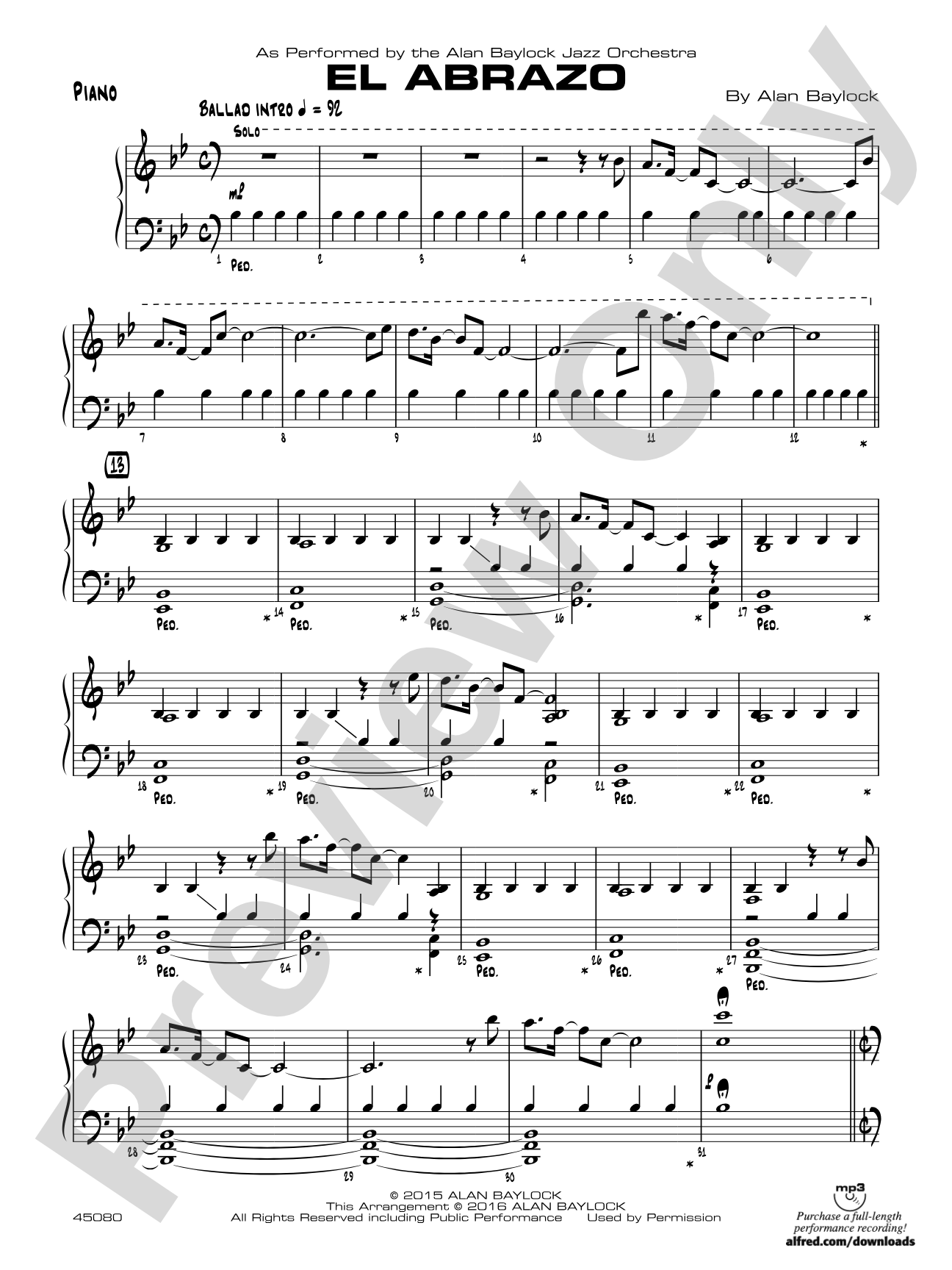
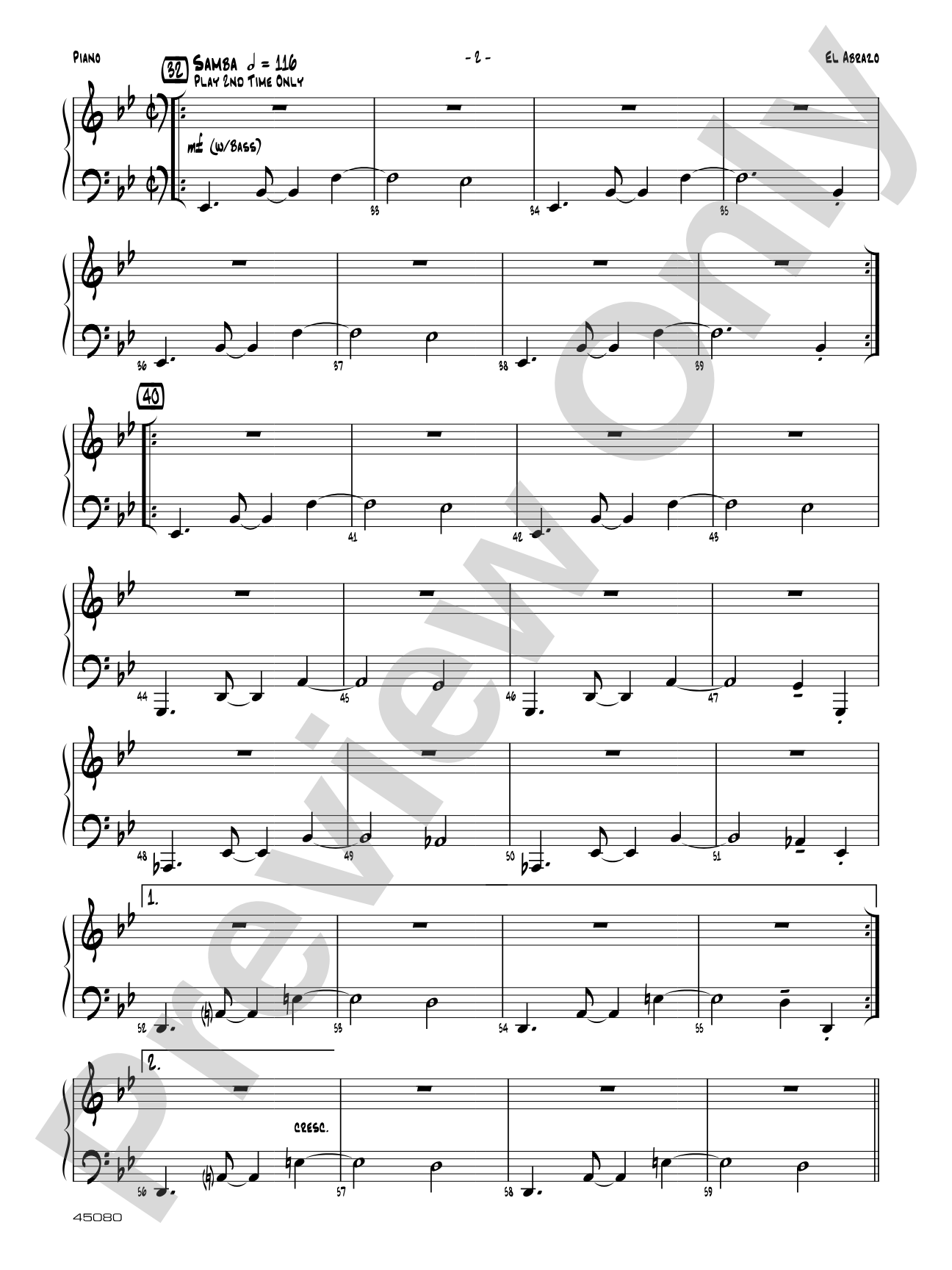

El Abrazo: Piano Accompaniment
By Alan Baylock
Grade: 4 (Medium Advanced / Difficult)
Item: 00-PC-0017489_K
$5.99
Pickup currently not available
Description
"El Abrazo" by Alan Baylock is truly stunning chart! The ballad beginning and ending will bring tears to your eyes---it's that beautiful. The chart then moves to a samba around 110 BPM for the half note. Lead trumpet range is to written high C and there is a tenor solo with chord changes. You won't forget this chart! As recorded on Alan Baylocks' CD Prime Time. (7:35) This title is available in MakeMusic Cloud.


Don't just read it, hear it, play along with it, and watch your students grow with it. In MakeMusic Cloud, El Abrazo: Piano Accompaniment comes alive with professional accompaniment, adjustable tempo, and built-in practice tools that turn solo practice into real progress.
Open in the Player
Jump straight in and assign it today.
Start Your Free Trial
Open this title and explore the full library in minutes.
Sample Audio
1
Audio File
--:--
0:00
0:00
Sample Video
Additional Details
Series:
Premier Jazz Series
Publisher:
Alfred Music
Page Count:
74
SKU:
00-PC-0017489_K
More about this title
About the Composer: Alan Baylock

Alan Baylock has shaped jazz education and performance across multiple continents through his work as a composer, arranger, and conductor. He directed the One O'Clock Lab Band at the University of North Texas and spent two decades as Chief Arranger for the Airmen of Note, the jazz ensemble of the United States Air Force Band. His own Alan Baylock Jazz Orchestra recorded three albums and toured extensively, while his guest conducting and clinician work has touched more than 100 ensembles at professional, collegiate, and high school levels.
Beyond his conducting and arranging credits, Baylock co-founded Brava Jazz Publishing in 2022 with composer Annie Booth, establishing a publishing venture dedicated to amplifying women composers and arrangers in big band jazz. His writing has been performed by an impressive roster including Melissa Aldana, the Brecker Brothers, Sean Jones, Joshua Redman, and many others. He holds degrees from Shenandoah University (where he later taught as Jazz Composer-in-Residence) and the University of North Texas, and remains an active voice in the Jazz Education Network.
Why we love this
This chart balances emotional depth with accessible sophistication. The opening and closing ballad sections deliver genuine lyricism that will resonate with both audiences and players, while the samba middle section sits at a manageable tempo and gives your ensemble room to breathe through the Latin groove without pushing past their comfort zone. At Grade 4, it reads as advanced work without requiring your lead trumpet section to live permanently in the stratosphere.
What to expect
The piece opens with genuine tenderness, the kind that makes a room quiet and attentive. Then it shifts into a warm, swaying samba groove that invites the ensemble into a collaborative conversation rather than a display of technique. The tenor solo feels like an intimate moment within that groove, unhurried and conversational.
Who it's for
Jazz ensembles at the medium-advanced to advanced high school level and college programs seeking repertoire that combines genuine musicality with achievable technical demands. Directors programming festival competitions or concert showcases will appreciate a chart that challenges players while delivering a performance that moves listeners. The tenor solo opportunity makes this especially valuable for ensembles with developing improvising soloists ready for structured change navigation.
How to get the most out of it
- Shape the ballad passages with dynamic restraint. The beauty lies in space and silence, not volume. Let the strings-like sonority of the ensemble speak quietly in the opening to set up the samba contrast.
- Lock the samba groove early in rehearsal by isolating the rhythm section and latin percussion for several bars. A solid clave foundation will carry the ensemble's confidence through the tenor solo section.
- Prepare the tenor soloist with the chord changes well before full ensemble rehearsal. Their navigation of the changes directly affects the band's ability to support and respond.
- Balance the lead trumpet's high passages (to written high C) by ensuring the section below carries enough weight. The lead should sing, not strain; use dynamic shaping to emphasize the melodic contour rather than relying on volume.
How to use it
Open a concert with the ballad opening to immediately establish intimacy and draw your audience in, then transition to the samba for a mid-concert energizer. Alternatively, program this as a climactic piece near the end of your set, where the contrast between the opening ballad and driving samba will leave a lasting impression. The 7-minute-35-second length gives you flexibility to build a varied program without overshadowing smaller works.
Skills your students will build
- Reading compound meters and polyrhythmic layering in a samba context
- Ensemble balance and blend in ballad writing without traditional harmony-voice independence
- Jazz comping and groove maintenance during a tenor solo chorus
- Articulation control and dynamic shaping across a wide tessatura range, especially in the lead trumpet
- Latin percussion integration and responsiveness to clave-based rhythmic structures