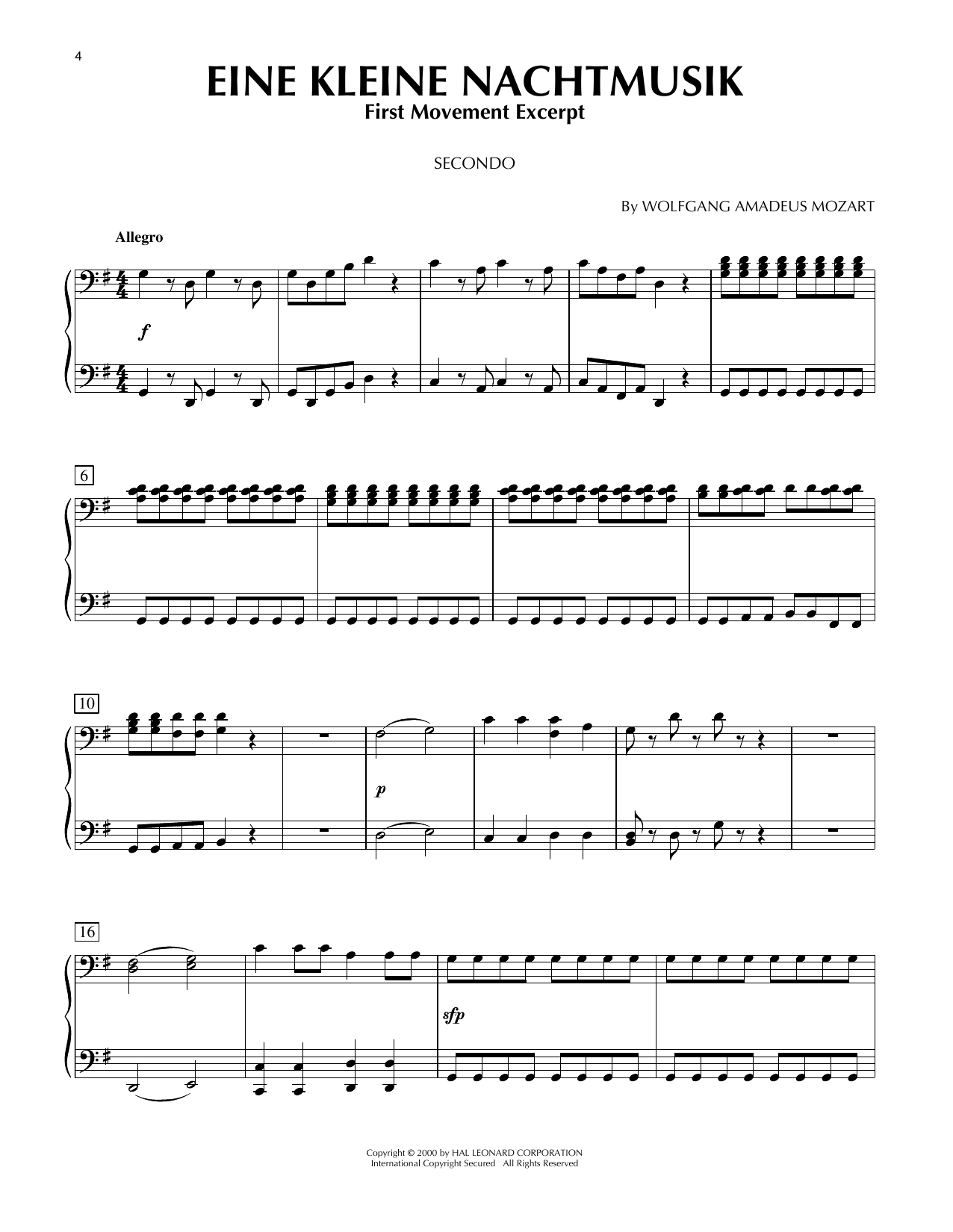
Wolfgang Amadeus Mozart (1756-1791) composed Eine kleine Nachtmusik in 1787, a work that exemplifies his gift for writing music of elegant simplicity and profound craft. Born in Salzburg and trained by his father Leopold from early childhood, Mozart became one of history's most prolific composers, working across every major genre with seemingly effortless mastery. His ability to write for young performers without sacrificing musical sophistication made him an ideal choice for music education, and this serenade remains a cornerstone of the classical repertoire.
Mozart's approach to orchestration and melodic writing in Eine kleine Nachtmusik reveals a composer deeply attuned to balance and proportion. The work's accessibility for developing musicians contrasts sharply with its structural integrity, offering students a genuine encounter with classical form rather than a watered-down approximation. His influence on how we teach music fundamentals, from phrase architecture to harmonic clarity, continues undiminished.