
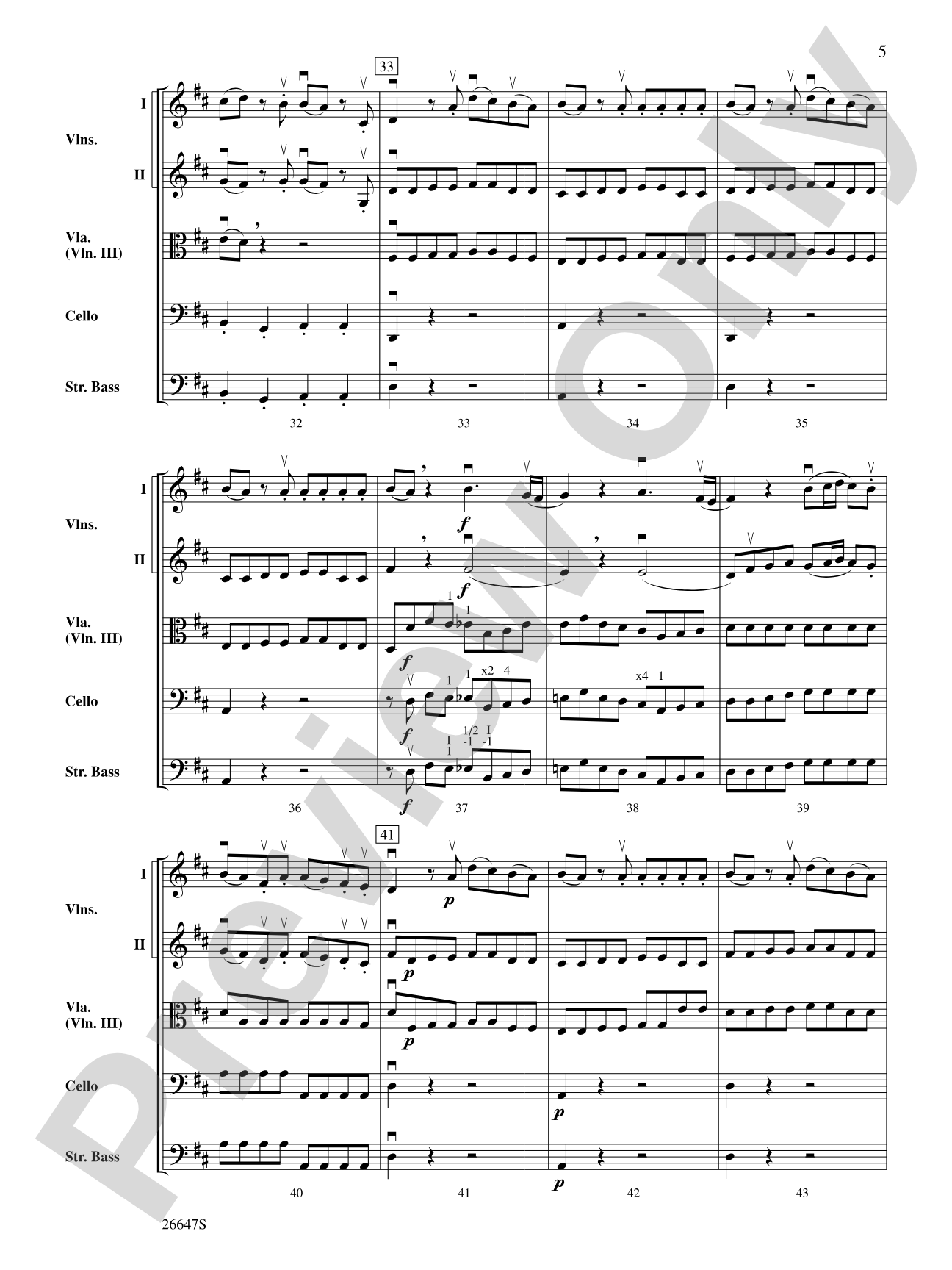
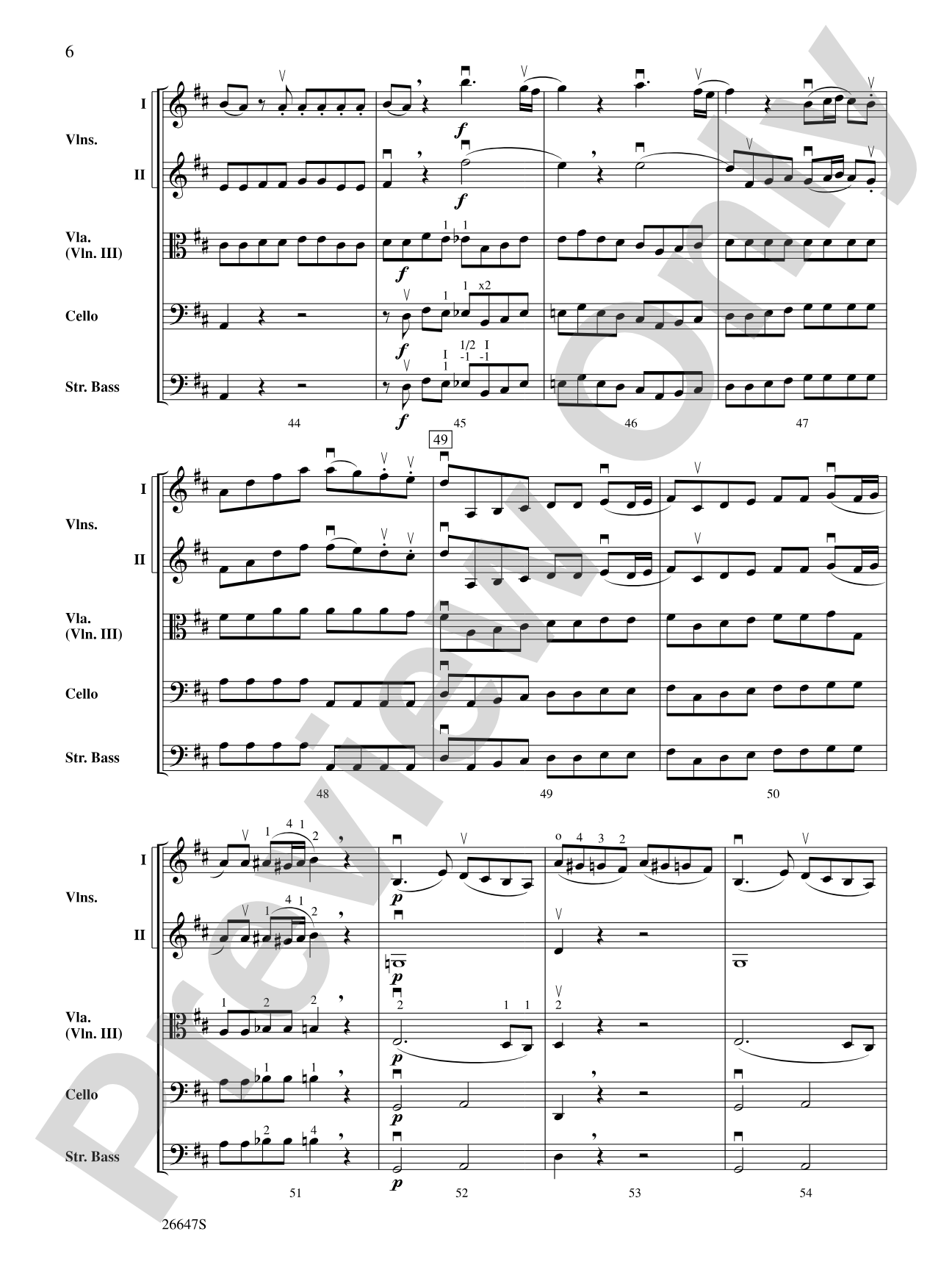
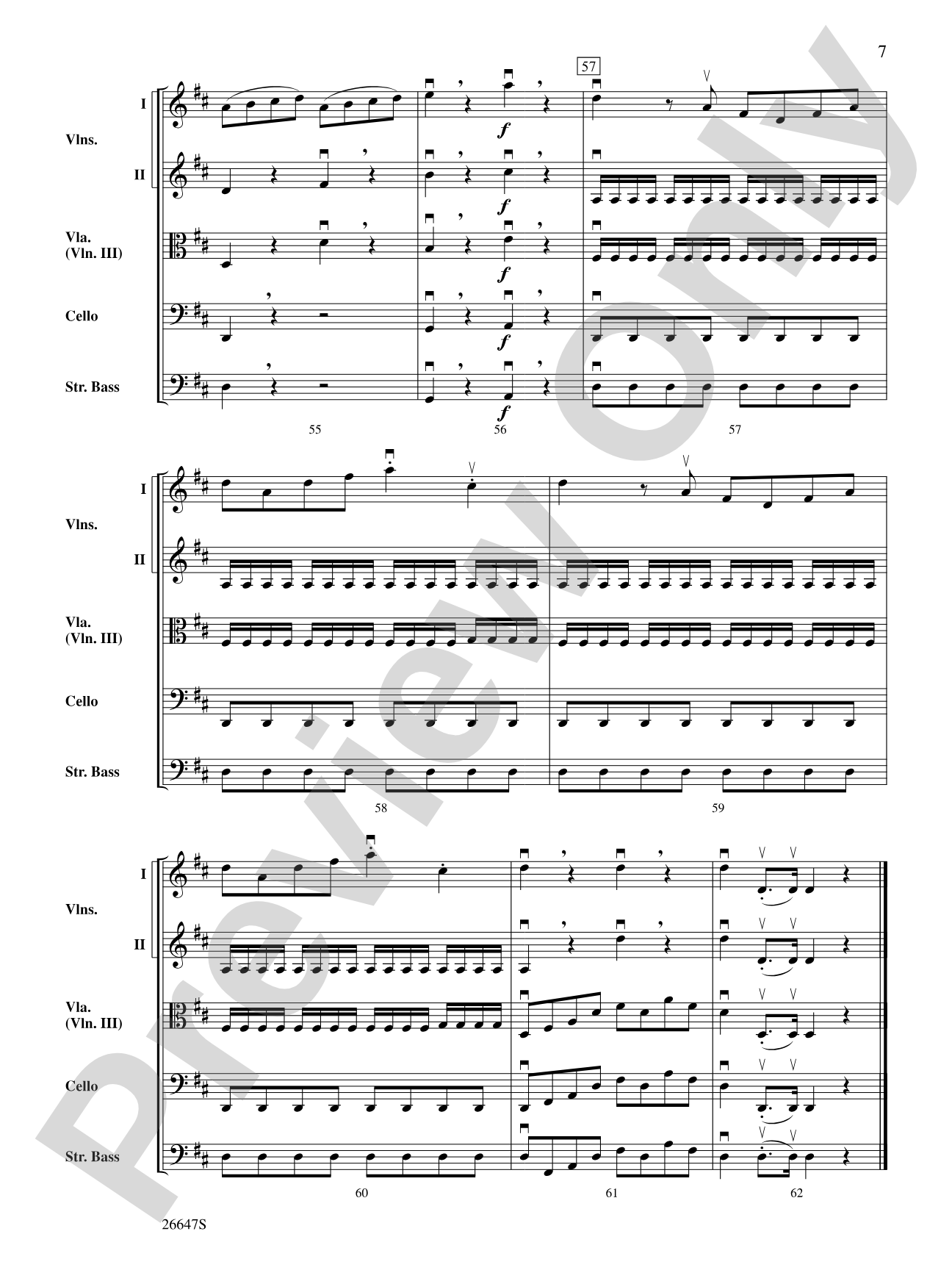


Eine Kleine Nachtmusik: Score
By Wolfgang Amadeus Mozart / arr. Bob Phillips
Grade: 2.5
Item: 00-PR-0001132
$8.00
Pickup currently not available
Description
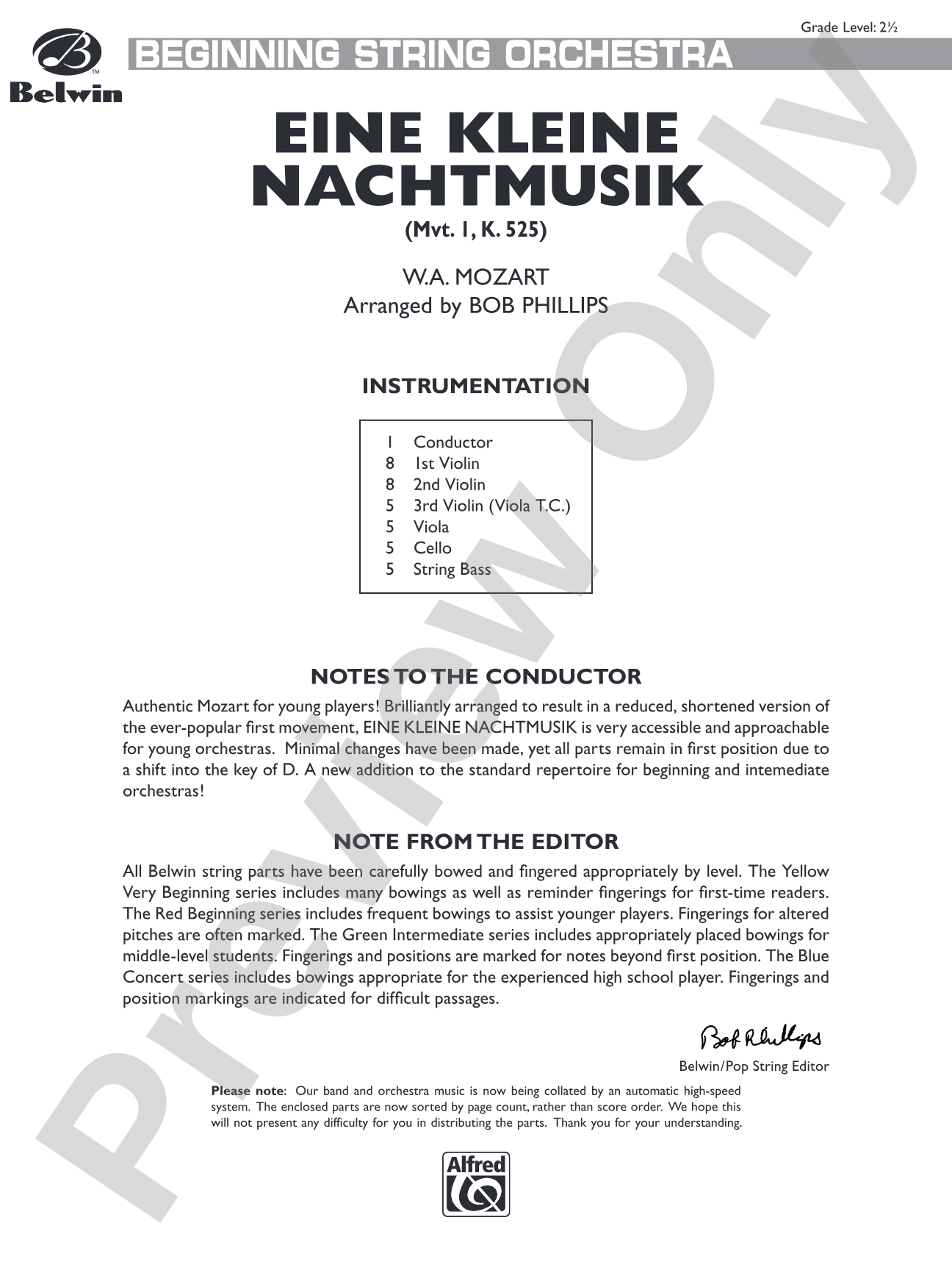
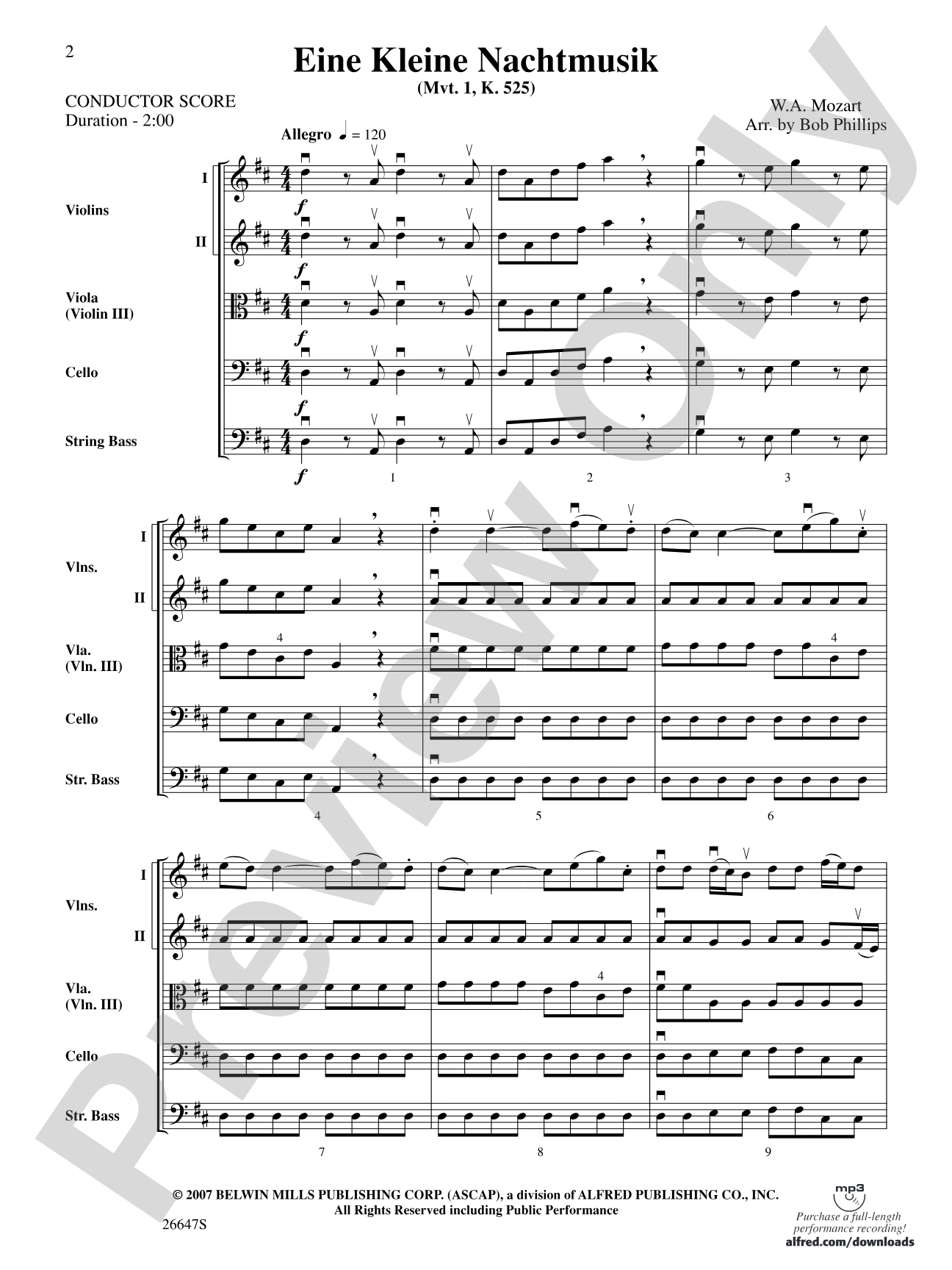
Authentic Mozart for young players! Brilliantly arranged, this selection results in a reduced, shortened version of the ever-popular first movement that is very accessible and approachable for young orchestras. Minimal changes have been made, yet all parts remain in first position due to a shift to the key of D. A new addition to the standard repertoire for beginning and intermediate orchestras! This title is available in MakeMusic Cloud.


Don't just read it, hear it, play along with it, and watch your students grow with it. In MakeMusic Cloud, Eine Kleine Nachtmusik: Score comes alive with professional accompaniment, adjustable tempo, and built-in practice tools that turn solo practice into real progress.
Open in the Player
Jump straight in and assign it today.
Start Your Free Trial
Open this title and explore the full library in minutes.
Sample Audio
1
Audio File
--:--
0:00
0:00
Sample Video
No sample videos found.
Additional Details
Series:
Belwin Beginning String Orchestra
Publisher:
Alfred Music
Page Count:
62
SKU:
00-PR-0001132
More about this title
About the Composer: Wolfgang Amadeus Mozart
Wolfgang Amadeus Mozart (1756-1791) was an Austrian composer whose prolific output shaped the Classical era and influenced centuries of composers that followed. Born in Salzburg, Mozart demonstrated extraordinary musical talent from childhood, composing and performing across Europe before settling in Vienna, where he created his most celebrated works across every major genre: symphonies, concertos, operas, chamber music, and sacred works.
Why we love this
This arrangement honors Mozart's elegant melodic writing and transparent orchestration while making the piece genuinely playable for young orchestras. Rather than oversimplifying the material, Bob Phillips preserves the character and structure of the original by transposing to D major, keeping all players in first position without sacrificing musicality. It's a rare arrangement that lets students experience authentic Classical repertoire rather than a watered-down approximation.
What to expect
Graceful and buoyant, with the unmistakable elegance of Classical style. The familiar opening melody unfolds with natural phrasing over a gently moving accompaniment, inviting the listener into Mozart's world of balanced proportions and refined charm.
Who it's for
Beginning and intermediate string orchestras seeking accessible yet substantive repertoire. Directors who want their students to experience Mozart's craftsmanship firsthand without the technical barriers of the full original score will find this arrangement essential for the concert or contest repertoire.
How to get the most out of it
- Establish a clear pulse from the conductor. The opening theme is deceptively simple, but maintaining a steady tempo with gentle forward motion prevents the piece from dragging.
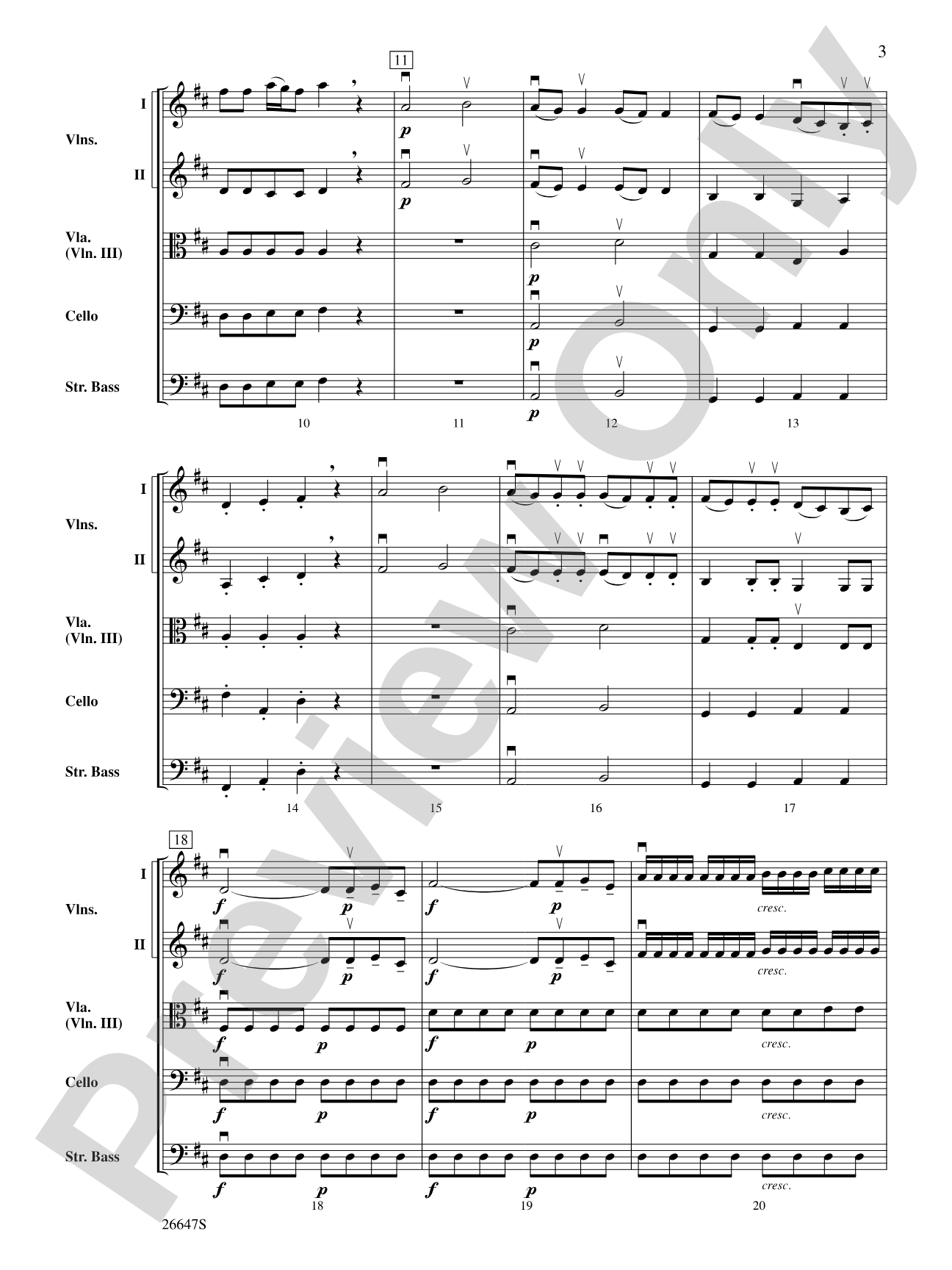
- Balance the first violin line against the accompaniment. Young players often focus on their individual parts; regular tutti rehearsals reinforce how the melody sits atop the harmonic foundation.
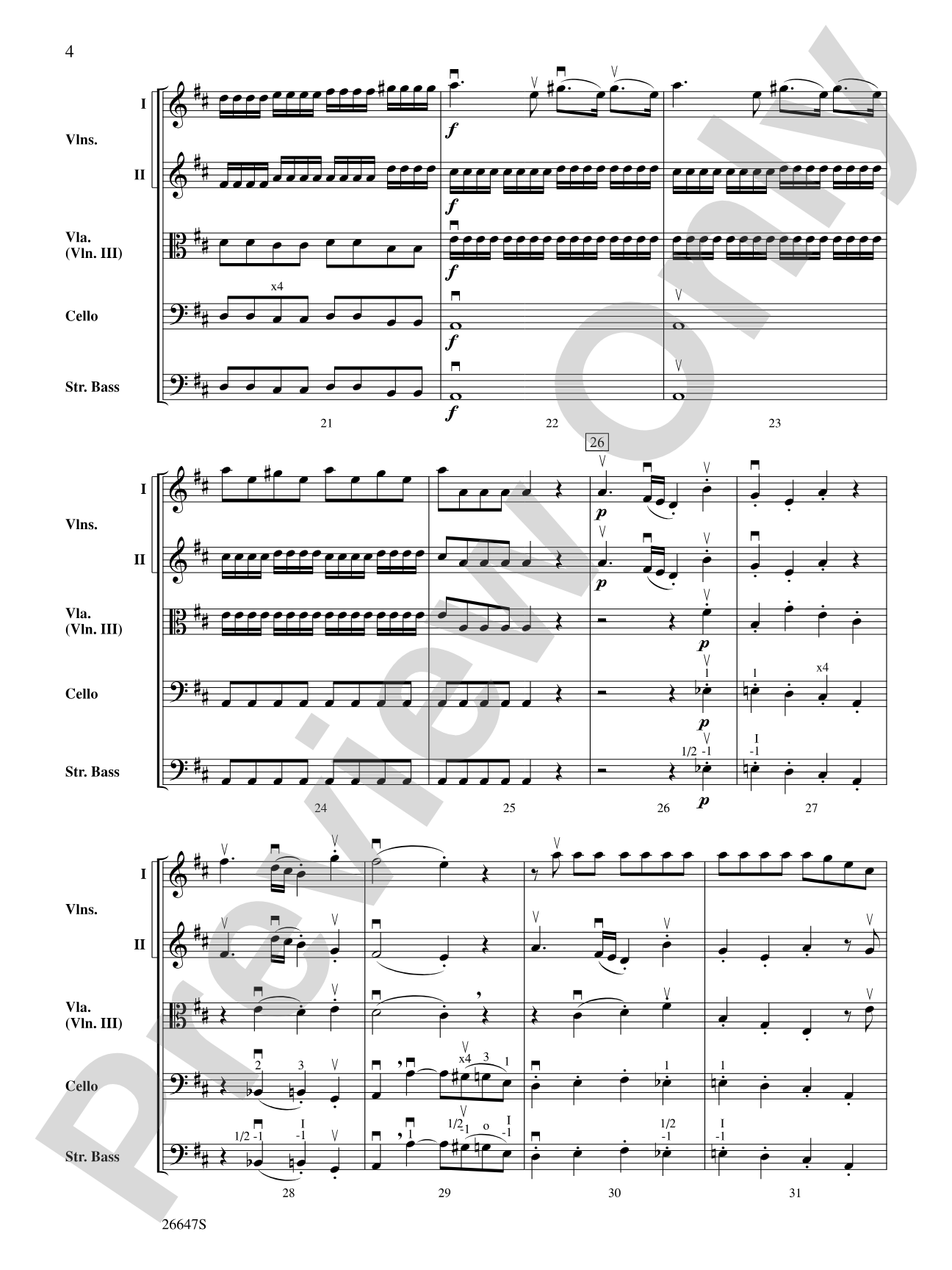
- Shape phrases with intentional dynamics and articulation. Even at this level, moving away from mechanical playing to communicate the phrase structure transforms the performance.
- Coordinate the ensemble's rhythmic figures in the accompaniment. Synchronized bowing in repeated eighth-note patterns creates the driving energy that propels the movement forward.
How to use it
Program this as a centerpiece of a concert focused on Classical masterworks or as a building block toward later encounters with Mozart's larger orchestral works. Its moderate length and satisfying musical arc make it ideal for intermediate-level contests or festivals, where it demonstrates musicianship without excessive performance anxiety.
Skills your students will build
- Playing sustained notes with consistent tone and intonation
- Maintaining a steady tempo across an extended movement
- Balancing melody and accompaniment within an ensemble
- Shaping phrase contours with dynamics and articulation
- Reading in D major with naturals in the original key
- Coordinating bowing patterns across the string section