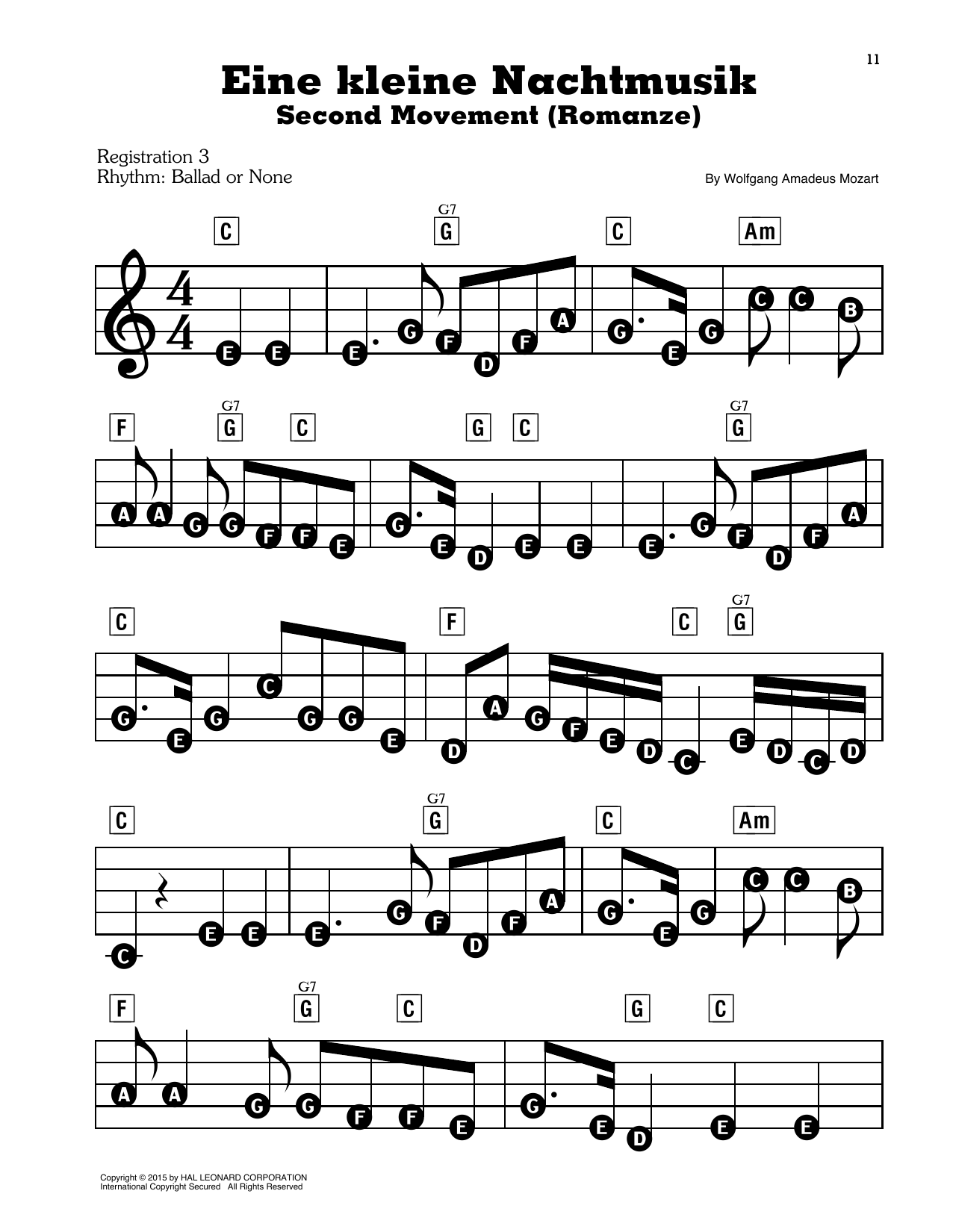
Eine Kleine Nachtmusik ("Romance"), Second Movement Sheet Music Preview

Eine Kleine Nachtmusik ("Romance"), Second Movement: E-Z Play Today

Item: 35-DS00960562

Digital Download
$4.99
Description

Eine Kleine Nachtmusik ("Romance"), Second Movement: E-Z Play Today isn't in MakeMusic Cloud just yet...but it could be. Let us know you'd like to see it, and you'll help shape what comes next. In the meantime, start a free trial and dive into thousands of interactive titles your students can play along with today.

Sample Audio
No sample audio found.
Sample Video
Additional Details
Publisher: Hal Leonard
Page Count: 3
SKU: 35-DS00960562

More about this title

About the Creator: Wolfgang Amadeus Mozart

Wolfgang Amadeus Mozart composed Eine Kleine Nachtmusik in 1787, a work that has become synonymous with elegant chamber music and graceful entertainment. Though the full suite contains multiple movements, this Romance movement showcases Mozart's gift for lyrical writing and his ability to craft melodies that seem to flow effortlessly, making it a touchstone for understanding Classical style and proportional phrasing.

Why we love this

The Romance lives in that sweet spot where students encounter genuine Mozart without the technical demands that can frustrate early pianists. This E-Z Play arrangement preserves the singing quality of the original while staying within reach, letting young players experience the satisfaction of playing a universally recognized masterpiece.

What to expect

Warm and lyrical, with a gentle nobility that never feels pretentious. The movement unfolds like a quiet conversation, intimate and graceful, inviting the listener into Mozart's world of balance and proportion.

Who it's for

Early intermediate pianists who are ready to explore Classical repertoire with recognizable style but need an accessible entry point. This arrangement also works well for teachers introducing students to Mozart's voice without overwhelming them with technical complexity.

How to get the most out of it

  • Shape phrases by thinking horizontally across entire lines rather than measure by measure; Mozart's melodies want to breathe as complete thoughts.
  • Keep the accompaniment understated so the cantabile line remains the focus; restraint in the supporting voices makes the Romance more romantic.
  • Maintain steady, unhurried tempo. Resist the urge to rush through passage work or slow down during rests; consistency anchors the elegance.

How to use it

Include this as a solo interlude in a student recital or as a palate cleanser between more demanding contemporary pieces. It also pairs naturally in a themed concert exploring serenades and chamber music, where its modest scope complements larger ensemble works.

Skills your students will build

  • Sustaining long melodic lines with appropriate phrasing
  • Balancing melody and accompaniment at the keyboard
  • Understanding Classical phrase structure and symmetry
  • Developing fluency with Alberti bass patterns
  • Executing graceful rubato within a steady harmonic framework

You May Also Like