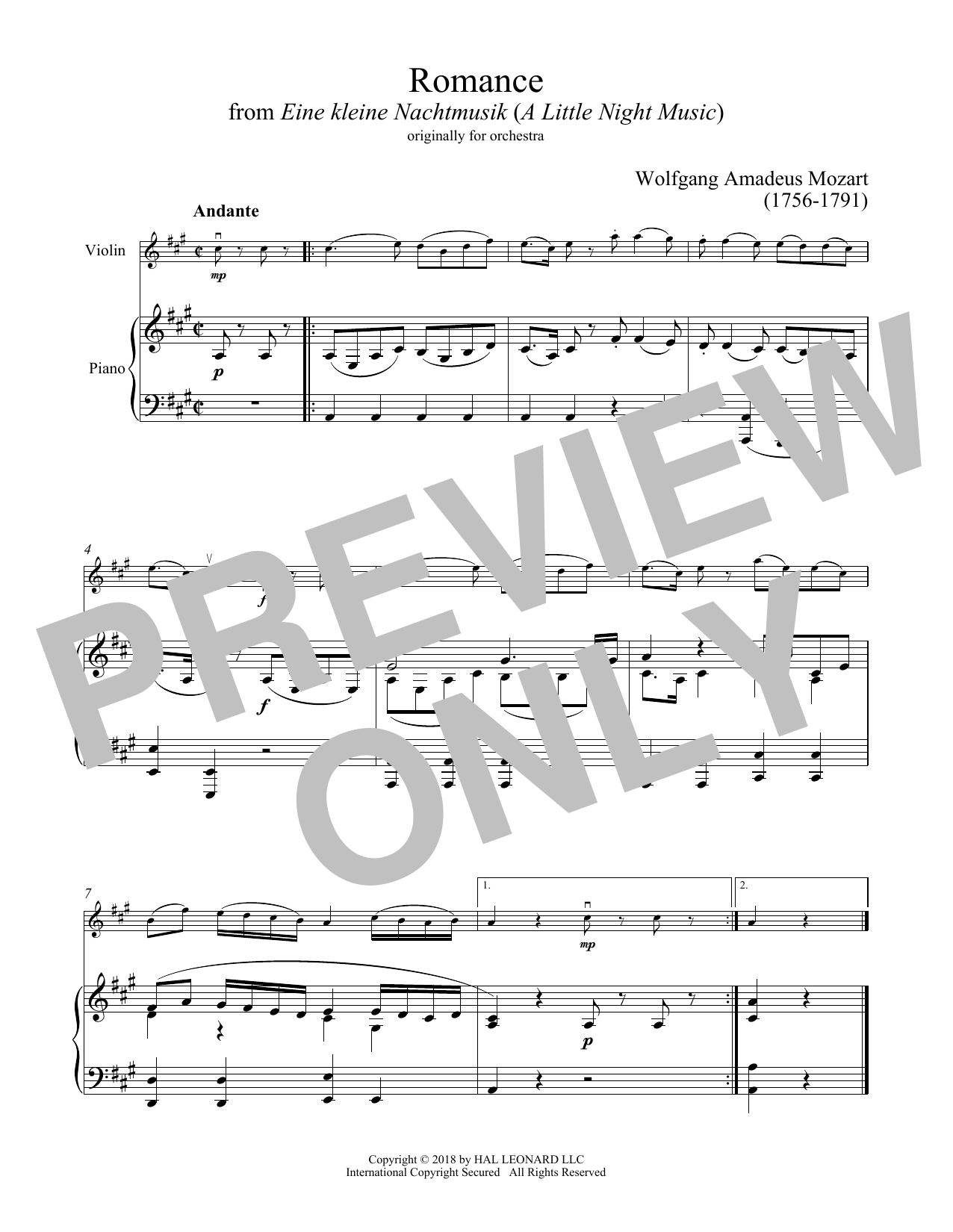
Mozart composed Eine kleine Nachtmusik in 1787, a work that stands as one of the most performed pieces in Western classical music. Written during his Vienna years, this serenade emerged from a prolific period when Mozart was simultaneously composing symphonies, concertos, and operas at a staggering pace. His ability to craft memorable melodies and transparent orchestration made him one of the most influential composers in music education.
Why we love this
The Romance movement offers violinists and pianists an accessible entry point into Mozart's chamber writing without sacrificing musical substance. A single page means students can focus entirely on stylistic refinement, voicing clarity, and the gentle expressiveness that makes this movement so beloved in weddings and recitals. The dialogue between violin and piano sits comfortably in the hands while demanding real musicianship.
What to expect
The Romance unfolds like a tender conversation between two close friends, unhurried and warm. Melodic lines drift gracefully over gentle harmonic support, creating an atmosphere of serene intimacy that makes this movement a natural choice for ceremonies and intimate gatherings.
Who it's for
This arrangement serves violinists preparing for recitals, weddings, or jury performances who want reliable, beautifully proportioned Classical repertoire. Pianists benefit from the relatively modest accompaniment figuration, making it suitable for intermediate players accompanying at similar levels.
How to get the most out of it
Shape the opening theme with gentle dynamic swells rather than terraced dynamics; the Romance thrives on continuous, unhurried phrasing that mimics the human voice.
Balance the violin melody against the piano's accompaniment by having the pianist voice inner lines rather than lean on the bass; this creates transparency and lets the violin breathe.
Establish a warm, singing tone in the violin by thinking in longer phrases than the notation might suggest; breathe between phrases rather than at every rest mark.
Keep rubato subtle and conversational; this movement works best when both players move together as if in gentle dialogue rather than as soloist accompanied by instrument.
How to use it
Pair this with other single movements from Eine kleine Nachtmusik, Schumann's Album for the Young, or early Romantic pieces to build a recital that traces the evolution from Classical grace to 19th-century lyricism. It functions equally well as a prelude or processional in a ceremony program, offering musical substance with accessibility for both performers and audience.
Skills your students will build
Long-line phrasing and melodic shaping in the Classical style
Balance and transparency between solo and accompanying voices
Rubato and expressive flexibility within a restrained harmonic language
Ensemble listening and coordinated breathing between violin and piano
You May Also Like
Scan to Complete Your Purchase
Use your phone's camera to scan the code below
You'll log in on your phone and the order will be added to your account