Eine Kleine Nachtmusik ("Menuetto"), Third Movement Sheet Music Preview

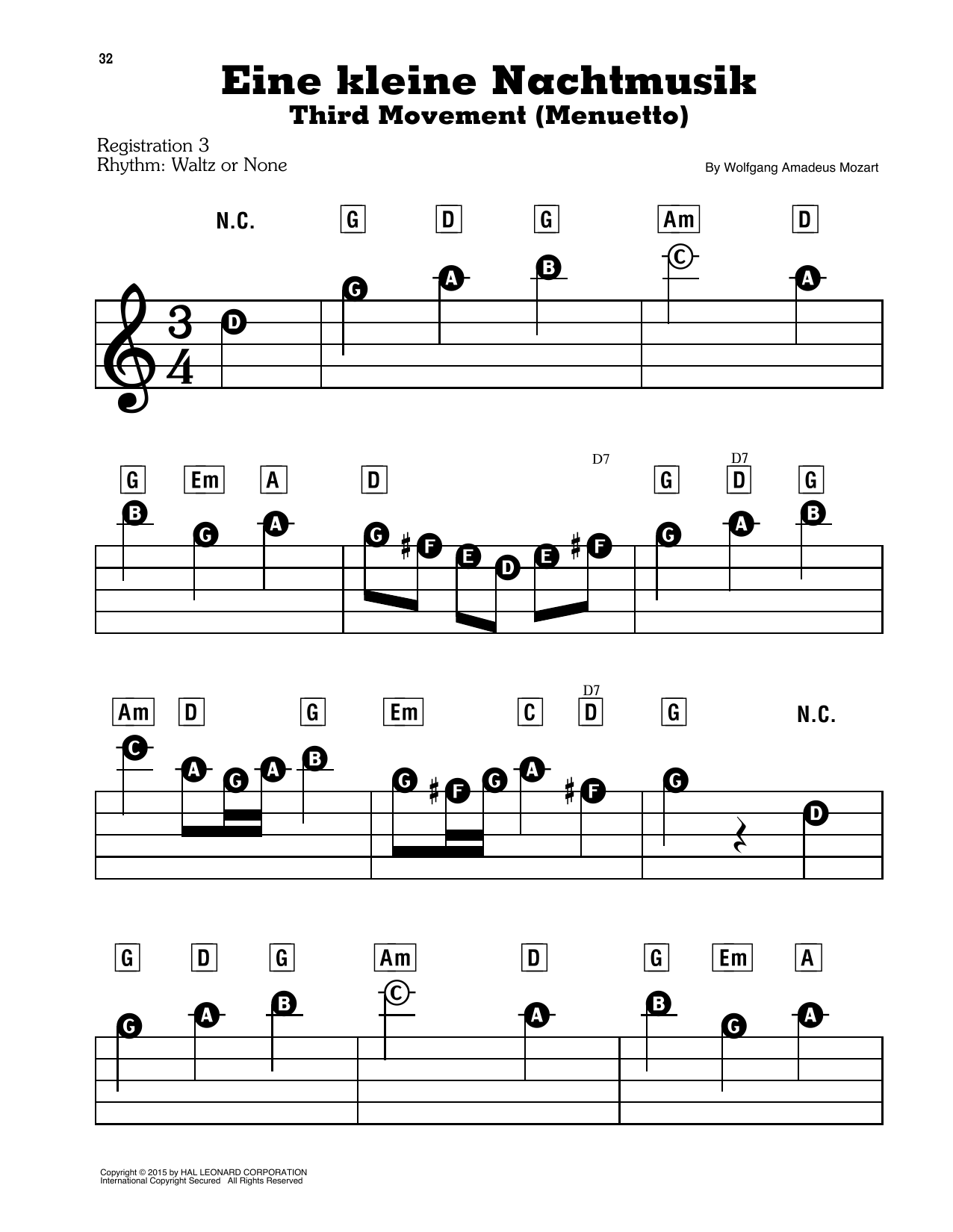
Eine Kleine Nachtmusik ("Menuetto"), Third Movement: E-Z Play Today

Item: 35-DS00960564

Digital Download
$4.99
Description

Eine Kleine Nachtmusik ("Menuetto"), Third Movement: E-Z Play Today isn't in MakeMusic Cloud just yet...but it could be. Let us know you'd like to see it, and you'll help shape what comes next. In the meantime, start a free trial and dive into thousands of interactive titles your students can play along with today.

Sample Audio
No sample audio found.
Sample Video
Additional Details
Publisher: Hal Leonard
Page Count: 2
SKU: 35-DS00960564

More about this title

About the Creator: Wolfgang Amadeus Mozart

Wolfgang Amadeus Mozart (1756–1791) composed Eine kleine Nachtmusik in 1787, creating one of classical music's most enduring works. Written for a small ensemble of strings, the piece epitomizes the elegance and refined grace of the Classical era, with melodies that remain instantly recognizable across centuries.

The Menuetto movement captures Mozart's gift for writing memorable, dance-like themes within a structured formal design. Its popularity in weddings and formal occasions speaks to the timeless appeal of Mozart's melodic invention and the piece's inherent dignity.

Why we love this

This E-Z Play arrangement makes one of the world's most celebrated classical melodies genuinely accessible to developing pianists without sacrificing the piece's characteristic elegance. The simplified voicing allows players to focus on the musical phrasing and dance-like character that make this movement so recognizable, rather than wrestling with technical barriers.

What to expect

The Menuetto unfolds with courtly refinement, moving in graceful three-beat phrases that echo a formal dance. There's an unhurried elegance here, a sense of musical conversation that feels both intimate and polished.

Who it's for

This edition opens Eine kleine Nachtmusik to pianists still building technical fluency, making it ideal for intermediate students and adult learners. It's equally valuable for instructors seeking a recognizable, musically rewarding piece that doesn't demand advanced technical skill.

How to get the most out of it

  • Shape the melody with gentle dynamic contours; resist the temptation to play every phrase at the same level. The Menuetto thrives on subtle breathing and variation.
  • Maintain a steady, dance-like tempo. This movement should feel graceful and unhurried, not stiff or mechanical.
  • Voice the inner harmonies lightly so they support without overwhelming the main melodic line.
  • Pay attention to any articulation markings in the arrangement; they guide the character and help define the Classical style.

How to use it

Program this at a student recital to give developing pianists access to repertoire with genuine musical stature. It pairs well with other accessible Classical movements or works by contemporaries, and its formal character makes it suitable for ceremonial occasions or collections themed around classical elegance.

Skills your students will build

  • Phrasing in a three-beat metric context
  • Voicing balance between melody and accompaniment
  • Articulation in Classical style
  • Maintaining steady tempo in a dance-like character
  • Reading a simplified but musically coherent arrangement

You May Also Like