
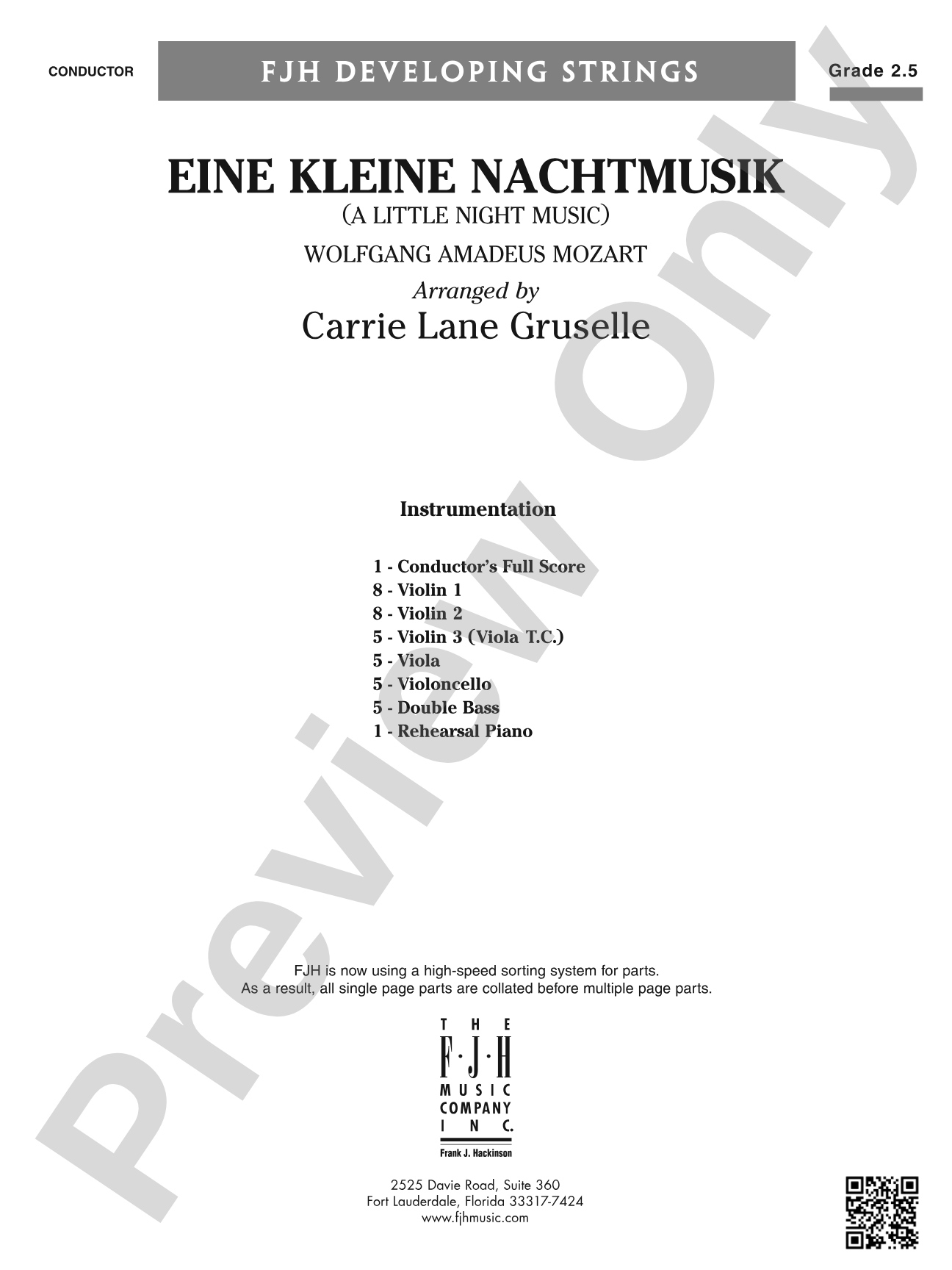
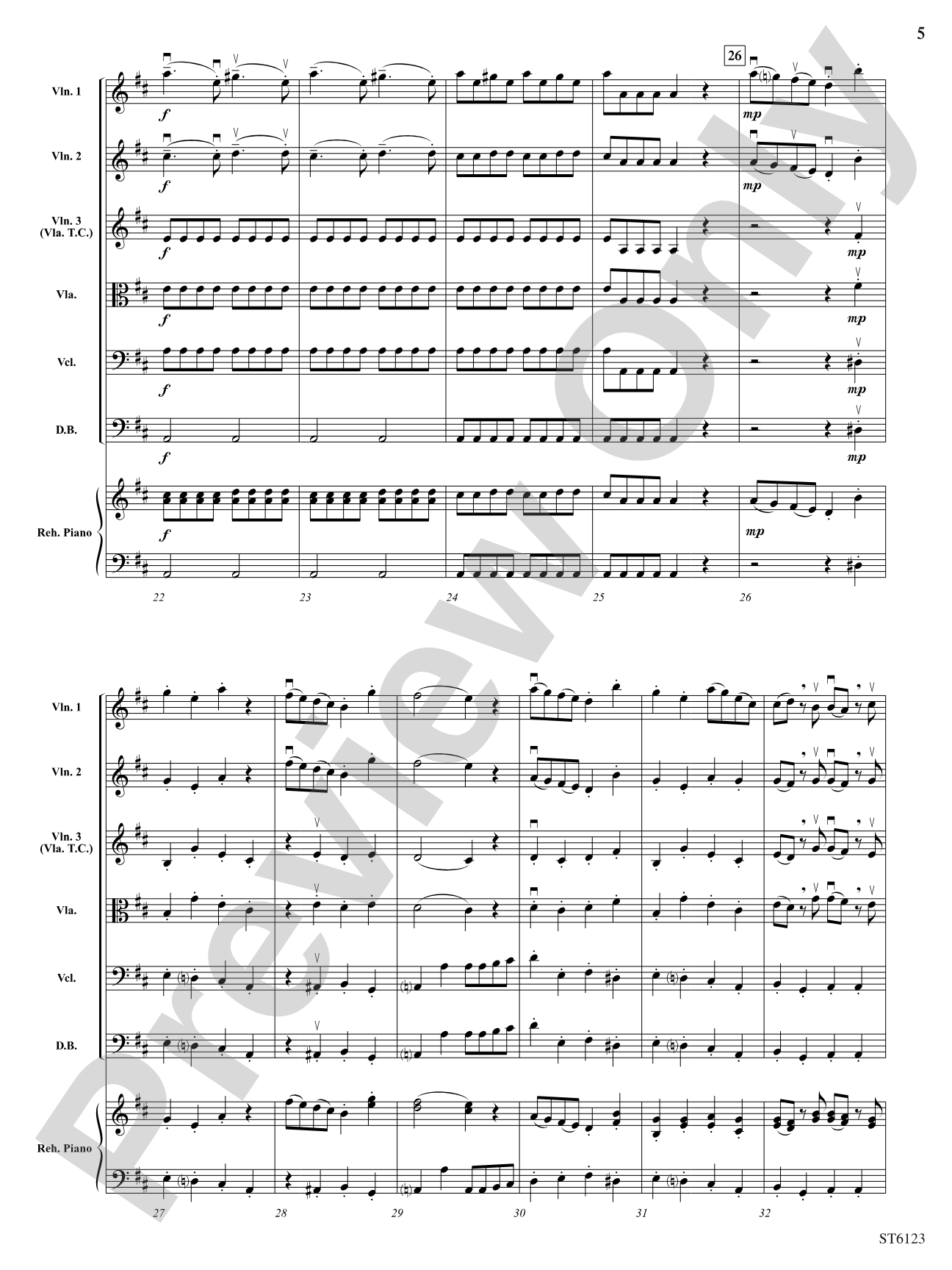
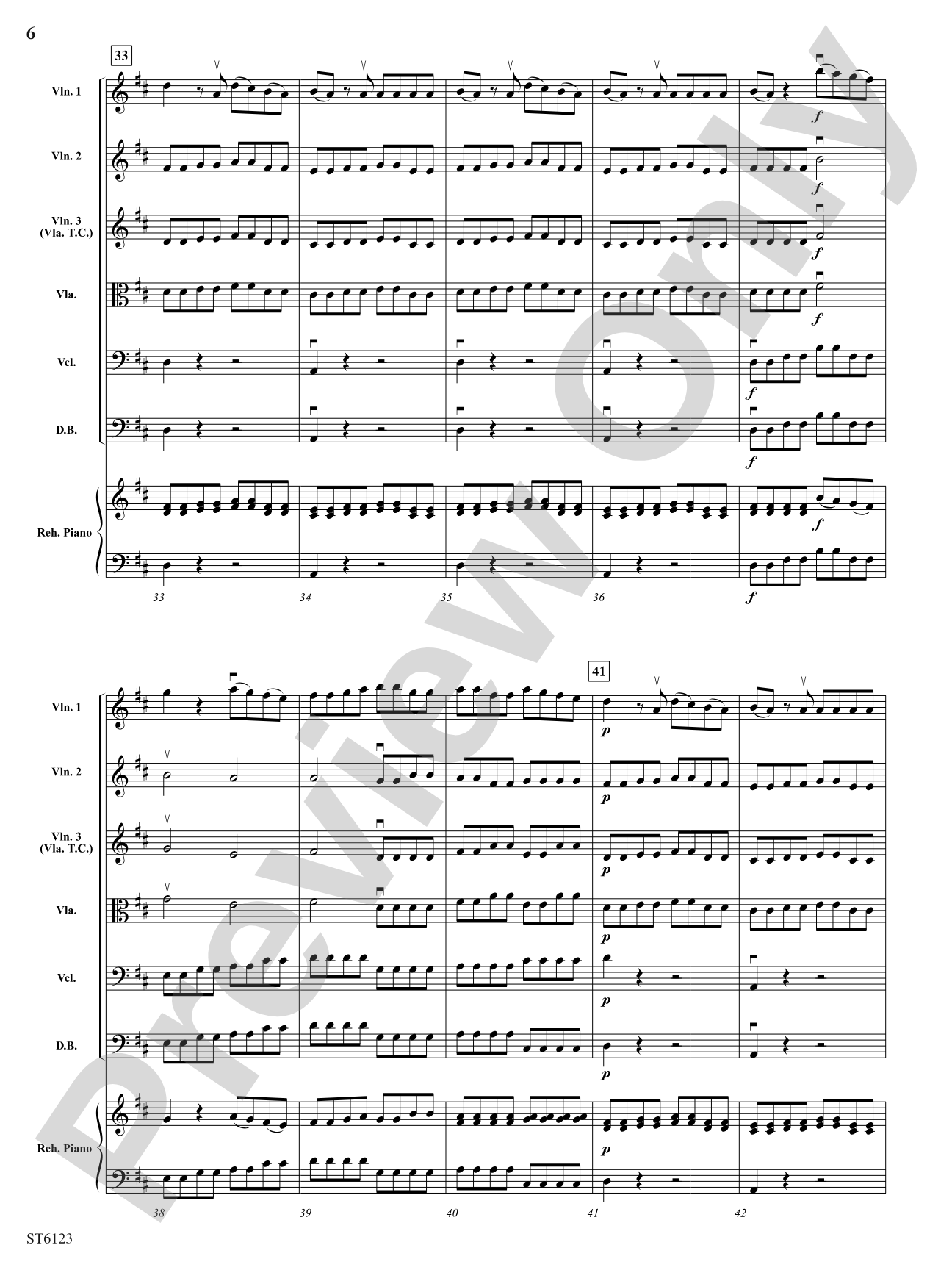
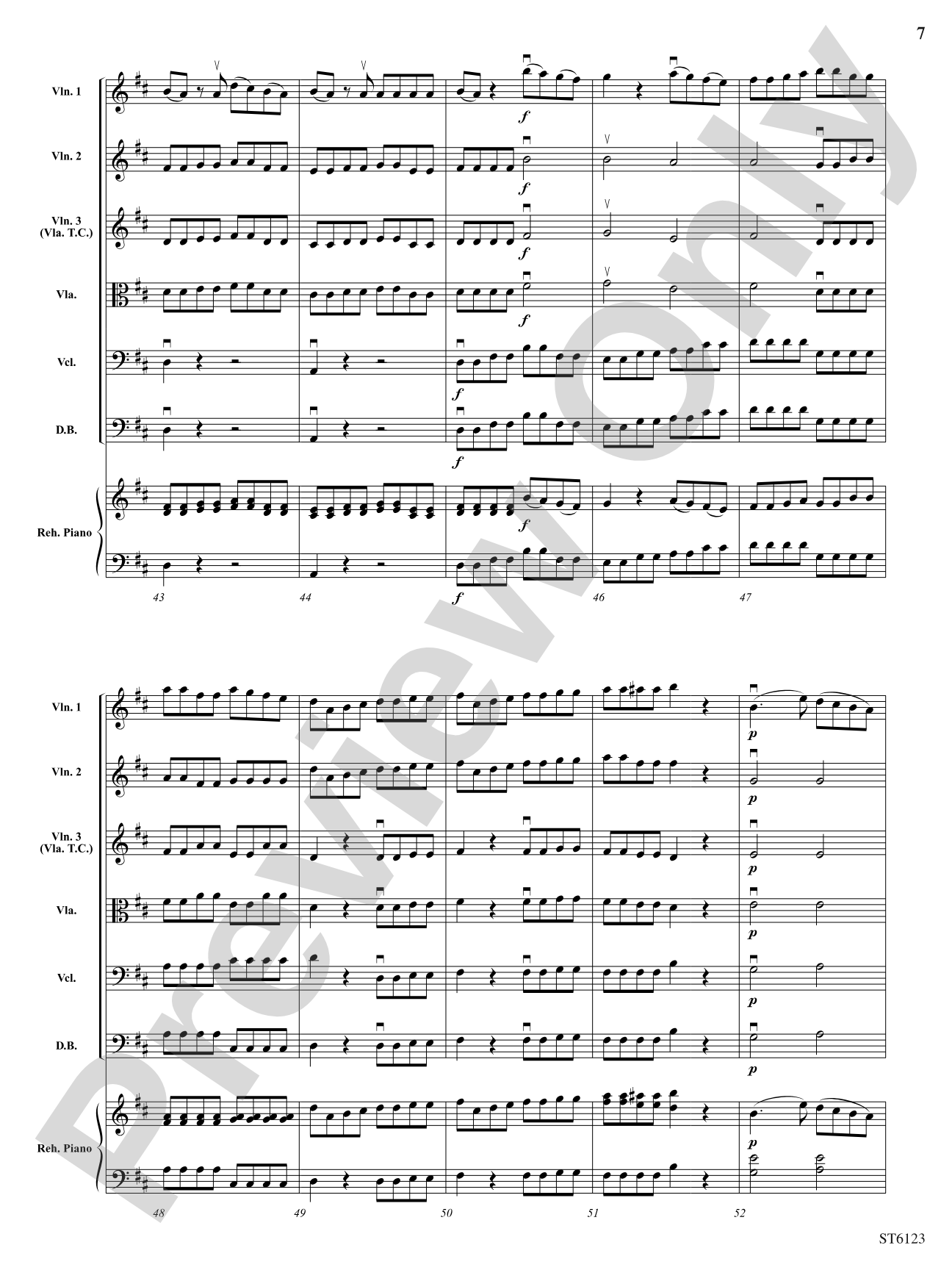
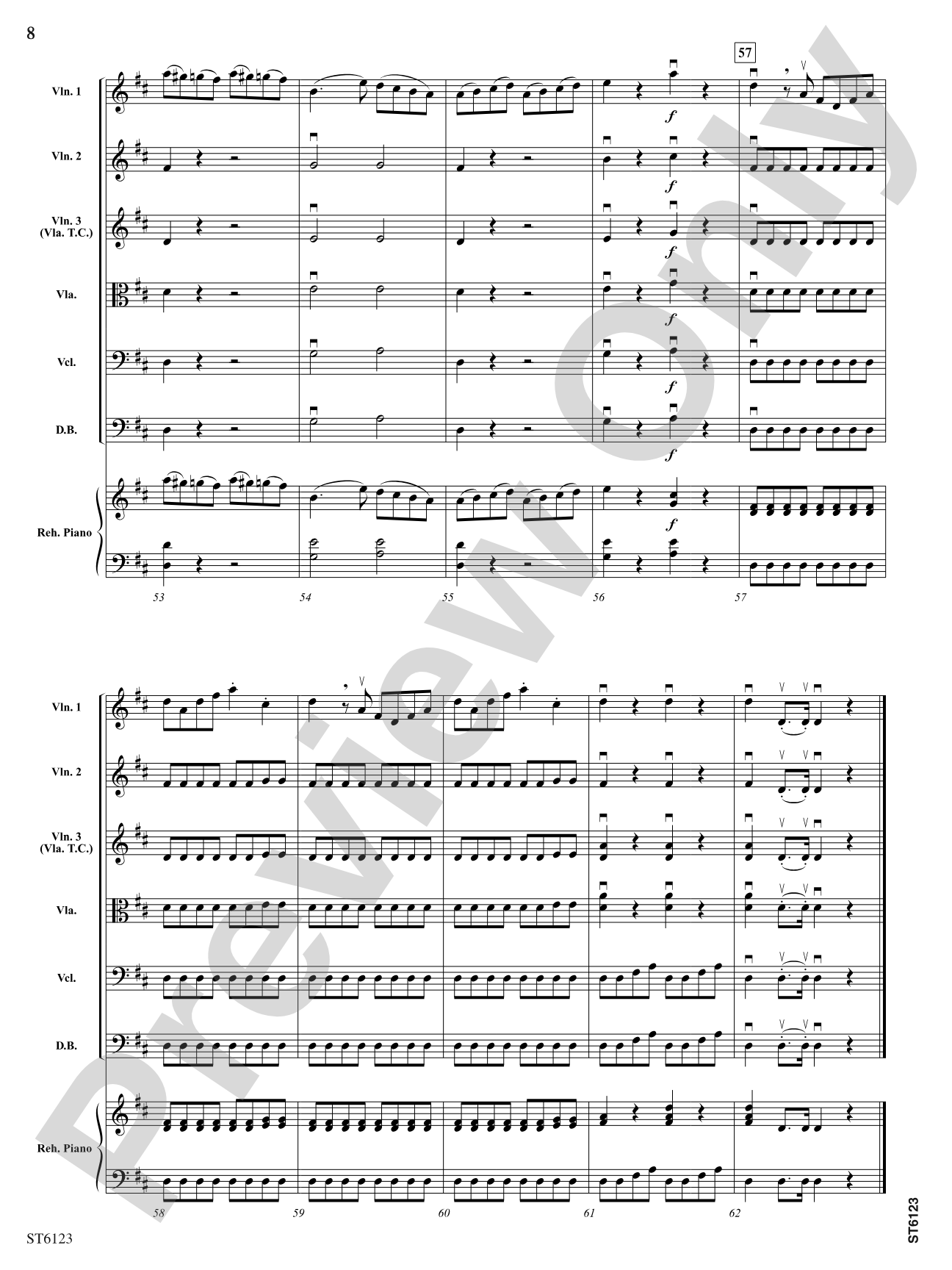

Eine Kleine Nachtmusik (A Little Night Music): String Orchestra Conductor Score & Parts
A Little Night Music
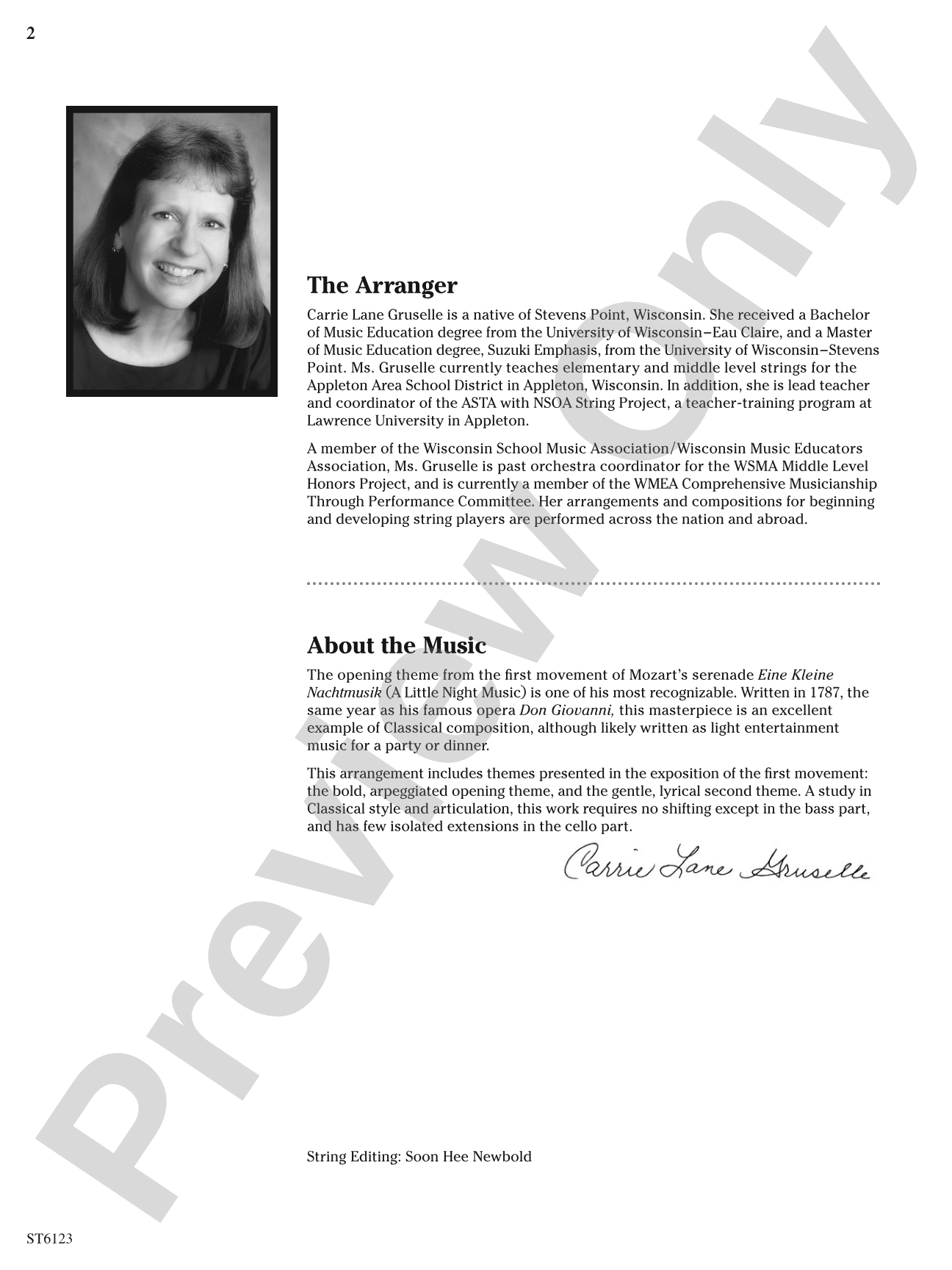
By Wolfgang Amadeus Mozart / arr. Carrie Lane Gruselle
Grade: 2.5
Item: 98-DST6123
$45.00
Pickup currently not available
Buy Extra Parts (Digital PDF Download)
Parts Added to Cart!
Description
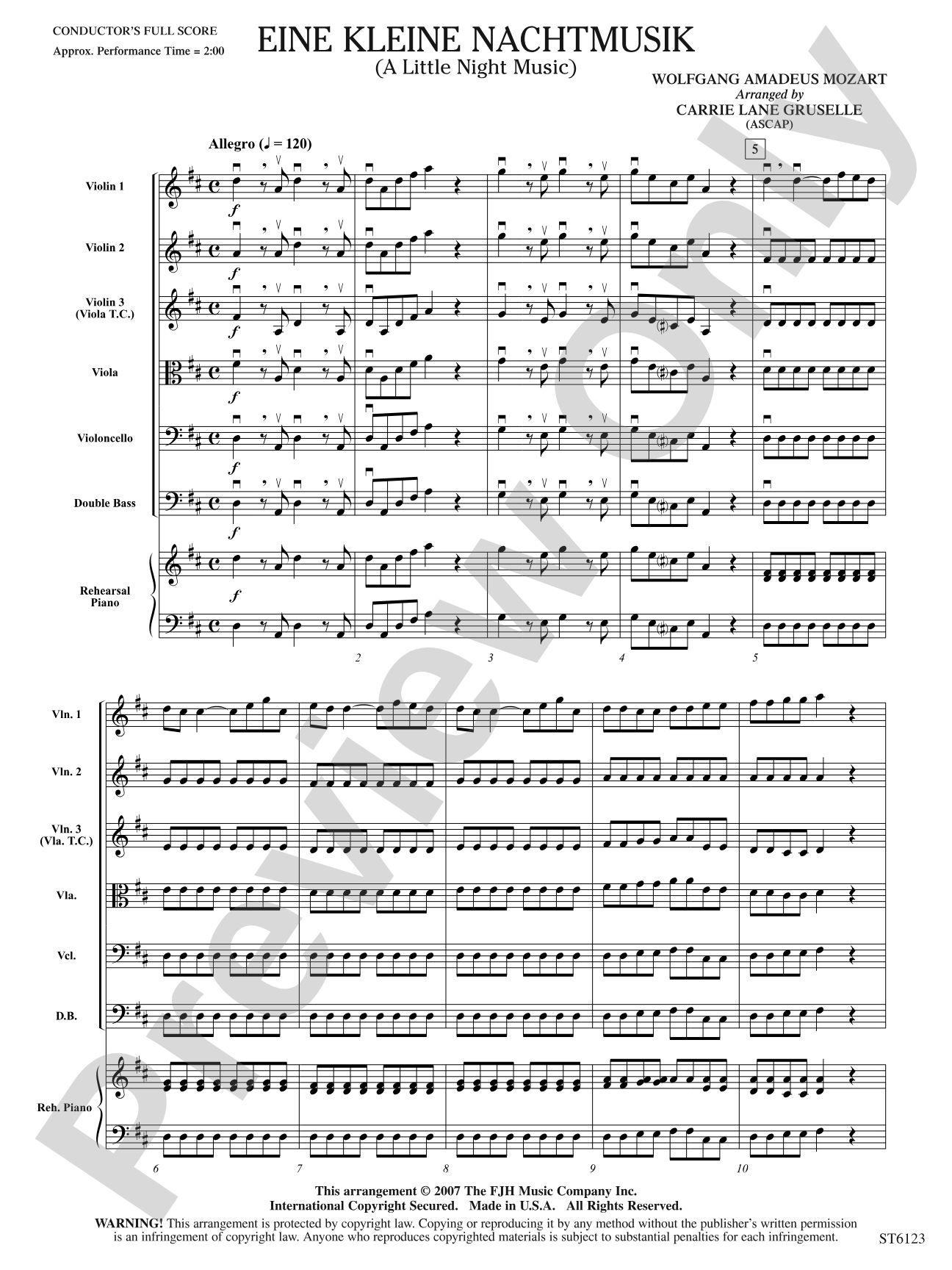
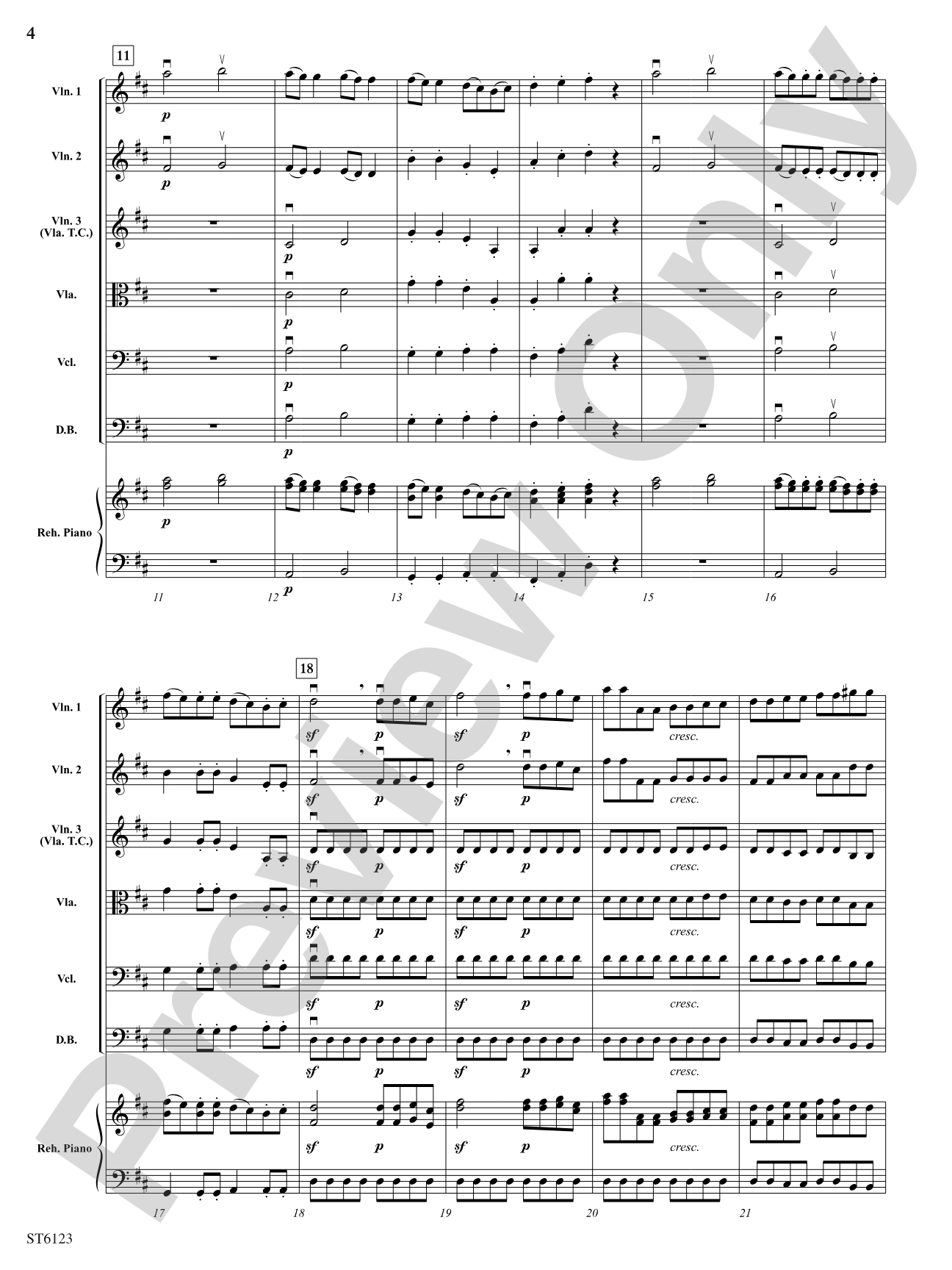
Students and audiences are sure to enjoy this accessible and expertly arranged transcription of Mozart's Eine kleine nachtmusik, one of his most recognizable melodies. This arrangement of themes from movement 1 will teach Classical-style articulation and bow strokes through a Mozart masterpiece. No shifting is required except for the bass part and isolated extensions in the cello part.


Eine Kleine Nachtmusik (A Little Night Music): String Orchestra Conductor Score & Parts isn't in MakeMusic Cloud just yet...but it could be. Let us know you'd like to see it, and you'll help shape what comes next. In the meantime, start a free trial and dive into thousands of interactive titles your students can play along with today.
Request This Title
Tell us you want it.
Start Your Free Trial
Explore everything that's ready to play right now.
Sample Audio
1
Audio File
--:--
0:00
0:00
Sample Video
No sample videos found.
Additional Details
Series:
FJH Developing Strings
Publisher:
The FJH Music Company, Inc.
SKU:
98-DST6123
More about this title
About the Composer: Wolfgang Amadeus Mozart
Wolfgang Amadeus Mozart (1756-1791) composed Eine kleine Nachtmusik in Vienna during the summer of 1787, a period of remarkable creative output that also saw the completion of Don Giovanni. Though relatively brief, this serenade became one of his most enduring works, performed in concert halls and gardens for over two centuries. Mozart's genius for melody and structural clarity shines throughout the piece, making it an ideal window into Classical composition for student musicians.
For educators, Mozart's music offers something rare: pieces that sound effortless and charming while containing sophisticated harmonic language and formal architecture. Eine kleine Nachtmusik demonstrates how economy of gesture and perfect proportion can create music of lasting appeal. Its accessibility has never diminished its artistic substance, which is why it remains fundamental to music education.
Why we love this
This arrangement captures everything that makes Eine kleine Nachtmusik essential repertoire: recognizable, engaging melodic material that your students will actually want to perform, paired with excellent orchestration for Grade 2.5 ensembles. Carrie Lane Gruselle has preserved Mozart's characteristic clarity and elegance while thoughtfully adapting the string writing to avoid unnecessary technical barriers, allowing your orchestra to focus on style, articulation, and ensemble balance rather than wrestling with complex fingering patterns.
What to expect
Graceful and unhurried, with the confident elegance of an 18th-century ballroom. The opening melody unfolds with natural phrasing, supported by accompaniment figures that dance gently beneath. There's a lightness here, a sense of refinement and balance that reflects Mozart's belief that music should delight before it instructs.
Who it's for
String orchestras at the Grade 2-3 level will find this well-suited to their technical range and musical maturity. It works equally well for students beginning to explore masterwork literature and for ensembles seeking a polished concert piece that doesn't demand advanced shifting or complex rhythmic reading.
How to get the most out of it
- Shape Mozart's phrases with dynamic subtlety. Resist the impulse to play everything uniformly; use gentle crescendos and diminuendos to bring the melodies forward and allow accompaniment figures to recede.
- Attend closely to bow stroke clarity in the accompaniment parts. The repeated note patterns and accompanying figures define Classical style; crisp, well-separated strokes will transform the ensemble sound from muddy to crystalline.
- Balance first and second violin lines carefully. Mozart wrote conversation between these parts, not dominance of the first violins. Adjust your seating or rehearsal focus so both voices remain audible.
- Emphasize the difference between legato and detached articulation. This arrangement teaches those distinctions through Mozart's own compositional language, so pointing out where each articulation appears will deepen students' understanding of style.
How to use it
Program this early in your concert when you want to establish tone and polish, or use it as an intermission piece to reset the room between heavier works. It pairs naturally with other Classical-era transcriptions and stands particularly well when preceded or followed by contemporary works, allowing audiences to hear how modern composers have learned from Mozart's approach.
Skills your students will build
- Classical-style bow articulation and separation
- Phrasing and dynamic shaping in melodic writing
- Balance between melody and accompaniment voices
- Reading and executing detached versus legato articulation markings
- Ensemble intonation in sustained harmonic passages