
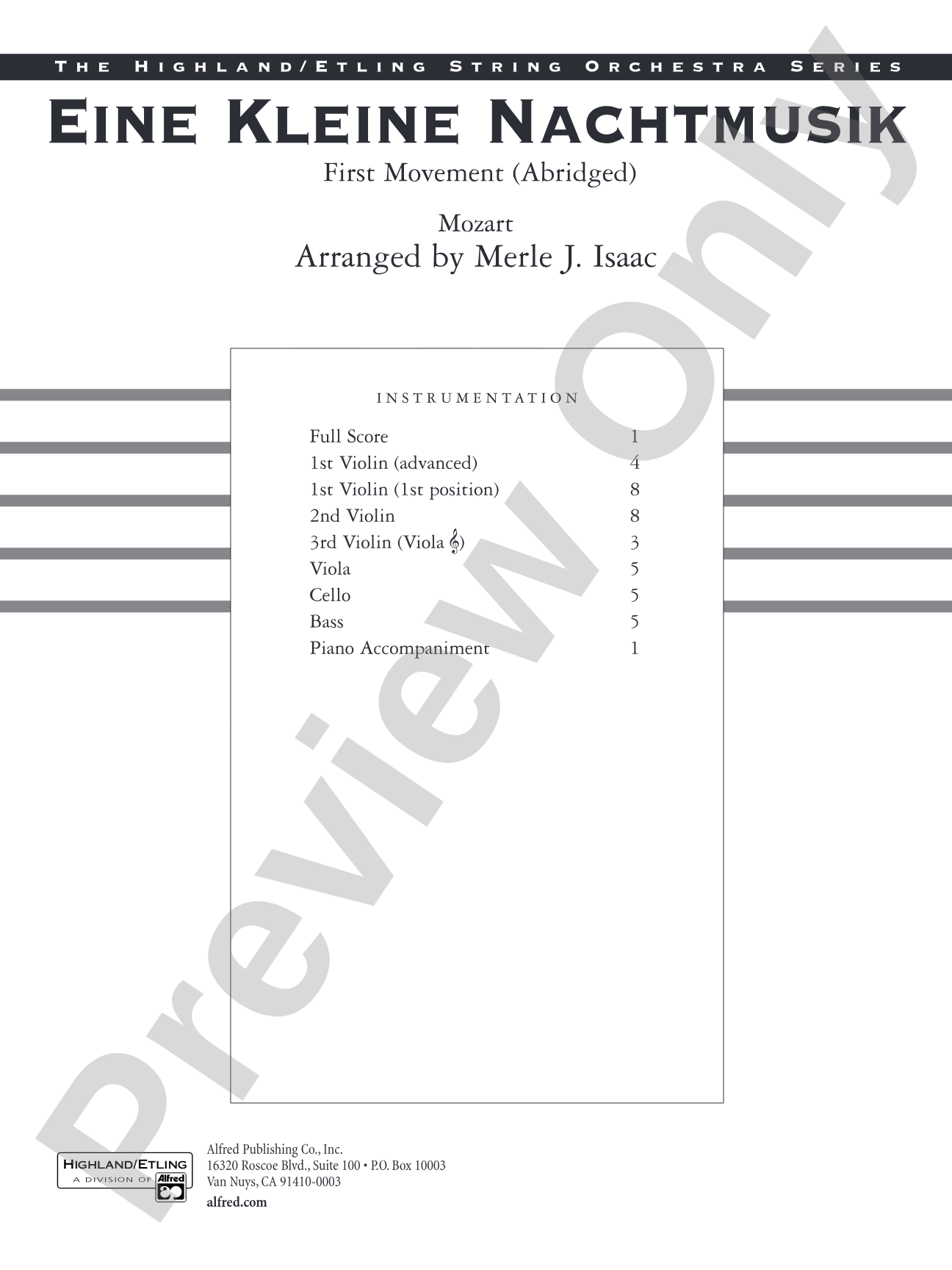

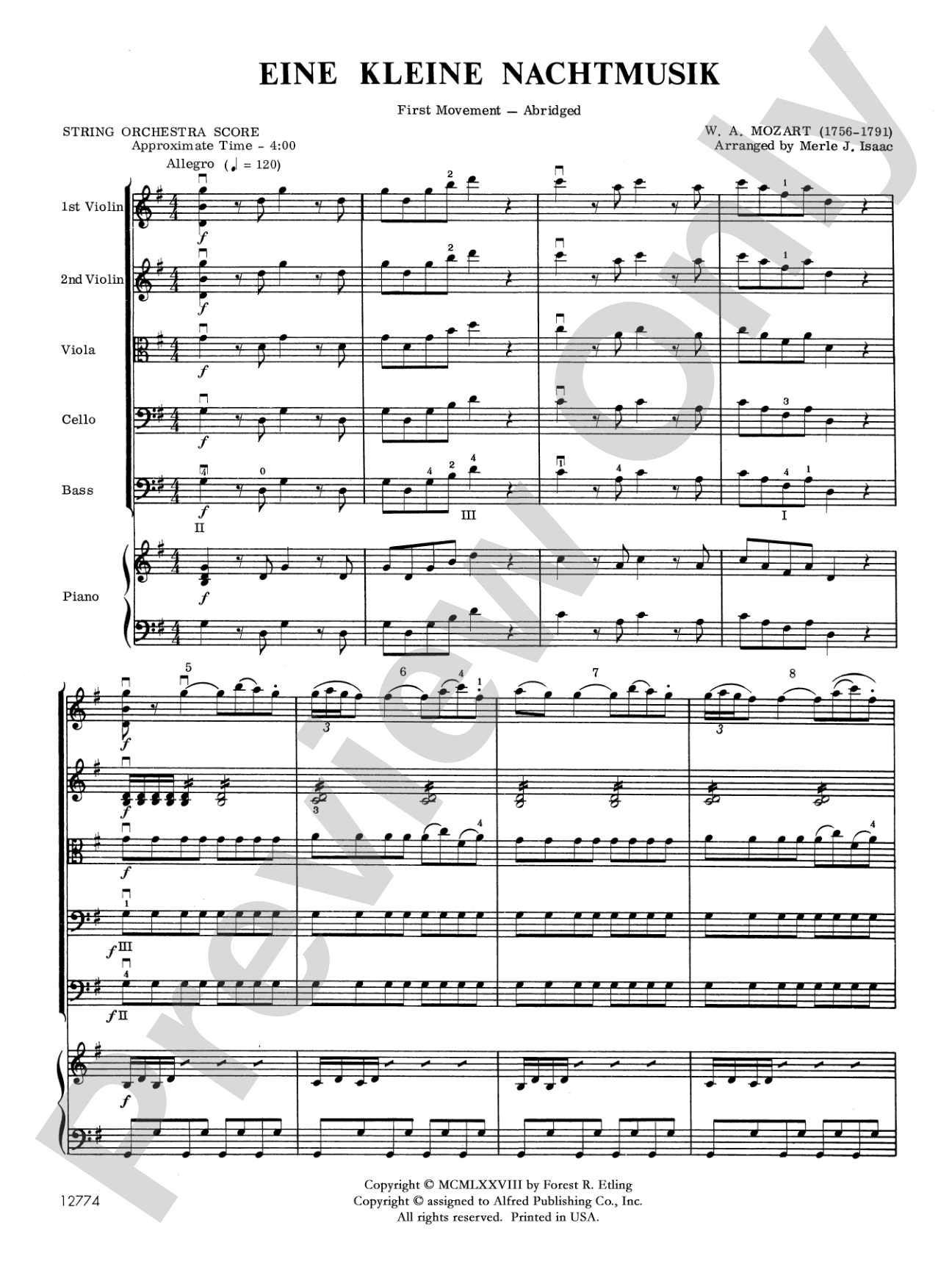
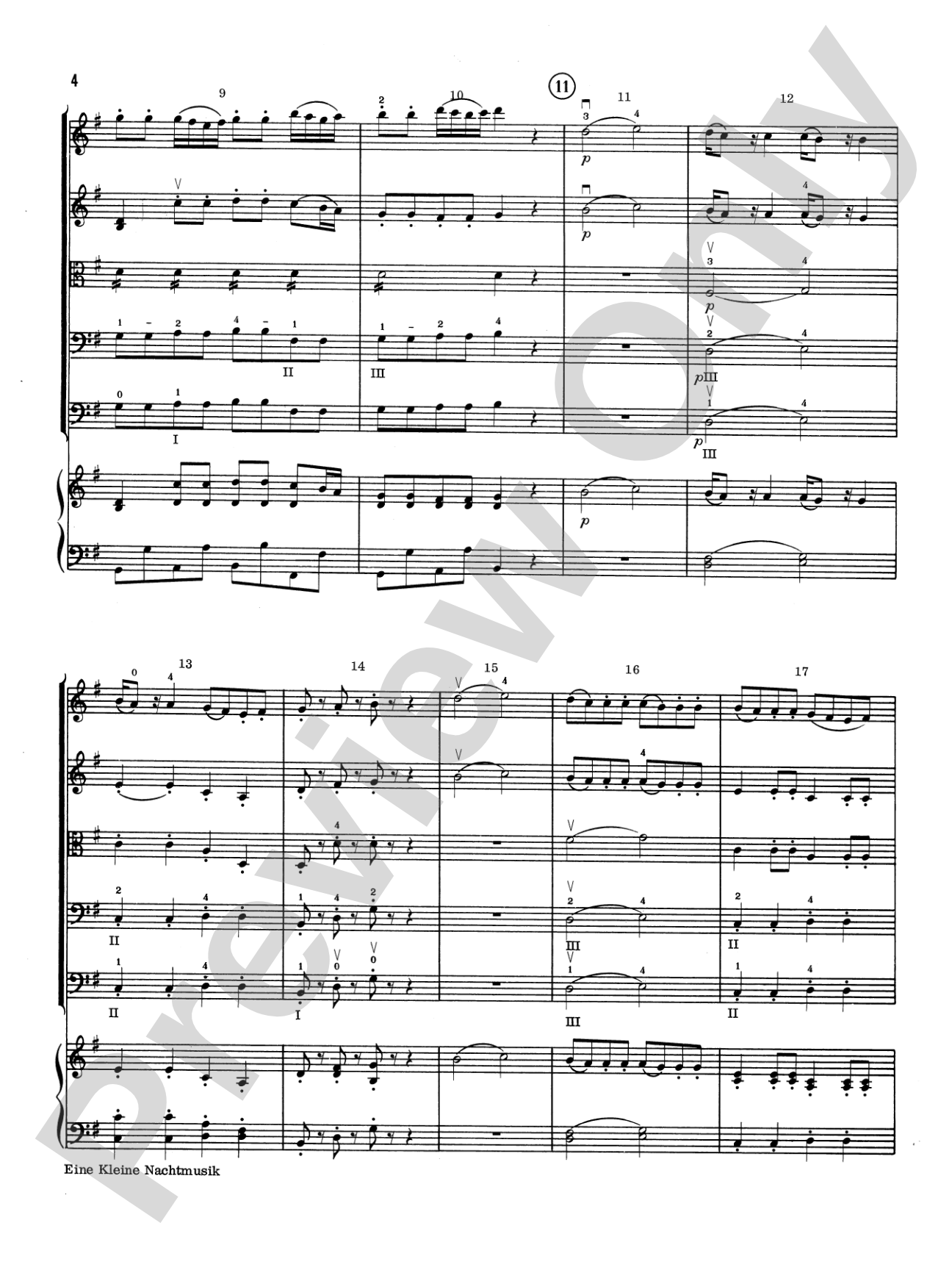
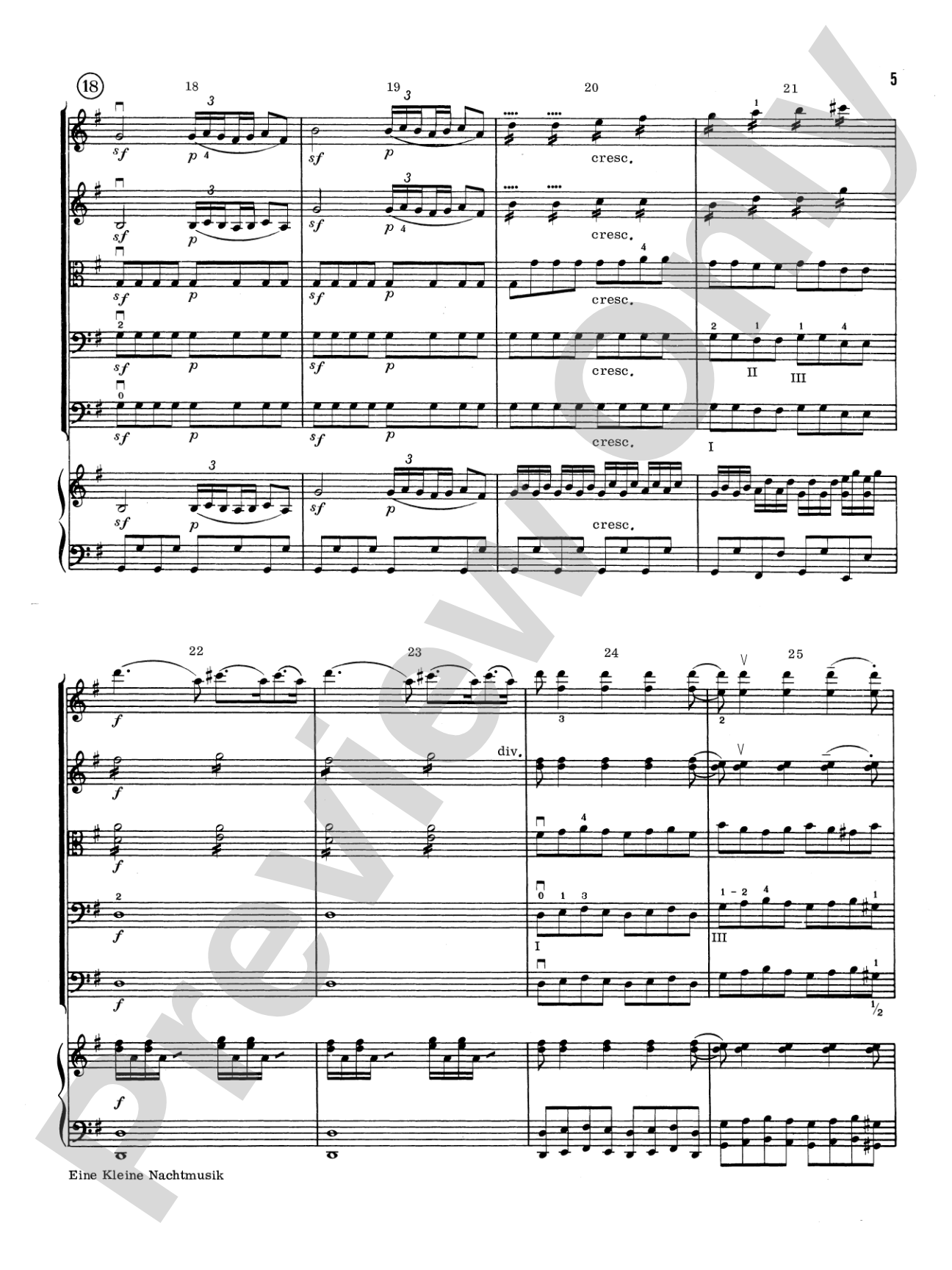
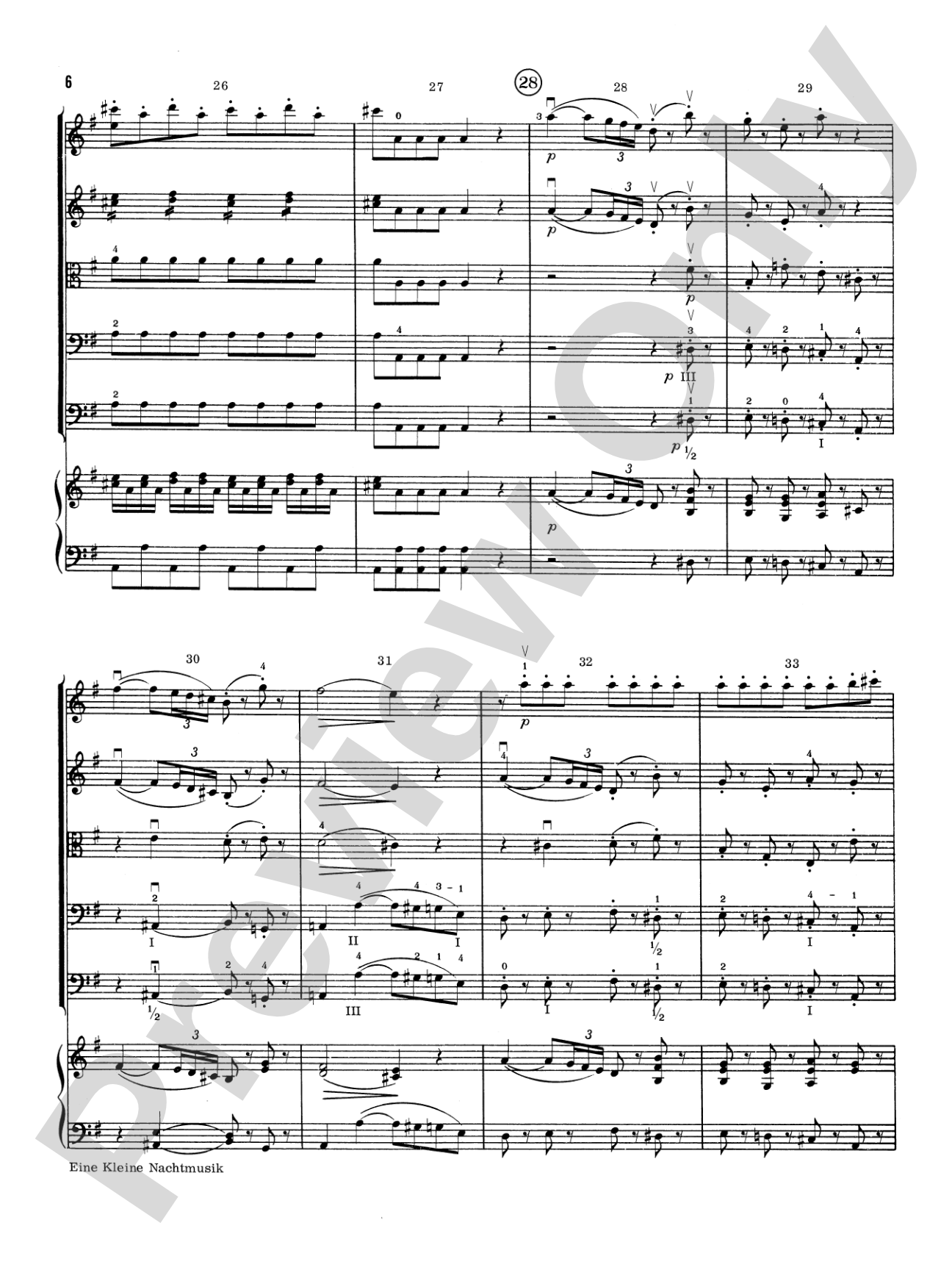
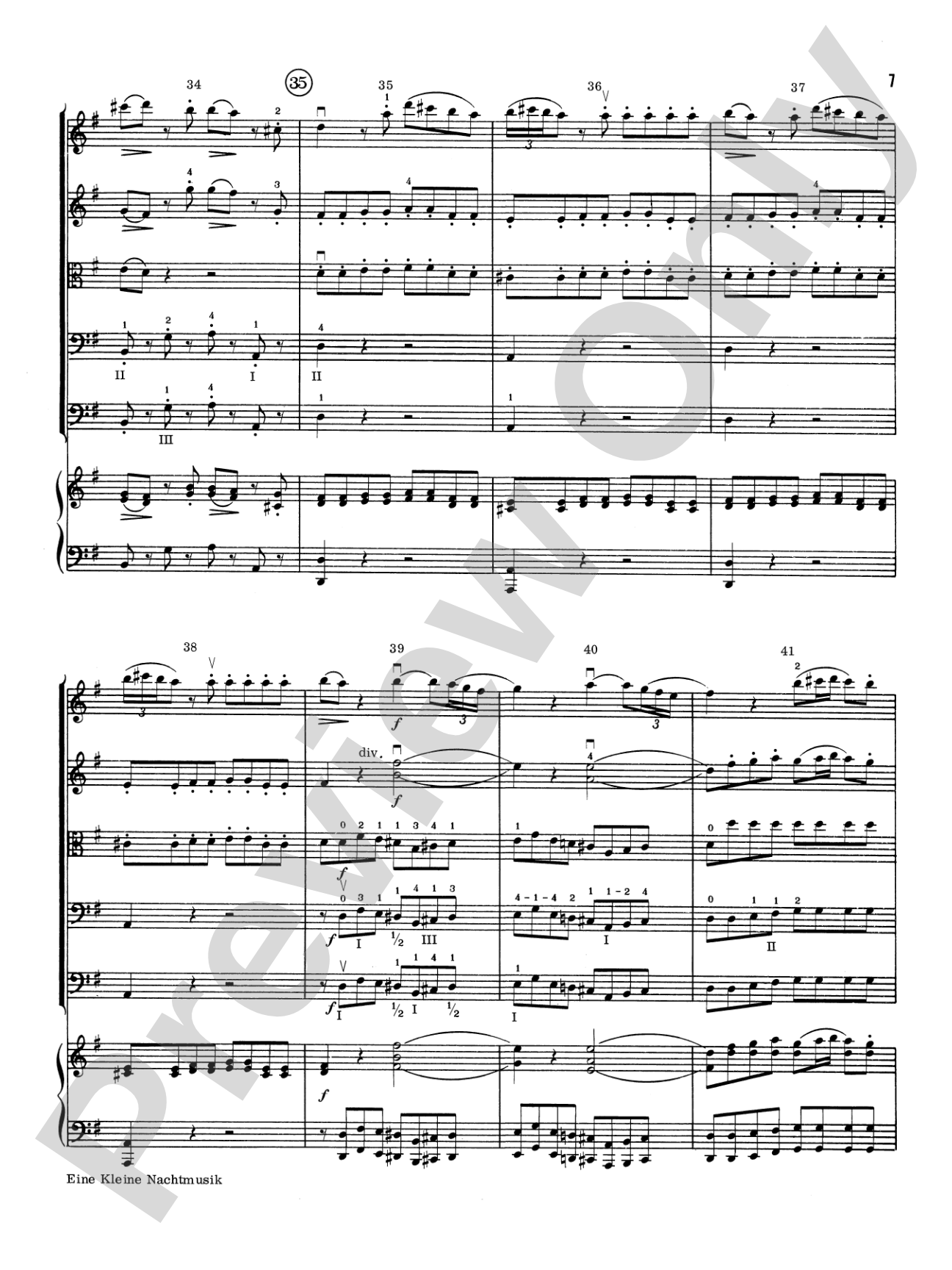
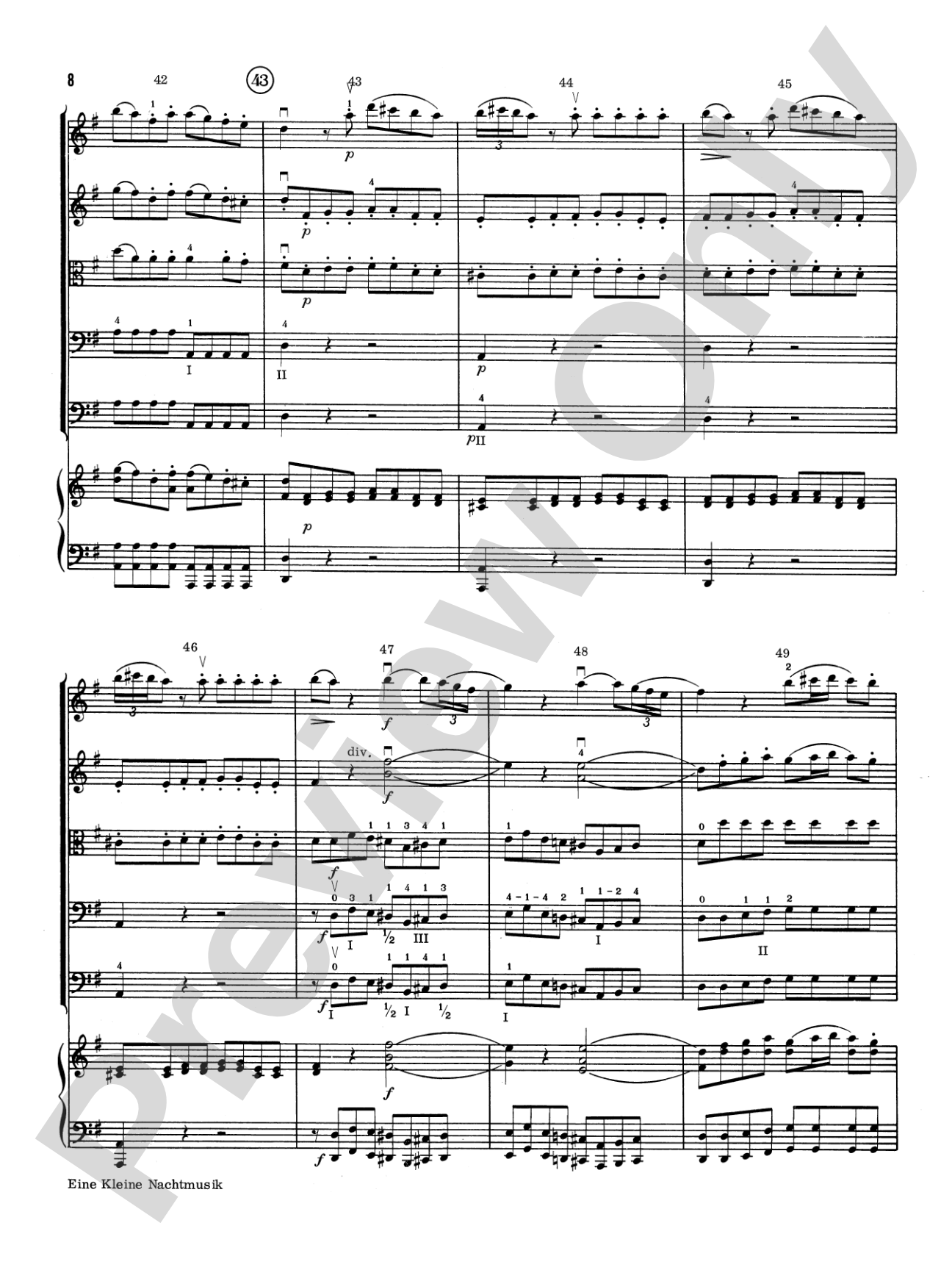
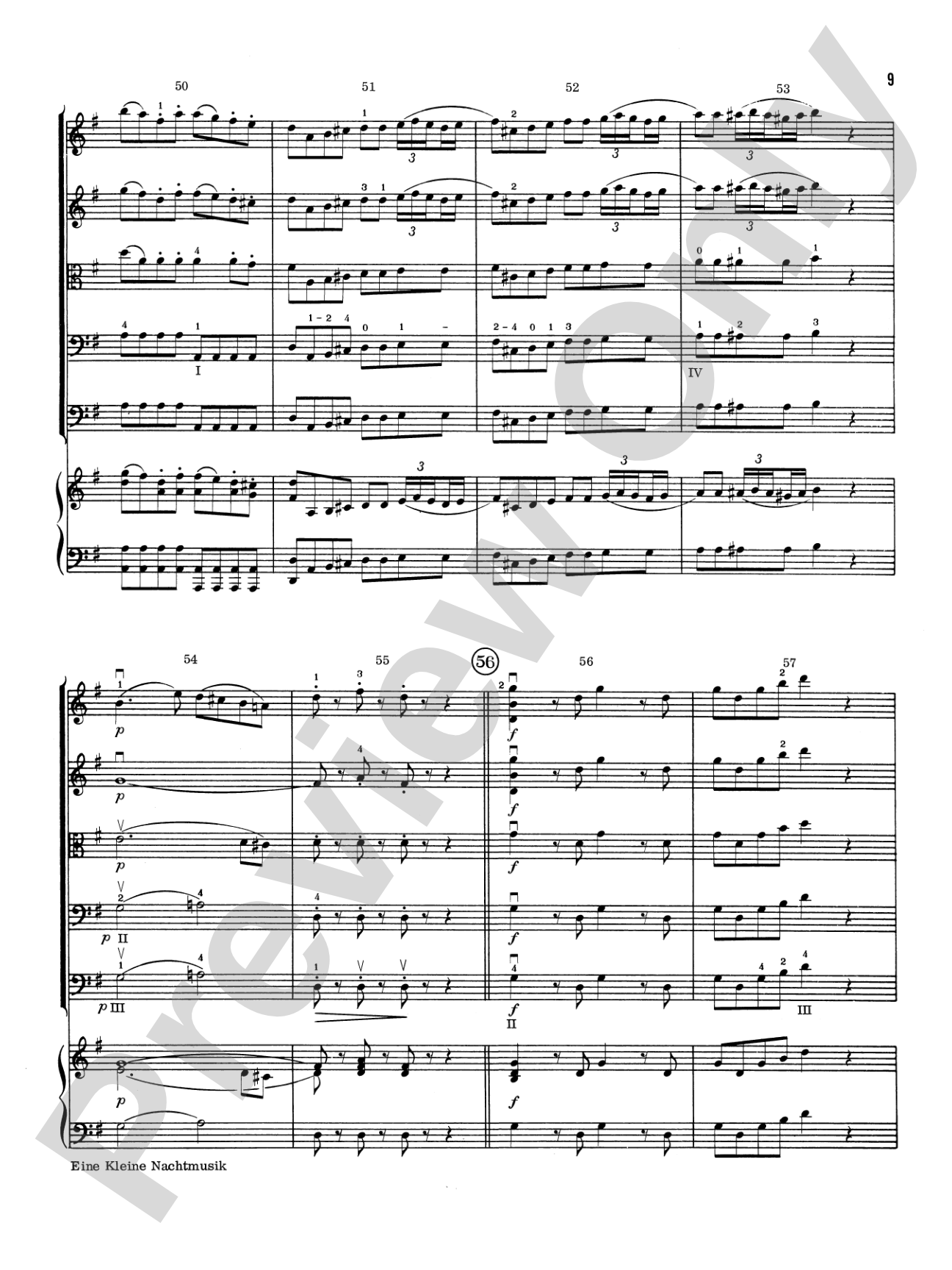
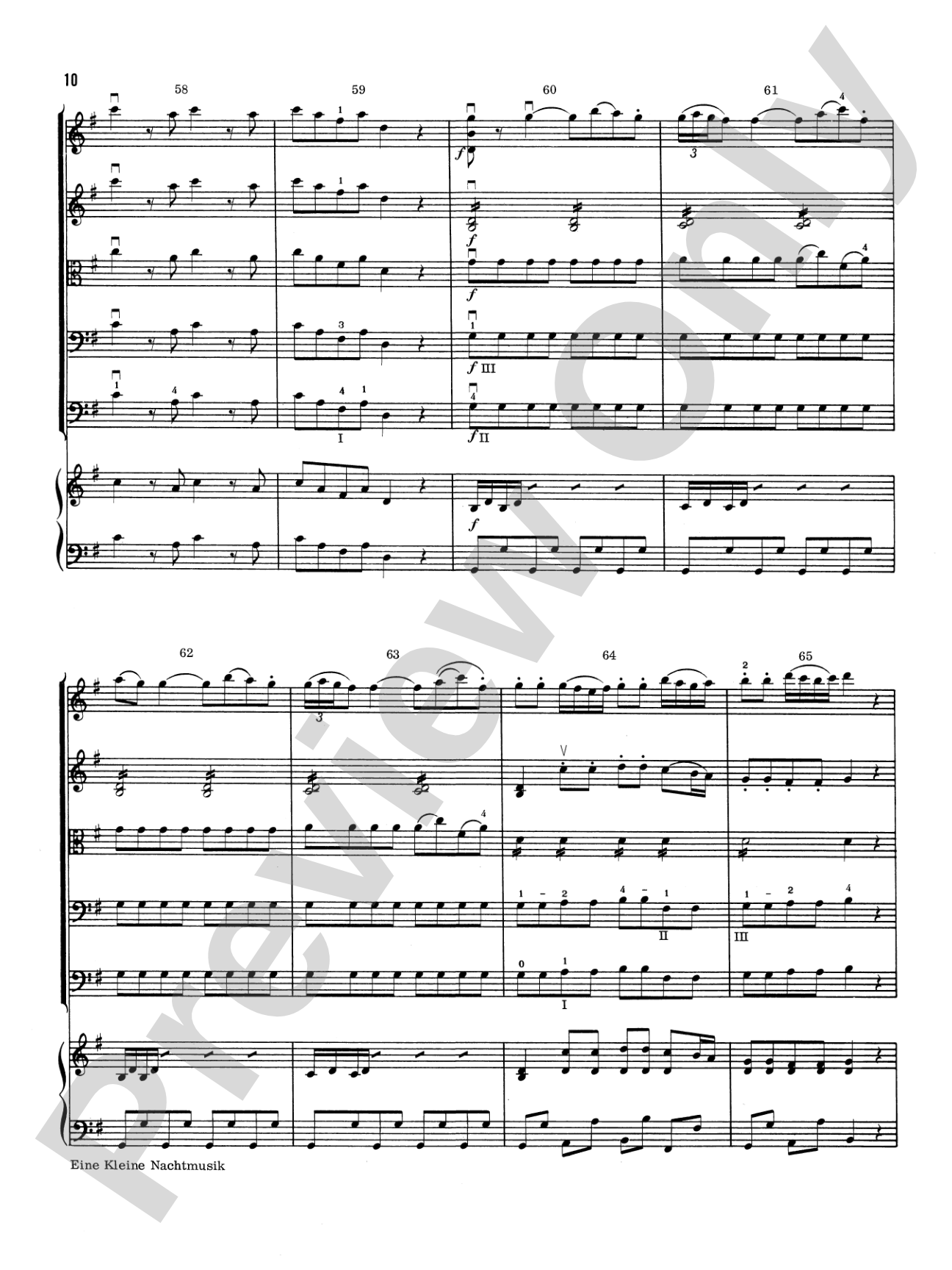
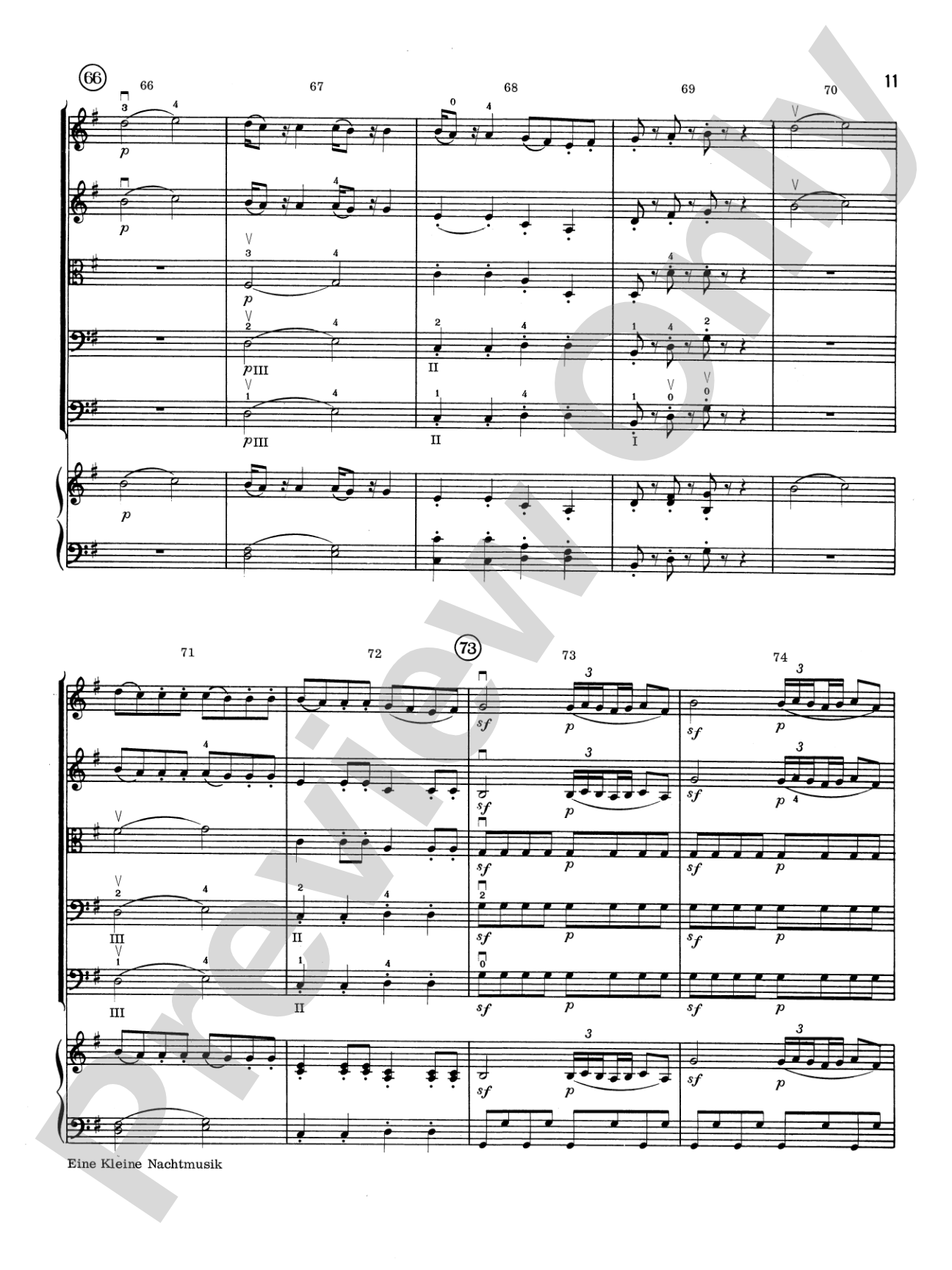
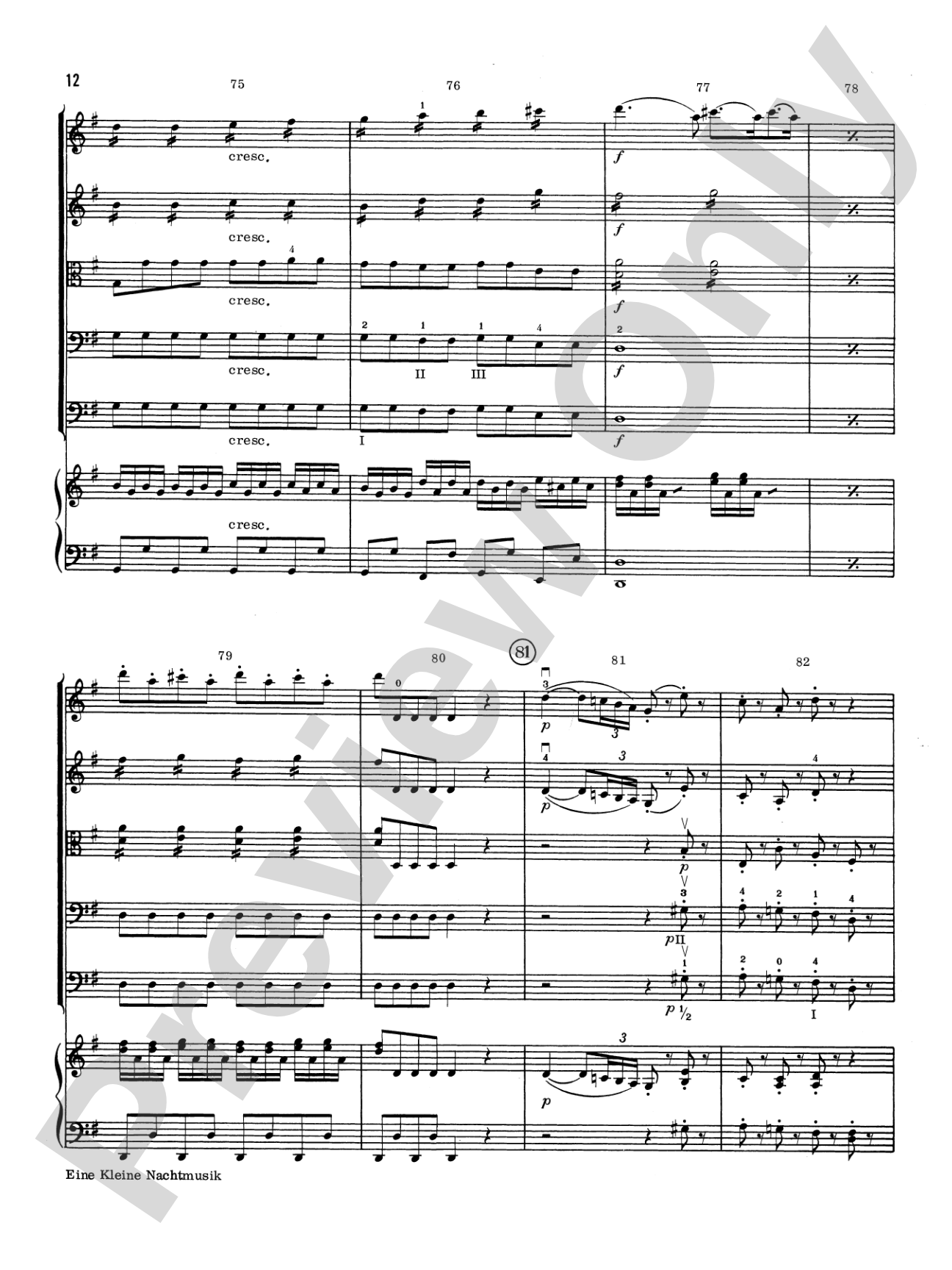
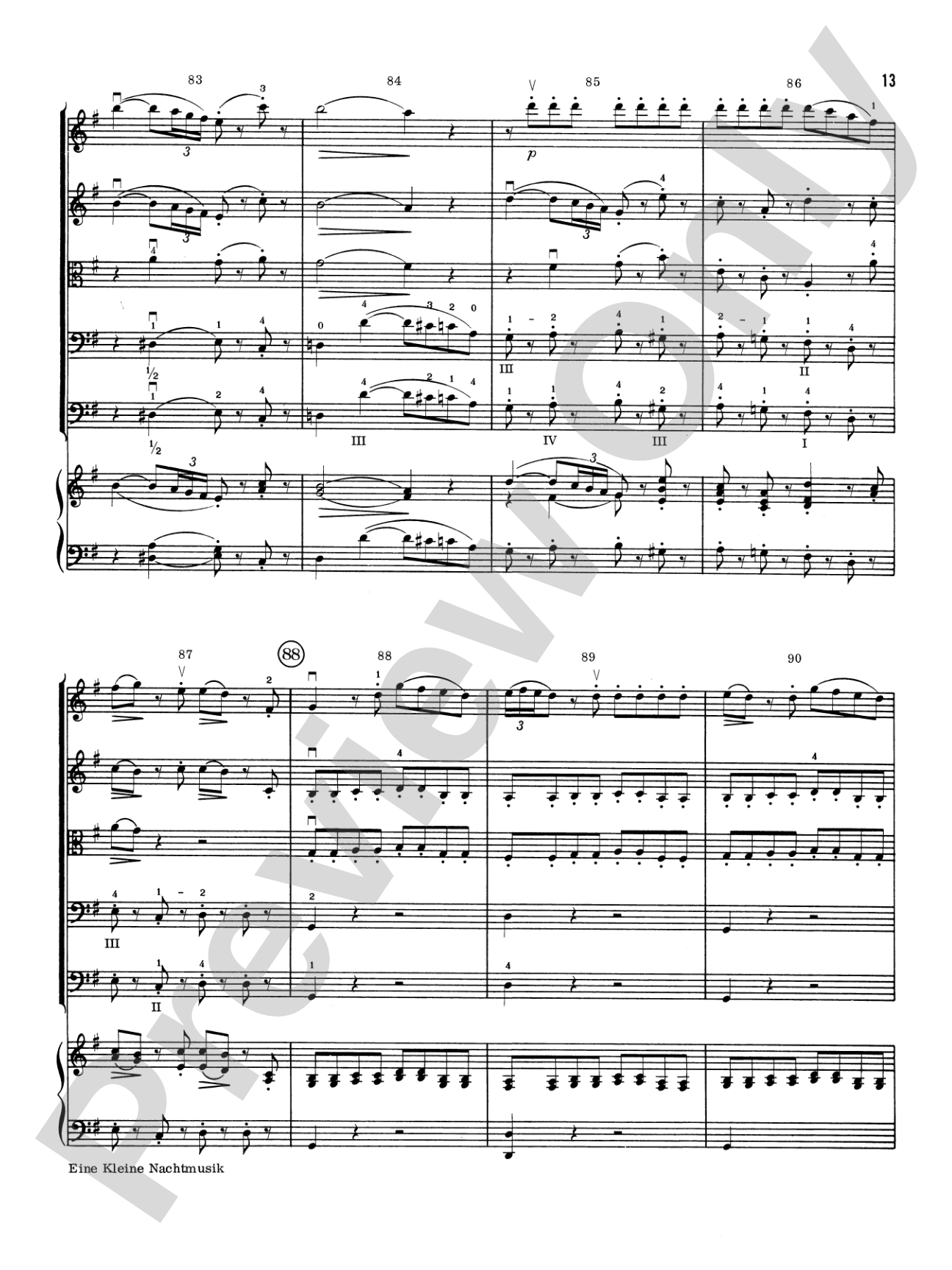
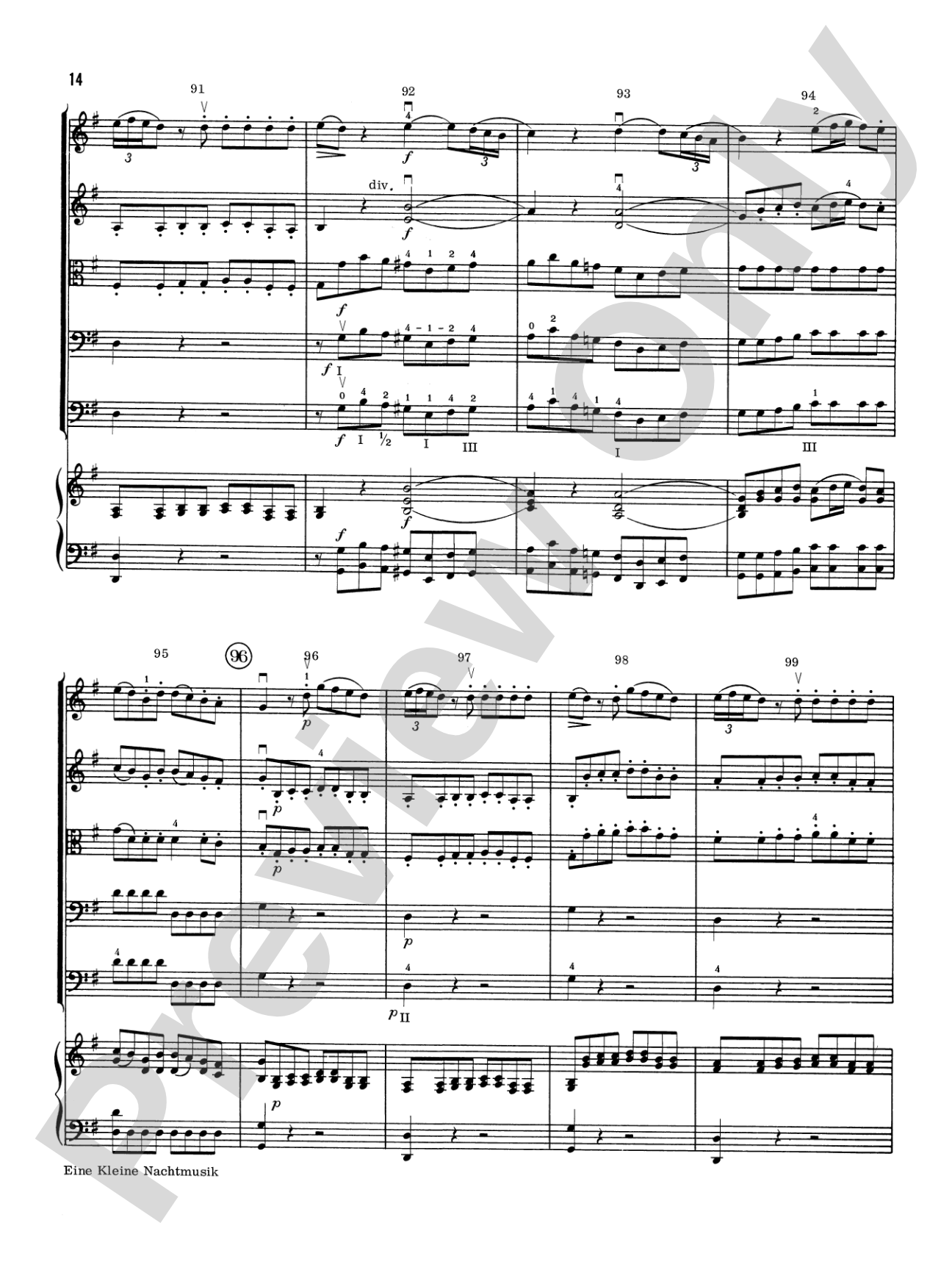
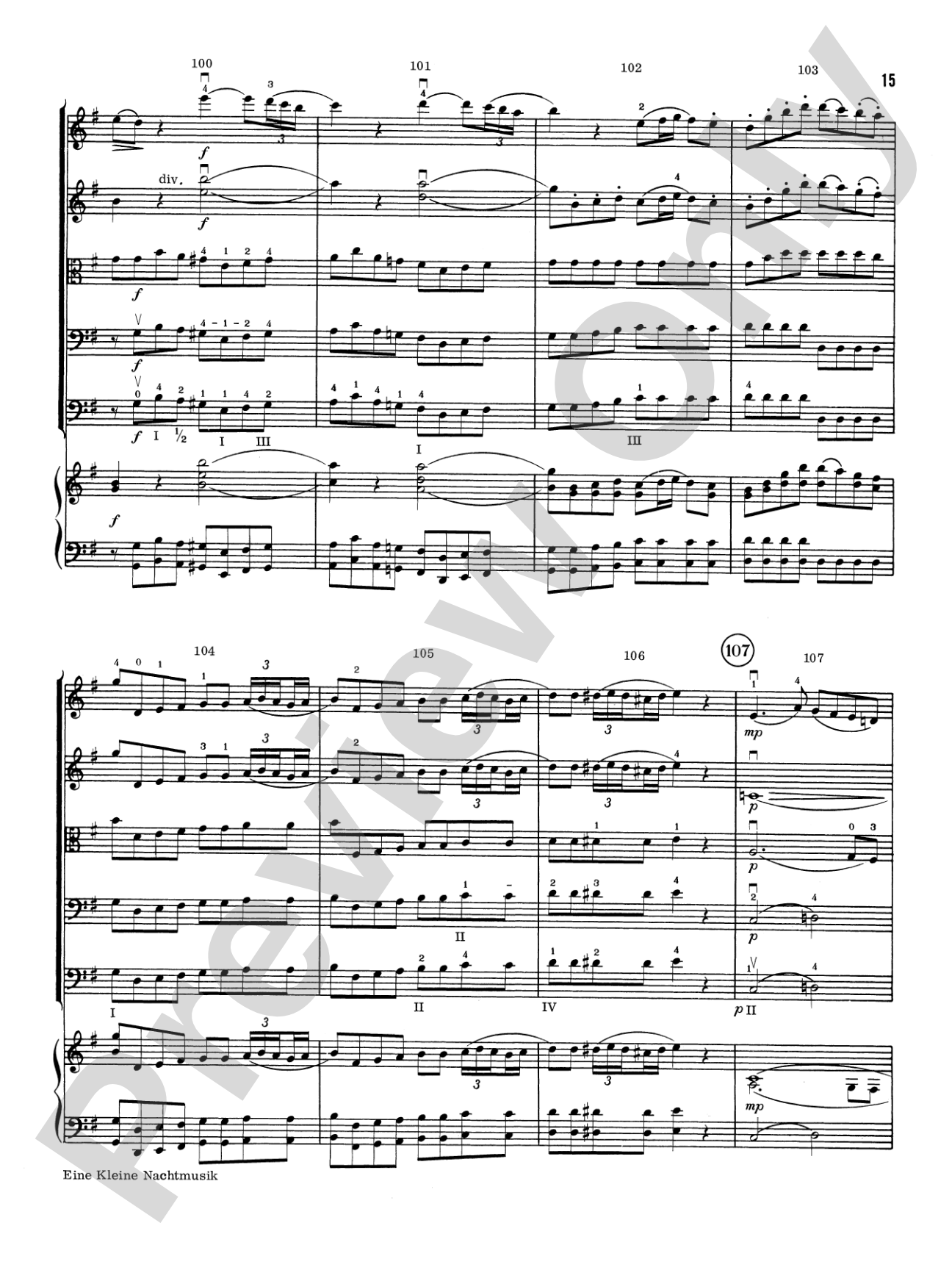
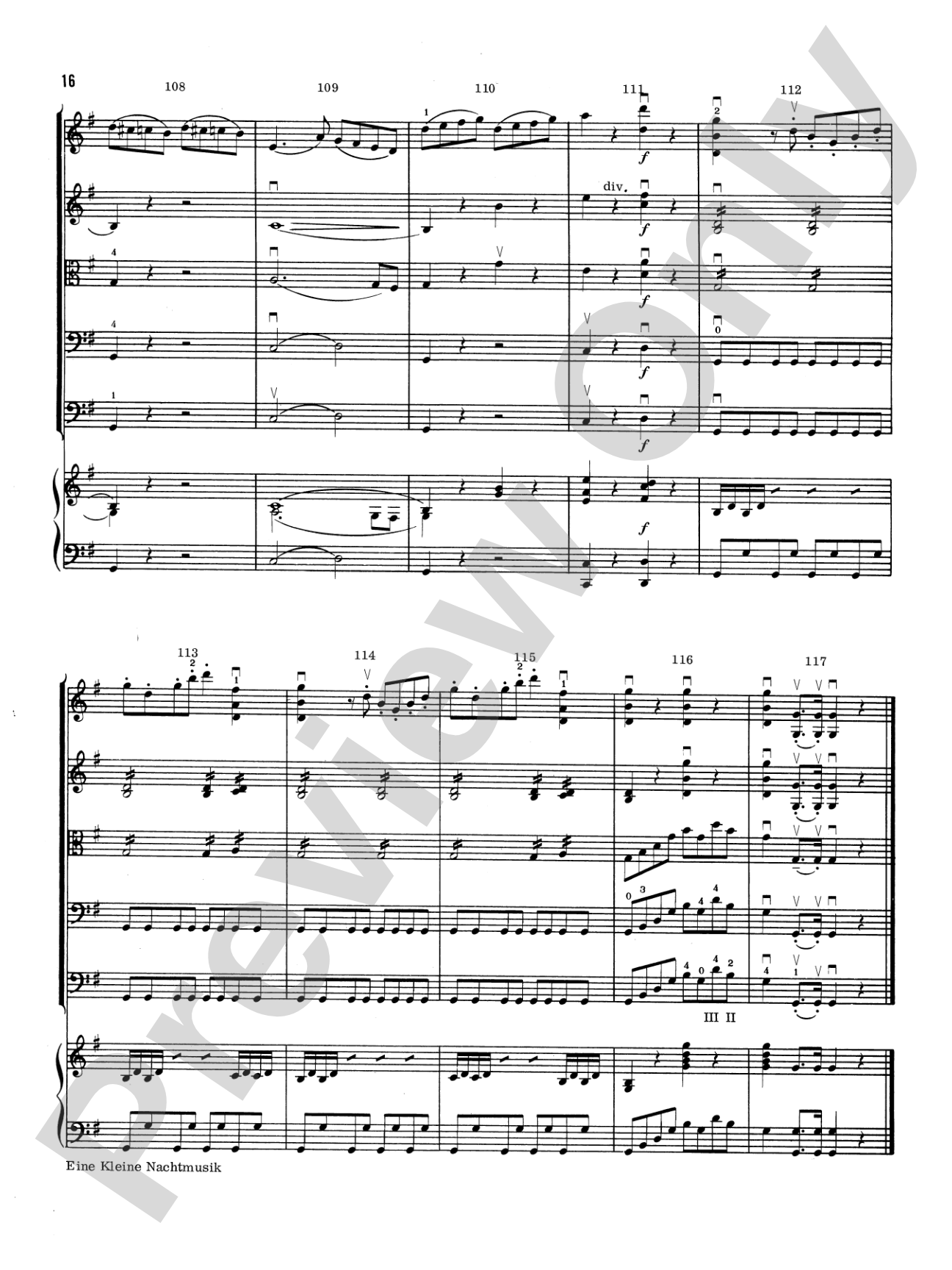

Eine Kleine Nachtmusik: String Orchestra Conductor Score & Parts
By Wolfgang Amadeus Mozart / arr. Merle J. Isaac
Grade: 3
Item: 00-PK-0000101

$62.00
Pickup currently not available
Buy Extra Parts (Digital PDF Download)
| Product | Price | Quantity |
|---|---|---|
| Eine Kleine Nachtmusik: Score | $9.00 | |
| Eine Kleine Nachtmusik: Advanced Violin | $5.99 | |
| Eine Kleine Nachtmusik: 1st Violin | $5.99 | |
| Eine Kleine Nachtmusik: 2nd Violin | $5.99 | |
| Eine Kleine Nachtmusik: 3rd Violin (Viola [TC]) | $5.99 | |
| Eine Kleine Nachtmusik: Viola | $5.99 | |
| Eine Kleine Nachtmusik: Cello | $5.99 | |
| Eine Kleine Nachtmusik: String Bass | $5.99 | |
| Eine Kleine Nachtmusik: Piano Accompaniment | $5.99 |
Parts Added to Cart!
Related Items
Eine Kleine Nachtmusik, 1st Movement: Full Orchestra Conductor Score & Parts |
$65.00
|
View | |
Eine Kleine Nachtmusik: Full Orchestra Conductor Score & Parts |
$63.00
|
View | |
Eine Kleine Nachtmusik: Full Orchestra Conductor Score |
$7.00
|
View | |
Eine Kleine Nachtmusik: String Orchestra Conductor Score & Parts |
$62.00
|
View | |
Eine Kleine Nachtmusik: String Orchestra Conductor Score |
$9.00
|
View |
Description


Don't just read it, hear it, play along with it, and watch your students grow with it. In MakeMusic Cloud, Eine Kleine Nachtmusik: String Orchestra Conductor Score & Parts comes alive with professional accompaniment, adjustable tempo, and built-in practice tools that turn solo practice into real progress.
Open in the Player
Jump straight in and assign it today.
Start Your Free Trial
Open this title and explore the full library in minutes.
Sample Audio
No sample audio found.
Sample Video
No sample videos found.
Additional Details
Series:
Highland/Etling String Orchestra
Publisher:
Alfred Music
Page Count:
160
SKU:
00-PK-0000101
More about this title
About the Composer: Wolfgang Amadeus Mozart
Wolfgang Amadeus Mozart (1756-1791) stands as one of the most prolific and influential composers in Western music history. Born in Salzburg, Austria, Mozart composed over 600 works across every major genre, from operas and symphonies to chamber music and concertos, all before his death at age 35. His mastery of melody, harmonic sophistication, and structural clarity made him a bridge between the Baroque and Romantic periods.
For string orchestra educators, Mozart represents the pinnacle of Classical writing for strings. His works demand clarity of line, precision of ensemble, and an understanding of period style that deepens musicians' interpretive skills. Teaching Mozart builds the foundation for all repertoire that follows.
Why we love this
Merle Isaac's Grade 3 arrangement opens one of music's most celebrated works to orchestras that might otherwise have no access to it. The part writing is clean and idiomatic for young string players, maintaining Mozart's essential character while removing technical barriers. Directors gain a genuinely rewarding piece that builds ensemble precision and musical maturity without requiring advanced technique.
What to expect
Eine kleine Nachtmusik radiates charm and elegance; even in this accessible arrangement, listeners encounter Mozart's gift for melody and his ability to craft musical conversation among the string voices. The work alternates between graceful sophistication and infectious rhythmic vitality, inviting performers to discover the joy of Classical chamber music.
Who it's for
This arrangement serves Grade 3 string orchestras ready to tackle a masterwork with confidence. Young musicians benefit from playing recognizable, substantial music that builds pride in their ensemble sound while developing fundamental skills in intonation, balance, and phrasing.
How to get the most out of it
- Shape each phrase with a clear beginning, middle, and goal rather than playing note to note; the elegant lines in Eine kleine Nachtmusik thrive on architectural clarity.
- Establish a steady, dance-like pulse in the minuet movements; Mozart's rhythmic drive depends on consistent tempo and rhythmic precision from all sections.
- Balance the texture by keeping first violins slightly forward without drowning out violas and cellos, who carry essential harmonic and melodic material throughout.
- Attend to articulation markings as score indications of phrasing and character; even at Grade 3, Mozart's articulation choices shape the musical narrative.
How to use it
Program this as the centerpiece of a concert celebrating the Classical era or as a foundation piece that demonstrates your orchestra's musical maturity to audiences unfamiliar with school string ensembles. It pairs naturally with contemporary or Romantic works and stands alone as a complete, satisfying performance.
Skills your students will build
- Reading and executing articulation markings (staccato, legato, accent) as tools for musical expression
- Maintaining steady pulse and ensemble rhythmic precision in dance forms (minuet, rondo)
- Balancing four-part string texture while supporting the melodic line
- Understanding phrase structure and shaping lines with intentional rubato and dynamic emphasis
- Listening across the ensemble to maintain pitch center and intonation in functional harmony