
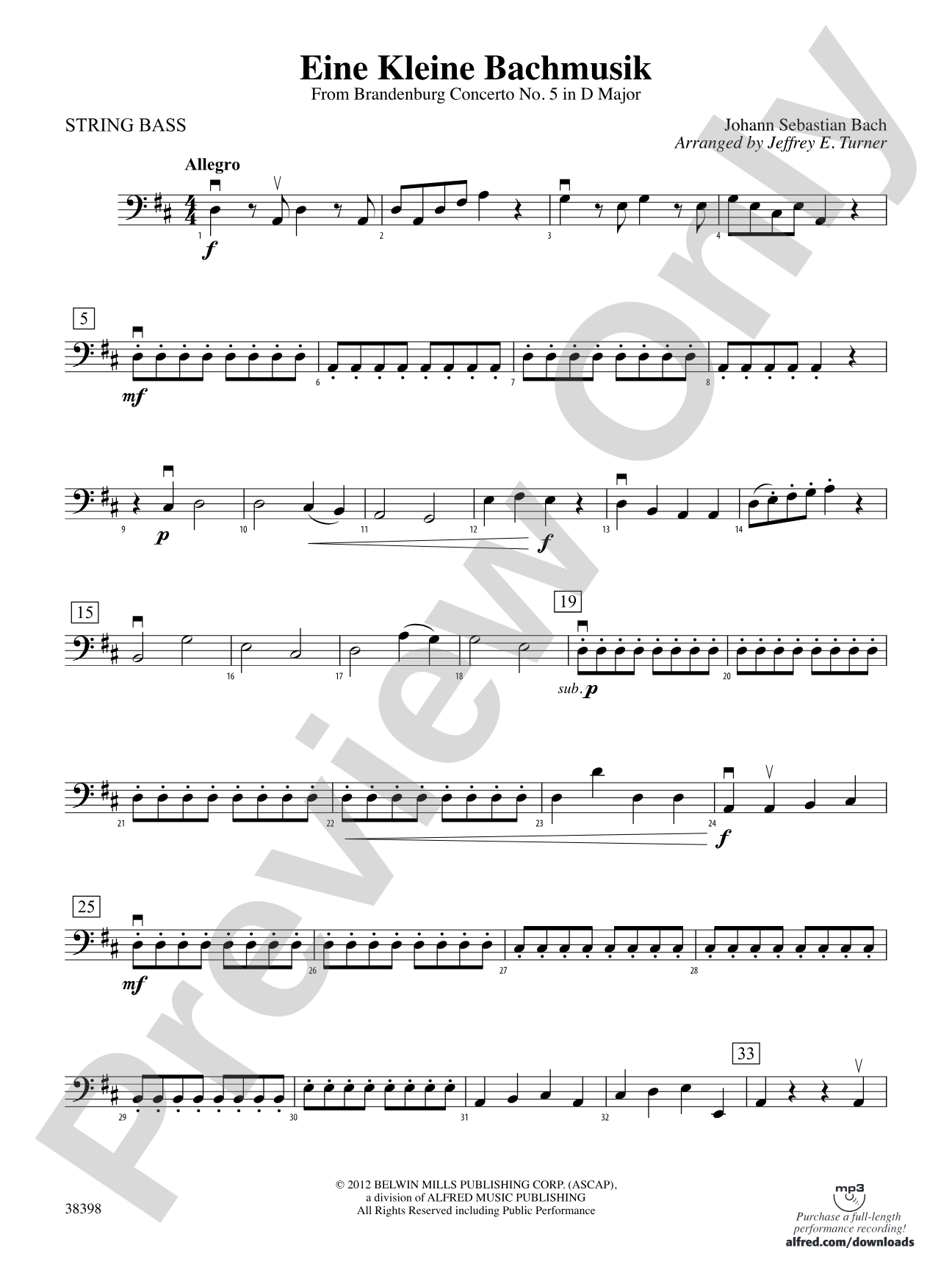

Eine Kleine Bachmusik (from Brandenburg Concerto No. 5 in D Major): String Bass
By Johann Sebastian Bach / arr. Jeffrey E. Turner
Grade: 2.5
Item: 00-PC-0015466_SB
$5.99
Pickup currently not available
Description
What if Bach and Mozart had been able to collaborate on a piece? This arrangement explores that idea. Using thematic material from Bach's Brandenburg Concerto, but arranged and orchestrated in a style similar to Mozart, it gives us a wonderful, easy-to-play piece that's the best of both worlds. This title is available in MakeMusic Cloud.


Don't just read it, hear it, play along with it, and watch your students grow with it. In MakeMusic Cloud, Eine Kleine Bachmusik (from Brandenburg Concerto No. 5 in D Major): String Bass comes alive with professional accompaniment, adjustable tempo, and built-in practice tools that turn solo practice into real progress.
Open in the Player
Jump straight in and assign it today.
Start Your Free Trial
Open this title and explore the full library in minutes.
Sample Audio
1
Audio File
--:--
0:00
0:00
Sample Video
No sample videos found.
Additional Details
Series:
Belwin Beginning String Orchestra
Publisher:
Alfred Music
Page Count:
144
SKU:
00-PC-0015466_SB
More about this title
About the Composer: Johann Sebastian Bach
Johann Sebastian Bach (1685-1750) was a German composer and organist whose mastery of counterpoint and harmonic language shaped the foundation of Western music. His instrumental works, including the Brandenburg Concertos, represent the height of Baroque compositional technique and remain essential repertoire for musicians across all levels. Bach's music combines mathematical precision with profound emotional depth, making his work endlessly rewarding to study and perform.
Why we love this
This arrangement captures what makes Bach's Brandenburg Concerto No. 5 so engaging while rendering it accessible for developing orchestras. Arranger Jeffrey E. Turner has reimagined the material through a Classical lens, creating clear part writing and manageable technical demands that let your ensemble focus on phrasing and ensemble balance rather than wrestling with complexity. It's a clever pedagogical move: students get to know one of music history's greatest works while building real skills in a part they can actually enjoy playing.
What to expect
The music radiates elegance and clarity. Bach's invention sings through transparent orchestration that feels neither simplified nor patronizing; instead, it unfolds with the grace of a well-proportioned chamber work. There's joy in the phrasing and a timeless quality that reminds listeners why this material has endured for nearly 300 years.
Who it's for
This title serves Grade 2.5 string orchestras working toward more sophisticated masterworks without the technical obstacles of unedited originals. It's ideal for ensembles ready to engage with Baroque harmonic language and counterpoint in a structured, playable context. Conductors seeking concert-quality arrangements that honor the source material while respecting student abilities will find this invaluable.
How to get the most out of it
- Shape the melodic lines with gentle dynamic contours throughout; this arrangement invites transparent, singing playing rather than heavy articulation.
- Balance the string sections carefully in passages where the first violins carry the main theme; the inner voices should support without obscuring the musical line.
- Maintain a light, dance-like quality in the faster sections by keeping the bow strokes clean and avoiding excessive vibrato on sustained notes.
- Use the printed score to identify where tutti and divisi passages shift the textural weight; clear entrances and releases will keep the performance feeling coordinated.
How to use it
Program this as a centerpiece on a spring concert, pairing it with contemporary works to highlight the continuum between Baroque and modern string writing. It also works beautifully as a second-half opener after a group of lighter 20th-century pieces, giving the audience a moment of refinement and architectural clarity. Consider it for young musicians' concerts where you want to expose developing audiences to canonical music in an approachable, engaging arrangement.
Skills your students will build
- Baroque phrasing and articulation conventions
- Balanced ensemble playing in transparent textures
- Reading and responding to clear formal architecture
- Intonation in harmonic progressions (common practice voice leading)
- Part independence while maintaining ensemble cohesion