Eighteenth Variation (from Rhapsody on a Theme of Paganini): 2nd Violin Sheet Music Preview

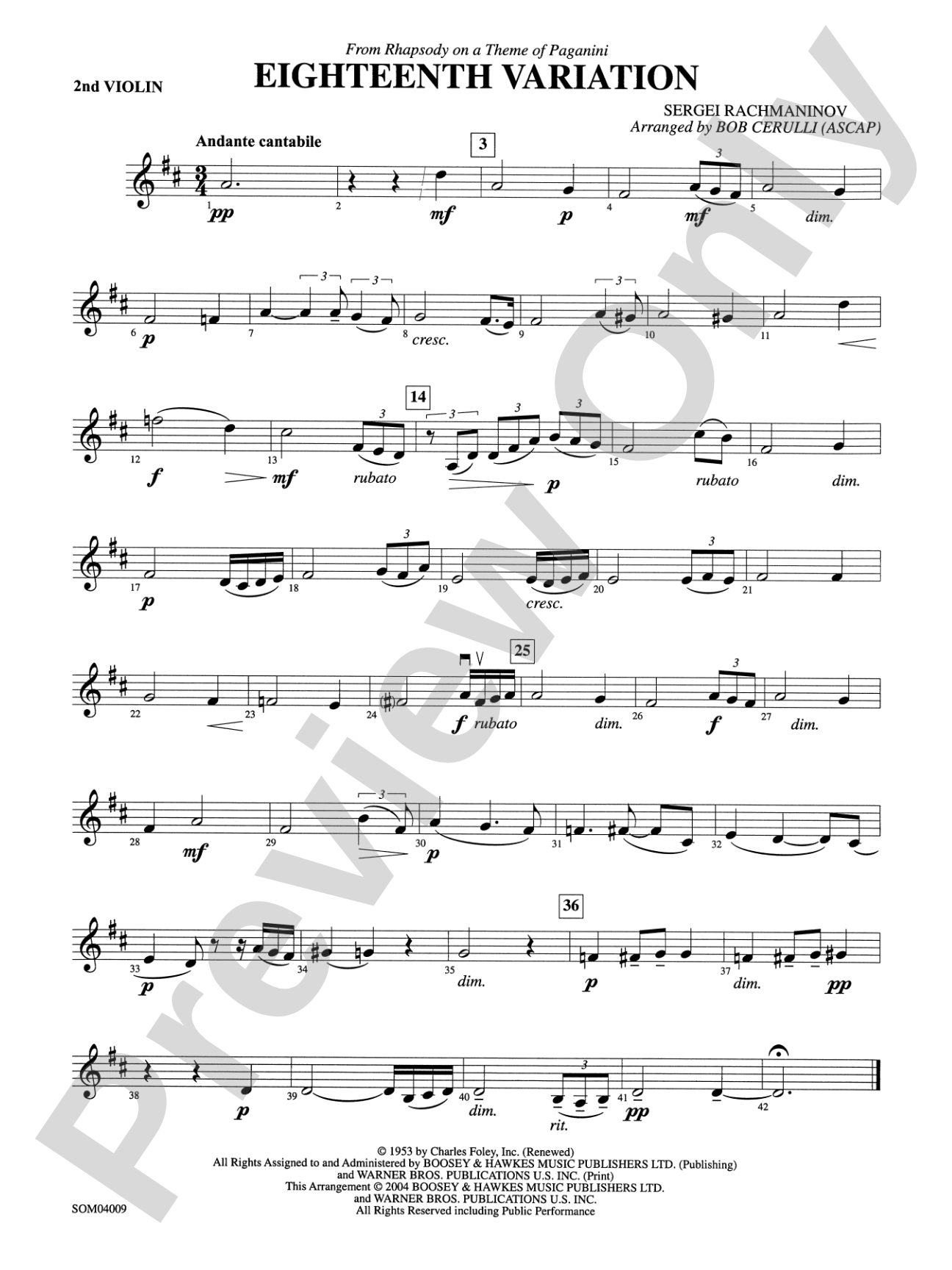
Eighteenth Variation (from Rhapsody on a Theme of Paganini): 2nd Violin

By Sergei Rachmaninoff / arr. Bob Cerulli

Grade: 3.5

Item: 00-PC-0015259_VN2

Digital Download
$5.99
Description
The revered Rachmaninoff Eighteenth Variation scored for strings alone, is indicated Andante cantabile and is comprised of a timeless romantic melody developed with extreme intensity. Characteristic rhythmic intricacies add to the enjoyment of this arrangement. (2:27)

Don't just read it, hear it, play along with it, and watch your students grow with it. In MakeMusic Cloud, Eighteenth Variation (from Rhapsody on a Theme of Paganini): 2nd Violin comes alive with professional accompaniment, adjustable tempo, and built-in practice tools that turn solo practice into real progress.

Sample Audio
0:00
0:00
Sample Video
Additional Details
Series: Pop Concert String Orchestra
Publisher: Alfred Music
Page Count: 42
SKU: 00-PC-0015259_VN2

More about this title

About the Composer: Sergei Rachmaninoff

Sergei Rachmaninoff (1873-1943) was a Russian composer, pianist, and conductor whose music defined late Romantic passion and technical brilliance. His works are staples of the concert repertoire, prized for their lyrical depth, harmonic sophistication, and uncompromising emotional directness.

The Rhapsody on a Theme of Paganini stands among his most performed compositions. Written in 1934 during his exile from Russia, this work transforms Paganini's 24th caprice into a full-length orchestral rhapsody. The Eighteenth Variation, with its soaring cantabile melody set against steady accompaniment, has become iconic in its own right and appears regularly in recital and concert settings.

Why we love this

This arrangement captures the Eighteenth Variation's celebrated lyricism without requiring the full orchestra, making it accessible for school and community string ensembles while preserving every ounce of Rachmaninoff's romantic sweep. The Grade 3.5 scoring respects the original's character; your players will feel they're performing a masterwork, not a simplification. Programming it offers a moment of genuine musical substance alongside lighter concert fare.

What to expect

Lush and sustained. The Eighteenth Variation unfolds as pure, singing melodic line over a gentle rhythmic foundation, with characteristic Rachmaninoff harmonic warmth. The Andante cantabile marking invites performers and listeners alike into a space of deep expression and romantic longing.

Who it's for

String orchestra directors working with Grade 3.5 ensembles who want to program substantive, recognizable music that challenges without overwhelming. This works equally well for school groups preparing a spring concert and community ensembles seeking repertoire that appeals to audiences familiar with the original orchestral version.

How to get the most out of it

  • Shape the main melody with deliberate attention to phrase length and breath; conductors often find it helpful to establish the emotional arc in full measure rather than beat-to-beat.
  • Balance the accompanying figures so they support rather than compete with the cantabile line. This often means asking second violins and violas to sit slightly back in dynamic terms.
  • Work the characteristic rhythmic intricacies in separate rehearsals if needed. Mark the problem passages clearly and isolate them to build confidence before full-section runs.
  • Allow time for the opening ritardando to settle naturally. Young ensembles sometimes rush through it; a slower, deliberate approach pays dividends.

How to use it

Pair this with lighter, faster selections to create dynamic contrast in a concert. Its 2:27 duration makes it ideal as a bridge piece or opening to a second half. Audiences recognize the melody instantly, which creates an immediate emotional connection.

Skills your students will build

  • Sustaining long, shaped melodic phrases with consistent tone quality
  • Balancing inner voices while supporting a cantabile line
  • Managing characteristic rhythmic intricacies across multiple parts simultaneously
  • Responding to subtle conductor gestures in a slower tempo
  • Coordinating string releases and attacks in passage work with unstated rhythmic complexity

You May Also Like