

Eighteenth Variation: From Rapsodie on a Theme of Paganini, Op. 43 - Piano Duo (2 Pianos, 4 Hands): Piano Duets & Four Hands
From Rapsodie on a Theme of Paganini, Op. 43
By Sergei Rachmaninoff
Level: Advanced
Item: 00-PB-0000823
$6.95
Pickup currently not available
Related Items
Eighteenth Variation: Piano Duo (2 Pianos, 4 Hands) Sheet (2 copies included) |
$6.95
|
View |
Description
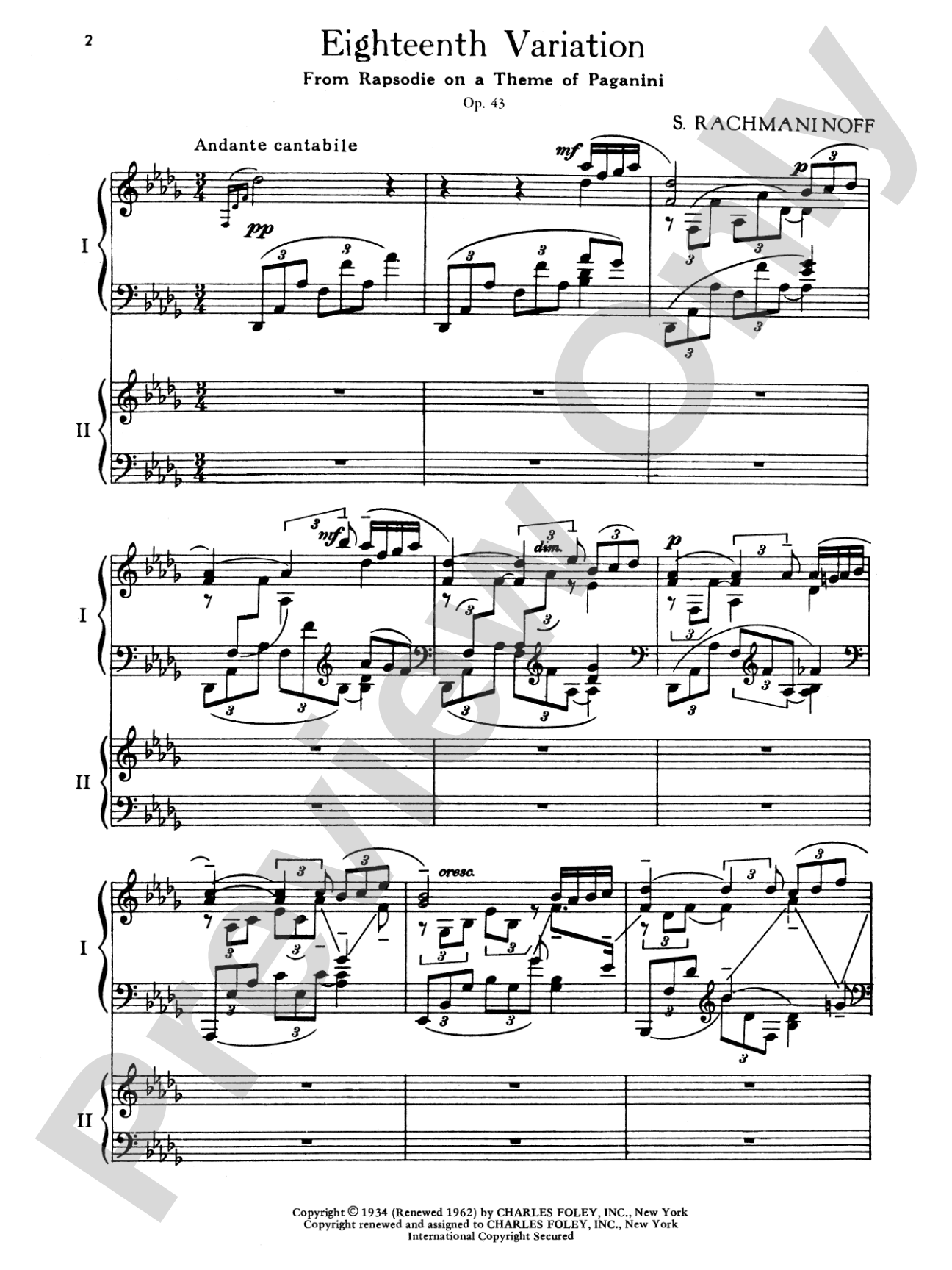
The world-famous Rachmaninoff Eighteenth Variation from Rhapsodie on a Theme of Paganini has probably graced as many pianos and recitals as has any favorite solo -- it is a top-selling piano solo, perfect for recitals. This is the original two-piano four-hands edition. A Federation Festivals 2024-2028 selection.


Eighteenth Variation: From Rapsodie on a Theme of Paganini, Op. 43 - Piano Duo (2 Pianos, 4 Hands): Piano Duets & Four Hands isn't in MakeMusic Cloud just yet...but it could be. Let us know you'd like to see it, and you'll help shape what comes next. In the meantime, start a free trial and dive into thousands of interactive titles your students can play along with today.
Request This Title
Tell us you want it.
Start Your Free Trial
Explore everything that's ready to play right now.
Sample Audio
No sample audio found.
Sample Video
No sample videos found.
Additional Details
Publisher:
Alfred Music
Page Count:
16
SKU:
00-PB-0000823
More about this title
About the Composer: Sergei Rachmaninoff
Sergei Rachmaninoff (1873–1943) was a Russian composer, pianist, and conductor whose music bridged the Romantic and modern eras. His works are celebrated for their soaring melodies, rich harmonic language, and technical demands that showcase the full expressive range of the piano. Rachmaninoff's compositions remain staples of concert life, performed by pianists worldwide for their combination of emotional depth and virtuosic brilliance.
The Rhapsodie on a Theme of Paganini stands among his most frequently performed works, a 24-variation tour de force that transforms a simple theme from Niccolò Paganini's Caprice No. 24. The Eighteenth Variation, with its memorable inversion of the theme and sweeping melodic gift, has achieved iconic status in recital and festival repertoire.
Why we love this
This movement transcends the typical two-piano arrangement by offering pianists an experience of shared ownership over one of classical music's most beloved melodies. The intimate yet expansive textures allow both players to inhabit the music fully, creating a recital moment that feels both familiar and freshly collaborative. Its Federation Festivals 2024-2028 selection status confirms what pianists already know: this variation earns its reputation through sheer musical power.
What to expect
Luminous and introspective, with an aching lyricism that seems to float above shimmering harmonic support. The inversion of Paganini's theme creates an almost spiritual quality, as if the melody is being discovered anew. This variation balances restraint with profound emotional generosity, building toward moments of undeniable beauty that reward both players' focused attention.
Who it's for
Advanced pianists seeking a substantial collaborative repertoire piece that carries genuine recital weight. Duet partnerships preparing for festivals, competitions, or concert programming will find this variation demands the technical security and musical maturity that justifies its place on major competition and festival lists.
How to get the most out of it
- Balance the melody between the two pianos so the inversion of the theme emerges with equal clarity in whichever hand carries it; avoid letting one piano overshadow the accompaniment.
- Synchronize the pedal releases precisely at section breaks to maintain the harmonic richness without muddying the texture across both instruments.
- Shape the dynamic arc across both parts as one continuous phrase rather than treating each piano independently; this unified approach reveals Rachmaninoff's architectural intent.
- Rehearse the ritardando and final cadence with metronomic attention first, then gradually release into expressive timing so the emotional weight lands without seeming rushed or self-indulgent.
How to use it
Position this as a centerpiece moment in a two-piano recital or as a standalone collaborative feature within a broader festival or competition appearance. Its 16-page scope and advanced technical demands make it substantial enough to anchor a program segment while remaining compact enough to pair with other Rachmaninoff variations or complementary 20th-century duet literature.
Skills your students will build
- Pedaling coordination across two instruments in close proximity
- Melodic prominence and accompaniment balance in shared textures
- Synchronized rubato and expressive timing between independent players
- Technical fluency in octave passages and rapid figuration at advanced tempos
- Harmonic listening and awareness of voice-leading across two keyboards