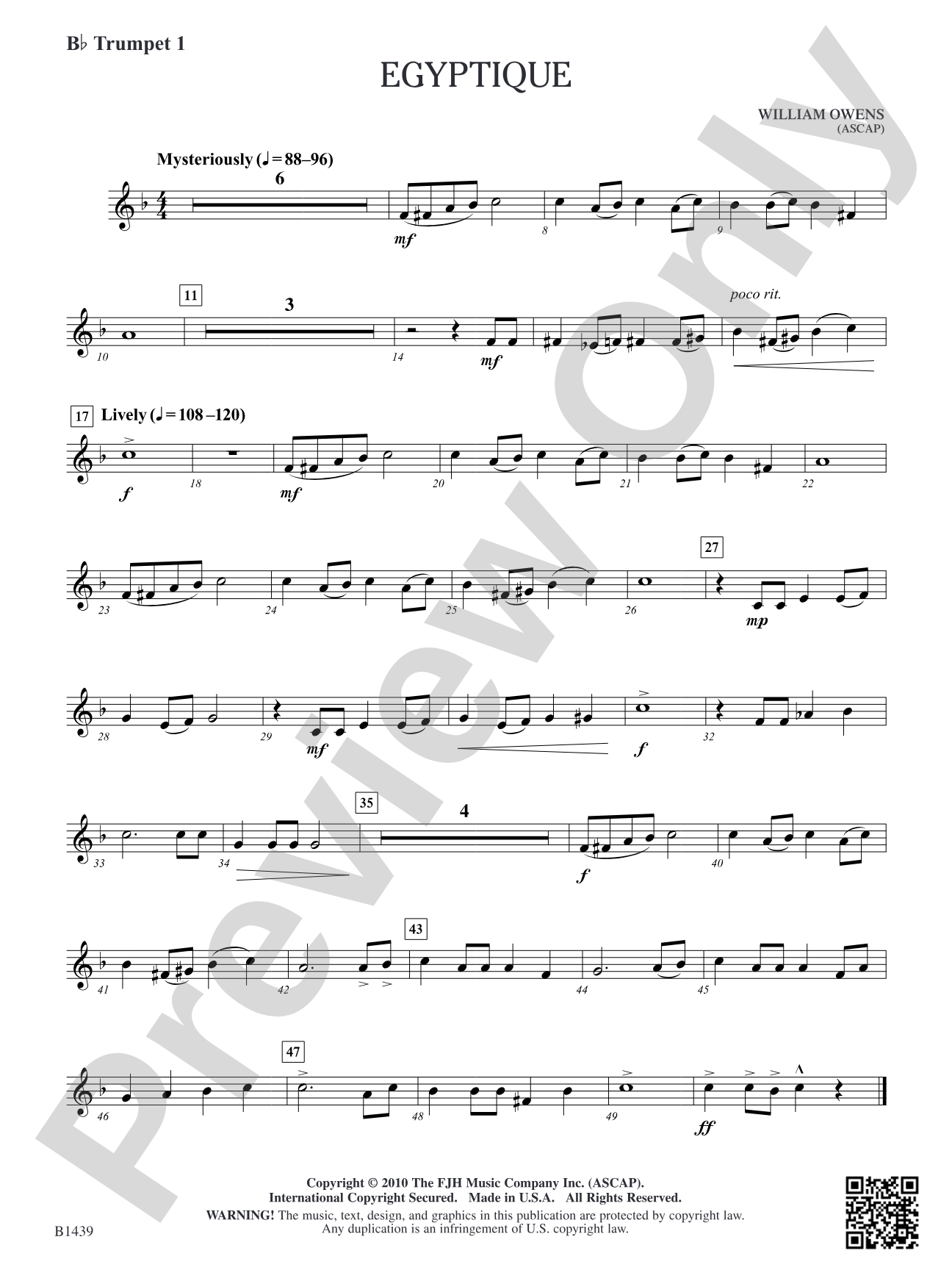
Egyptique: B-flat Trumpet 1 Sheet Music Preview

Egyptique: B-flat Trumpet 1

By William Owens

Grade: 1.5

Item: 98-PC-DB1439_T1

Digital Download
$7.00
Description
Experience the beauty and mystique of all things Egypt through this skillfully crafted programmatic work. Exotic harmonies and colorful percussion scoring contribute to the magical nature of the piece. A mysterious opening quickly develops into a lively melody that is as intriguing and enchanting as the Great Land itself!

Don't just read it, hear it, play along with it, and watch your students grow with it. In MakeMusic Cloud, Egyptique: B-flat Trumpet 1 comes alive with professional accompaniment, adjustable tempo, and built-in practice tools that turn solo practice into real progress.

Sample Audio
0:00
0:00
Sample Video
Additional Details
Series: FJH Developing Band
Publisher: The FJH Music Company, Inc.
SKU: 98-PC-DB1439_T1

More about this title

About the Composer: William Owens

William Owens

William Owens brings three decades of direct classroom experience to his compositional work. A VanderCook College of Music graduate and Distinguished Alumnus, he spent 30 years directing bands in Texas before retiring in 2014, during which time he established himself as one of the most prolific voices in young band literature with over 300 published works. His music appears on state and national required lists, and his practical understanding of what young ensembles can accomplish informs every piece he writes.

Owens has earned recognition from major music organizations including ASCAP, the American Bandmasters Association, and Phi Beta Mu International. His works have been commissioned by college programs and professional fraternities, and his compositions are frequently studied in music education texts as models of effective writing for developing musicians. He currently resides in Fort Worth, Texas.

Why we love this

Owens writes for where your band actually is, not where you wish it were. The opening mystery draws listeners in immediately, and the lively melody that follows gives your students something genuinely engaging to play rather than mere technical exercises. At grade 1.5, the piece respects both the limitations and the musicality of developing ensembles, making it festival-ready without feeling watered down.

What to expect

The piece unfolds like walking through a temple at dusk, with shadowy harmonies and whispered sonorities giving way to sunlit melody and rhythmic vitality. Exotic instrumental colors create visual imagery without sacrificing musical substance, inviting your band to think beyond the notes on the page.

Who it's for

This work fits developing concert bands ready for short programmatic pieces that challenge their listening as much as their playing. Directors seeking festival material that entertains audiences while remaining achievable at the 1.5 level will find a strong choice here.

How to get the most out of it

  • Shape the mysterious opening with restraint. Let the exotic harmonies speak through clear articulation and balanced dynamics rather than expressive excess; the strangeness of the sound world should create intrigue on its own.
  • Bring out the percussion colors as soloists during transitions. The scoring relies on these moments to paint the Egyptian landscape, so ensure mallets, bells, and tambourines are mixed forward without overwhelming the ensemble.
  • Establish a steady tempo foundation before the lively melody enters. Students often rush when excitement builds, so lock in the rhythm section early and maintain that grid as the piece develops.
  • Balance the melodic line across your upper woodwinds. The intriguing melody passes between instruments, and clarity of voice exchange keeps the storytelling audible.

How to use it

Program this early in a concert to establish an adventurous mood, or place it as the centerpiece of a global music theme. Its festival credentials make it ideal for late-season performance contests, and the programmatic nature gives audiences a narrative entry point into your band's work.

Skills your students will build

  • Balancing exotic harmonies and dissonance in an accessible context
  • Playing with nuance in soft, mysterious passages
  • Responding to programmatic cues and mood shifts within a single piece
  • Listening to ensemble color and blend across uncommon harmonic territory

You May Also Like