
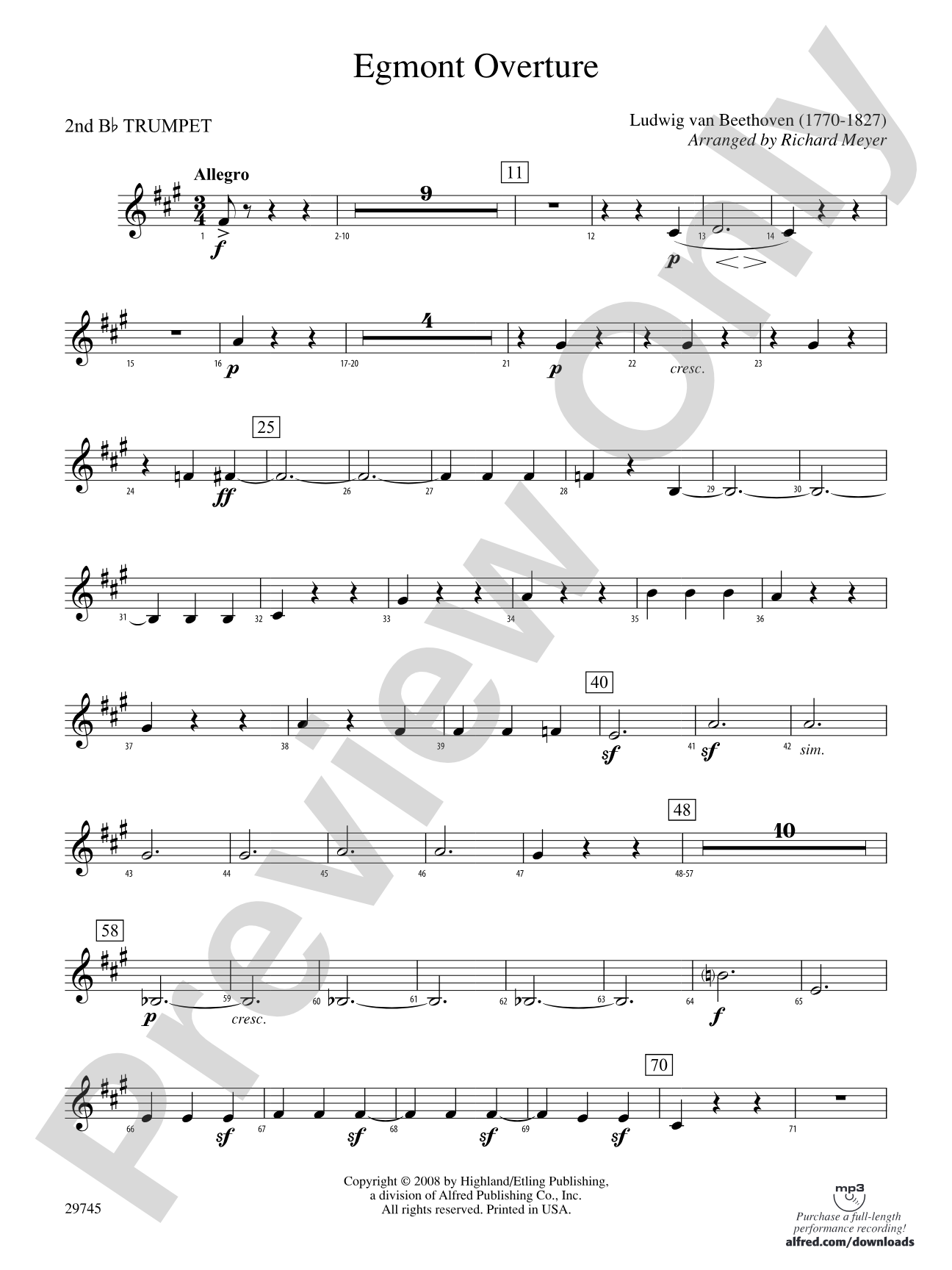

Egmont Overture: 2nd B-flat Trumpet
Arr. Richard Meyer
Grade: 2
Item: 00-PC-0001597_T2
$3.00
Pickup currently not available
Description
Now, all the intensity of this powerful, minor-keyed overture for the young full orchestra! While keeping the colors of the original intact, individual parts are all in very practical ranges, with string parts playable in first position (with optional shifting for first violins). Percussion parts have been tastefully added. A great opener or closer for any concert. (5:00) This title is available in MakeMusic Cloud.


Don't just read it, hear it, play along with it, and watch your students grow with it. In MakeMusic Cloud, Egmont Overture: 2nd B-flat Trumpet comes alive with professional accompaniment, adjustable tempo, and built-in practice tools that turn solo practice into real progress.
Open in the Player
Jump straight in and assign it today.
Start Your Free Trial
Open this title and explore the full library in minutes.
Sample Audio
1
Audio File
--:--
0:00
0:00
Sample Video
No sample videos found.
Additional Details
Series:
Highland/Etling First Philharmonic
Publisher:
Alfred Music
Page Count:
202
SKU:
00-PC-0001597_T2
More about this title
About the Composer: Richard Meyer

Richard Meyer brings three decades of orchestral leadership and string pedagogy to his work as a composer and arranger. After 22 years directing the orchestra program at Oak Avenue Intermediate School in Temple City, California, he transformed a 29-student ensemble into a 200-member program while overseeing the city's elementary string curriculum. His "Giving Bach" initiative, launched in 2009, pioneered interactive concert experiences for students with special needs and underserved communities across Southern California, earning national recognition for its impact.
Meyer's influence extends across the profession as a guest conductor, clinician at major conferences, and string editor for Alfred Publishing Company. He directed the Pasadena Youth Symphony Orchestra for 16 years, leading performances across the United States, Europe, and Australia. With nearly 200 compositions and arrangements published, including the widely-used String Explorer Series and Sight-read It for Strings co-authored with colleagues, Meyer combines practical classroom experience with compositional craft.
Why we love this
Meyer has engineered this arrangement with genuine understanding of young orchestras in mind. String parts stay in accessible ranges (first position for violins, with optional shifting only for those ready), percussion is added with restraint to enhance rather than overwhelm, and the harmonic and melodic colors of Beethoven's original survive intact. For a Grade 2 ensemble, this is the rare arrangement that doesn't dilute the emotional power of a masterwork.
What to expect
Dark, urgent, and propulsive. Meyer preserves the driving energy and minor-key gravity of Beethoven's original, channeling them through orchestration that feels entirely appropriate for young players. The arrangement conveys dramatic purpose and emotional stakes without requiring virtuosic technique.
Who it's for
Young orchestras at the Grade 2 level who are ready to tackle a significant work with real musical weight. Conductors seeking an opener or closer that leaves an impression without overwhelming less experienced ensembles will find this arrangement a reliable choice for concerts and festivals.
How to get the most out of it
- Establish the minor-key character from the opening; the intensity Meyer preserves depends on committed, dark string tone in the first violins and violas.
- Balance the added percussion parts carefully so they enhance texture without masking the string writing that anchors the arrangement.
- Use the full five-minute duration to build dramatic shape; resist rushing the climaxes, which land harder when approached with patience.
- Reference the conductor score for Meyer's exact dynamic markings and articulation choices; they guide younger players toward the stylistic maturity this piece demands.
How to use it
This works powerfully as a concert opener that signals seriousness and ambition to the audience. It also serves as a finale option when you want to leave listeners with something substantial and memorable. Consider programming it early in the season to build confidence in younger ensembles, or save it for a contest or festival appearance.
Skills your students will build
- Reading and responding to minor-key tonality and its expressive character
- Managing sustained intensity and dynamic control over extended phrases
- Balancing multiple orchestral sections (strings, winds, percussion) in a complex texture
- Executing clean articulation and unified bowing in rapid passages
- Understanding and maintaining dramatic pacing across a five-minute work