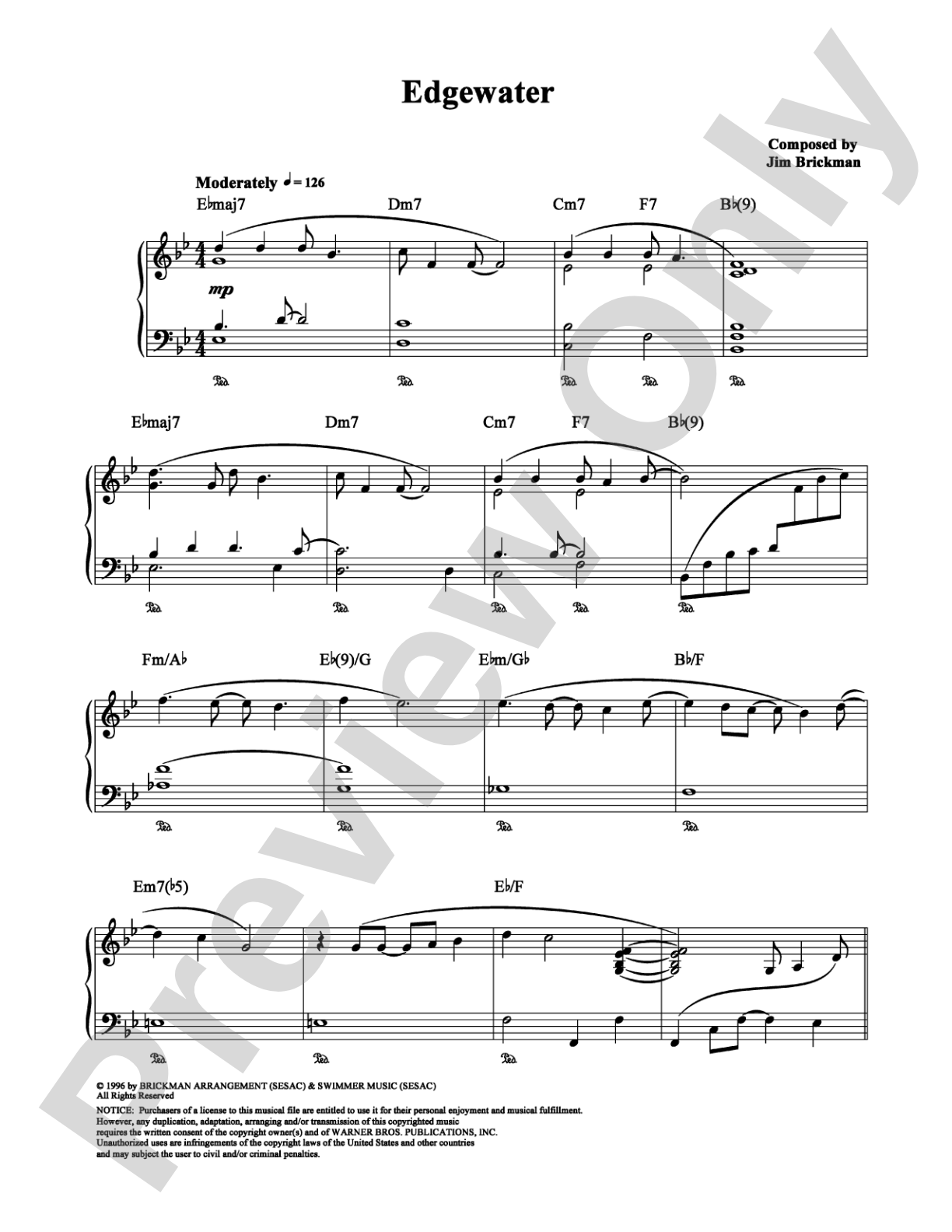
Edgewater: Piano Digital Sheet Music

Edgewater: Piano Digital Sheet Music

Jim Brickman

Item: 00-PS-0001245

Digital Download
$3.99
Description

Edgewater: Piano Digital Sheet Music isn't in MakeMusic Cloud just yet...but it could be. Let us know you'd like to see it, and you'll help shape what comes next. In the meantime, start a free trial and dive into thousands of interactive titles your students can play along with today.

Sample Audio
No sample audio found.
Sample Video
Additional Details
SKU: 00-PS-0001245

More about this title

About the Artist: Jim Brickman

Jim Brickman

Jim Brickman stands as the defining voice of contemporary solo piano music, building a career on compositions that speak directly to listeners' emotional lives. His approach to songwriting centers on creating memorable melodies and harmonic progressures that resonate across diverse audiences, establishing him as a major figure in modern American instrumental music.

Brickman's philosophy flows from a simple conviction: music serves as the backdrop to our most significant experiences. His prolific output and commanding live presence have fundamentally reshaped how audiences engage with instrumental piano, proving that the genre can achieve both artistic depth and genuine popular appeal.

Why we love this

Brickman's compositions sit at the intersection of accessibility and musicianship, making them ideal for pianists seeking repertoire that sounds sophisticated without demanding virtuosic technique. The piece exemplifies his gift for crafting emotionally direct melodies that players genuinely enjoy inhabiting, and audiences connect with immediately.

What to expect

Edgewater unfolds with the reflective quality characteristic of Brickman's best work, building emotional depth through straightforward harmonic language and singable melodies. The piece invites listeners into an intimate, contemplative space where modest musical gestures accumulate into genuine emotional presence.

Who it's for

Pianists at the intermediate to advanced-intermediate level who gravitate toward contemporary repertoire with strong melodic content. Teachers seeking accessible yet artistically rewarding pieces for recital programming or student performance opportunities will find this particularly valuable.

How to get the most out of it

  • Bring out the melodic line with consistent voicing so the main theme remains audible even as accompanimental textures thicken or shift.
  • Shape phrases using subtle tempo flexibility rather than rigid metronomic playing; allow expressive space where the melody suggests natural breathing.
  • Balance textural layering so accompaniment never masks the emotional core of the writing.
  • Use the damper pedal to enhance harmonic resonance, but change it frequently enough to maintain clarity in the melodic voice.

How to use it

This works beautifully on student or faculty recitals as a bridge between classical and contemporary contexts, particularly in spring or end-of-year concerts where audiences appreciate accessible yet substantive playing. It also serves well as an encore or as part of a thematic program exploring contemporary American piano composition.

Skills your students will build

  • Sustaining melodic line control across shifting accompanimental textures
  • Managing pedal changes for harmonic color without sacrificing textural clarity
  • Shaping phrase contour through touch and tempo rather than dynamic extremes
  • Balancing singability in melody with compositional sophistication

You May Also Like