

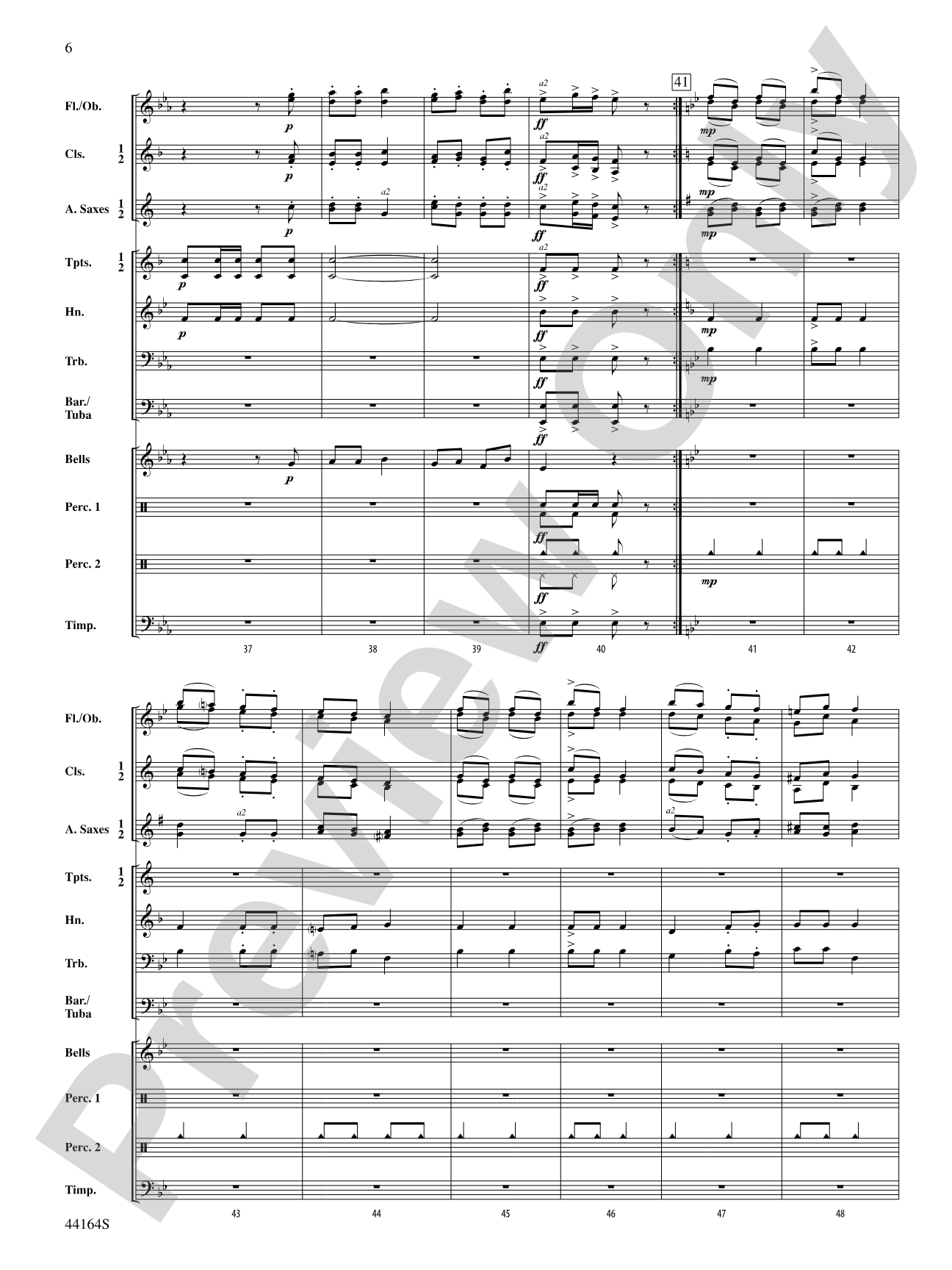
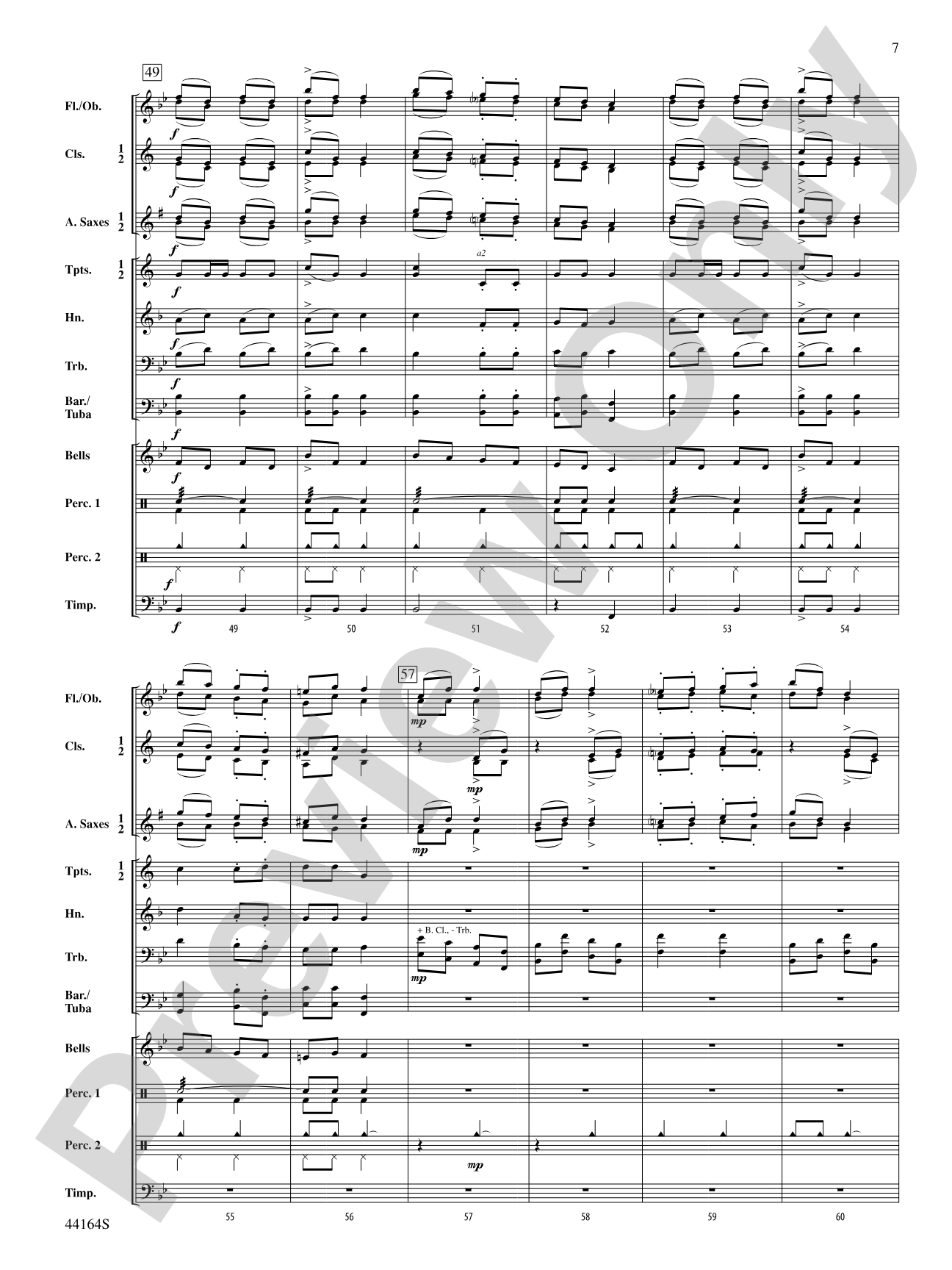
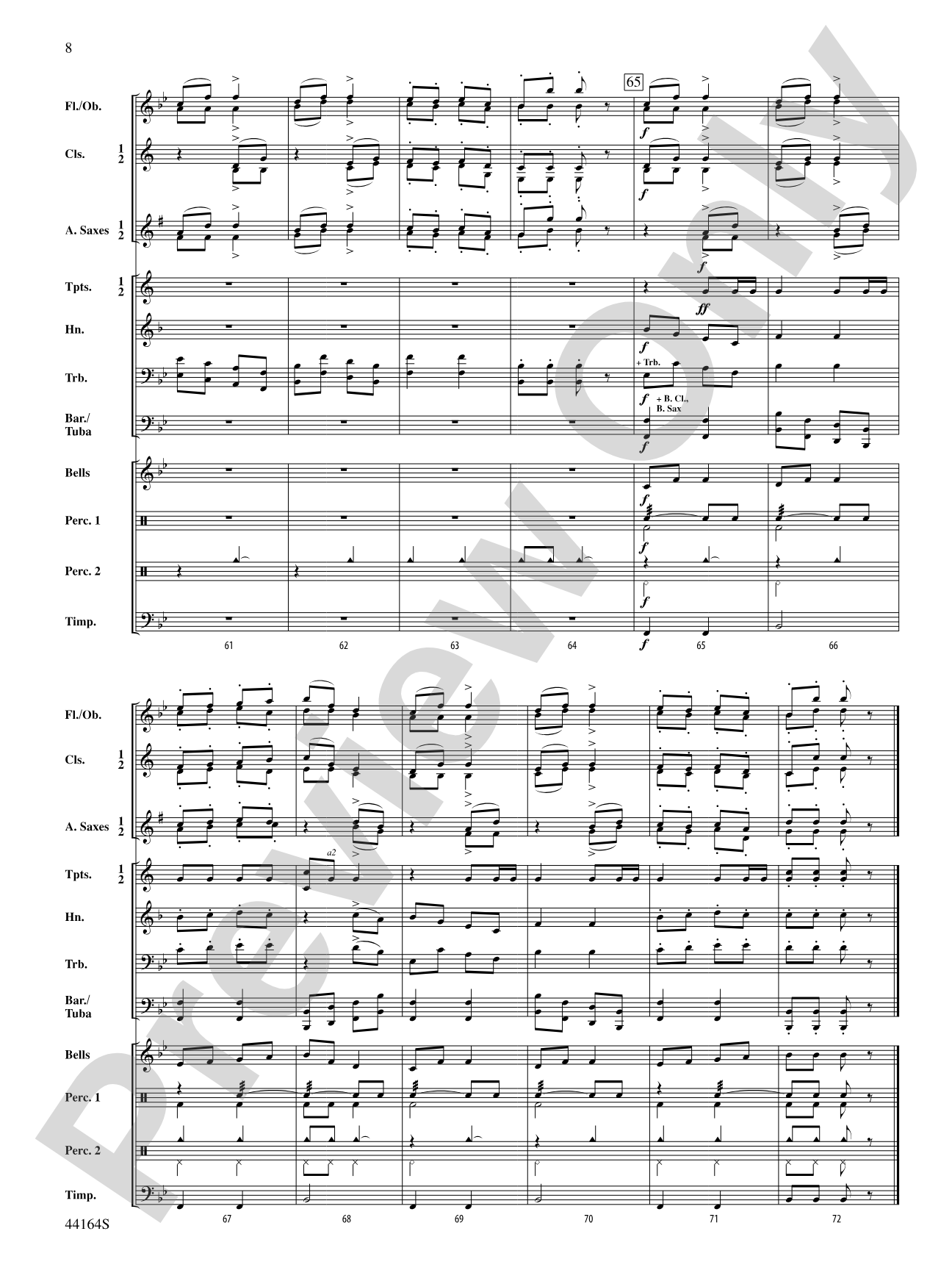

Ecossaise for Military Band, WoO 22: Concert Band Conductor Score & Parts
By Ludwig van Beethoven / arr. Todd Stalter
Grade: 1.5 (Easy)
Item: 00-PK-0006767

$49.00
Pickup currently not available
Buy Extra Parts (Digital PDF Download)
Parts Added to Cart!
Description
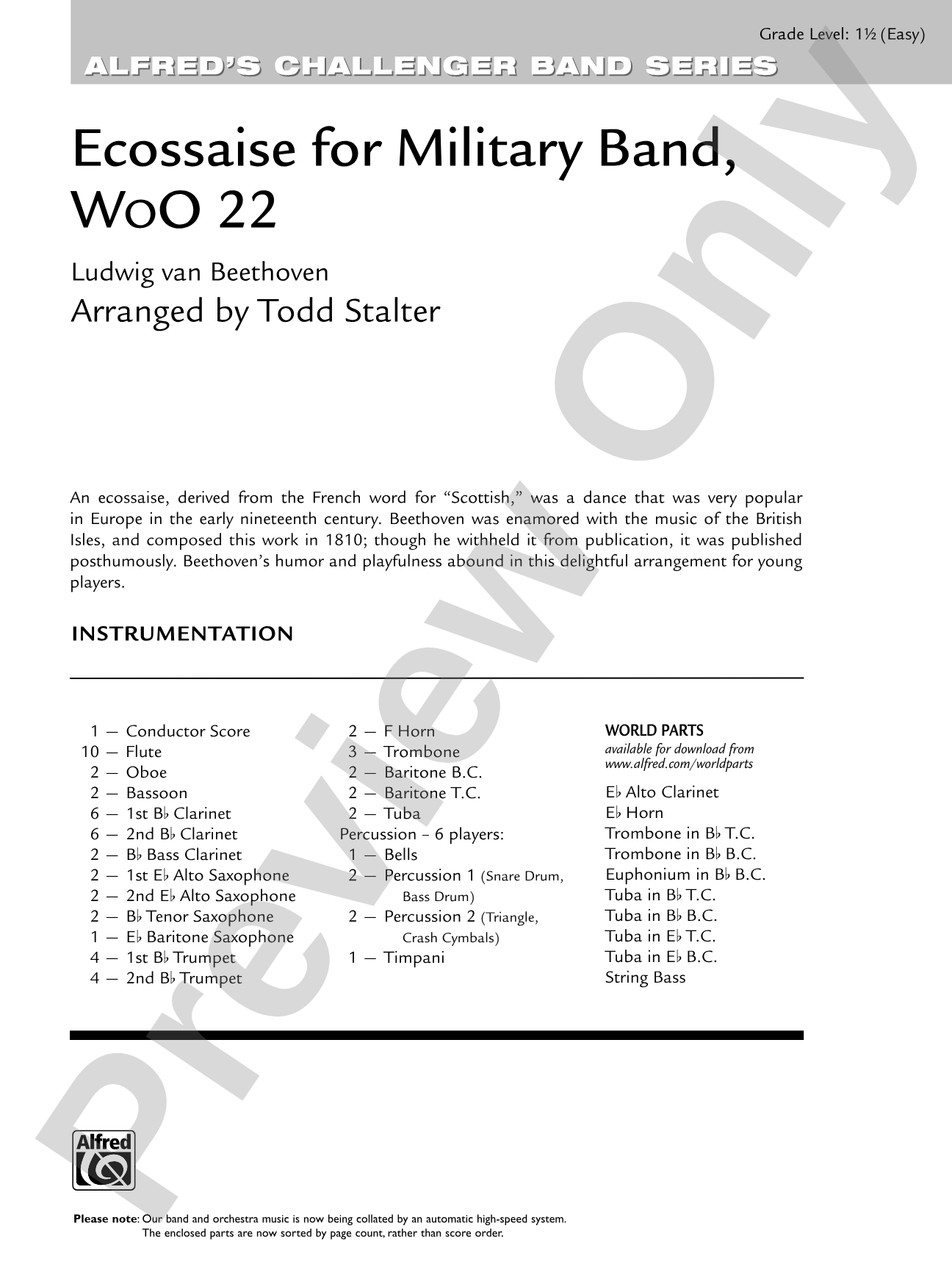
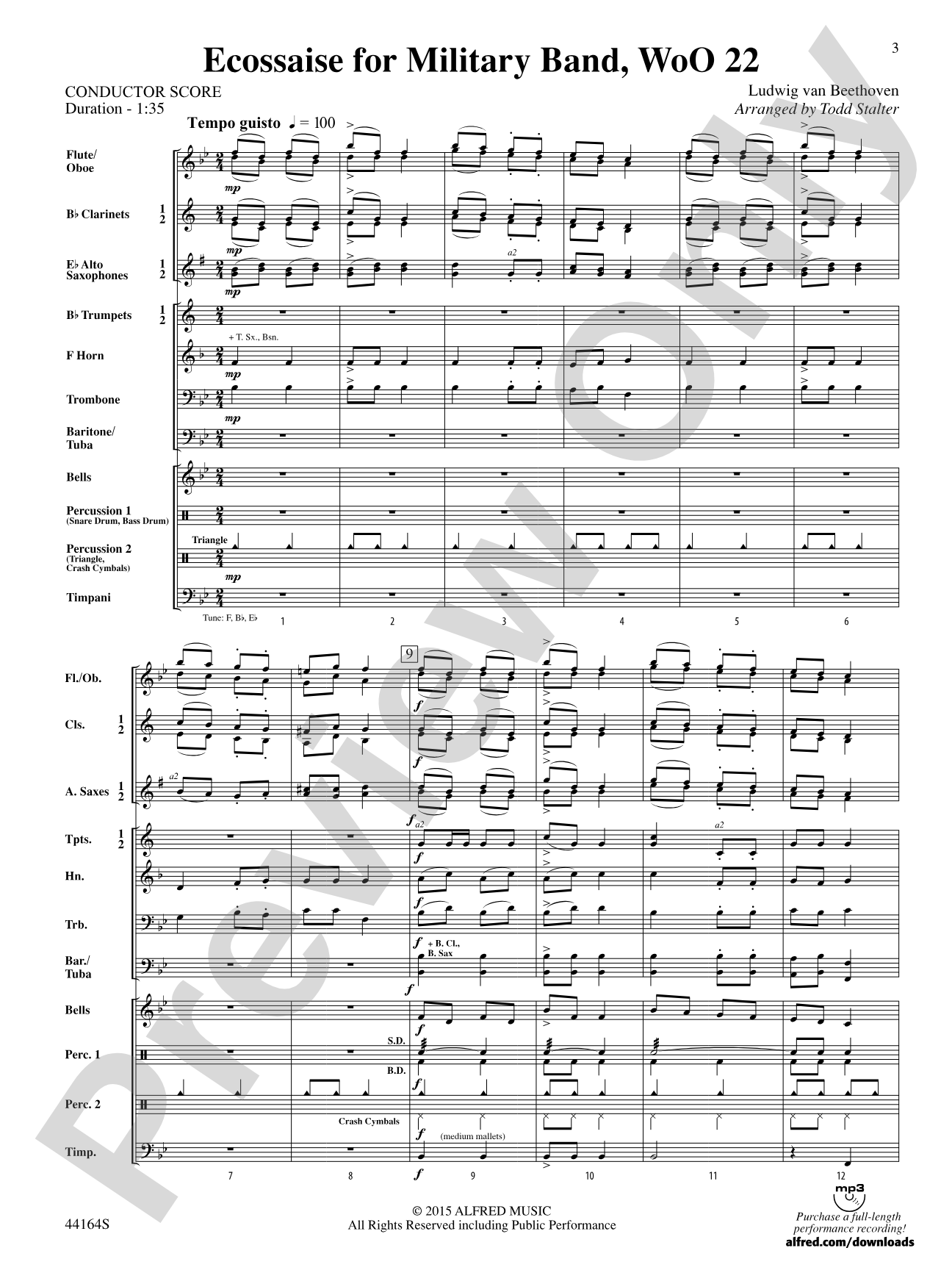
An ecossaise, derived from the French word for "Scottish," was a dance that was very popular in Europe in the early nineteenth century. Beethoven was enamored with the music of the British Isles, and composed this work in 1810; though he withheld it from publication, it was published posthumously. Beethoven's humor and playfulness abound in this delightful arrangement for young players. (1:35)


Don't just read it, hear it, play along with it, and watch your students grow with it. In MakeMusic Cloud, Ecossaise for Military Band, WoO 22: Concert Band Conductor Score & Parts comes alive with professional accompaniment, adjustable tempo, and built-in practice tools that turn solo practice into real progress.
Open in the Player
Jump straight in and assign it today.
Start Your Free Trial
Open this title and explore the full library in minutes.
Sample Audio
1
Audio File
--:--
0:00
0:00
Sample Video
No sample videos found.
Additional Details
Series:
Challenger Band Series
Publisher:
Alfred Music
Page Count:
120
SKU:
00-PK-0006767
More about this title
About the Composer: Ludwig van Beethoven
Ludwig van Beethoven (1770-1827) fundamentally transformed Western music by expanding the Classical forms he inherited and infusing them with unprecedented emotional depth and structural innovation. Though primarily known for his symphonies and sonatas, Beethoven composed across all genres, including numerous dance movements and lighter works that reveal his wit and accessibility alongside his architectural brilliance.
Why we love this
Todd Stalter's arrangement brings Beethoven's infectious humor into a context where young players can experience a genuine masterwork without drowning in technical complexity. The ecossaise's straightforward charm and buoyant character make it an ideal vehicle for introducing early-nineteenth-century style to developing musicians, and at 1.5 grade level, it's genuinely playable without sacrificing the voice leading and clarity that make Beethoven essential.
What to expect
The ecossaise bubbles with good-natured charm, its lilting rhythms and straightforward melodies evoking the Scottish dances that captivated European ballrooms two centuries ago. There's an undercurrent of musical wit throughout; Beethoven's orchestration dances rather than marches, giving even the youngest players a chance to make music feel alive and spirited.
Who it's for
This arrangement works beautifully for young concert bands exploring the classical repertoire at early intermediate levels, whether in school programs or youth ensemble settings. It's equally suited to festival or contest performance, where its brevity and accessibility appeal to both adjudicators and audiences.
How to get the most out of it
- Clarify the dotted rhythms that drive the ecossaise forward; slight rhythmic fuzziness here will undermine the dance's natural momentum and comedic timing.
- Balance the melody across sections as it passes around the band; this piece relies on smooth handoffs to maintain its narrative arc.
- Lean into the character marked by the piece's structure; Beethoven's playfulness depends on crisp articulation and clear phrasing, not heavy interpretation.
- Keep the tempo conversational and buoyant (the 1:35 duration suggests approximately 120-130 BPM); resist the urge to drag, which flattens the dance's energy.
How to use it
Open a concert with this piece to establish an accessible, engaging tone, or use it as a palate cleanser between weightier works. It pairs well with other light Classical-era pieces or with nineteenth-century folk-inspired arrangements, and its short duration makes it ideal for mixed programs where you want to showcase student musicianship without demanding extended stamina.
Skills your students will build
- Articulation clarity in dance rhythms
- Melodic phrasing across section transfers
- Reading straightforward Classical-era scoring
- Maintaining steady tempo and buoyancy in cut time
- Balancing forte sections without heaviness