Echoes of Scotland Sheet Music Preview

Echoes of Scotland: Piano

By Mary Leaf

Item: 98-DW9128

Digital Download
$5.95
Description
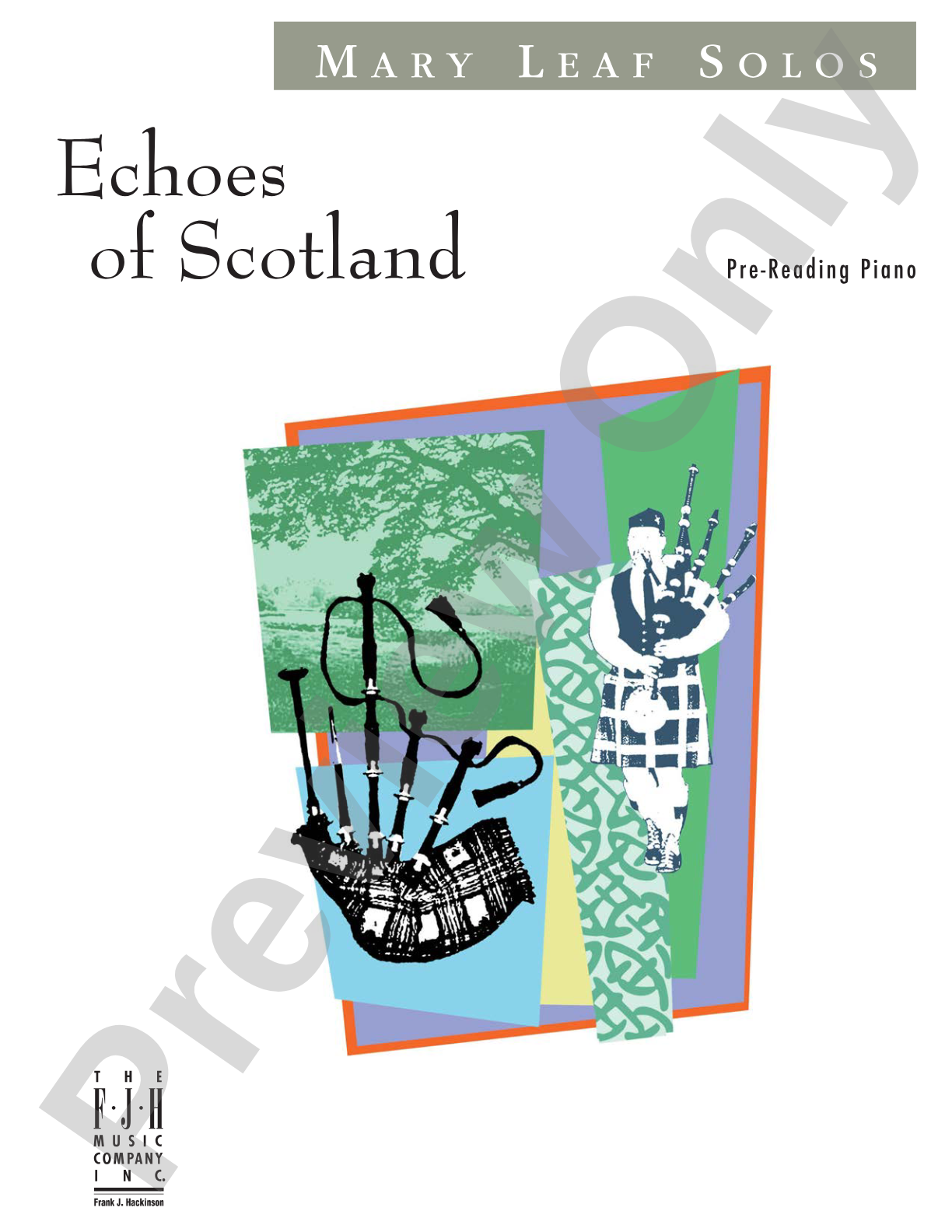
These two pre-reading solos offer a charming peek into the sights and sounds of Scotland. Students will thoroughly enjoy the lively and rhythmic Pipes & Dreams. The lyrical and artistic Highlands of Scotland is sure to take their learning to new heights!

Echoes of Scotland: Piano isn't in MakeMusic Cloud just yet...but it could be. Let us know you'd like to see it, and you'll help shape what comes next. In the meantime, start a free trial and dive into thousands of interactive titles your students can play along with today.

Sample Audio
No sample audio found.
Sample Video
Additional Details
Series: Written For You
Publisher: The FJH Music Company, Inc.
SKU: 98-DW9128

More about this title

Why we love this

Mary Leaf writes for beginners without condescension. These two pieces respect young pianists' musicality while staying within their technical reach. The pairing of a rhythmic showstopper with a lyrical companion gives students the chance to shine in contrasting musical styles within a single lesson.

What to expect

Pipes & Dreams bounces with the energy of traditional Scottish music, full of rhythmic momentum and playful spirit. Highlands of Scotland unfolds with lyrical warmth, painting a musical landscape that invites expression and emotional depth.

Who it's for

Young pianists at the pre-reading through early elementary level who are just building foundational skills. These pieces work for students ready to engage with musical character and cultural context alongside technical fundamentals.

How to get the most out of it

  • In Pipes & Dreams, anchor the steady pulse through the rhythmic figures. Let the lively character come from articulation and evenness rather than rushing.
  • Bring out the singing melody in Highlands of Scotland by shaping phrases with gentle dynamic swells. Think of it as storytelling rather than note-reading.
  • Use the Scottish musical references (the folk character and modal flavors) to spark student curiosity. Ask what makes these pieces sound different from their other repertoire.

How to use it

Program these as a cultural discovery duo in a spring or autumn recital celebrating world music. They work equally well in a studio lesson sequence where you want to introduce young pianists to music beyond European classical tradition.

Skills your students will build

  • Rhythmic accuracy and pulse awareness
  • Melodic phrasing and dynamic shaping
  • Recognition of cultural musical characteristics
  • Hand independence in simple accompaniment patterns
  • Sustaining musical storytelling within a beginner's technical framework

You May Also Like