
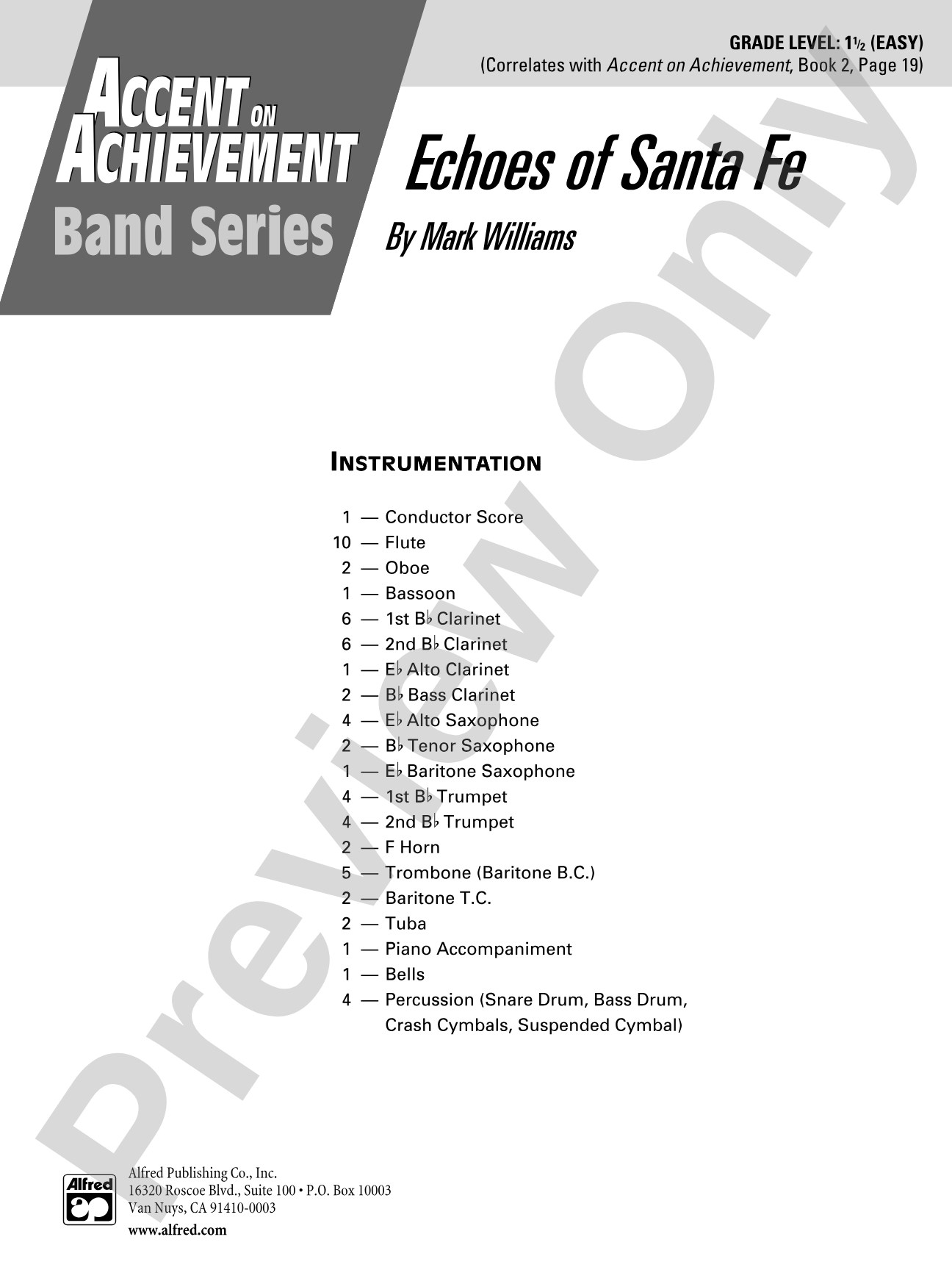
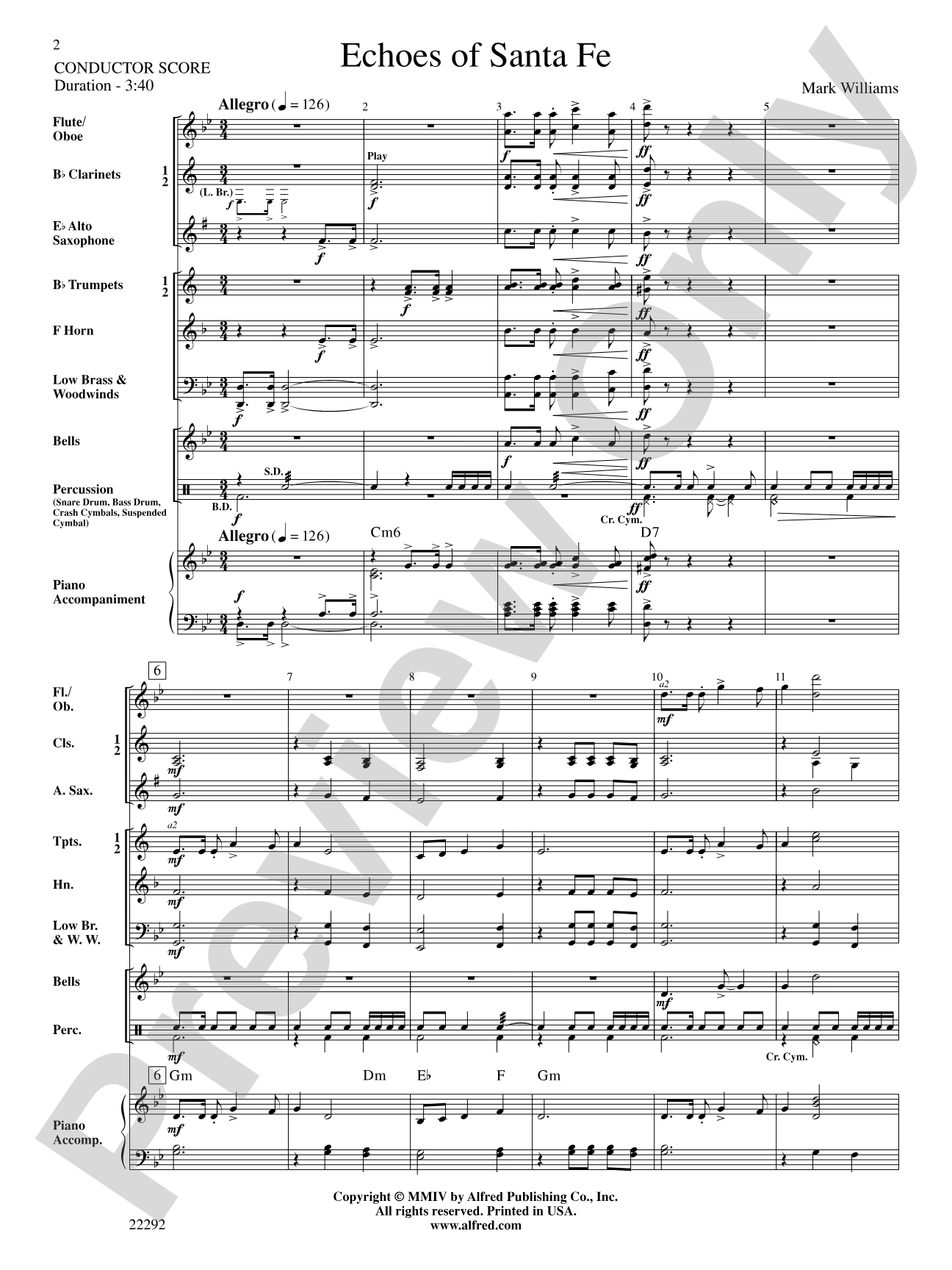
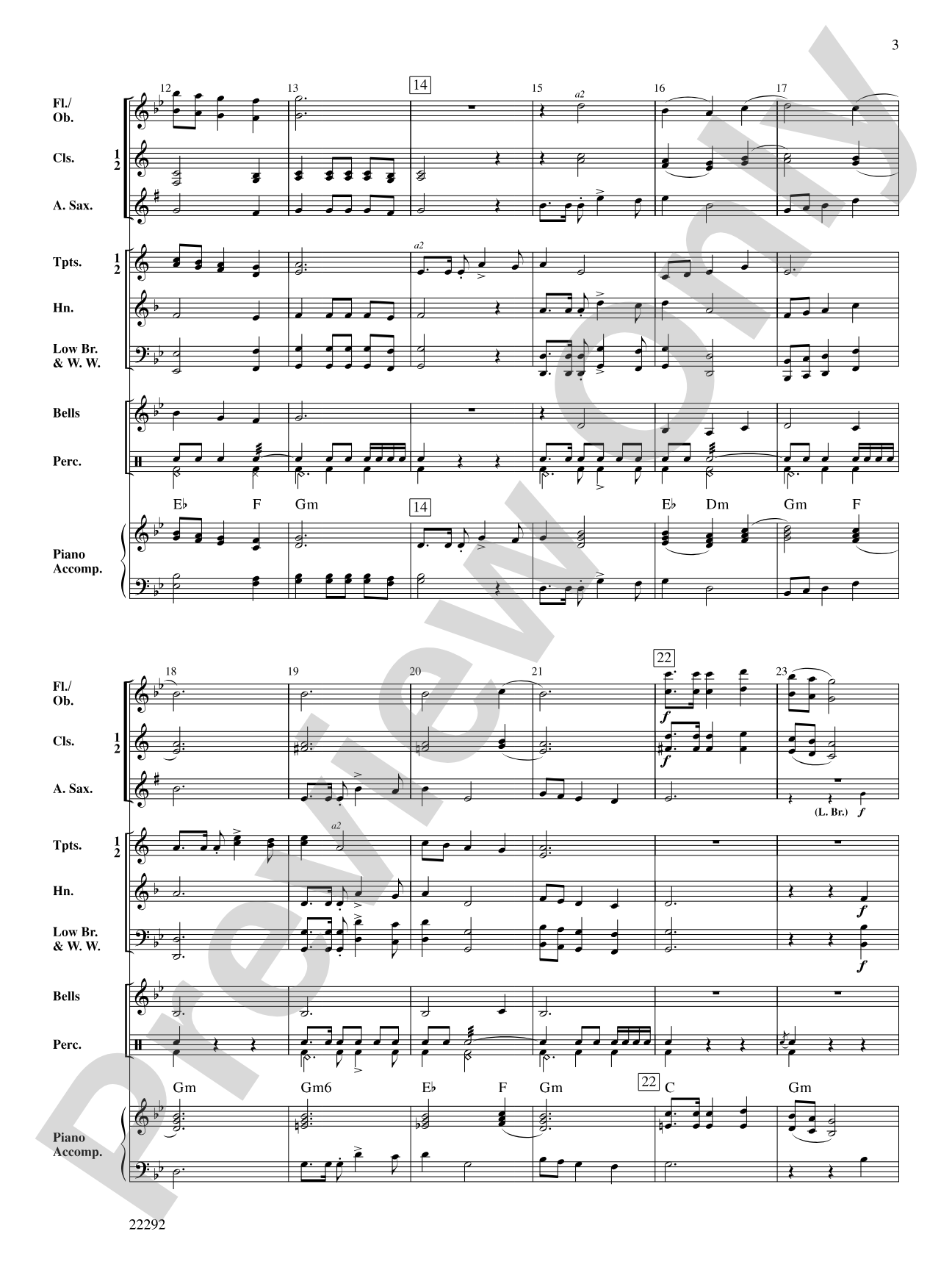
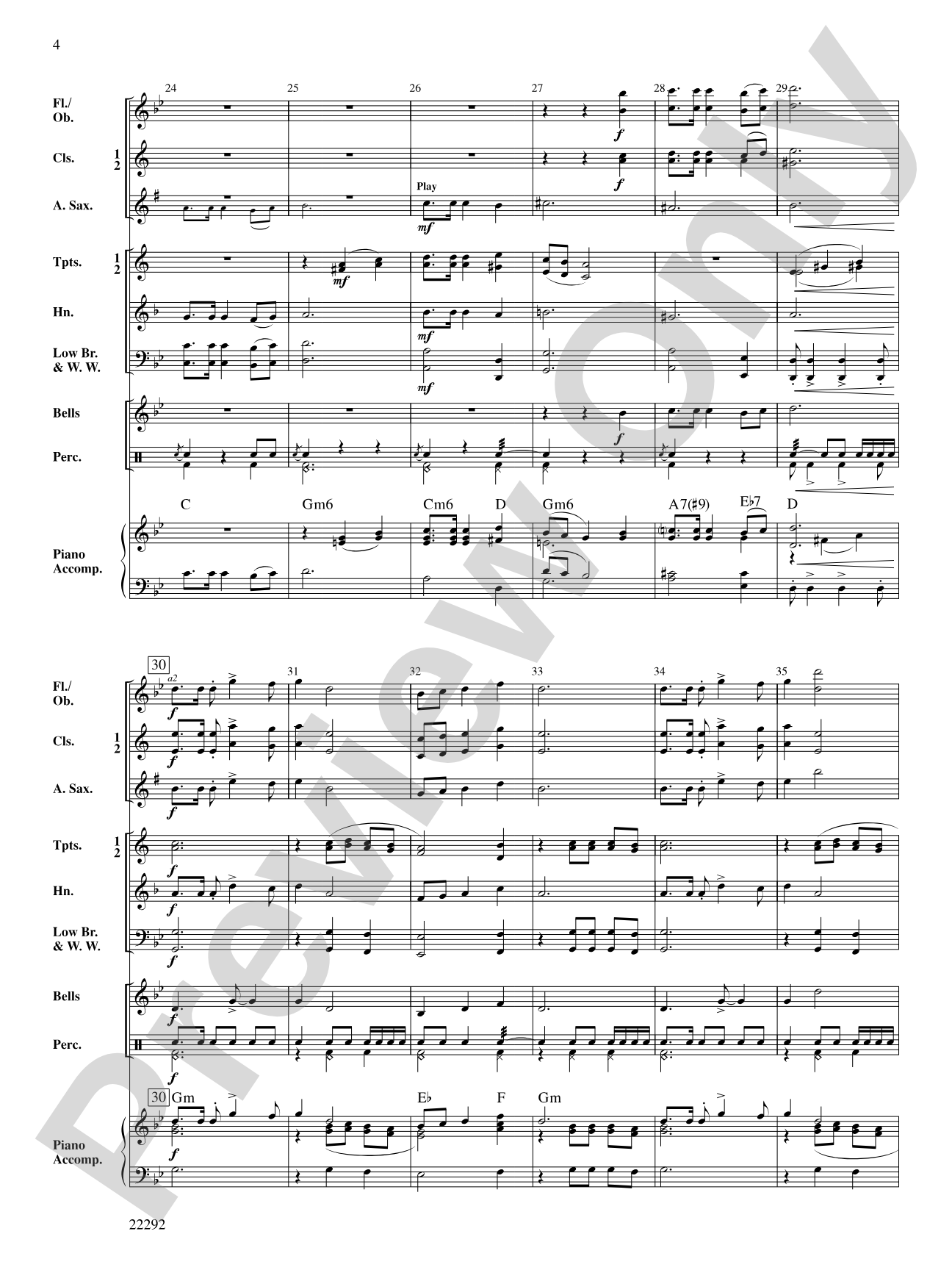
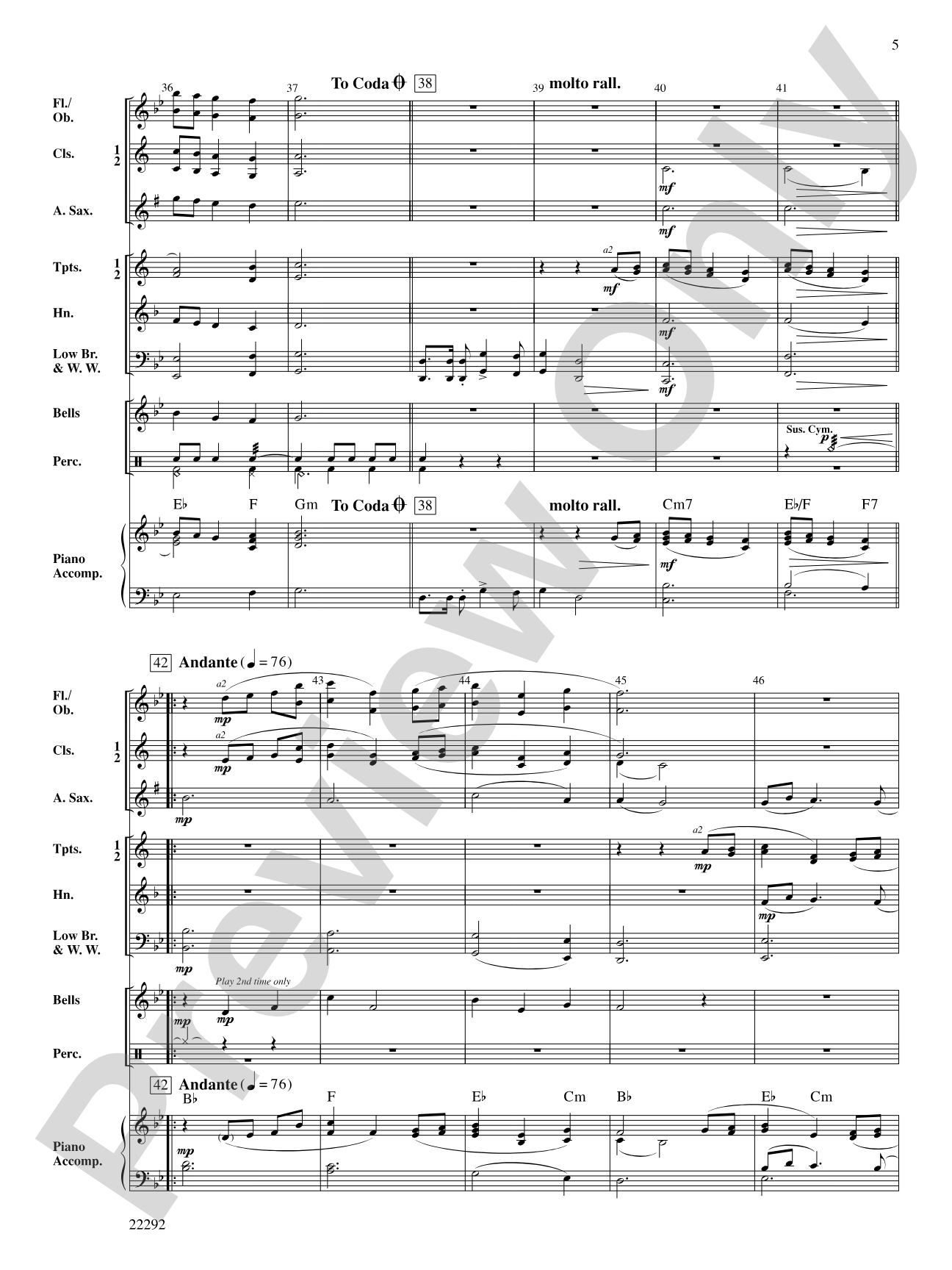
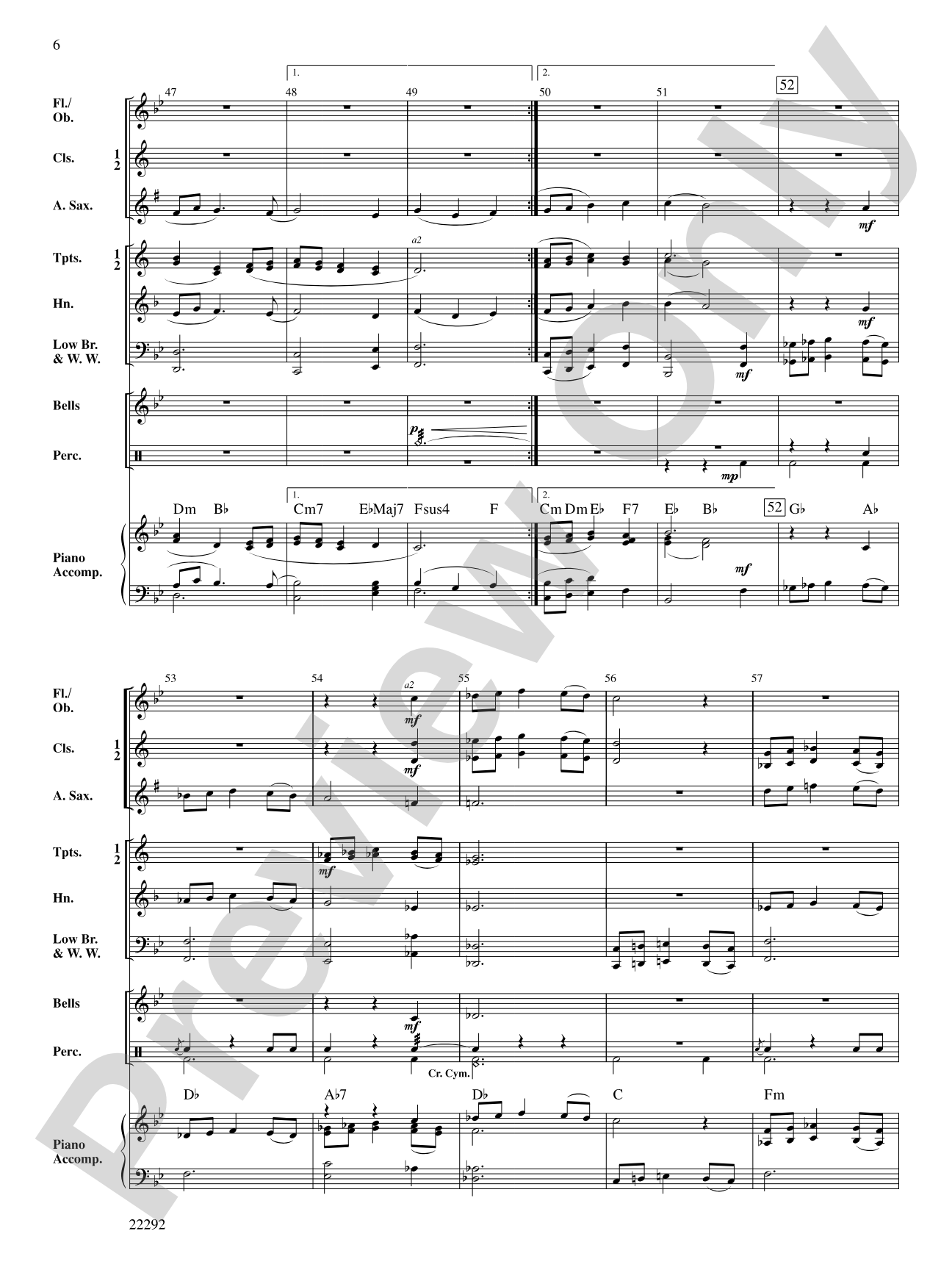
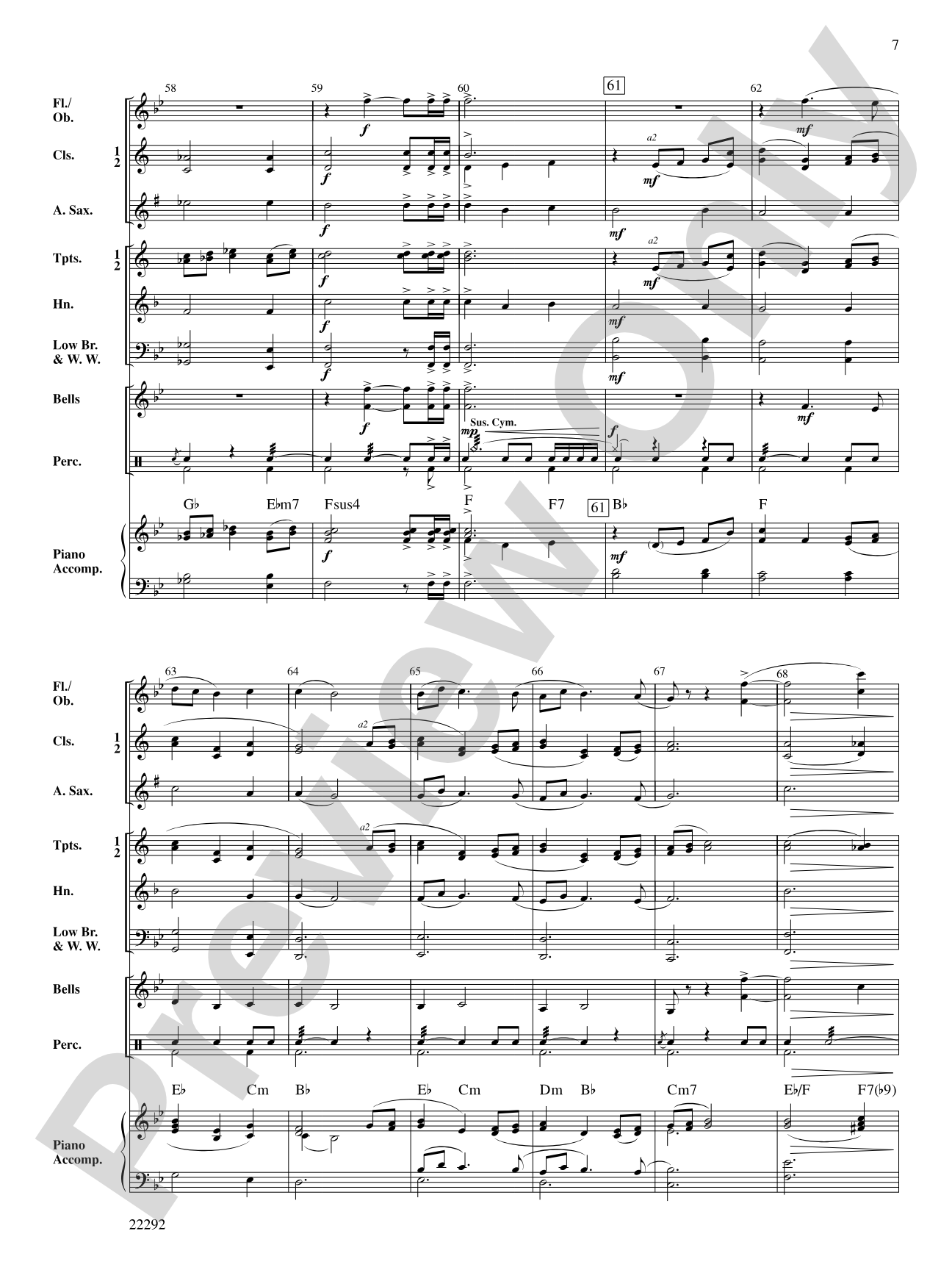
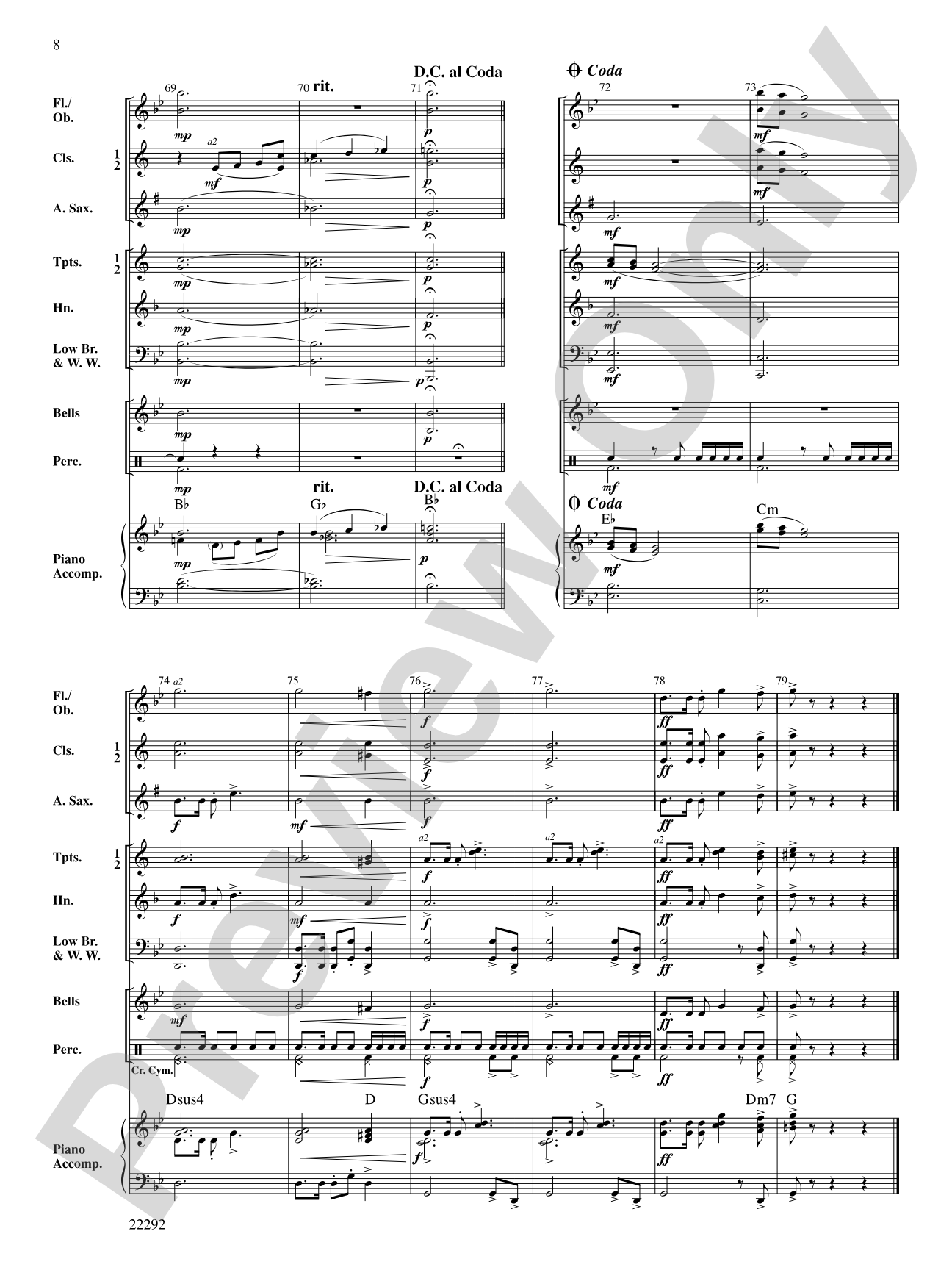

Echoes of Santa Fe: Score
Music by Mark Williams
Grade: 1.5 (Easy)
Item: 00-PR-0000539
$5.00
Pickup currently not available
Description
Hear the streets of Old Santa Fe come alive in this solid original by Mark Williams. Perfect for introducing the dotted eighth-sixteenth rhythm pattern, this fast-slow-fast overture contains brilliant contrasts and strong melodic material that is sure to hold your band's and audience's interest. Correlated with Accent on Achievement, Book 2, page 19. This title is available in MakeMusic Cloud.


Don't just read it, hear it, play along with it, and watch your students grow with it. In MakeMusic Cloud, Echoes of Santa Fe: Score comes alive with professional accompaniment, adjustable tempo, and built-in practice tools that turn solo practice into real progress.
Open in the Player
Jump straight in and assign it today.
Start Your Free Trial
Open this title and explore the full library in minutes.
Sample Audio
1
Audio File
--:--
0:00
0:00
Sample Video
No sample videos found.
Additional Details
Series:
Accent on Achievement
Publisher:
Alfred Music
SKU:
00-PR-0000539
More about this title
About the Composer: Mark Williams

Mark Williams built his reputation as one of school music's most prolific and accessible composers, with over 200 published works spanning band, orchestra, and choir. His career took him across North America and to Australia as a clinician and guest conductor, but his deepest commitment was to elementary band instruction in Washington state, where he taught for many years and developed materials grounded in classroom reality.
Williams earned degrees from Eastern Washington University and brought both composition and performance expertise to his work, serving as a woodwind performer and arranger for the 560th Air Force Band. His contributions were recognized through the Western International Band Clinic's Gralia Competition and multiple ASCAP Special Awards. Beyond the page, he performed actively on bassoon and led the Spokane British Brass Band as conductor and artistic director.
Why we love this
Williams nails the pedagogical moment here, introducing dotted eighth-sixteenth rhythm in a context that feels like real music rather than a drill. The fast-slow-fast structure keeps ensemble energy high while giving younger musicians room to listen and respond, and the Santa Fe landscape gives every band a chance to find authentic character in their playing.
What to expect
The piece evokes the warmth and vitality of old Santa Fe through lyrical melody and rhythmic drive. You move from energetic, sun-baked streets into a reflective moment before the ensemble returns with renewed vigor, creating a satisfying arc that keeps listeners and players engaged.
Who it's for
Beginning to early intermediate concert bands working at the Grade 1.5 level will find this piece accessible and musically rewarding. It pairs perfectly with students using Accent on Achievement Book 2, particularly those ready to tackle the dotted eighth-sixteenth rhythm pattern with confidence.
How to get the most out of it
- Treat the tempo changes as dramatic shifts, not just transitions. The contrast between outer sections and the lyrical middle becomes the piece's emotional spine.
- Balance the melody across your ensemble so the strong melodic material stays clear even when harmonic texture thickens. Secondary lines should support, not compete.
- Lock the dotted eighth-sixteenth rhythm early in sectionals before full ensemble rehearsal. Once students own it rhythmically, the musical phrasing will follow naturally.
- Lean into the imagery. Ask players to listen for and shape the "streets" and atmosphere suggested by the title. This attention makes the difference between correct and convincing.
How to use it
Use this as an opener or early-season closer when you want a piece that sounds polished but doesn't demand technical virtuosity. It also works wonderfully as a bridge between method book study and concert literature, showing students how carefully chosen technical challenges can serve musical storytelling.
Skills your students will build
- Reading and executing dotted eighth-sixteenth rhythm patterns
- Sustaining lyrical phrasing in slower passages
- Managing tempo changes and section transitions with precision
- Blending melody with supporting harmonic lines
- Creating musical character through dynamic contrast