Echo Lake Overture: 1st F Horn Sheet Music Preview

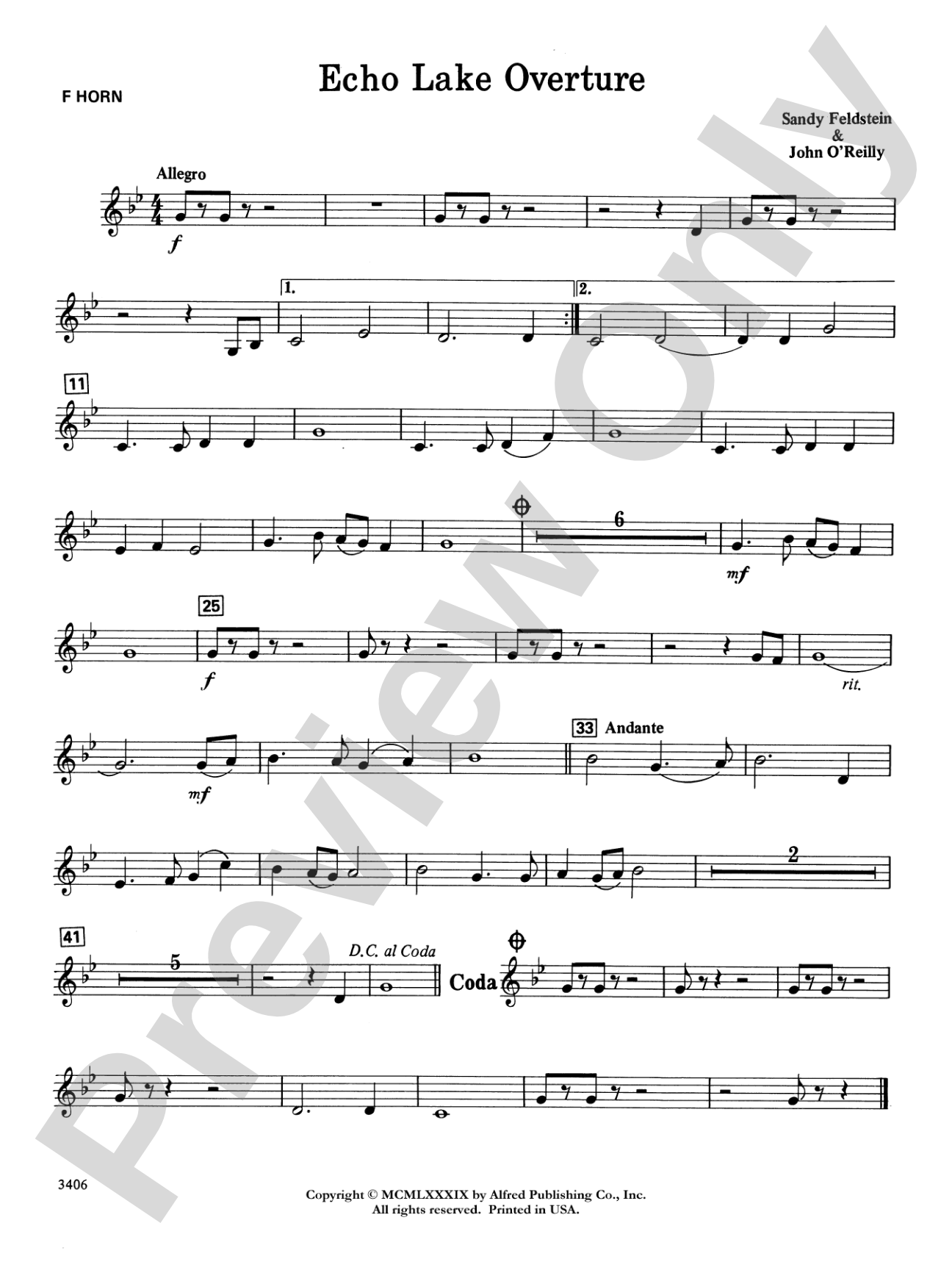
Echo Lake Overture: 1st F Horn

By Sandy Feldstein and John O'Reilly

Grade: 1 (Very Easy)

Item: 00-PC-0001840_H1

Digital Download
$3.00
Description
Here's a great overture for the first year concert that's easy to play, yet impressive in its grandeur. The interplay between woodwinds and brass are effectively contrasted by the strong tutti sections. Don't miss this one! (Grade 1---Correlates with Alfred's Basic Band Method, Book 1, Unit 12)

Don't just read it, hear it, play along with it, and watch your students grow with it. In MakeMusic Cloud, Echo Lake Overture: 1st F Horn comes alive with professional accompaniment, adjustable tempo, and built-in practice tools that turn solo practice into real progress.

Sample Audio
No sample audio found.
Sample Video
Additional Details
Series: Basic Band Series
Publisher: Alfred Music
Page Count: 112
SKU: 00-PC-0001840_H1

More about this title

About the Composer: Sandy Feldstein

Sandy Feldstein stands among the most prolific and widely performed composers for beginning band and orchestra. His approach to music education is rooted in creating works that balance accessibility with genuine musical substance, allowing young musicians to experience the satisfaction of playing something that sounds mature and well-crafted from their very first year.

Feldstein's collaborations with John O'Reilly, particularly in the Basic Band Series, have shaped how generations of students encounter ensemble playing. His compositions consistently reward careful attention to phrasing and balance while remaining technically within reach of developing musicians.

Why we love this

Echo Lake Overture delivers genuine concert impact without requiring advanced technical facility. The orchestration shows sophisticated understanding of how to deploy young players' limited ranges for maximum effect; the contrast between transparent woodwind writing and full brass sections creates real drama, and students recognize immediately that they're playing something substantial rather than an exercise.

What to expect

The overture opens with transparency and clarity, woodwinds trading ideas with elegance. Brass enters with warmth and support, and the full ensemble moments feel celebratory without overwhelming. There's a sense of arrival and accomplishment in every section.

Who it's for

First-year concert band directors seeking opening concert repertoire that builds musicianship while keeping technical demands reasonable. Students in their first year of ensemble playing who are ready to move beyond warm-ups and method book exercises into music that sounds and feels like a real concert piece.

How to get the most out of it

  • Balance the opening woodwind dialogue carefully so each phrase projects clearly even at moderate dynamic levels. Young players often play timidly in exposed passages; encourage them to breathe support into these moments.
  • Lock the tutti sections (full band entrances) by drilling the rhythmic unison before adding any phrase shaping. Once the ensemble hits these moments together, then refine dynamics and articulation.
  • Shape the interplay between woodwind and brass families as a conversation. Whichever section has the primary melodic idea should lead slightly; the accompanying section responds rather than competes.
  • Establish a clear tempo early and maintain it through the sectional contrasts. Young ensembles often rush in moments of excitement; a steady conductor beat prevents tempo fluctuation from undermining the form.

How to use it

Program this as your opening selection for a first concert; its title and assured character set a confident tone for the ensemble's debut. It also works effectively as a closer for a youth band or sectional concert, where you can showcase how much musicianship has developed since September.

Skills your students will build

  • Balancing ensemble sound between woodwind and brass choirs
  • Maintaining steady tempo across sectional changes and contrasts
  • Responding to expressive phrasing cues while preserving rhythmic accuracy
  • Blending with section mates in transparent, exposed passages
  • Understanding form and phrase structure through listening to orchestration choices

You May Also Like