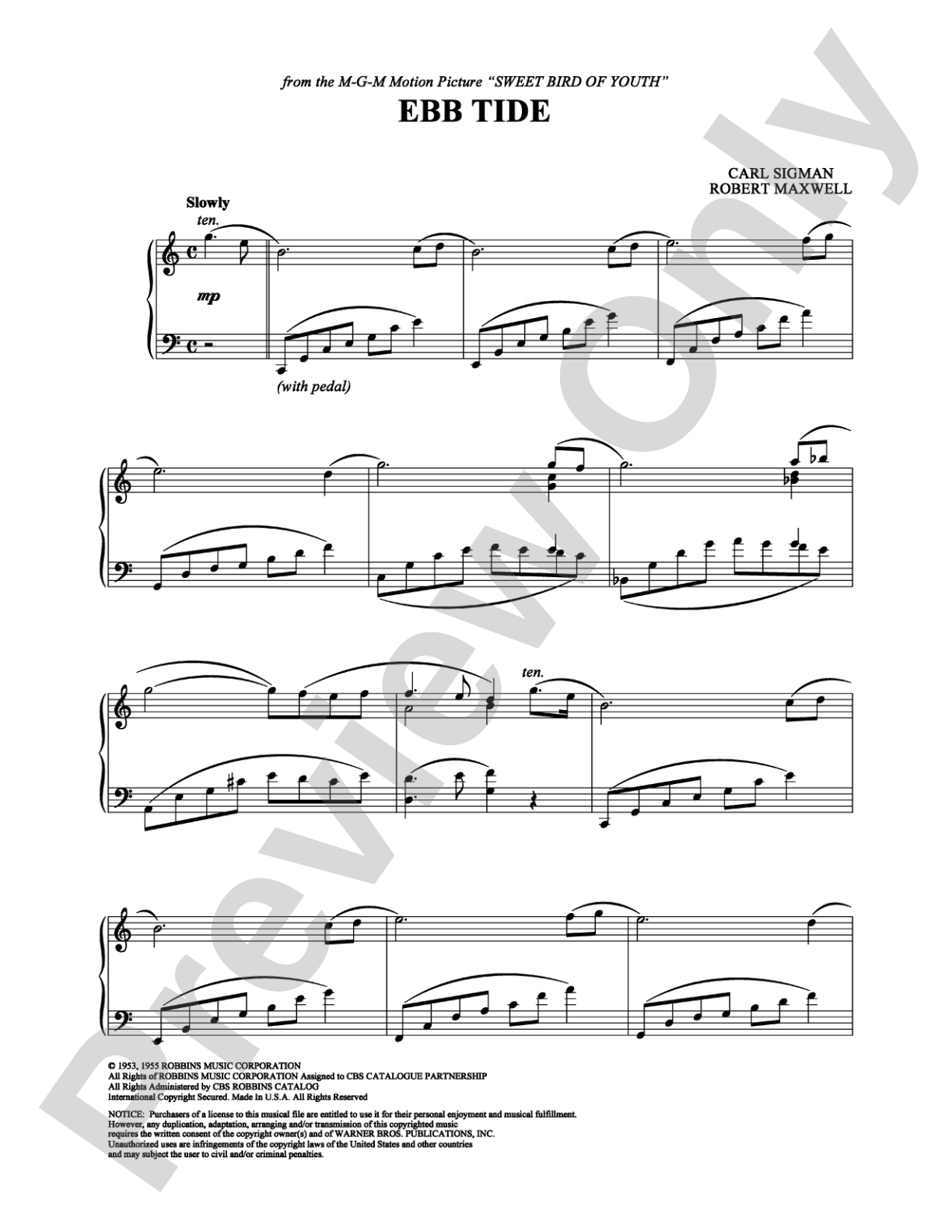
Ebb Tide: Piano Digital Sheet Music

Ebb Tide: Piano Digital Sheet Music

Carl Sigman, George Shearing, Robert Maxwell

Item: 00-PS-0000574

Digital Download
$3.99
Description

Ebb Tide: Piano Digital Sheet Music isn't in MakeMusic Cloud just yet...but it could be. Let us know you'd like to see it, and you'll help shape what comes next. In the meantime, start a free trial and dive into thousands of interactive titles your students can play along with today.

Sample Audio
No sample audio found.
Sample Video
Additional Details
SKU: 00-PS-0000574

More about this title

About the Artist: George Shearing

George Shearing (1919-2011) was a British jazz pianist and composer who became a defining voice in cool jazz during the 1950s. Blind from birth, he developed an innovative approach to voicing that emphasized block chords and harmonic sophistication, influencing generations of jazz pianists and arrangers who studied his recordings and transcriptions.

Why we love this

Shearing's interpretation of this standard exemplifies the clarity and elegance that made him essential listening for piano students exploring jazz harmony. His touch, phrasing, and voicing choices offer a masterclass in how to inhabit a ballad with restraint and sophistication rather than virtuosic display.

What to expect

Elegant restraint. The piece unfolds with unhurried grace, favoring harmonic depth and tonal warmth over flashy runs. There's a sense of contemplation and poise throughout, inviting the listener into quiet introspection rather than demanding attention.

Who it's for

Jazz pianists developing their voicing vocabulary and understanding of ballad interpretation, particularly students drawn to the cool jazz aesthetic. This digital score works well for pianists transcribing from recordings or preparing to learn the standard through study of a recorded master.

How to get the most out of it

  • Study the harmonic movement closely; Shearing's block voicing technique creates color and momentum through chord quality rather than rapid passagework.
  • Pay attention to dynamics and space. The piece breathes through silence and subtle shifts in volume, not constant filling of the texture.
  • Listen to multiple recordings of the tune before settling on interpretation; understanding how Shearing treats the melody line will clarify your own phrasing choices.
  • Work the left hand independently. Shearing's bass line supports without overwhelming, requiring careful balance and independence between hands.

How to use it

Feature this in a jazz recital or standards showcase where the focus is on interpretive maturity and harmonic sophistication. It pairs naturally with other ballads from the Great American Songbook and demonstrates how a single pianist's approach can define a composition's emotional landscape.

Skills your students will build

  • Jazz block voicing and harmonic reharmonization
  • Ballad phrasing and dynamic control
  • Left-hand independence in jazz accompaniment
  • Listening analysis and transcription skills
  • Melodic interpretation within a harmonic framework

You May Also Like