
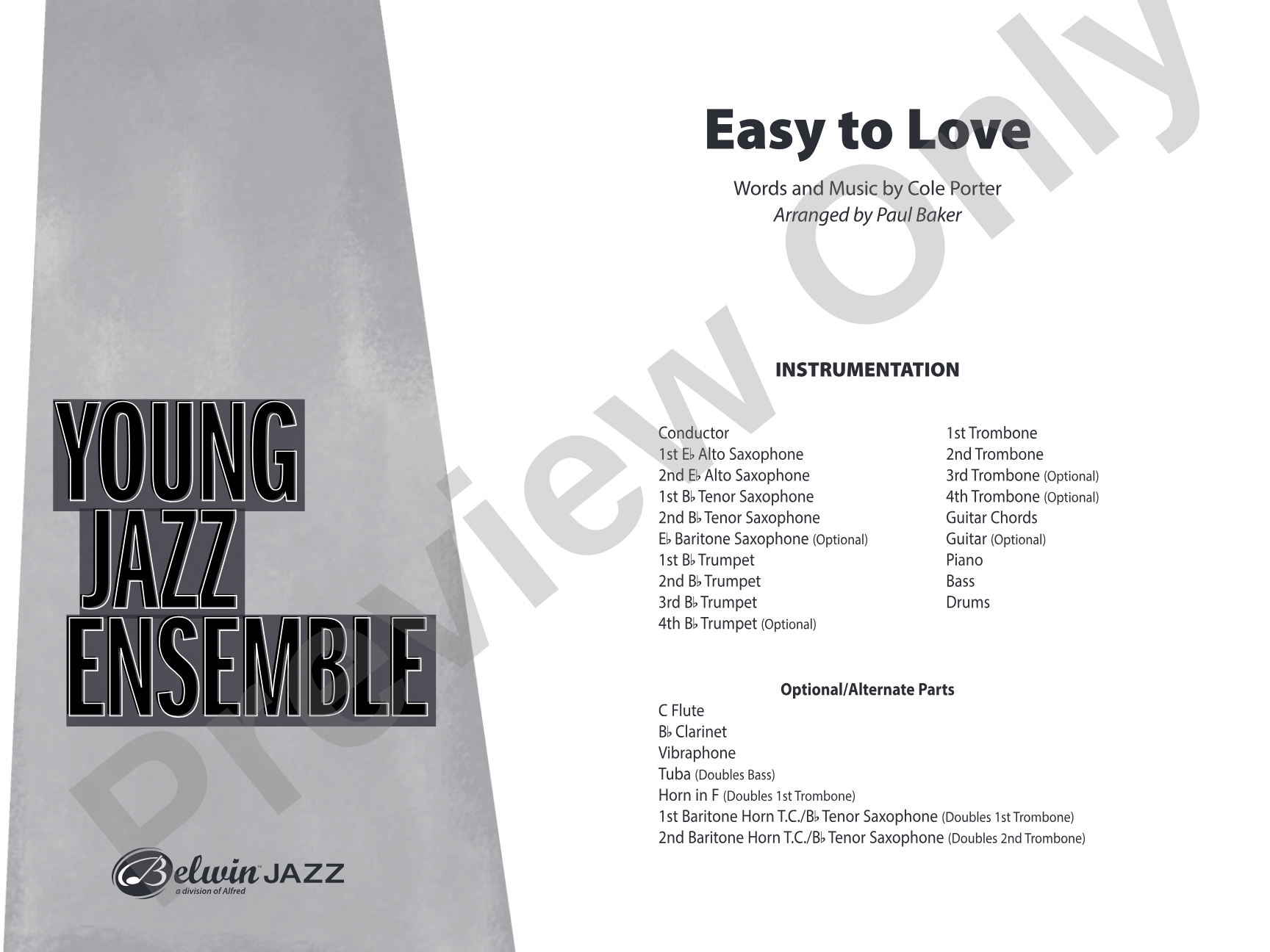
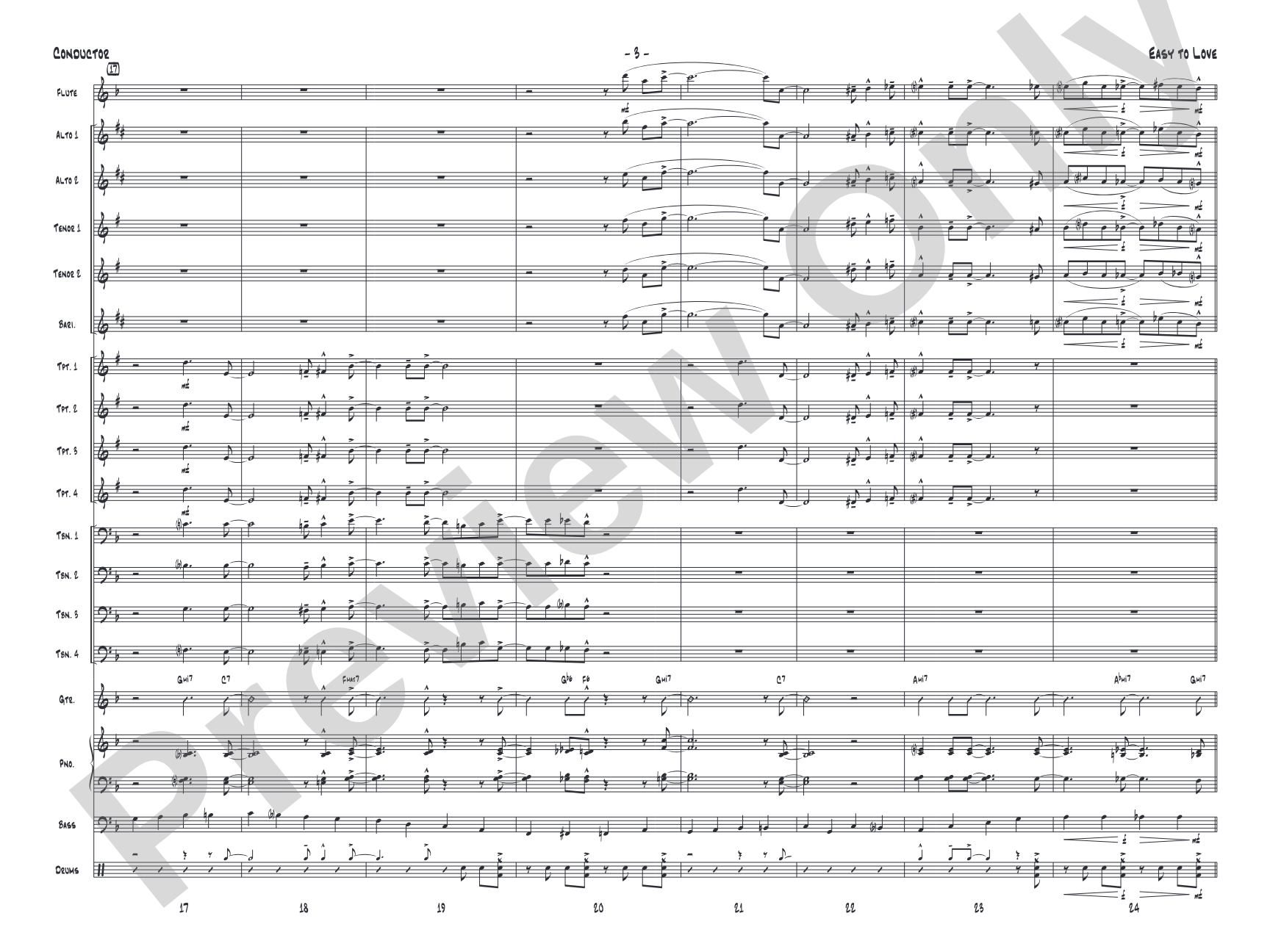
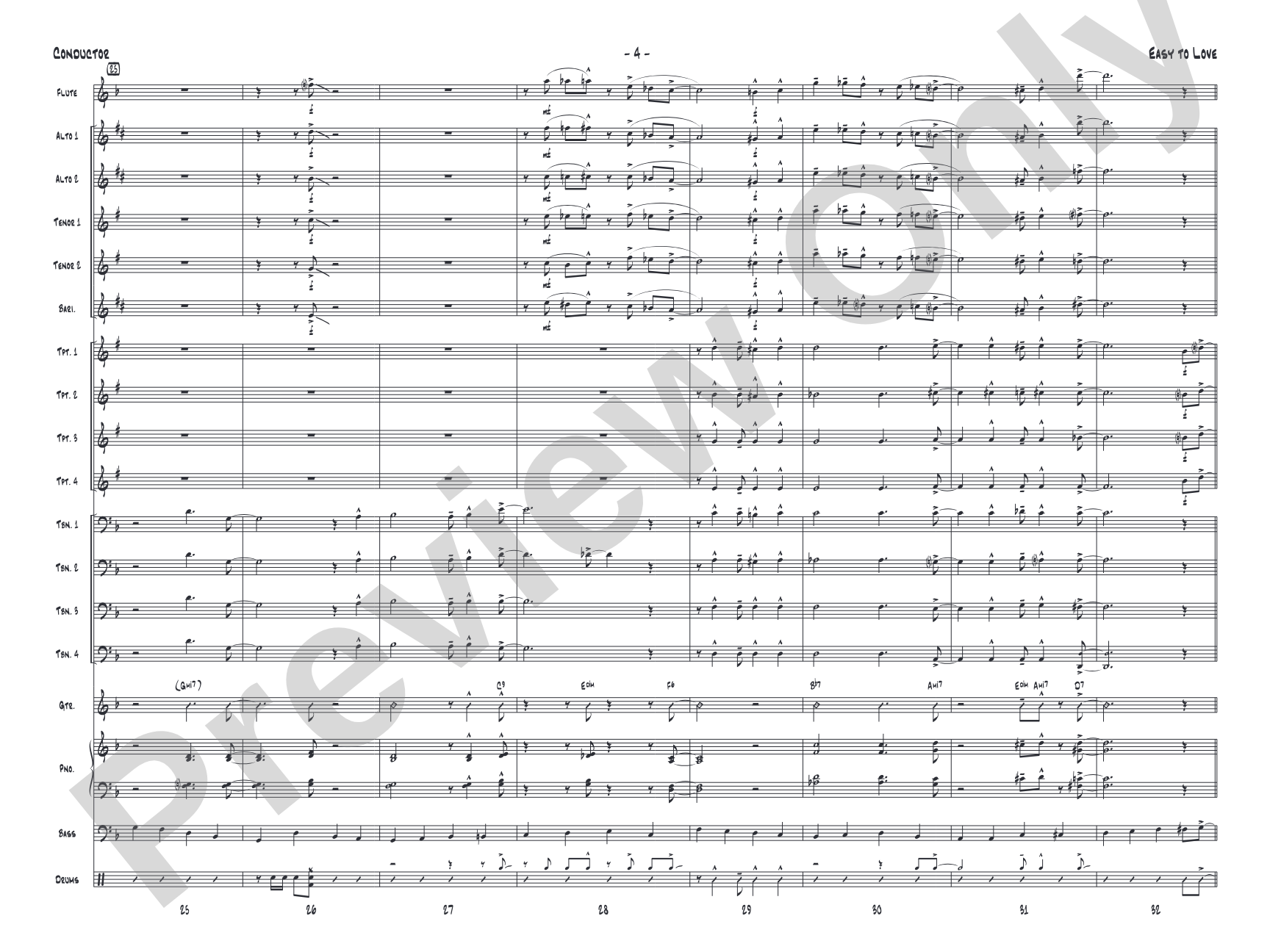
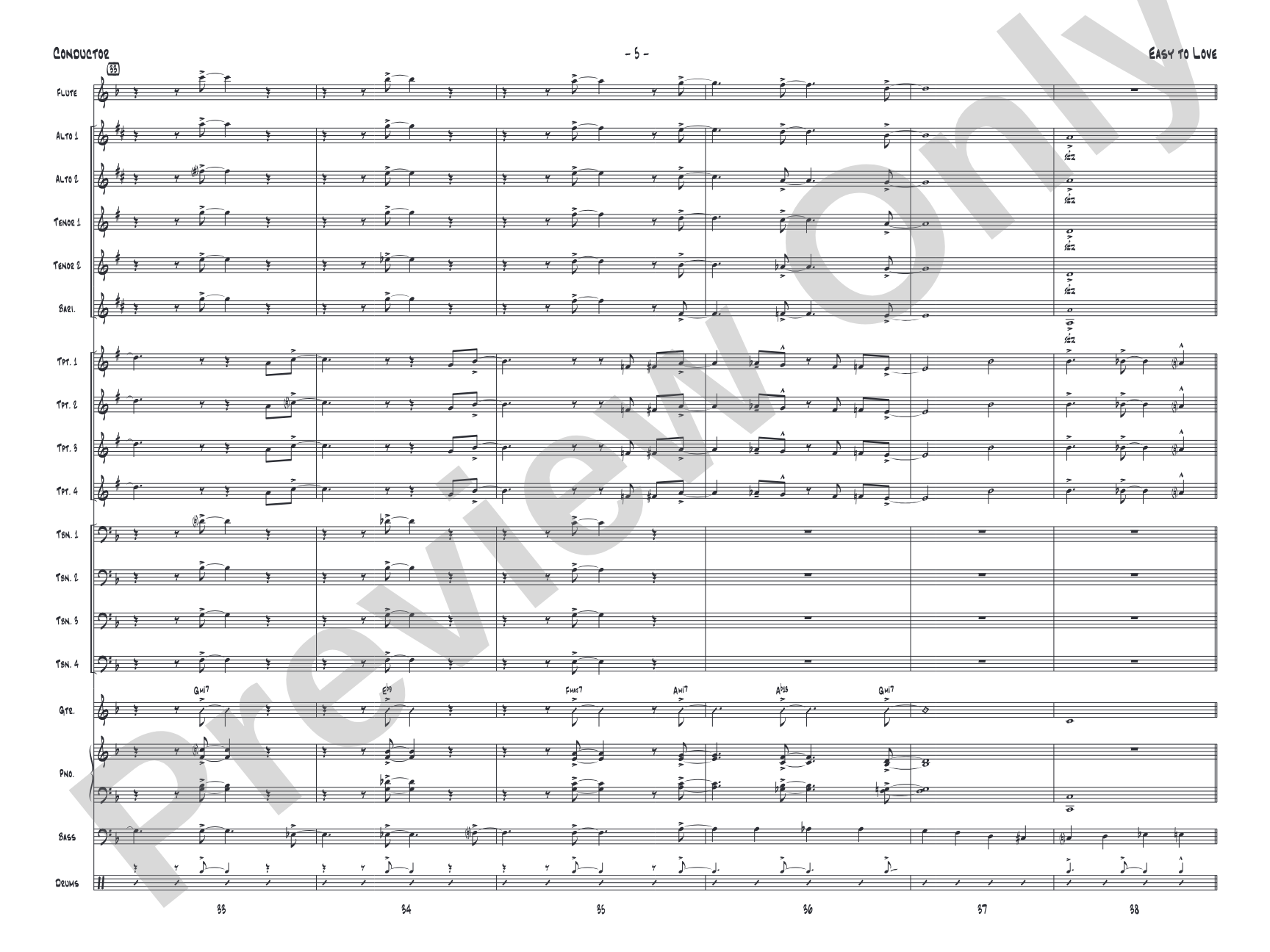
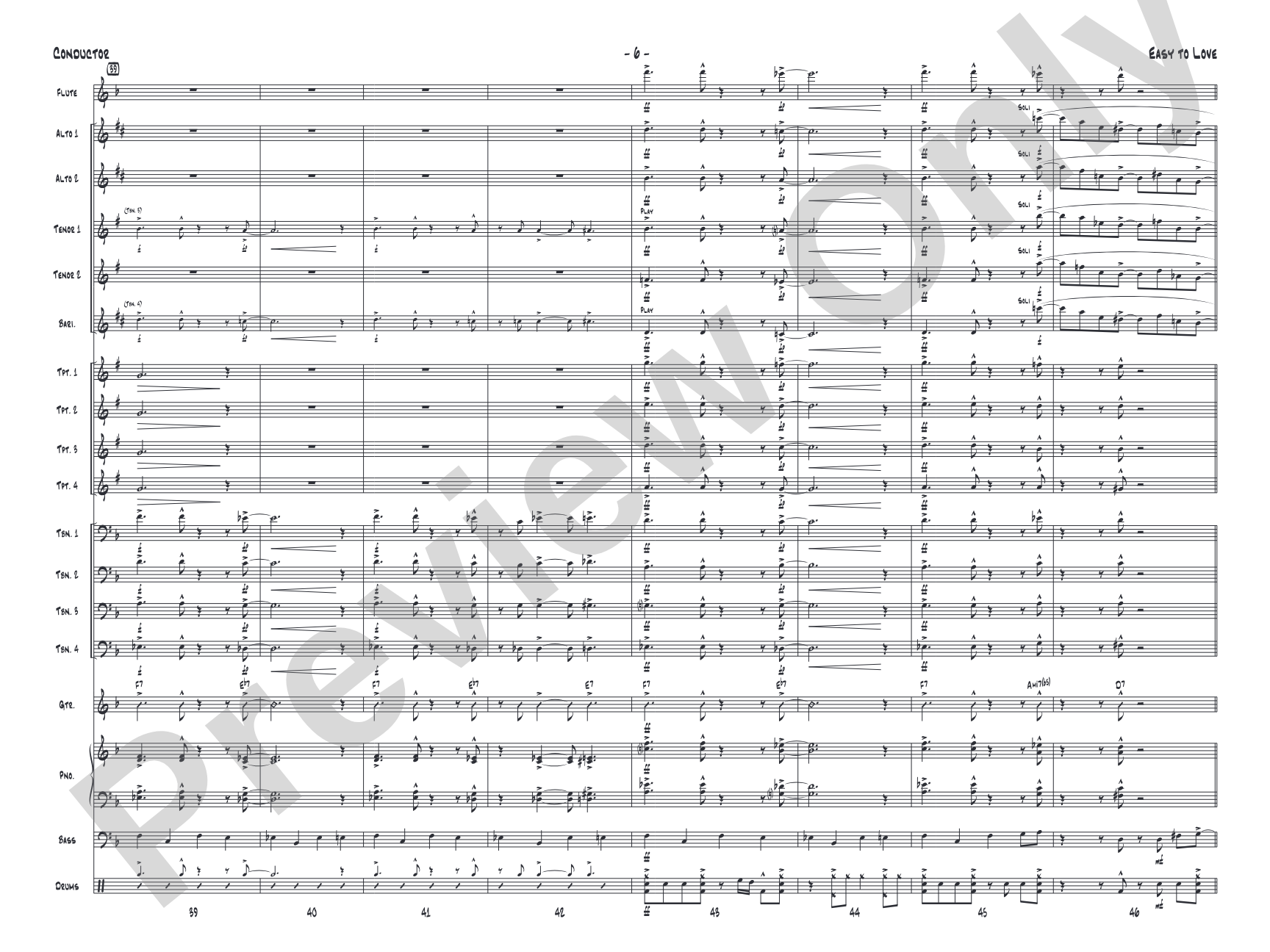
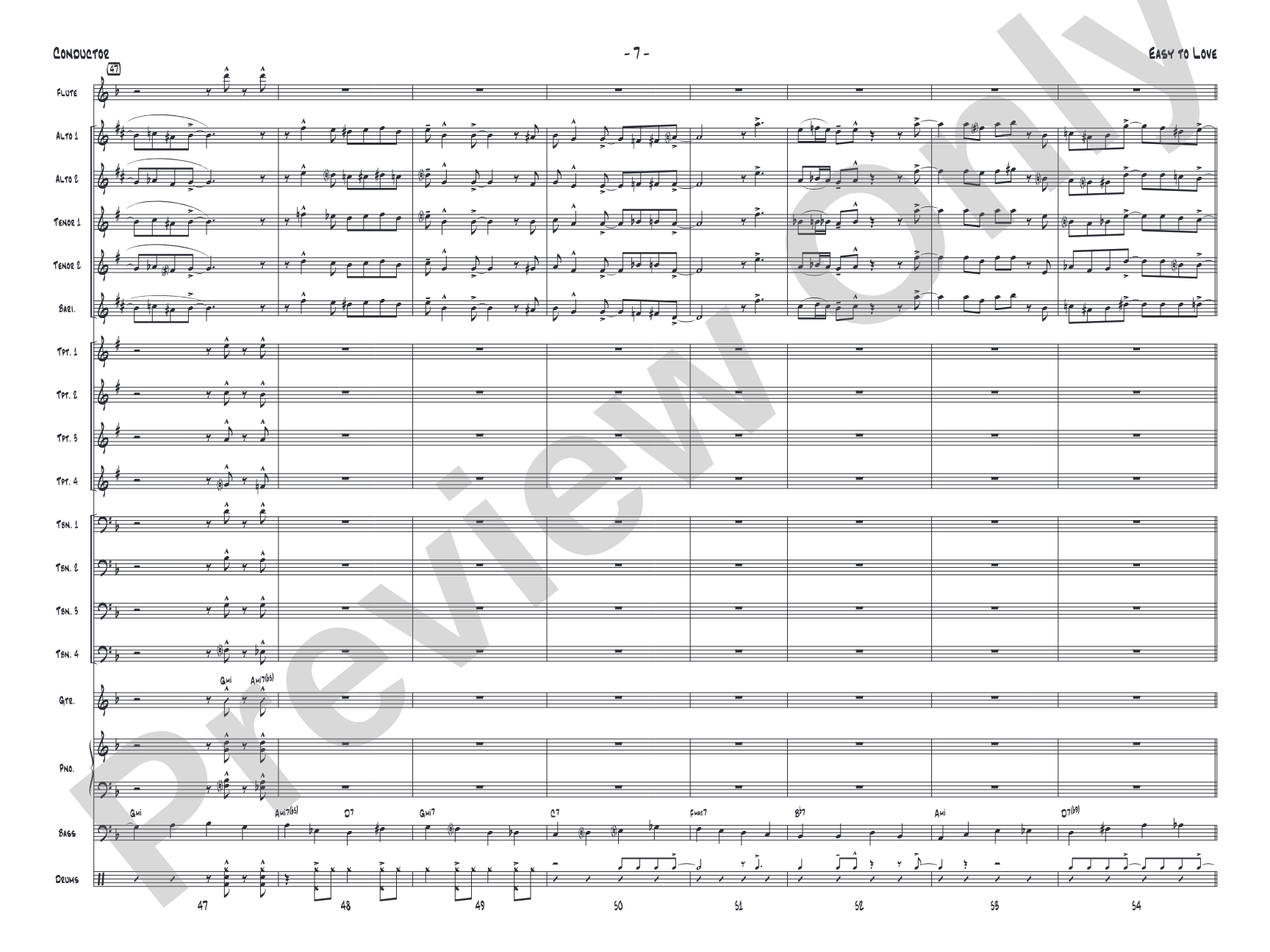
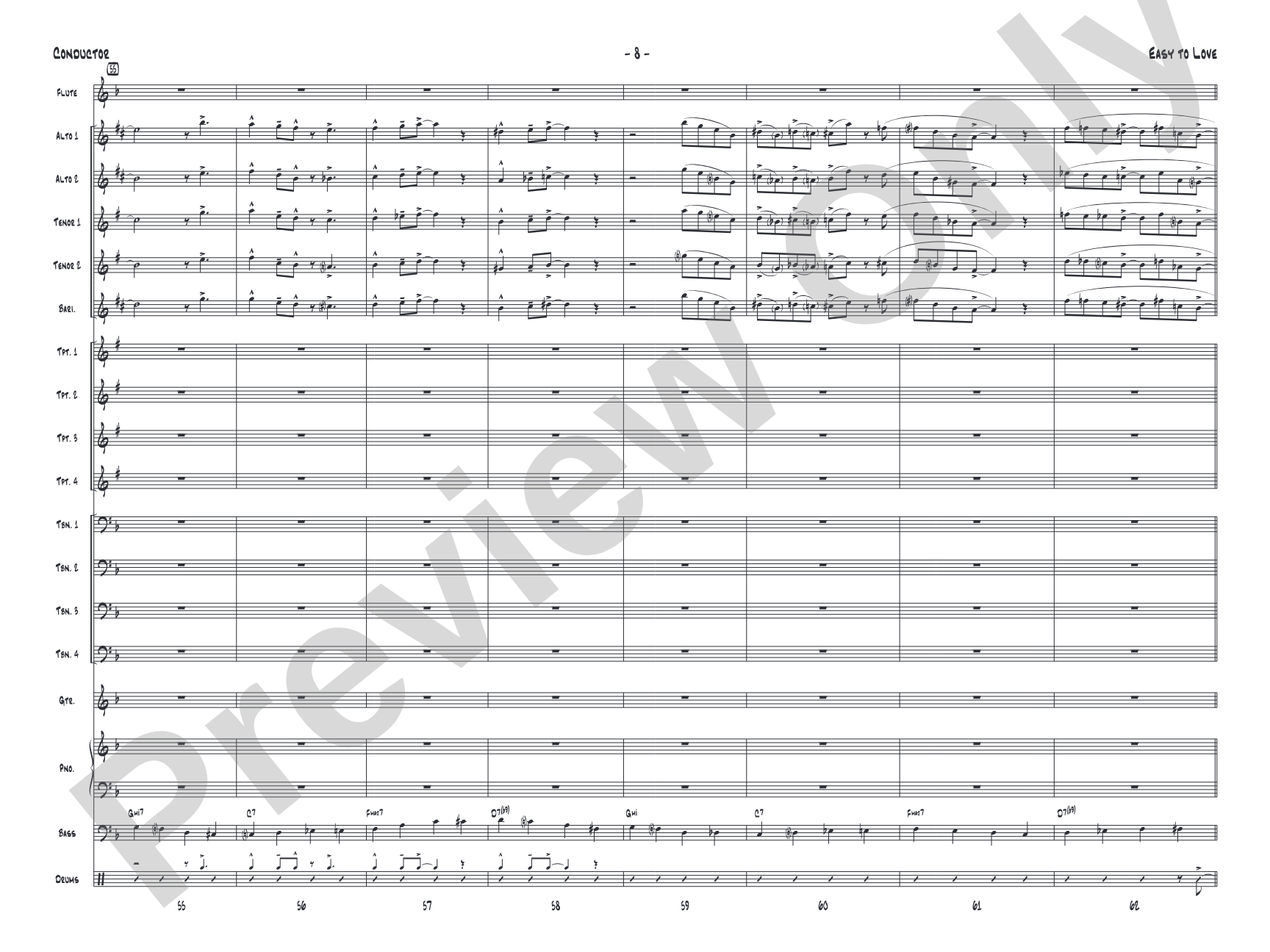
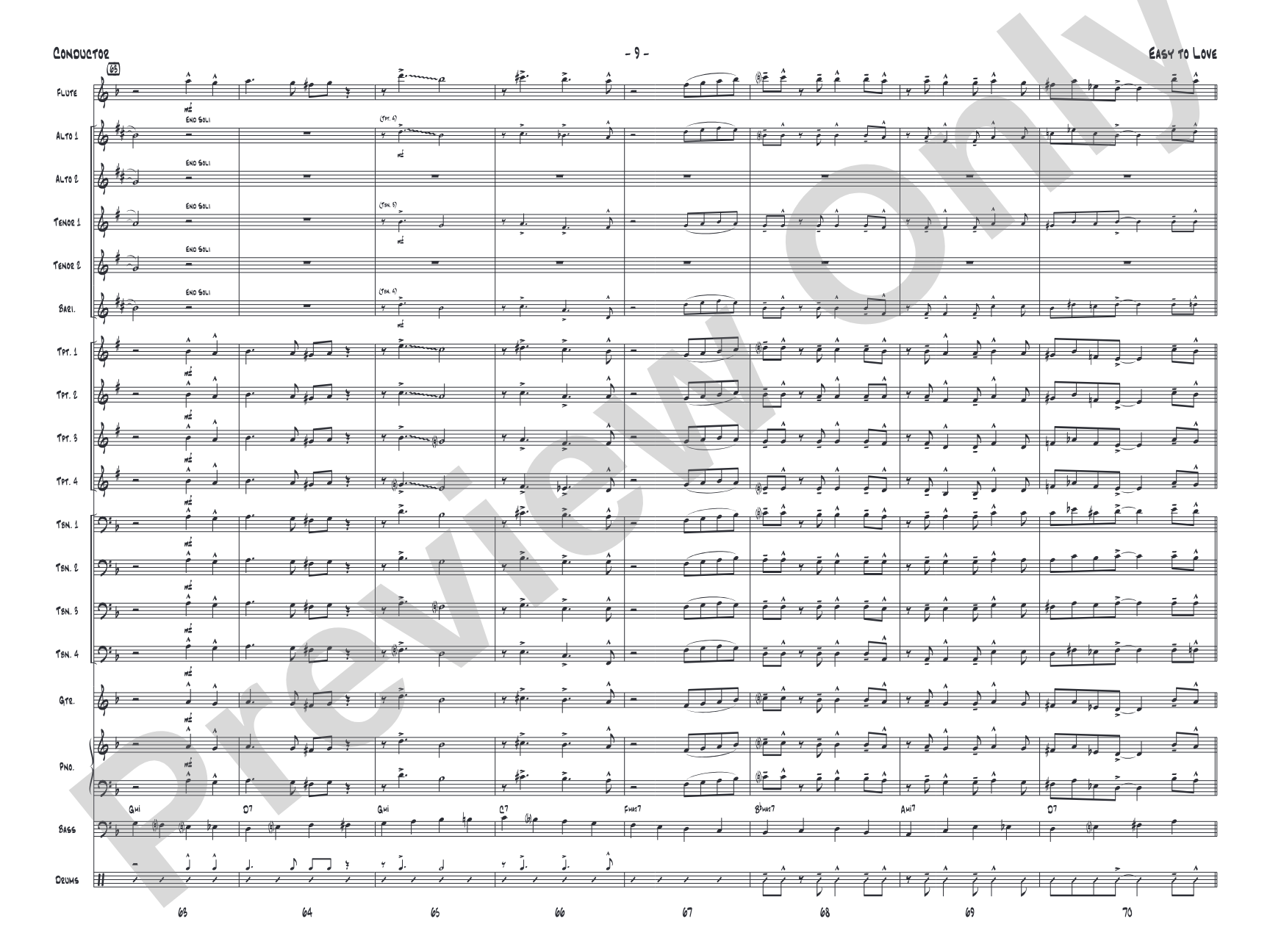
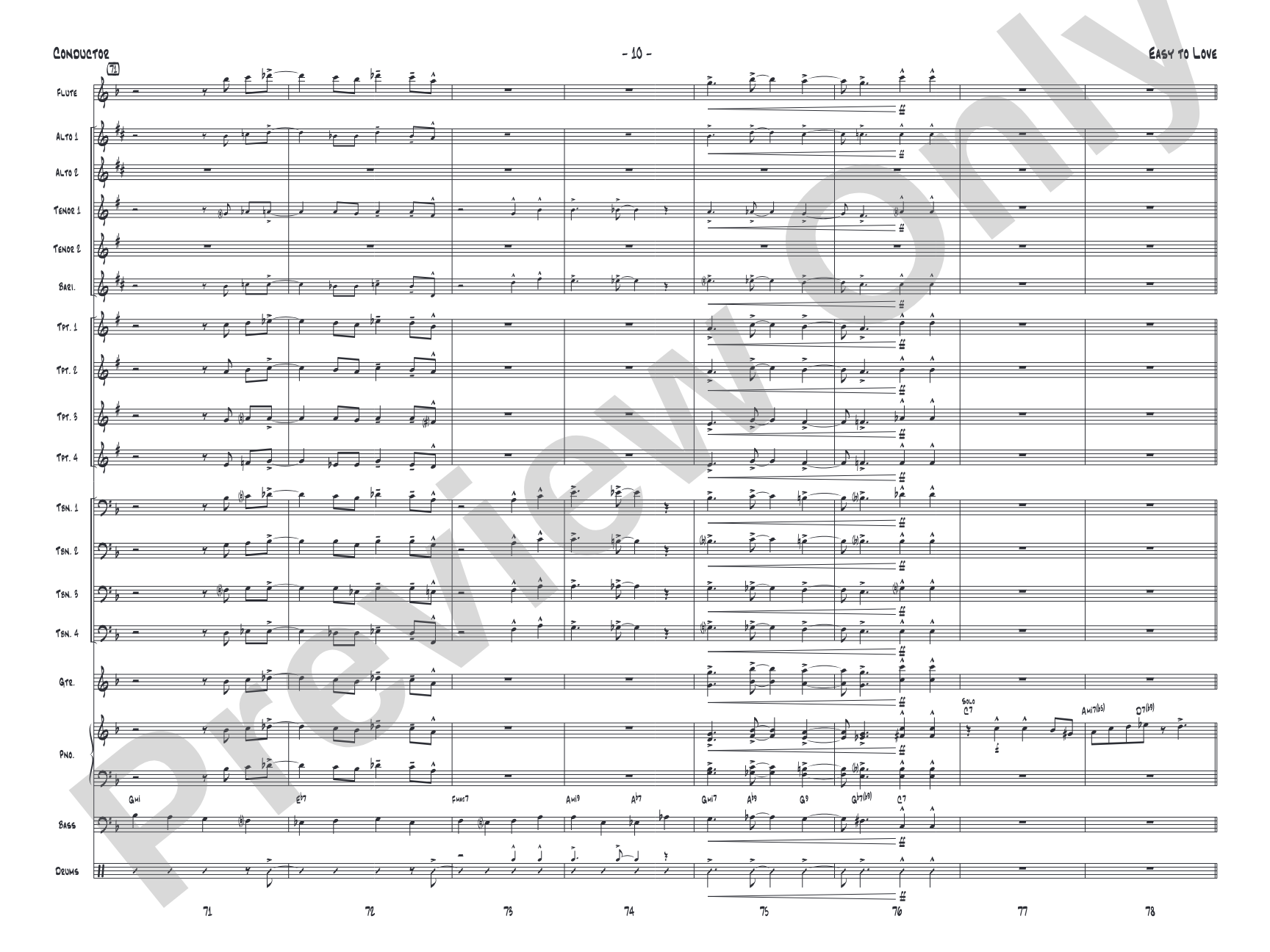
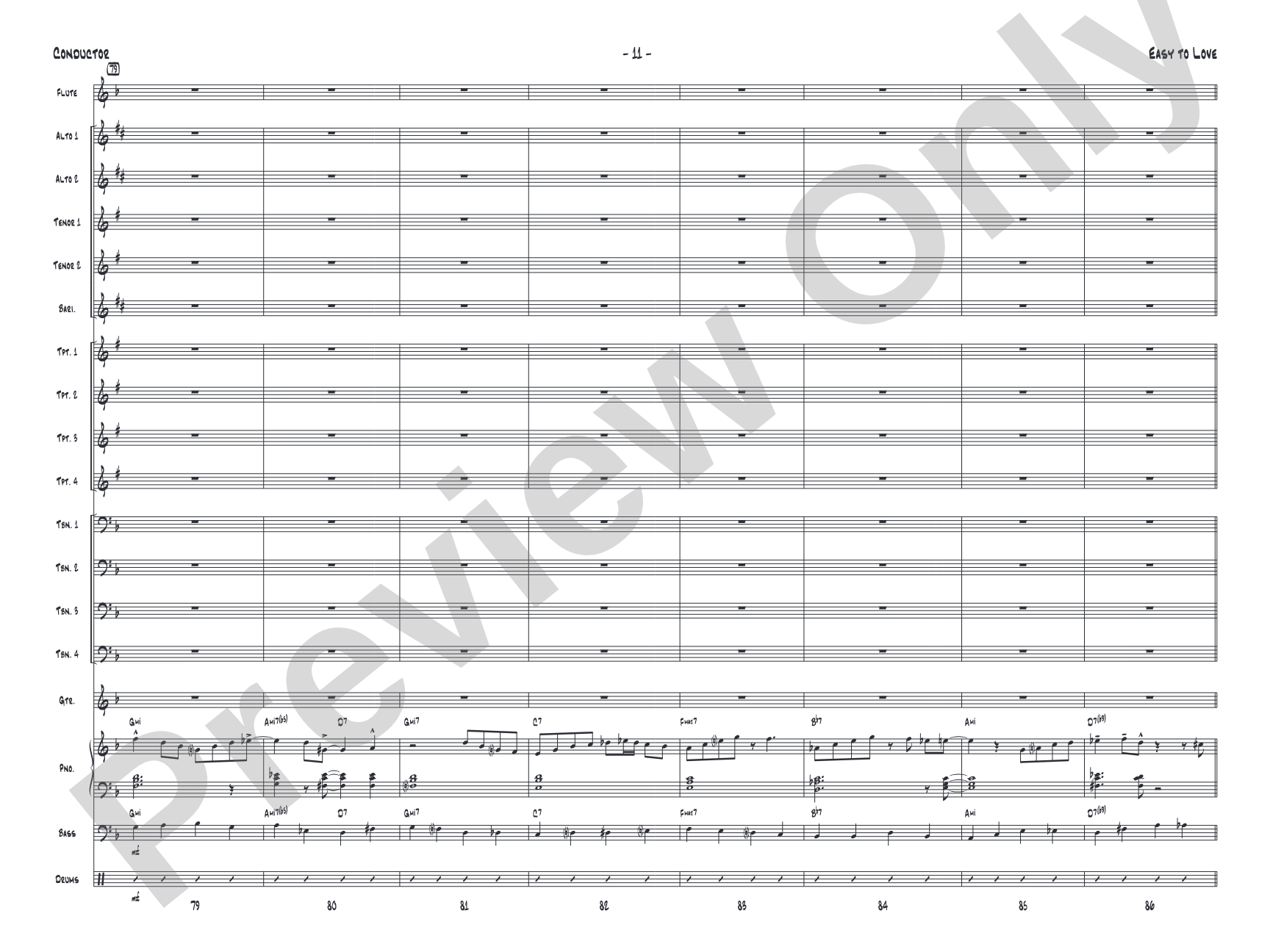
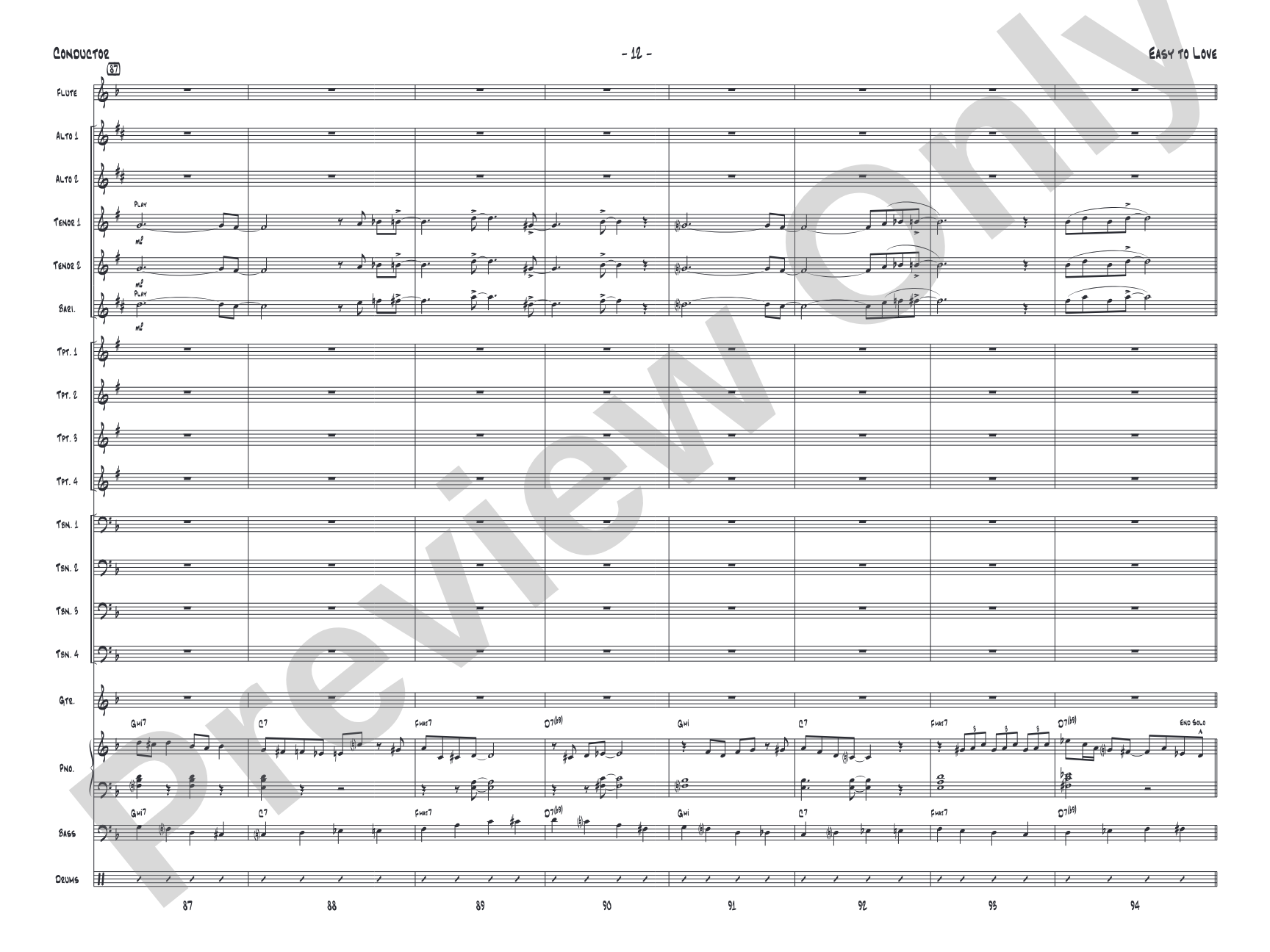
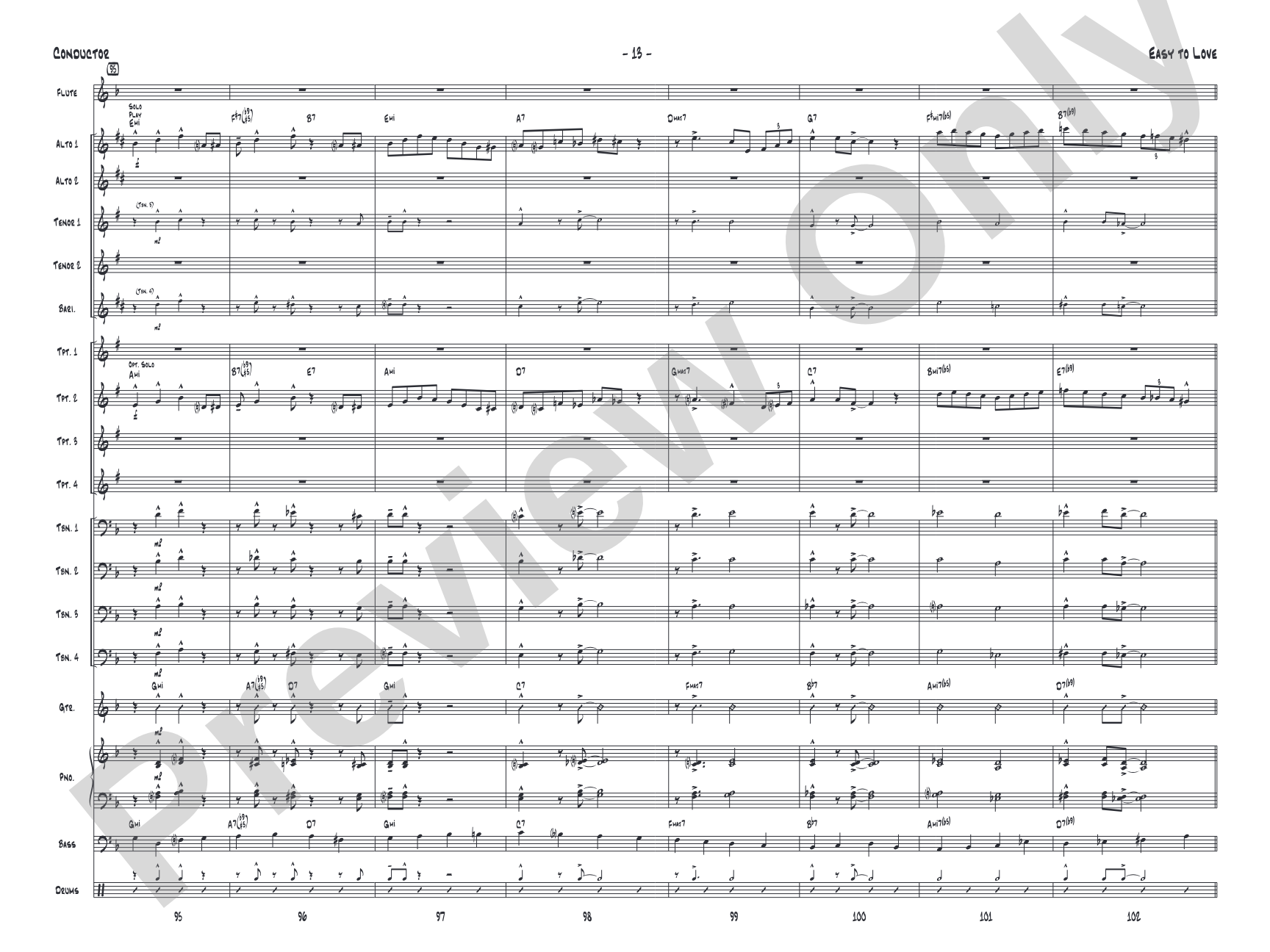
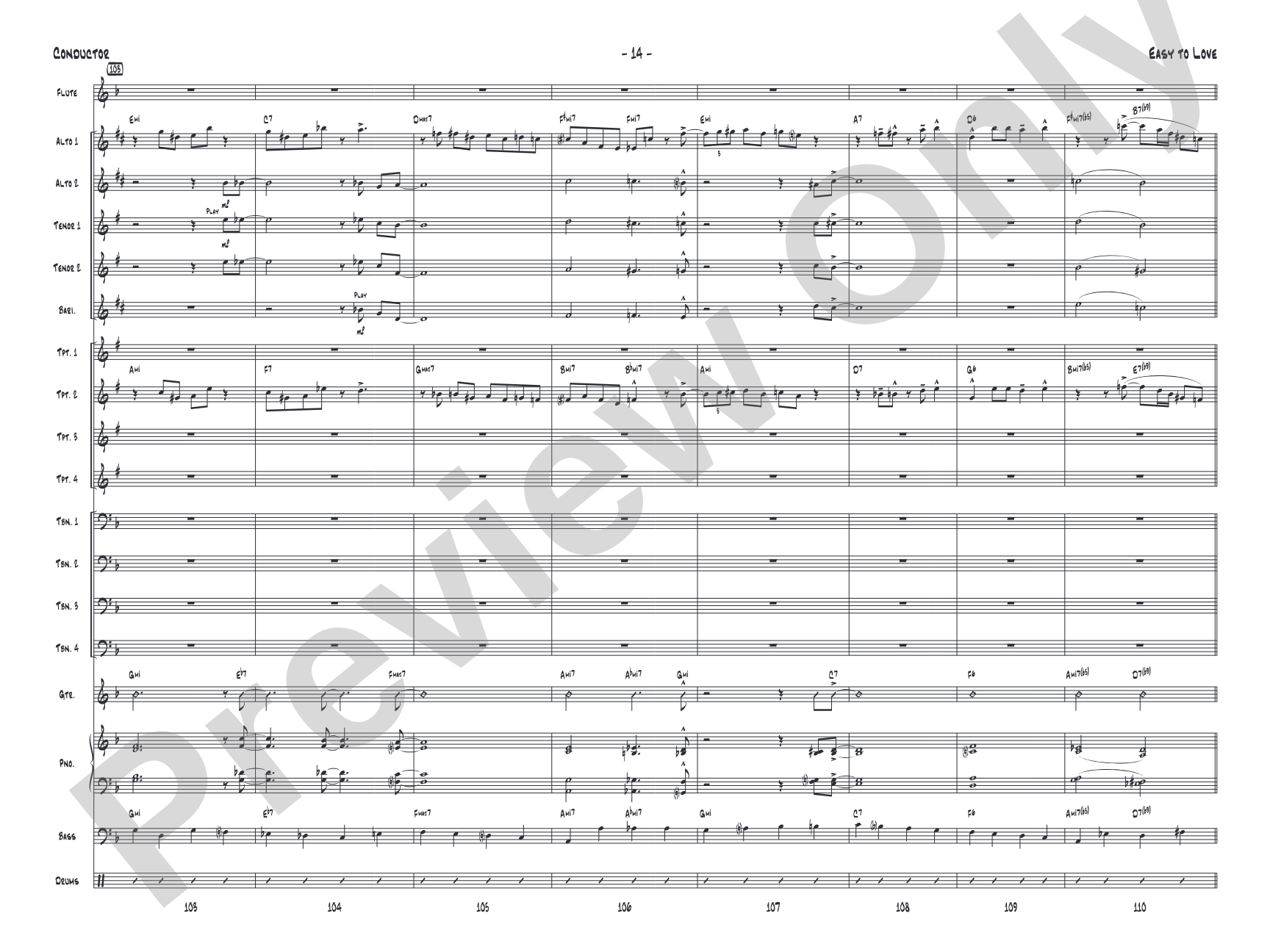
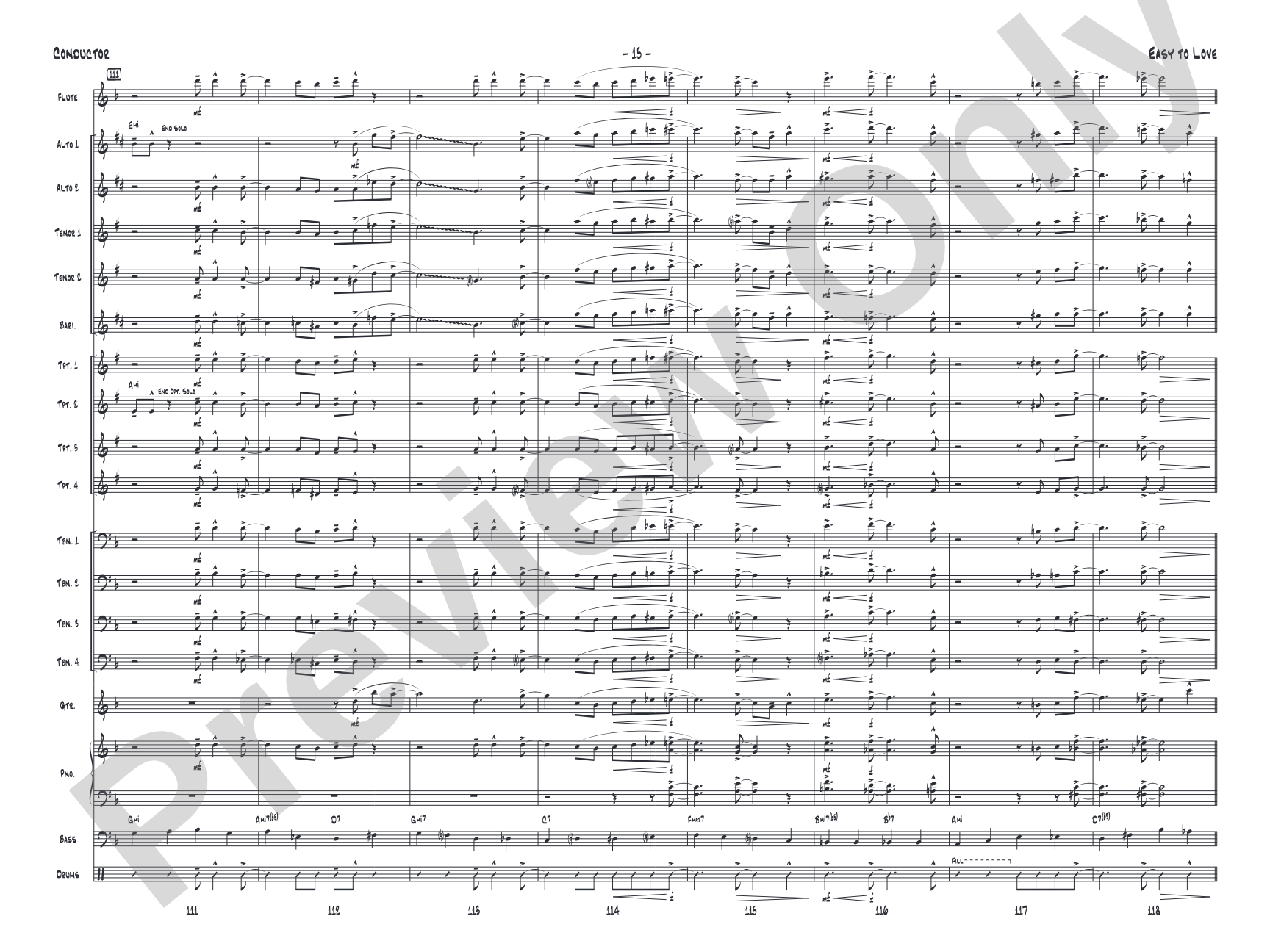
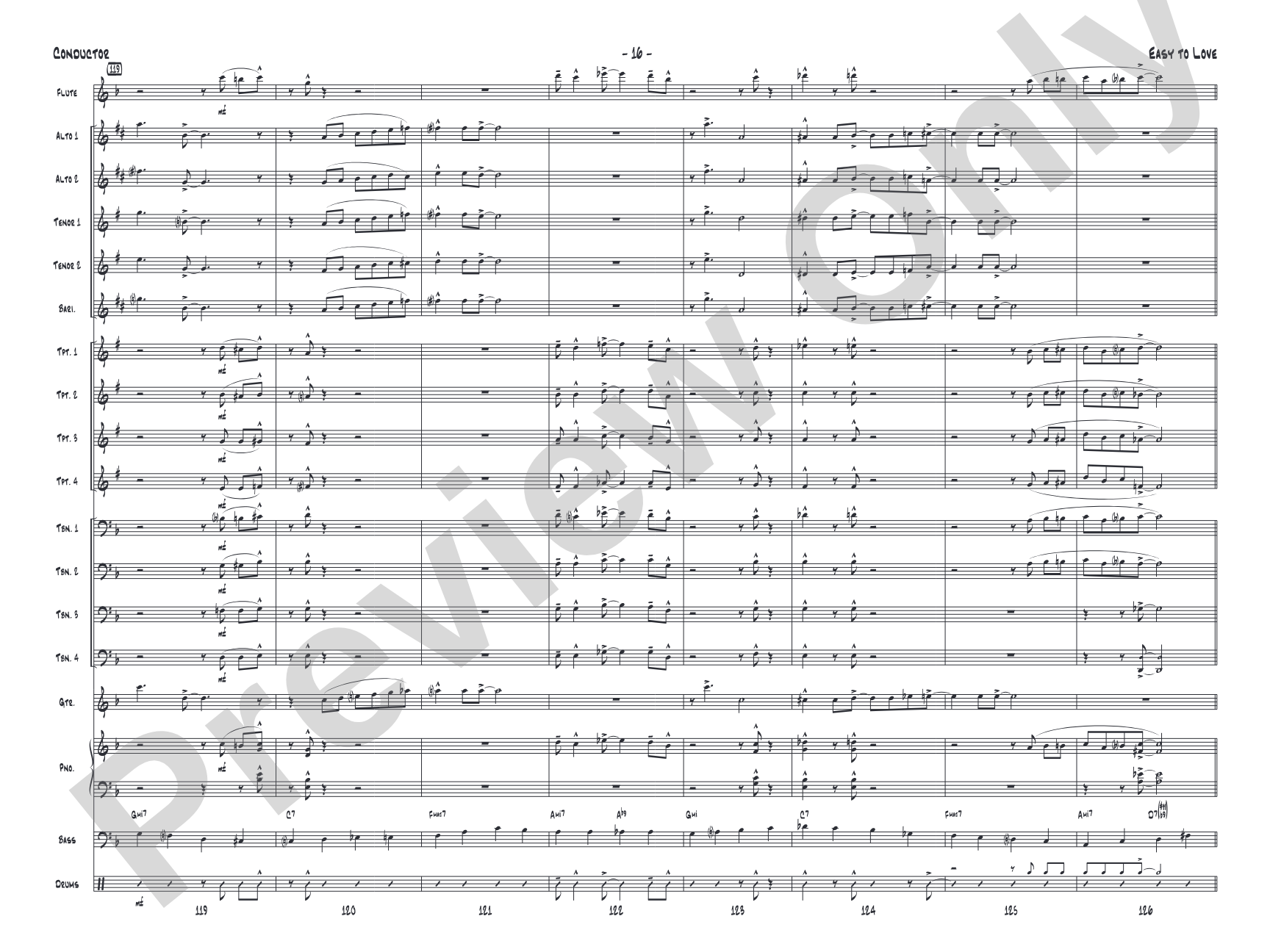
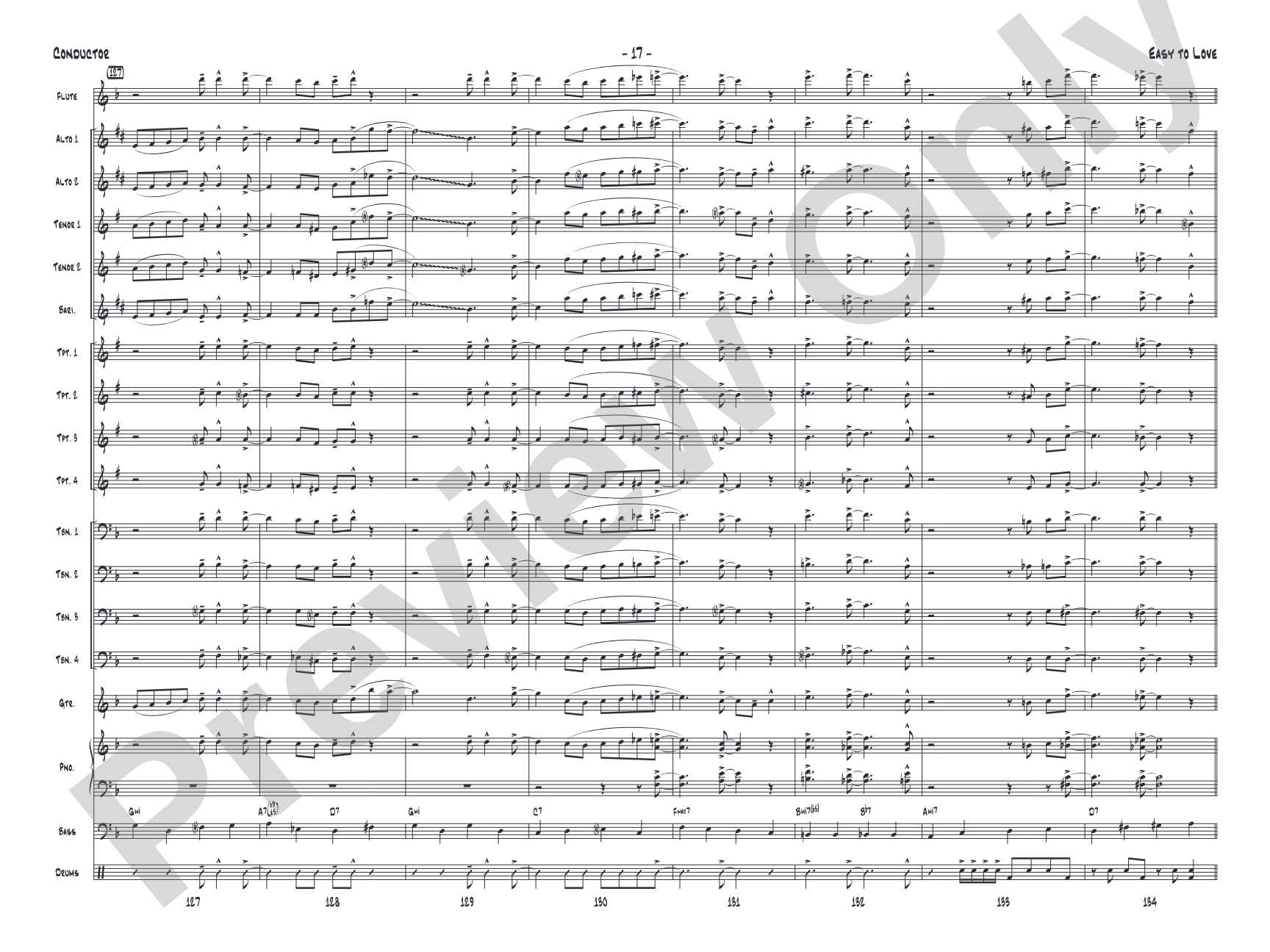
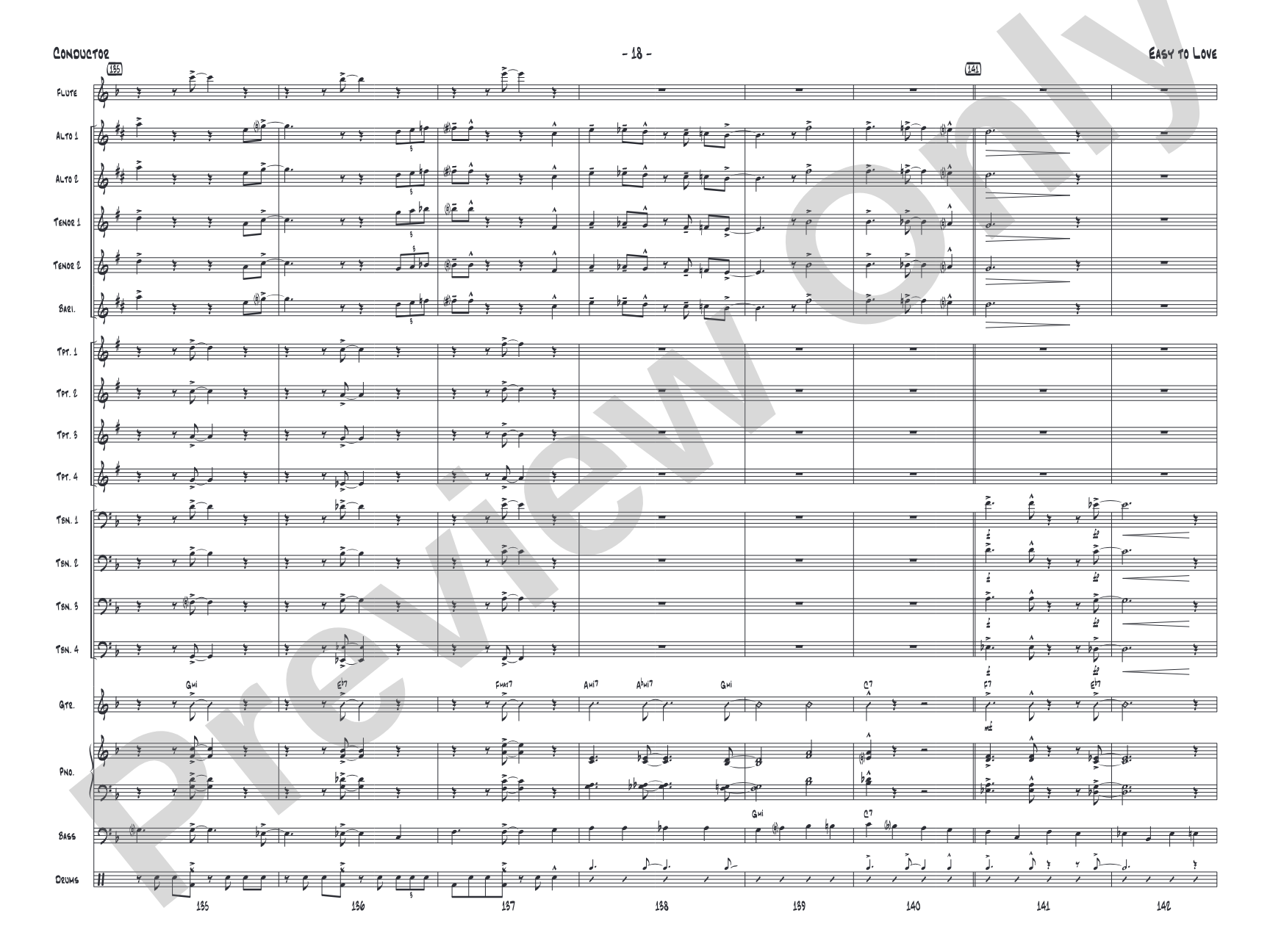
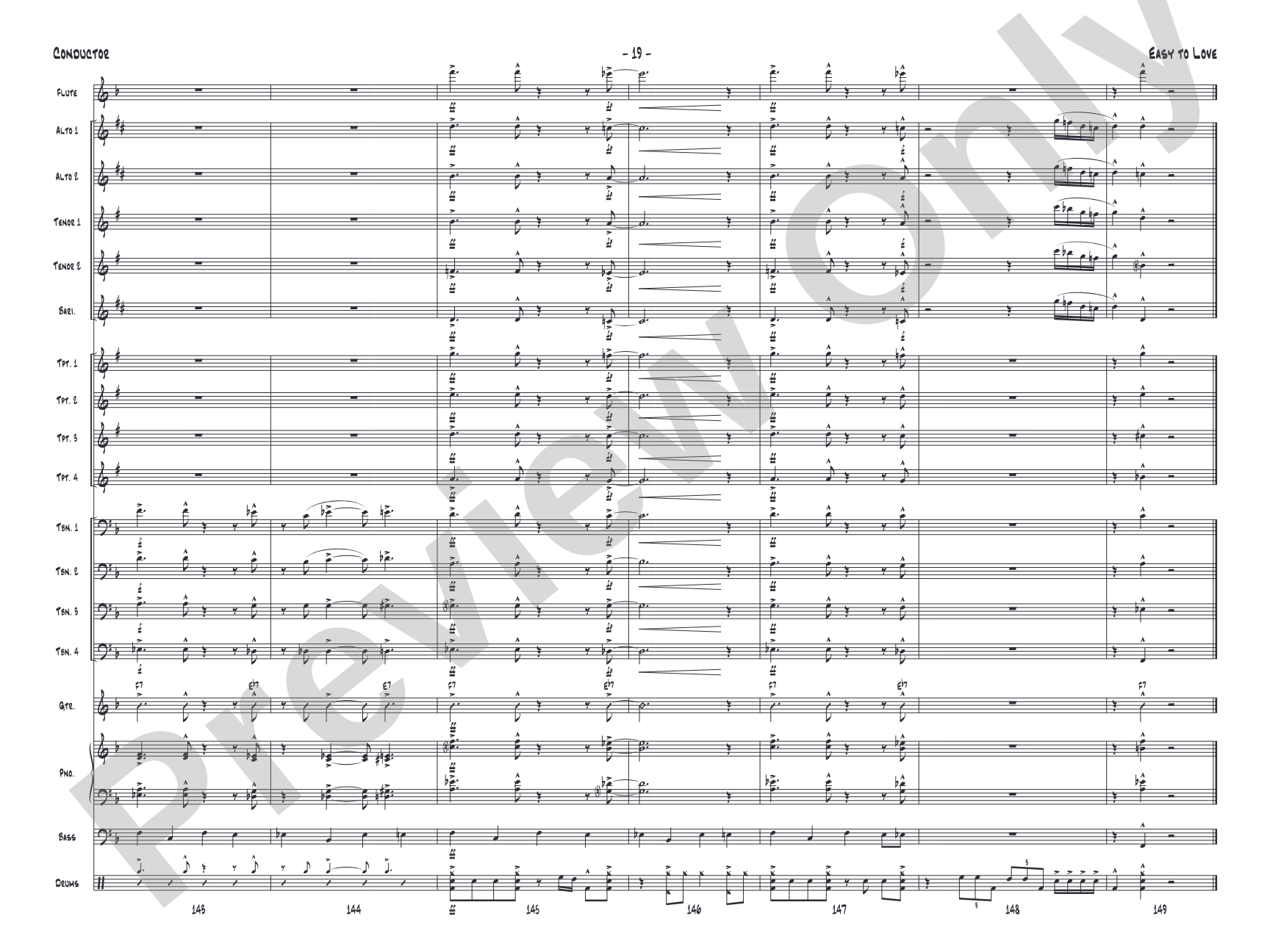

Easy to Love: Jazz Ensemble Conductor Score & Parts
Words and music by Cole Porter / arr. Paul Baker
Grade: 2.5 (Medium Easy)
Item: 00-PK-0008431

$48.00
One moment…
Description
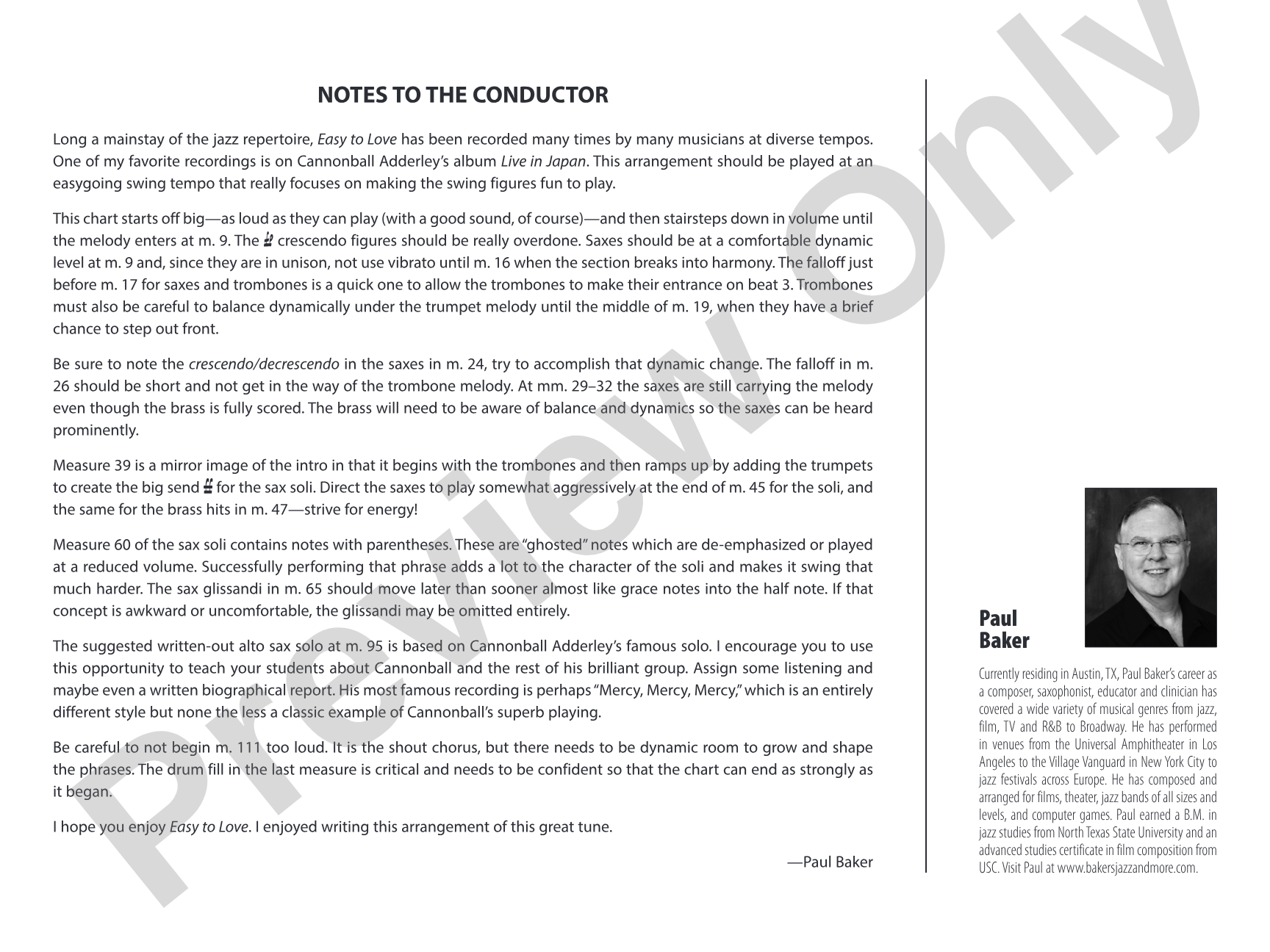
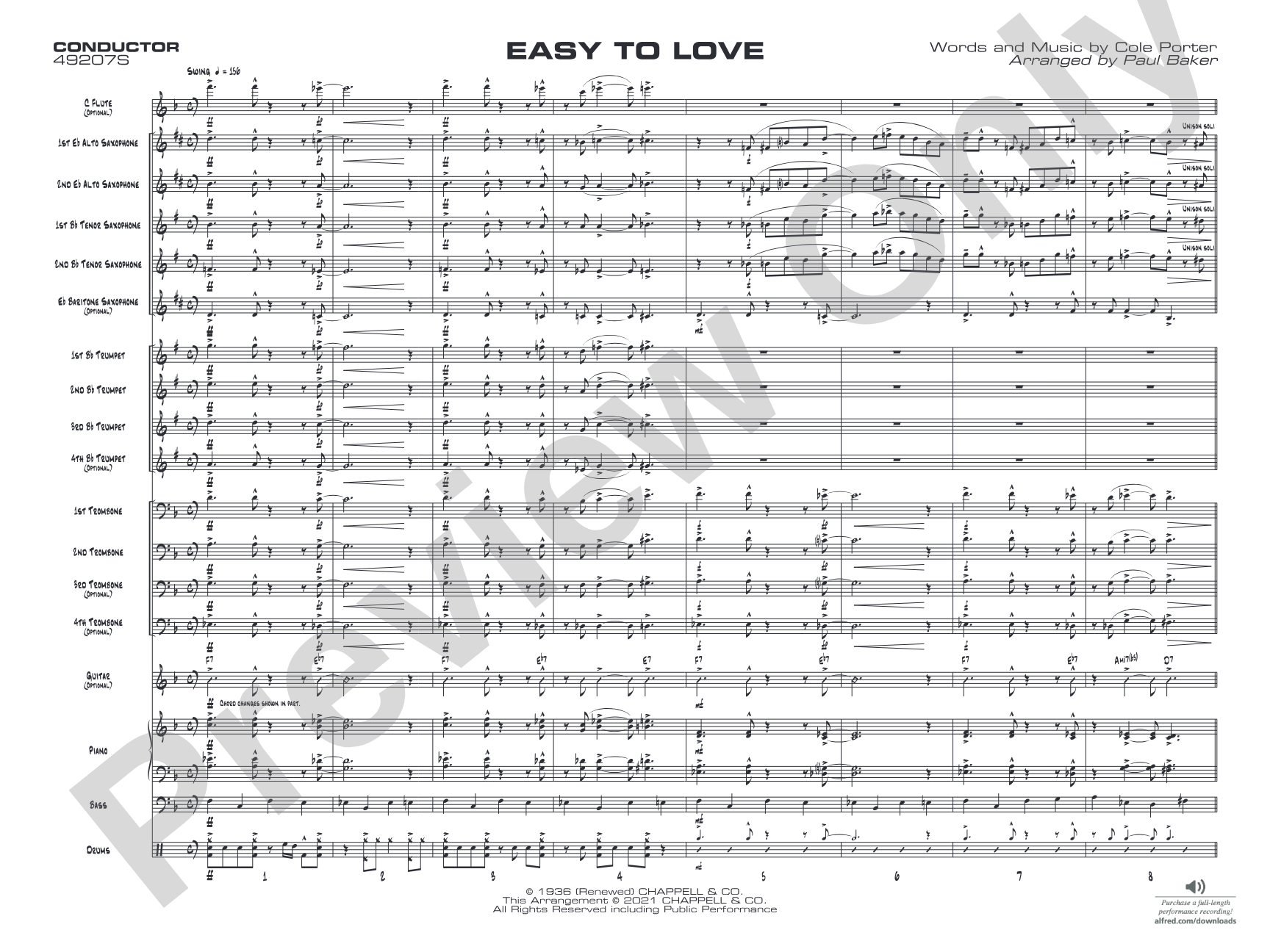
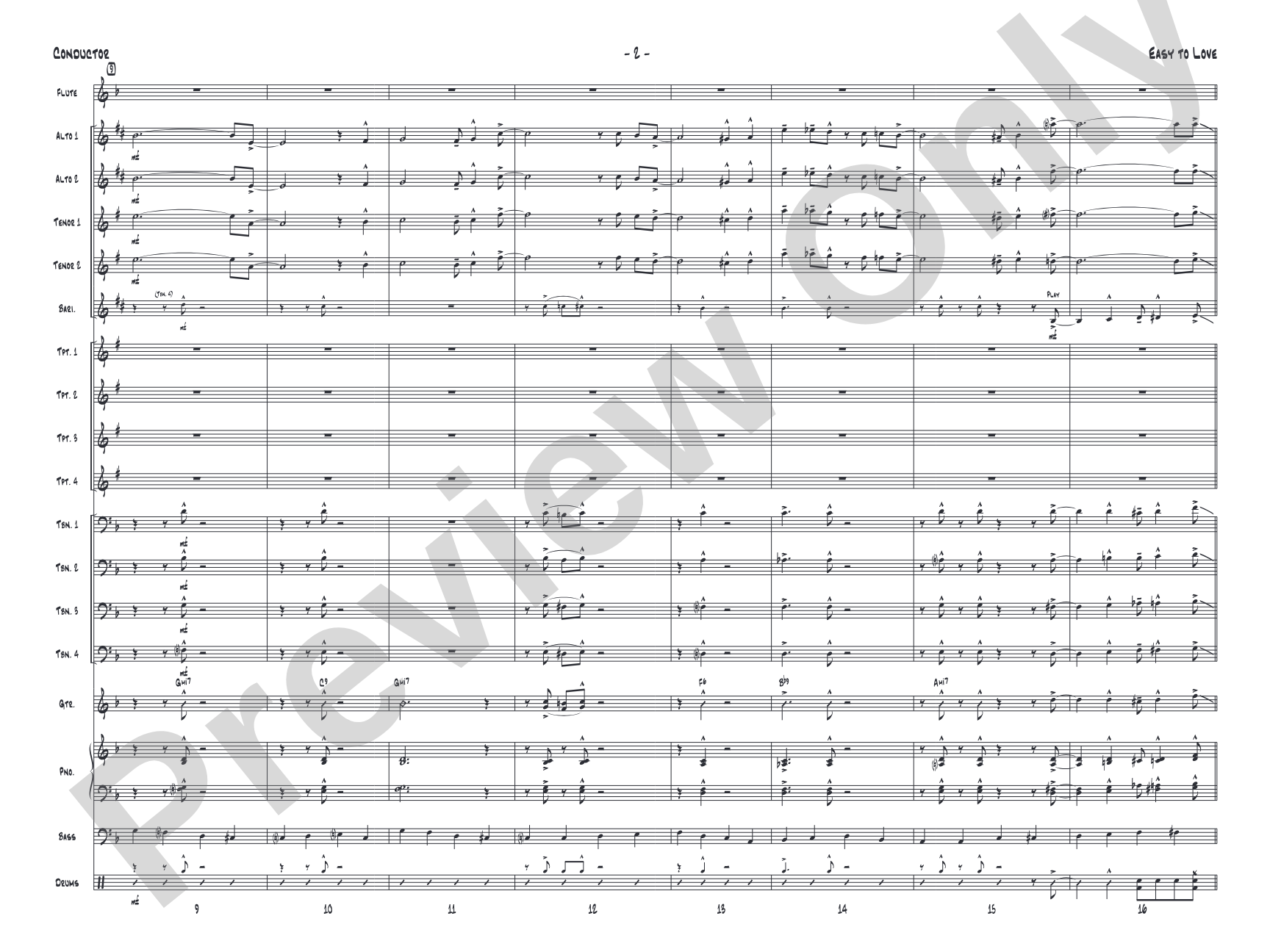
A swing chart played around 154 BPM on a great jazz standard. A great sax section soli, plenty of tutti ensemble, and written-out solos provided for piano (or vibes), alto 1 (or trumpet 2). Lead trumpet range is to written G on top of the staff. Optional parts included for vibes, flute, clarinet, and more. Everyone has plenty to do on Easy to Love arranged by Paul Baker! (3:50)


Don't just read it, hear it, play along with it, and watch your students grow with it. In MakeMusic Cloud, Easy to Love: Jazz Ensemble Conductor Score & Parts comes alive with professional accompaniment, adjustable tempo, and built-in practice tools that turn solo practice into real progress.
Open in the Player
Jump straight in and assign it today.
Start Your Free Trial
Open this title and explore the full library in minutes.
Sample Audio
1
Audio File
--:--
0:00
0:00
Sample Video
Additional Details
Series:
Young Jazz Ensemble
Publisher:
Alfred Music
Page Count:
100
SKU:
00-PK-0008431
More about this title
About the Composer: Cole Porter
Cole Porter (1891-1964) was an American composer and lyricist who brought sophistication and wit to Broadway and film musicals throughout the twentieth century. His melodies are distinguished by unexpected harmonic turns and singable lines that work equally well in jazz arrangements, making his standards a cornerstone of the jazz repertoire.
Why we love this
Paul Baker's arrangement captures the essence of a Porter standard while keeping the ensemble engaged from start to finish. The balance of section soli, ensemble passages, and written-out solos means no one sits idle, and the medium-easy grade makes it accessible without sacrificing the sophisticated harmony and swing feel that makes this tune rewarding to play.
What to expect
A poised, swinging take on a beloved standard that invites the ensemble to sound polished and unified. The arrangement breathes with the elegance of the original melody while creating moments where each section gets to lead, making everyone feel the swing.
Who it's for
Jazz ensembles at the high school or community college level looking for a standard that teaches swing style and section playing without excessive technical demands. The optional instrumentation makes it flexible for varying ensemble sizes and available players.
How to get the most out of it
- Lock the time with the rhythm section by listening carefully to the piano comping and bass line; at 154 BPM, a relaxed swing feel matters more than rushing the tempo.
- The sax section soli demand blend and intonation focus. Balance the lead voice while keeping inner parts transparent rather than covering them.
- Feature the written-out solos on piano (or vibes) and alto 1 (or trumpet 2) with enough space and dynamics so they breathe; these passages are the soloist's moment to shine.
- Approach the tutti sections with deliberate articulation and consistent phrase shape to maintain clarity across all parts.
How to use it
Place this on a jazz festival or contest program where a crowd-pleasing standard sets a solid foundation for more challenging material. It also works well as a feature piece in a jazz concert, showcasing both ensemble cohesion and individual soloists.
Skills your students will build
- swing articulation and phrasing at medium tempo
- section blend and intonation in sax soli
- listening and responding to rhythm section comping
- reading and executing written-out jazz solos with style
- reading optional parts and doubling strategies